



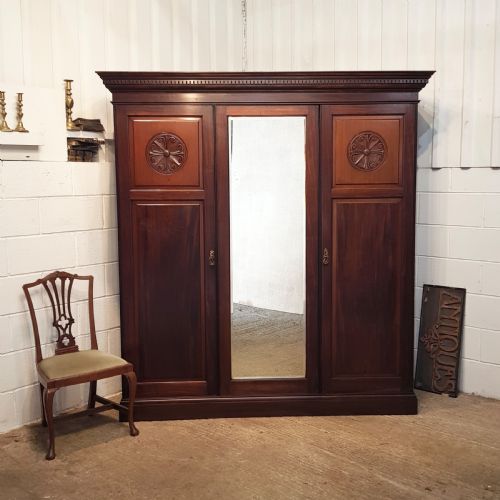


Victorian Mirrored Breakfront Press
A Victorian mirrored breakfront press is a substantial bedroom storage piece offering generous hanging space and mirrored doors, prized for its imposing presence.
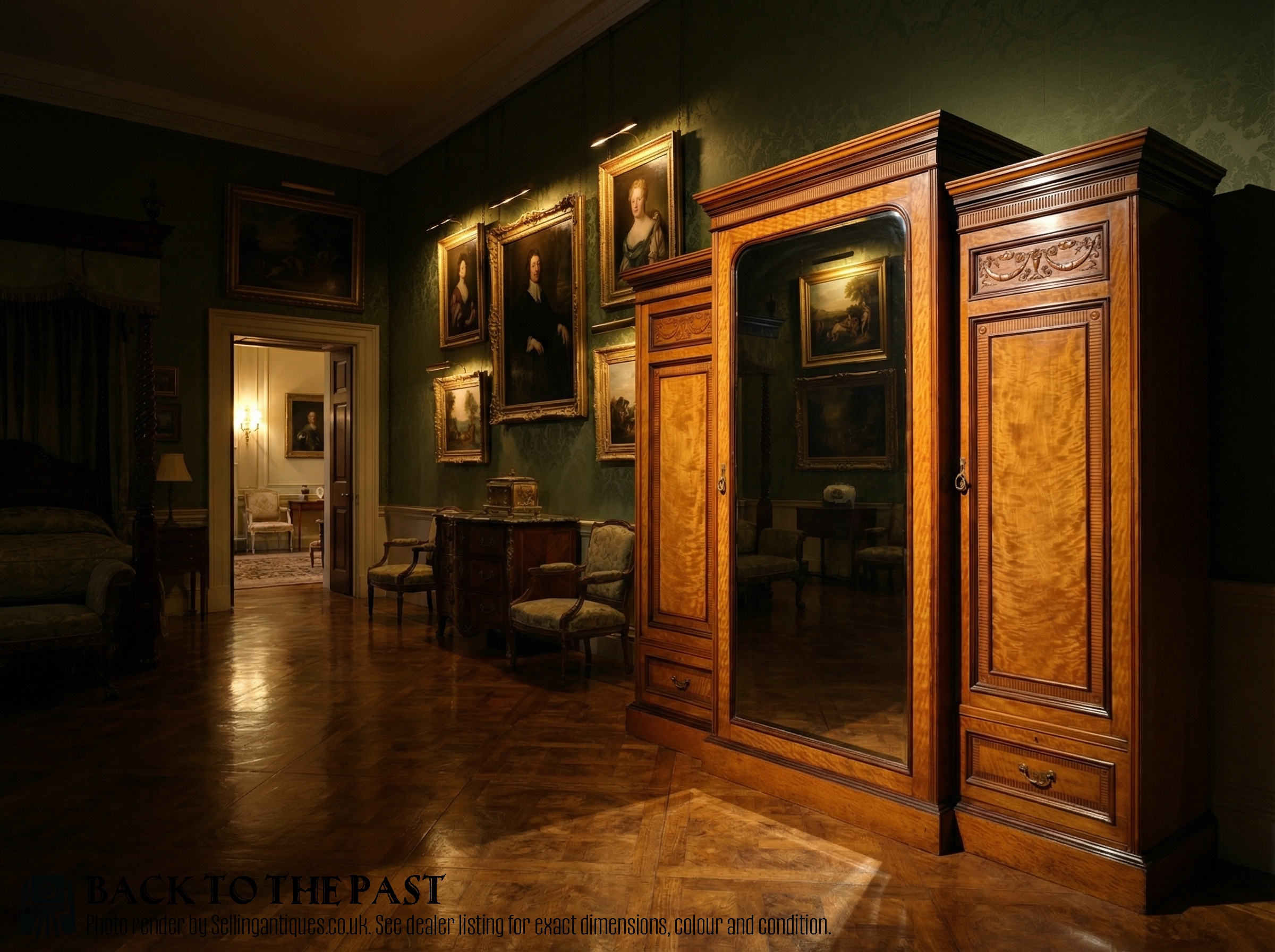
Victorian Mirrored Breakfront Press
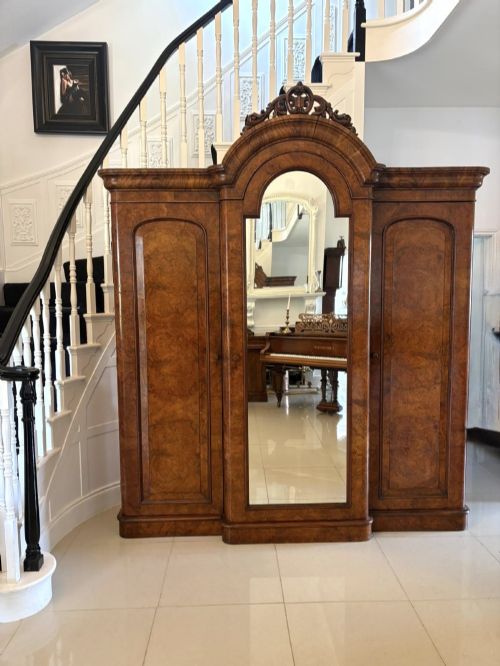
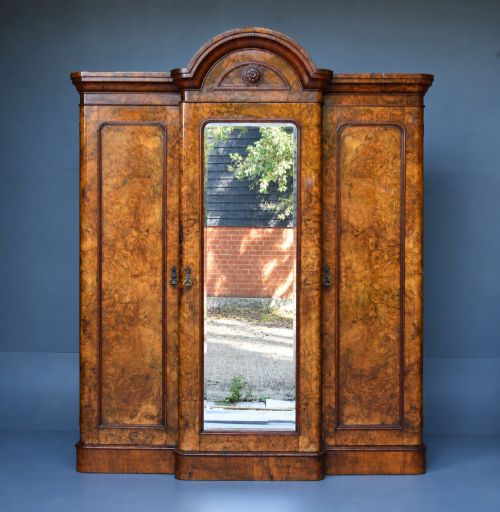
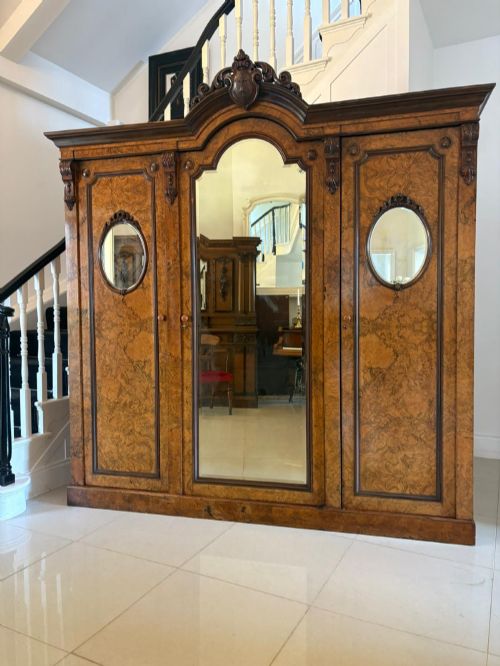
The victorian mirrored breakfront press forms a grand category of bedroom furniture designed for prominent display in large Victorian homes. These pieces typically present as large multi-door wardrobes and armoires featuring a central projecting section flanked by recessed wings, often incorporating mirrored glass door panels.
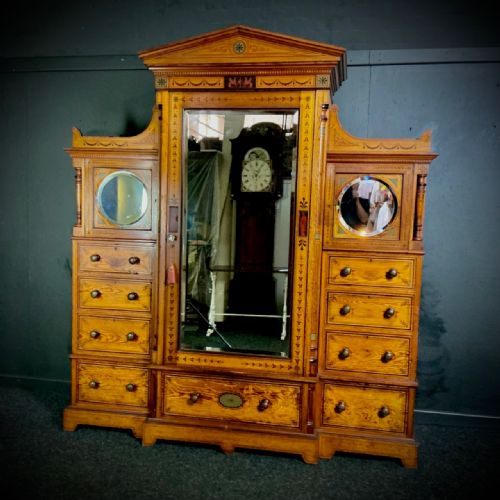
Most examples encountered on this page date from the nineteenth century, specifically spanning the Victorian period through to the late Victorian era and the Aesthetic Movement. Common configurations include triple and four-door formats, gentleman's wardrobes, and occasional modular bedroom units that dismantle for transport.
Makers utilised various timber configurations to create visual impact, ranging from figured mahogany and burr walnut to rosewood, pitch pine, pollard oak, and satinwood inlay. Buyers frequently encounter matching bedroom suites or individual breakfront fitted wardrobes designed to dominate a spacious bedroom interior.
How they were made
Cabinet makers built these large wardrobes using solid timbers and decorative veneers applied to structural frames. Mahogany, burr walnut, rosewood, and pitch pine served as the primary woods, often enhanced with satinwood inlay and detailed mouldings.
Glass production during the period allowed for large bevelled mirror glass door panels, which required sturdy timber framing to support the weight. Brass hardware, including locks, handles, and hanging fittings, completed the interior and exterior construction.
Victorian Mirrored Breakfront Press Retail Price Guide 2026
Typical asking prices for victorian mirrored breakfront press among the pieces listed under this phrase on Sellingantiques today, from the lower quarter to the upper quarter. They describe what is for sale here now, not the wider market.
Listings feature woods including mahogany, burr walnut, rosewood, pitch pine, pollard oak, and satinwood inlay.
What varies in quality
Quality in a victorian mirrored breakfront press rests upon the selection of timber veneers and the intricacy of the cabinet work. Highly figured burr walnut, pollard oak, and detailed satinwood inlay distinguish superior examples from plain pine or simpler mahogany pieces.
Structural complexity also defines the tier of craftsmanship, where multi-door configurations, breakfront architectural shaping, and matching components such as bedside cabinets or fitted interiors indicate higher workshop ambition.
The Victorian Mirrored Breakfront Press Glossary
- Breakfront
- A cabinet design where the central section projects forward from the flanking side sections. This architectural arrangement creates depth and shadow across the facade.
- Compactum
- A multi-functional wardrobe featuring a combination of hanging space, shelves, and linen slides or drawers. It provides comprehensive clothing storage within a single carcass.
- Burr walnut
- Timber taken from a walnut tree growth or burl, displaying intricate swirling grain patterns. Cabinet makers prized this wood for high-status veneering.
- Aesthetic Movement
- A late nineteenth-century design style emphasising visual beauty over narrative meaning. Pieces from this movement often feature refined lines and subtle decorative details.
- Gentleman's wardrobe
- A specialised wardrobe traditionally fitted with sliding linen trays or drawers on one side and a tall hanging compartment on the other.
Victorian Mirrored Breakfront Press: Frequently Asked Questions
Do these wardrobes dismantle for moving?
Many large nineteenth-century wardrobes were constructed to dismantle into modular sections, including the cornice, base, and individual side carcases.
This modular construction made transport and installation into upper-floor bedrooms feasible for Victorian households.
What is a compactum wardrobe?
A compactum is a multi-functional wardrobe designed to house various types of clothing within one unified piece of furniture.
These interiors typically combine hanging space with linen slides, internal drawers, and shelving units.
How do I care for burr walnut veneer?
Burr walnut veneer requires protection from direct sunlight and excessive humidity to prevent timber drying and veneer lifting.
Regular dusting with a soft, dry cloth helps maintain the polished finish without damaging the delicate grain.