
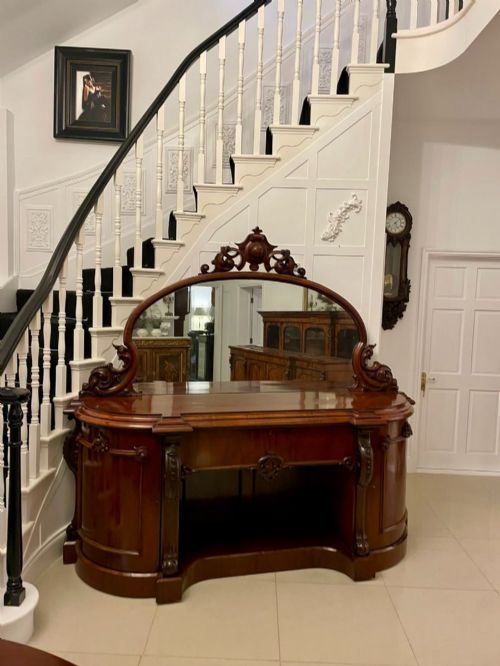
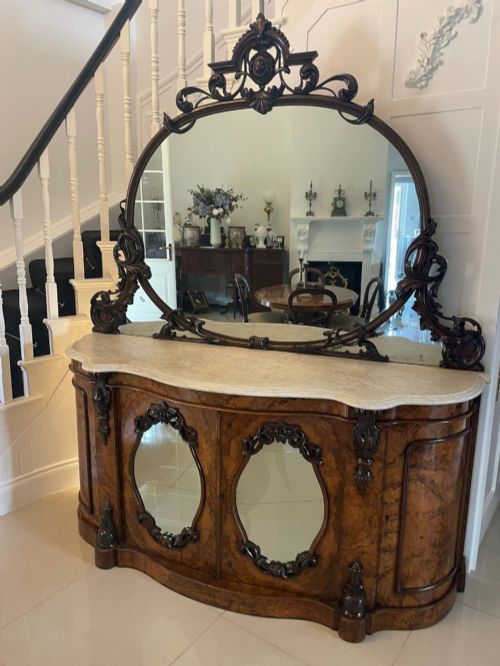
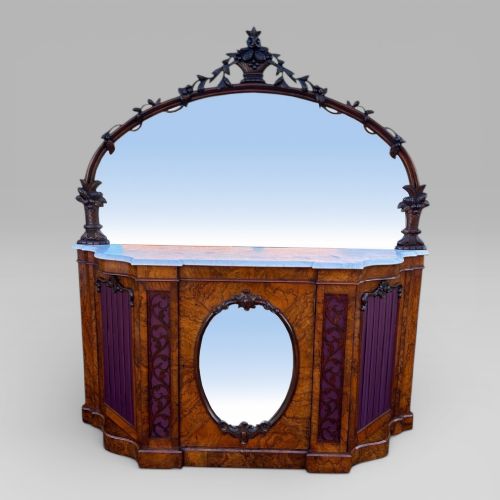
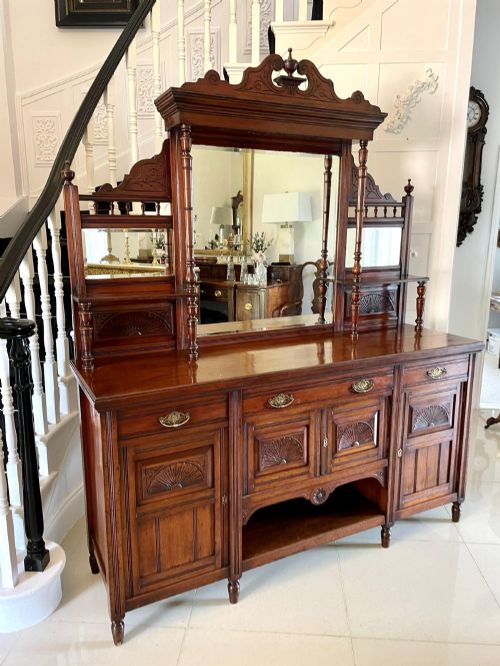
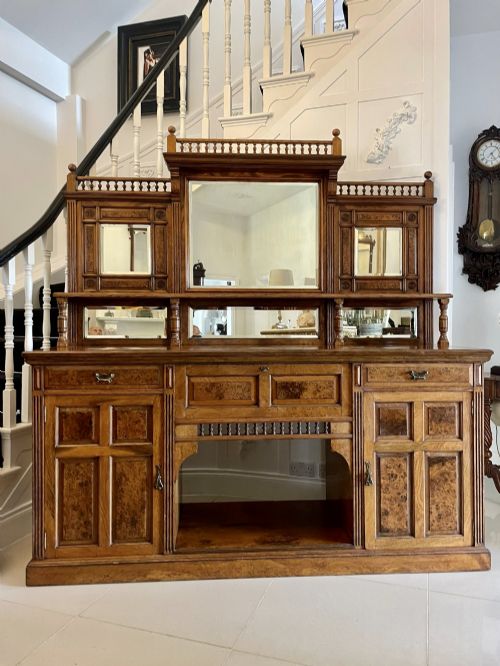
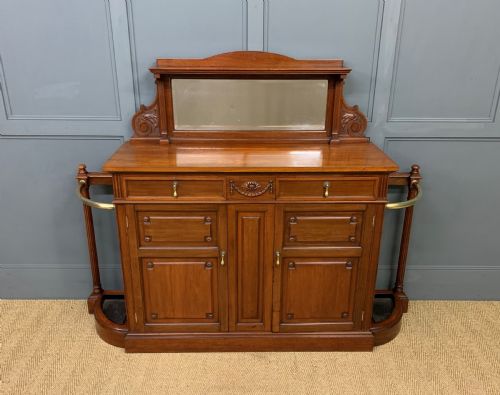
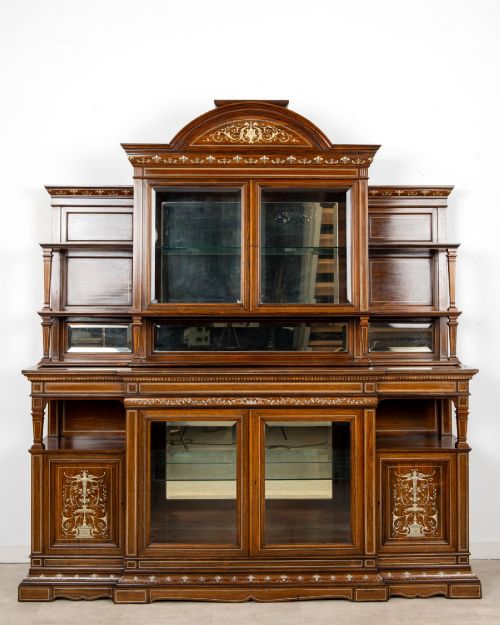
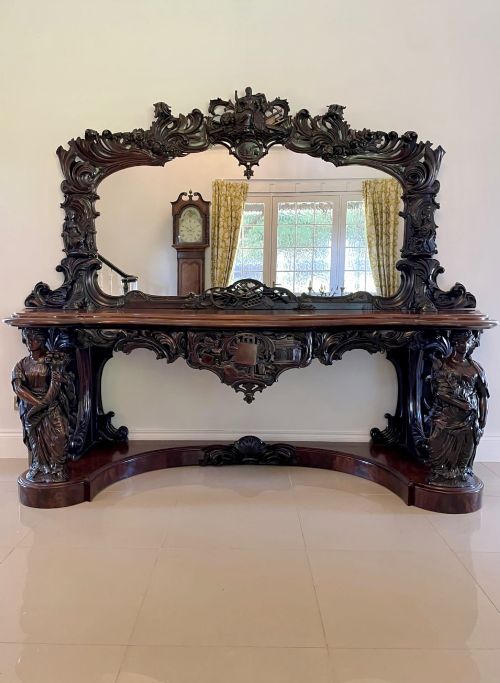
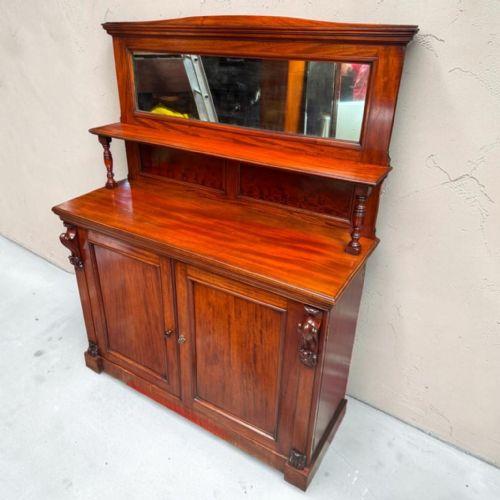
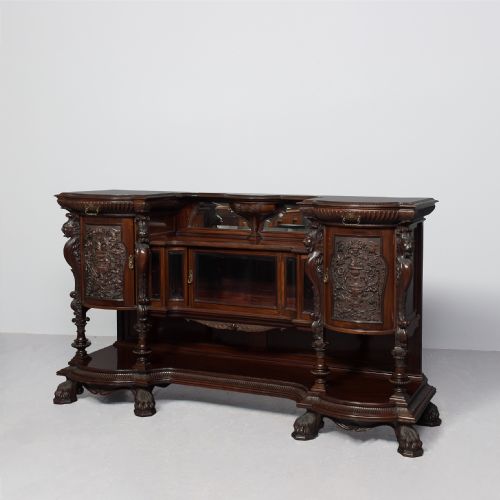
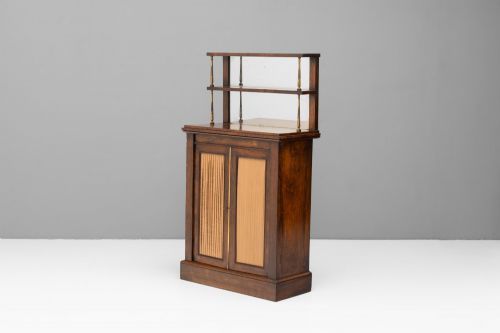
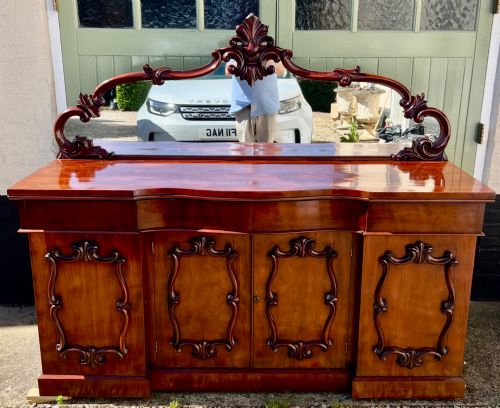
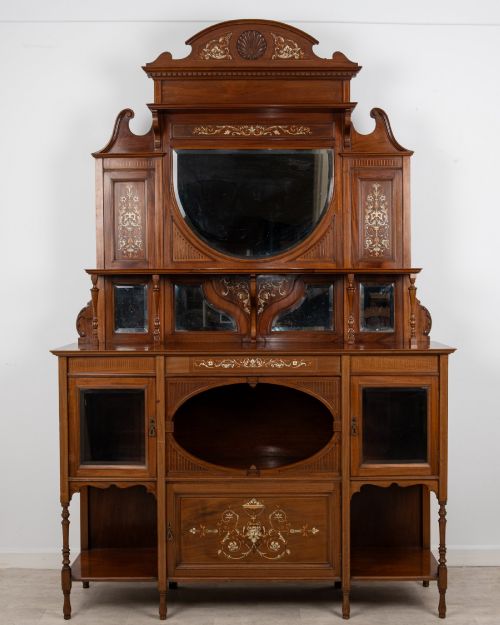

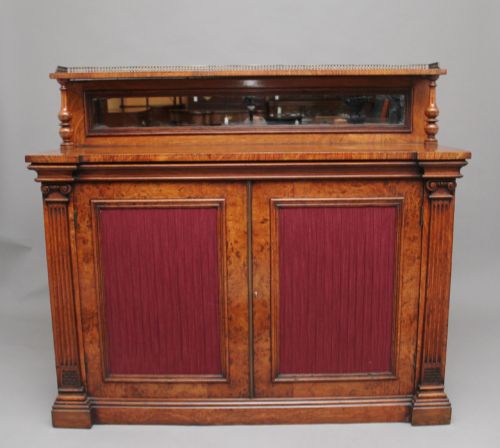

Victorian Mirrored Back Sideboard
These victorian mirrored back sideboard pieces bring deep timbers and reflective glass together to anchor a grand dining room or hall.
Victorian Mirrored Back Sideboard
A victorian mirrored back sideboard combines a substantial timber base of cupboards and drawers with an upright superstructure holding a plate glass mirror. These large dining room and parlour pieces emerge from the nineteenth century in various stylistic revivals, from early Victorian proportions to late Victorian output.
The version most commonly met on this page uses mahogany, burr walnut, or oak, often finished with carved details and architectural cornices. They serve to display ceramics and silver on the surface while reflecting light and interior space through the central glass panel.
Materials and construction
Cabinetmakers select dense hardwoods like mahogany, rosewood, and pollard oak, sometimes applying figured burr walnut or burr yew veneers to prominent surfaces. Carved ornamentation, brass mounts, and inlaid marquetry panels decorate the structural frames of the pedestals and superstructure.
The glass mirror plate is set into a shaped or carved wooden frame attached securely to the rear of the sideboard base. Joinery relies on traditional dovetailing for drawers and robust framing for the heavy doors and plinths.
Several oak sideboards incorporate fierce carved Green Man masks gazing out from the woodwork.
Factors that separate the range
Quality rests in the selection of timber veneers, the depth and crispness of hand-carved elements, and the structural integrity of the heavy base. Pieces designated as exhibition quality display superior figure in the walnut or mahogany, alongside meticulous attention to secondary timbers.
The integration between the mirrored superstructure and the lower sideboard base dictates architectural harmony. Finer examples retain original bevelled mirror glass, intact brass hardware, and balanced proportions across the pedestals and central cabinet doors.
Shoolbred and Co·Collinson and Lock·Holland and Sons·T Simpson and Son
The Victorian Mirrored Back Sideboard Glossary
- Credenza
- A low dining or drawing room cabinet, often synonymous with sideboard forms in nineteenth-century contexts. It frequently incorporates glass doors or mirrored superstructures.
- Chiffonier
- A compact sideboard or cabinet equipped with a shelf or mirror on the upper section. These pieces often serve narrower hallway or parlour spaces.
- Marquetry
- The art of applying decorative veneer pieces in wood to form geometric or floral patterns. This technique appears on late nineteenth-century cabinet doors and friezes.
- Pedestal
- A structural upright support column positioned beneath the main cabinet body. Sideboards often use double pedestals to flank a central recess or cupboard.
Victorian Mirrored Back Sideboard: Frequently Asked Questions
How do I clean the wooden surfaces?
Dust the timber regularly with a soft, dry cloth to prevent particulate buildup on the polished finish. Avoid using silicone sprays or modern household detergents that can degrade antique French polish.
Apply a traditional beeswax sparingly when the wood appears dry, buffing the surface gently after application. Protect the top from moisture and direct heat to preserve the grain and veneer.
Are the mirror plates original?
Many nineteenth-century pieces retain their original mercury or silvered glass mirror plates, which often display subtle foxing or speckling. This oxidation pattern indicates age and authentic period manufacture.
Replacement mirrors generally present a completely clear, uniform reflection without the slight distortions or dark spots characteristic of older glass.
How much weight can the top hold?
The timber top is constructed to support heavy porcelain platters, silver tea services, and decorative bronze objects safely. The internal framework and plinth distribute the downward load evenly across the floor.
Avoid placing excessively heavy stone sculptures or industrial loads on the surface to prevent long-term sagging of the central timber planks.
Can the mirrored back be removed for transport?
The upper mirrored superstructure is typically secured to the lower sideboard base with screws and dowels. Dismantling this joint allows for safer maneuvering through narrow doorways and stairwells.
Mark the alignment points before unscrewing the back frame to ensure the components reassemble squarely without straining the wood.