



Victorian Military Chest Drawers
Victorian military chest drawers are portable campaign furniture designed for officers on the move, combining sturdy timbers and flush brass fittings to withstand travel.
Victorian Military Chest Drawers
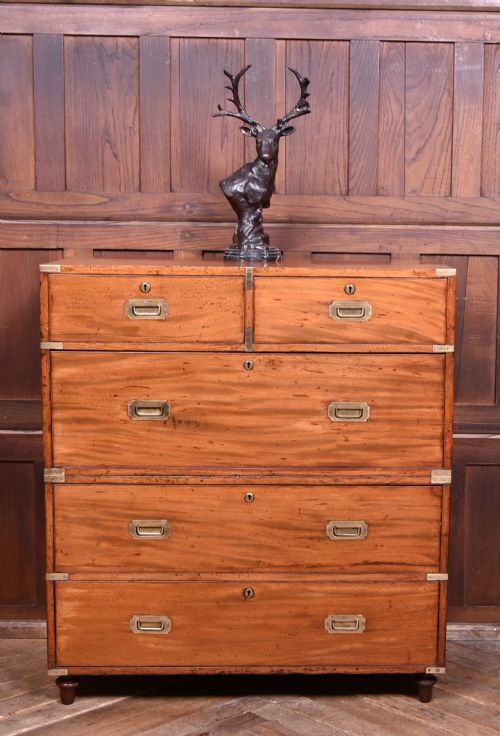
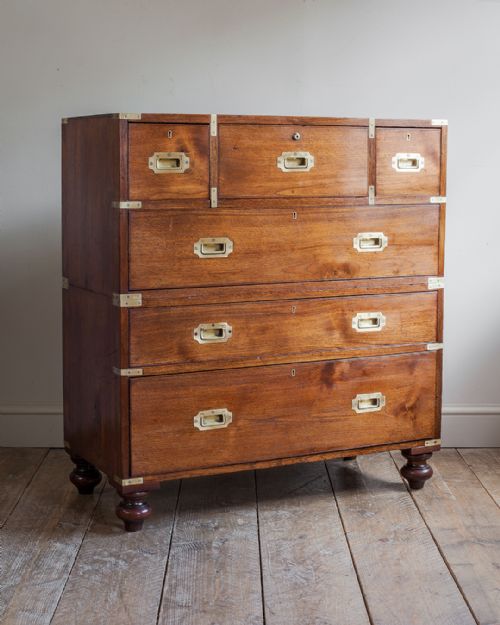
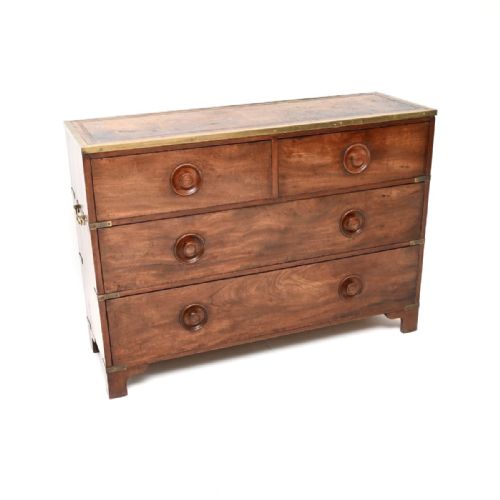
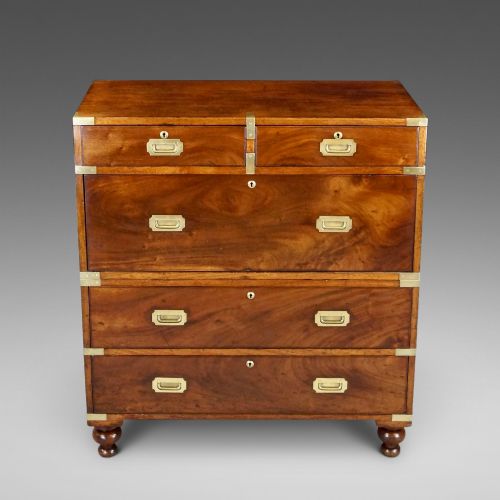
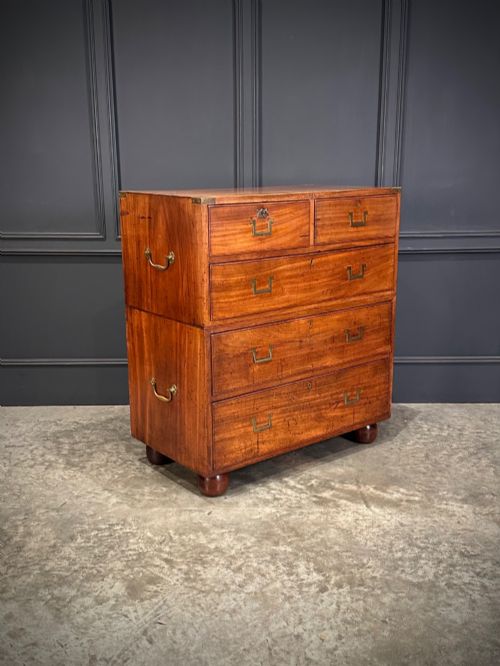
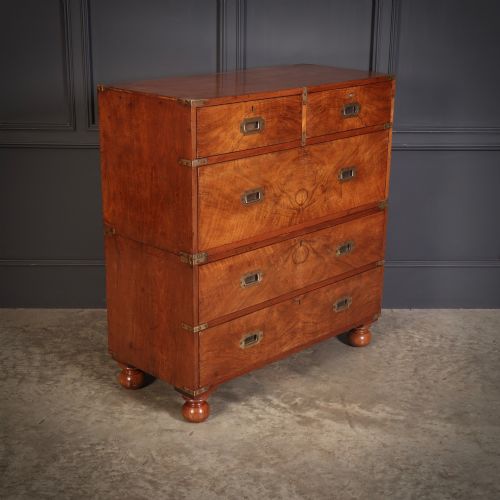
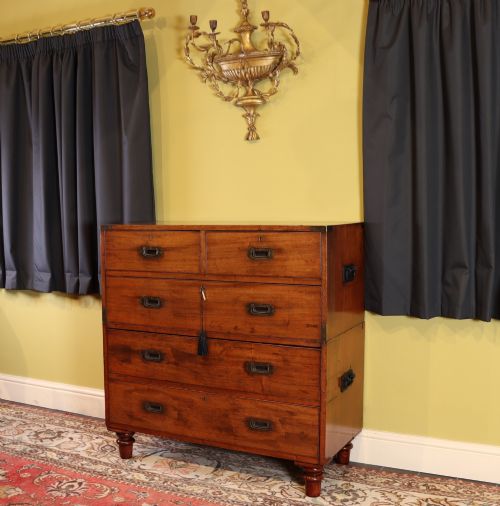
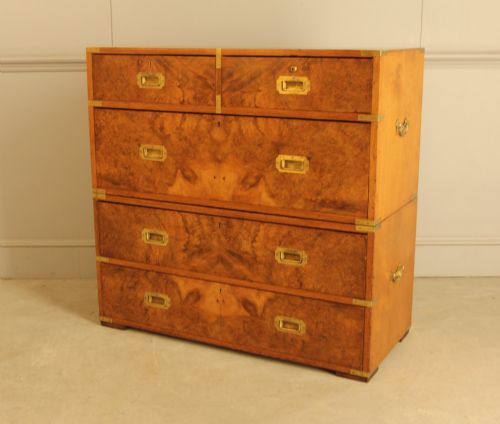
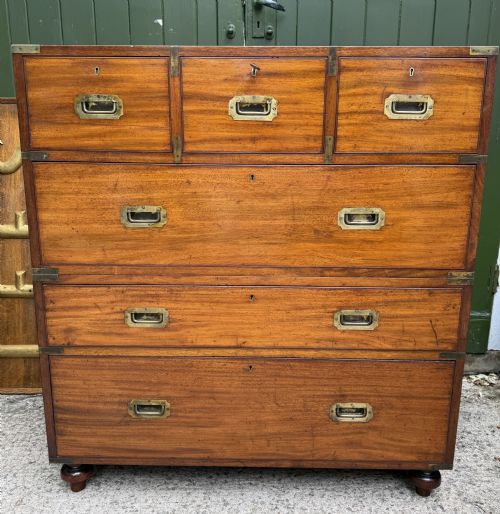
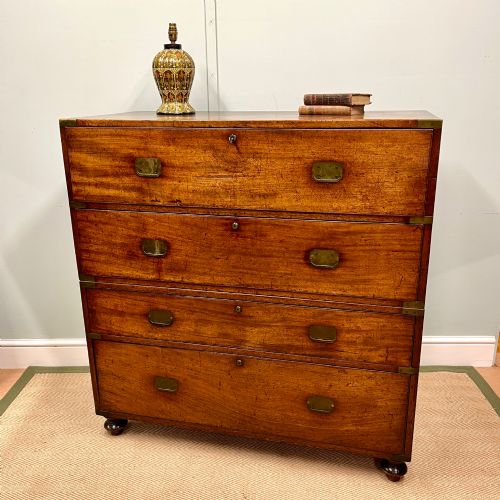
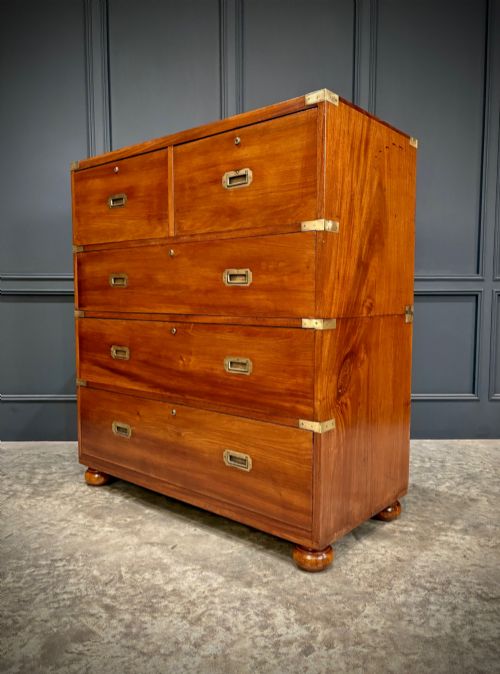
Victorian military chest drawers are practical campaign pieces built in two separate sections for easy transport by sea or land during service. The standard version encountered here is a rectangular mahogany or teak chest with inset brass corner brackets and flush carrying handles.
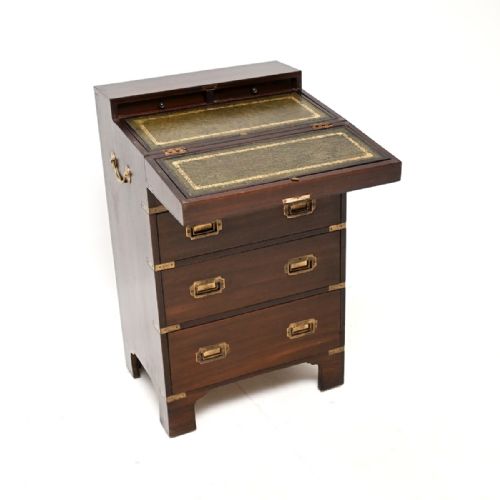
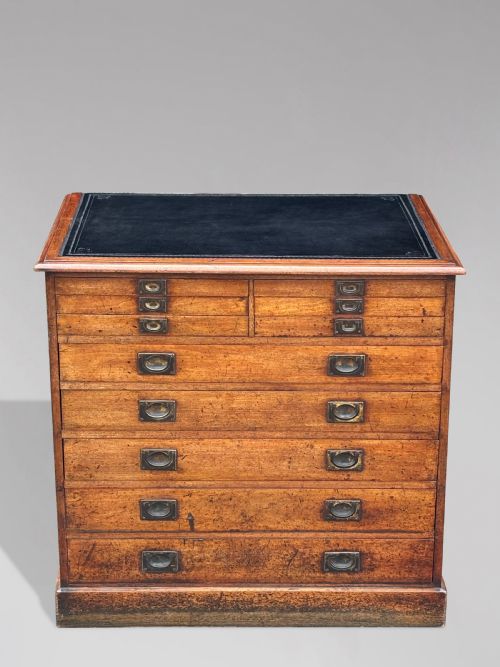
Beyond basic drawer arrangements, many surviving examples incorporate secretaire drawers featuring fitted writing surfaces and small internal compartments. Variants range from compact desktop storage to tall cabinets and bureau forms created for colonial officers.
How they were made
Craftsmen built these chests using dense, durable timbers such as mahogany, teak, camphor wood, and padauk that could endure tropical climates and rough handling. Each section was framed with brass binding screwed securely into the corners and edges to protect the wood from impact.
Hardware was specifically designed to sit flush with the drawer fronts and side panels so that projections would not catch during packing. Recessed ring handles and folding flush drawer pulls allow the exterior to remain entirely flat.
Camphor wood chests carried the added benefit of naturally deterring moths and insects from officers' uniforms during long sea voyages.
What varies in quality
Quality depends heavily on the grade of timber selected and the precision of the joinery, with figured grains like burr walnut or heavily figured mahogany marking the upper end. The thickness of the brass mounts and whether the backboards are finished to the same standard as the front reveal the original maker's intent.
Internal organisation also separates standard pieces from superior examples, particularly fitted secretaire drawers with secret compartments and pigeonholes. Maker signatures stamped into the brass work or drawer linings add a distinct layer of distinction.
S. W. Silver & Co·Ross & Co·Army & Navy·Graves and Sons of Devonport·Arthur Foley & Son of Salisbury
The Victorian Military Chest Drawers Glossary
- Two-part chest
- A piece constructed as two separate box sections stacked vertically, designed to separate for easier transport on military campaigns.
- Secretaire
- A drawer fitted with a drop-front that opens to reveal a writing surface, small pigeonholes, and tiny drawers.
- Campaign furniture
- Portable furnishings built for officers and travellers, characterised by dismantling parts, folding mechanisms, and protective brass hardware.
- Flush handle
- A recessed metal handle set into the wood so it does not protrude beyond the surface of the chest.
- Brass bound
- The technique of reinforcing corners and edges with strips of brass to prevent splitting during transit.
Victorian Military Chest Drawers: Frequently Asked Questions
Why are they built in two sections?
The two-part construction allowed officers to divide a single heavy chest into manageable loads for pack animals, wagons, and ship holds. Each half stands on its own base or locks securely onto the section below.
This modular design was essential for frequent relocation during military campaigns across colonies and foreign postings.
What woods were used for these chests?
Cabinetmakers relied on durable hardwoods capable of resisting humidity and insect damage during overseas service. Mahogany and teak are the most common timbers found on these pieces.
Camphor wood and padauk also appear frequently, often selected for their distinct aromatic qualities and resilience in tropical climates.
Are brass mounts original?
Original brass mounts show consistent patination, wear patterns, and period-appropriate screwheads matching the timber around them. The corners, brackets, and recessed handles were integrated directly into the construction.
Replacement hardware usually lacks the precise flush fit and aged appearance found on untouched nineteenth-century examples.