




Victorian Mary Gregory Glass
Victorian Mary Gregory glass brings distinctive white enamelled figures into nineteenth-century interiors through vibrant coloured vessels.
Victorian Mary Gregory Glass
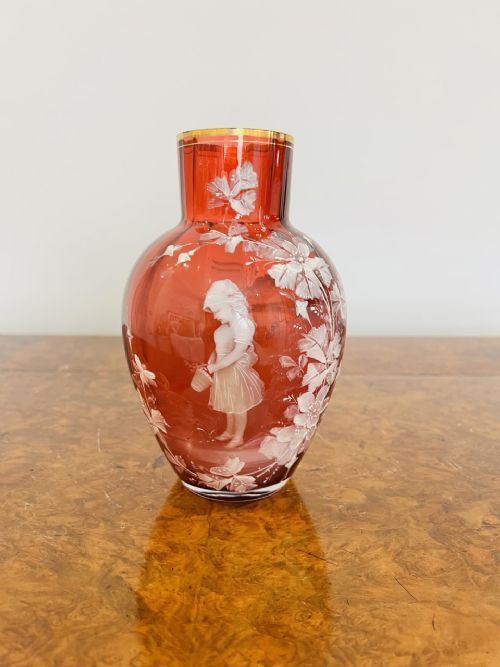
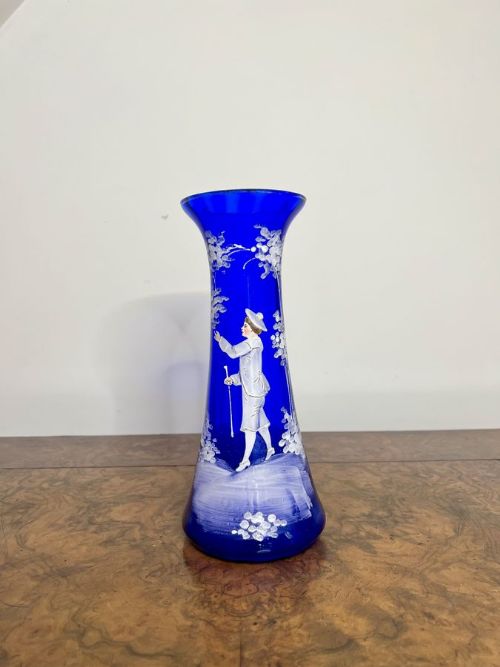
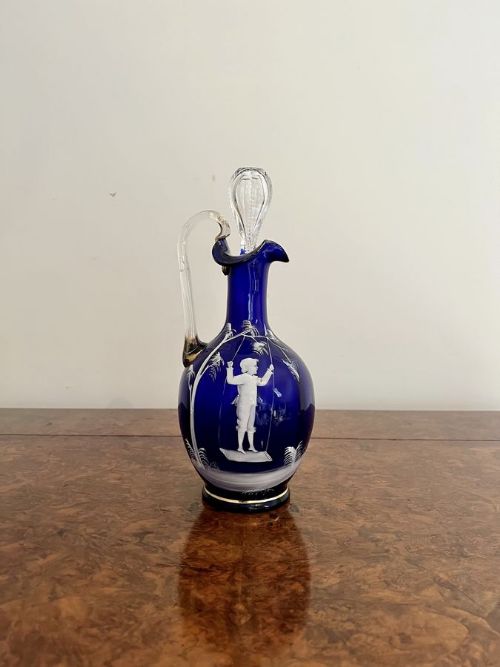
Victorian Mary Gregory glass pieces are decorative items defined by their characteristic painted child figures, predominantly rendered in white enamel. The items on this page span the Victorian era, specifically appearing across dates from eighteen-eighty to nineteen-hundred.
The physical forms include vases, ewers, decanters, and dressing table sets alongside smaller items such as trinket boxes, pill boxes, scent bottles, and beakers.
Coloured glass bodies provide the contrasting backdrop for these painted scenes, with cranberry glass and green glass appearing most frequently alongside blue, amethyst, yellow, cobalt, and black glass.
Materials and technique
Glassmakers created the coloured vessels using various mineral oxides to achieve shades like cranberry, cobalt, and olive green. Some pieces incorporate gold leaf highlights alongside the primary white enamel paint.
The distinctive white enamel is applied by hand to depict silhouetted children amongst foliage, landscapes, or branches. Certain items also feature fitted silver mounts attached to the glass body.
Victorian children painted in white enamel forever chase butterflies across brightly coloured glass.
Evaluating the pieces
The refinement of the painted white enamel work dictates the visual success of the piece, separating hurried brushwork from careful detail in the figures and foliage. The depth and clarity of the coloured glass ground also contribute to the overall impact.
Proportion and form matter greatly, particularly in functional items like ewers, decanters, and dressing table components where the balance between glass body and painted motif requires a steady hand.
The Victorian Mary Gregory Glass Glossary
- Enamel paint
- Opaque vitreous composition applied to the glass surface and fired to adhere. This medium forms the characteristic white figures found on these vessels.
- Cranberry glass
- Rich pinkish-red glass produced by adding gold chloride to the molten batch. It serves as one of the most common background colours for these painted wares.
- Ewer
- A large jug with a wide spout and a handled body, often used historically for water or wine. Several examples appear among these decorative glass items.
- Trinket box
- A small lidded container designed for storing jewellery or small personal items. These boxes often feature hinged or fitted metal mounts.
Victorian Mary Gregory Glass: Frequently Asked Questions
What is Mary Gregory glass?
It is nineteenth-century coloured glassware decorated with hand-painted white enamel figures, typically depicting children playing in natural settings.
While traditionally attributed to a specific decorator or factory, the term now encompasses a broad range of Victorian decorative items sharing this distinct aesthetic.
How do I date these pieces?
Most examples originate from the Victorian period, spanning the mid to late nineteenth century through to around nineteen-hundred.
Examination of the glassblowing technique, the style of the enamel work, and any applied silver mounts helps establish the approximate decade of manufacture.
Where were these items placed?
They served primarily as decorative objects for display in parlours, drawing rooms, and bedrooms on mantelpieces, cabinets, and dressing tables.
Smaller items like scent bottles and pill boxes functioned as personal accessories or vanity items rather than purely static displays.
How should I clean them?
Dust gently with a soft, dry cloth to protect the delicate white enamel surface from abrasion. Avoid immersion in water, especially on pieces with silver mounts or gold leaf details.