


Victorian Marquetry Furniture
These pieces of victorian marquetry furniture combine precise wood veneers with solid timbers to create surface patterns that catch the eye in any room.
Victorian Marquetry Furniture
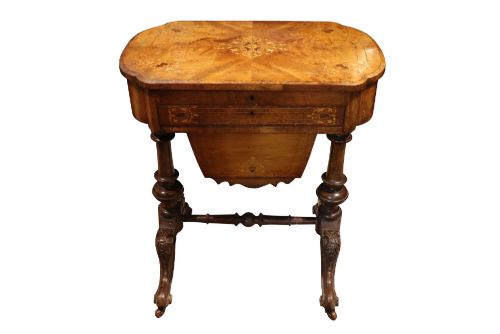
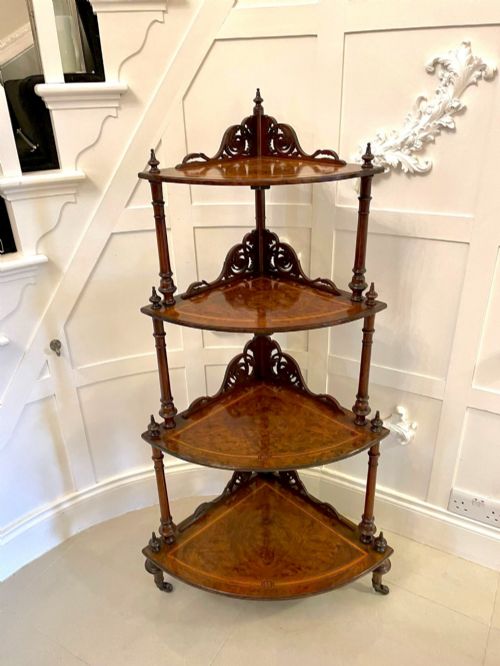
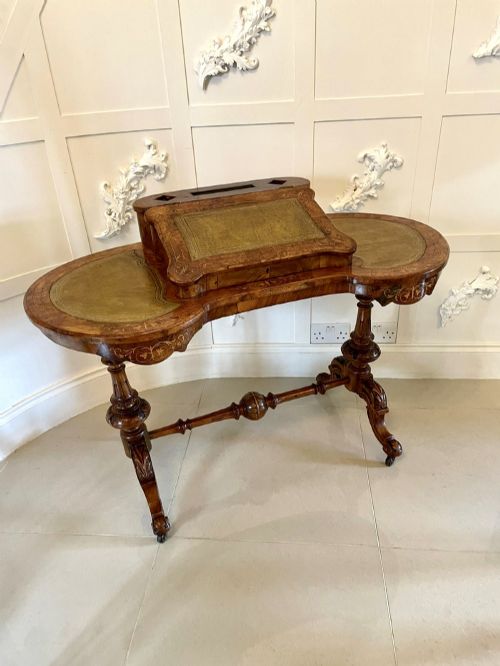
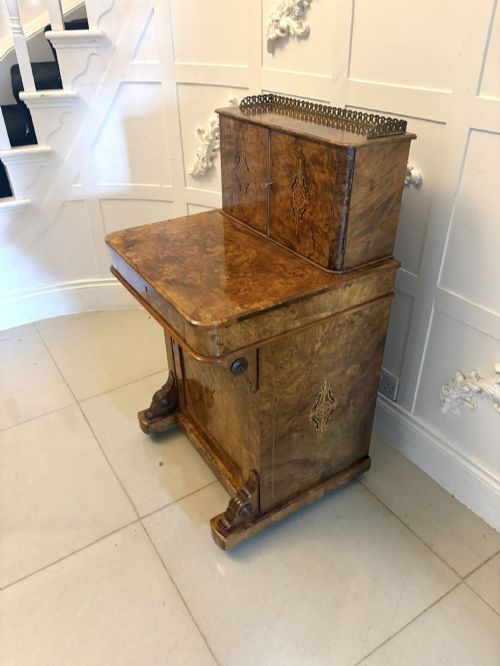
When searching for victorian marquetry furniture, buyers encounter a diverse selection of practical domestic forms spanning the nineteenth century. The most common pieces on this page include walnut and mahogany centre tables, occasional tables, games tables, and writing desks produced during the Victorian period.
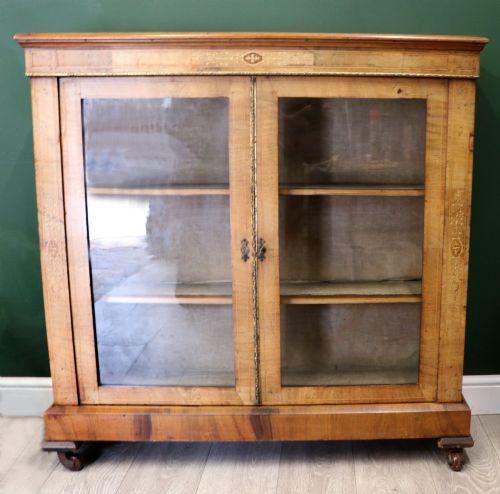
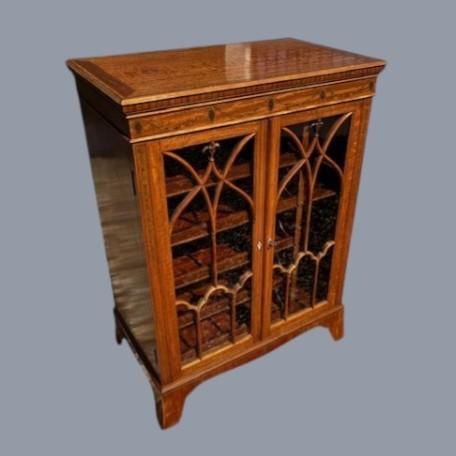
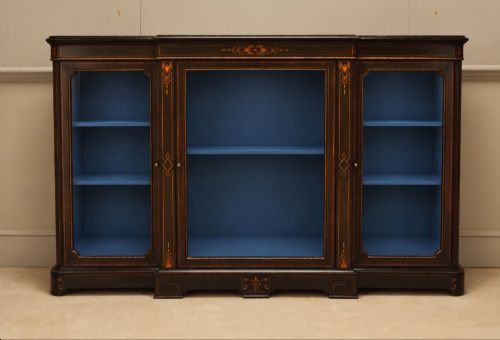
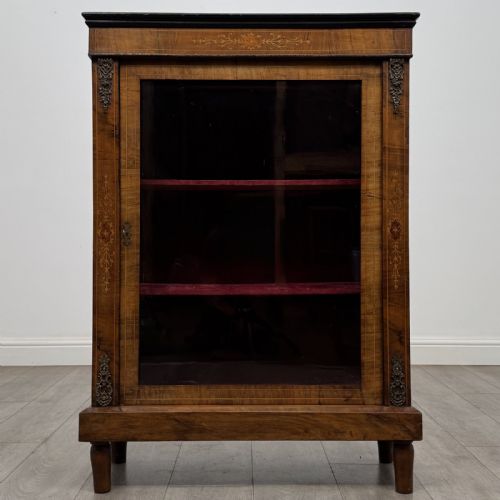
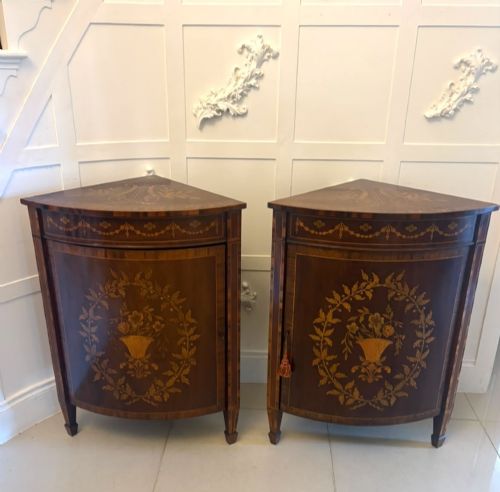
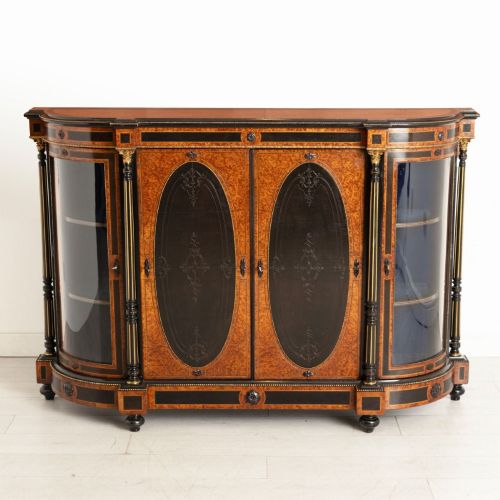
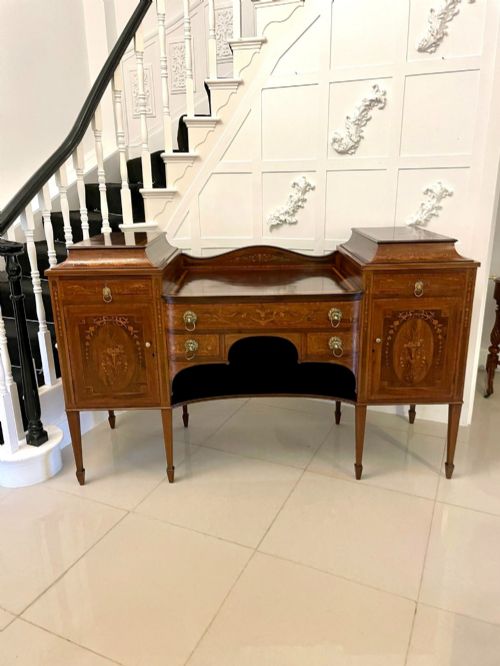
Beyond tables and desks, the selection encompasses display cabinets, corner cabinets, credenzas, and sideboards shaped in walnut, rosewood, and ebonised wood. These items served formal reception rooms and private chambers alike, demonstrating the broad utility of decorative woodwork in nineteenth-century interiors.
Regional variations extend beyond standard British output to include French revival styles, Dutch pieces, Anglo-Indian tables, and Swiss Black Forest work. Each origin brings distinct timber selections and contrasting pictorial motifs to the category.
Craftsmanship and Material Depth
Quality rests in the precision of the veneer work and the depth of the underlying timbers, particularly the choice of burr walnut or figured mahogany. Superior examples display tight, seamless joints within the marquetry panels where different wood species meet without visible gaps.
The secondary framing and interior construction reveal the standard of workshop output, distinguishing standard commercial production from pieces bearing maker attributions. Sophisticated mechanisms on games tables or writing desks indicate higher manufacturing ambition.
Victorian Marquetry Furniture Retail Price Guide 2026
Typical asking prices for victorian marquetry furniture among the pieces listed under this phrase on Sellingantiques today, from the lower quarter to the upper quarter. They describe what is for sale here now, not the wider market.
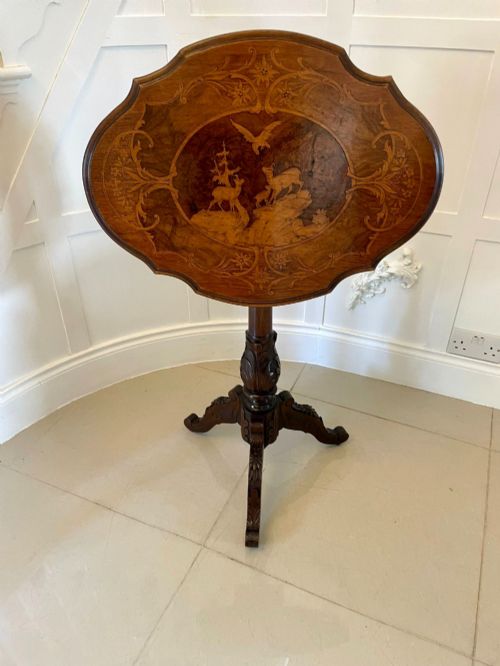
Swiss Black Forest tables arrive bearing subtle carved animal motifs alongside intricate wood inlays.
Hewetsons London·Gillows·Lamb of Manchester·Liberty and Co
The Victorian Marquetry Furniture Glossary
- Marquetry
- Decorative veneer work forming pictures or patterns by fitting together small pieces of wood or other materials. This technique defines the visual surface of the category.
- Burr walnut
- Wood taken from a tree growth featuring swirling grain patterns. Cabinet makers prized this timber for its rich texture.
- Ormolu
- Gilt-bronze mounts applied to furniture edges and corners. These decorative metal additions highlight the structural lines.
- Ebonised
- Timber treated to resemble ebony through staining and polishing. This process creates a dark, uniform background for inlay.
- Credenza
- A low side cabinet used for storage and display in Victorian dining rooms. They often incorporate extensive marquetry panels.
Victorian Marquetry Furniture: Frequently Asked Questions
What is victorian marquetry furniture?
Victorian marquetry furniture comprises nineteenth-century household furnishings decorated with fitted wood veneers that form floral, geometric, or pictorial patterns. These pieces range from small occasional tables to large display cabinets.
Craftsmen built these items using dense hardwoods like walnut and mahogany as a base for intricate surface designs. The style reflects a period of high decorative ambition in British and European cabinet making.
How do I care for marquetry surfaces?
Protect marquetry surfaces by keeping them away from direct sunlight and maintaining steady room humidity. Extreme temperature shifts can cause the thin wood veneers to lift or crack over time.
Apply a mild furniture wax occasionally and polish gently with a soft cloth to maintain the timber's natural lustre. Avoid using liquid cleaners or heavy commercial polishes.
Where were these pieces used?
These items originally populated the drawing rooms, parlours, and dining spaces of nineteenth-century homes. Tables and games surfaces stood in central gathering areas, while cabinets displayed collections.
Today, buyers place these functional antiques in modern living rooms and hallways where their decorative wood patterns complement contemporary interiors.
How do I identify different furniture styles?
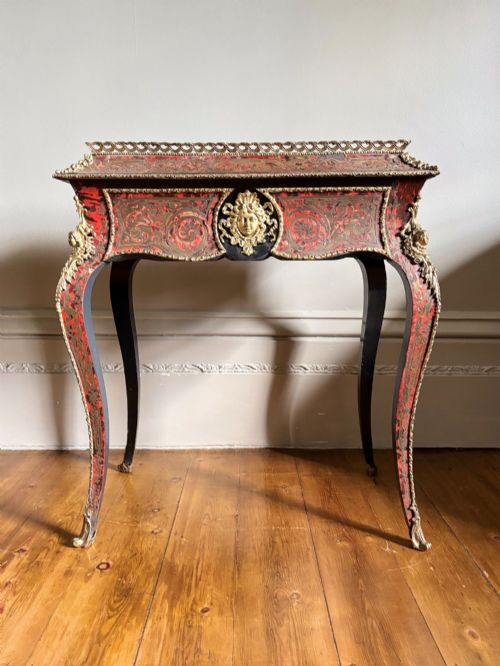
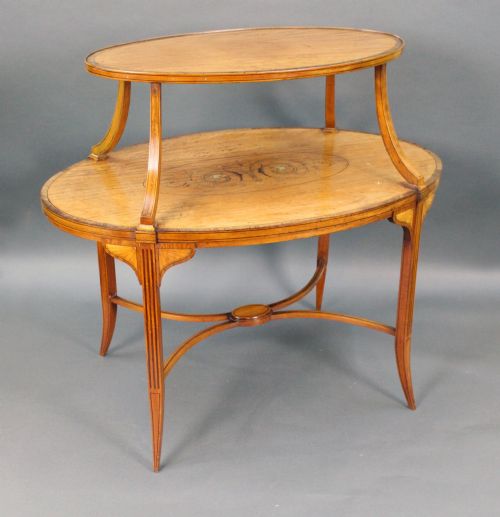
Identify styles by examining the overall silhouette, leg shapes, and specific decorative motifs applied to the wood carcase. Sheraton revival pieces show lighter satinwood tones, while French revival items often feature curved lines and ormolu mounts.
Reference the primary timber species and inlay subjects to narrow down the geographic origin and production decade.