



Victorian Marquetry Card Table
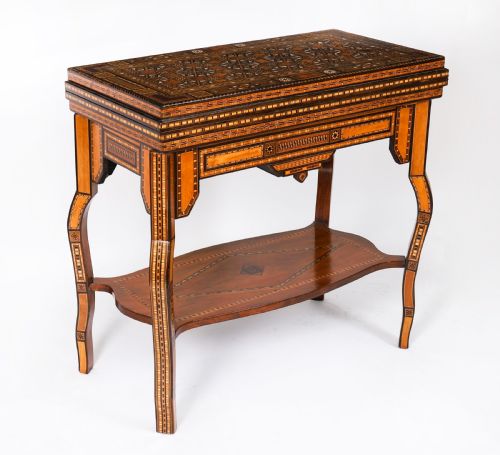
A victorian marquetry card table brings folding surfaces and detailed wood patterns together for formal entertaining.

Victorian Marquetry Card Table
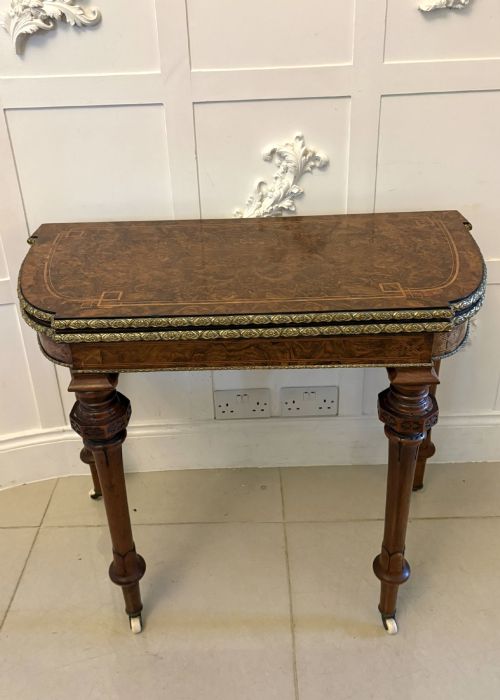
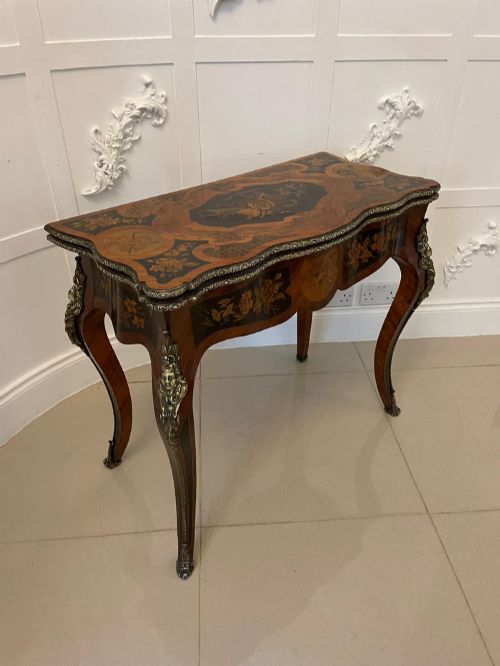
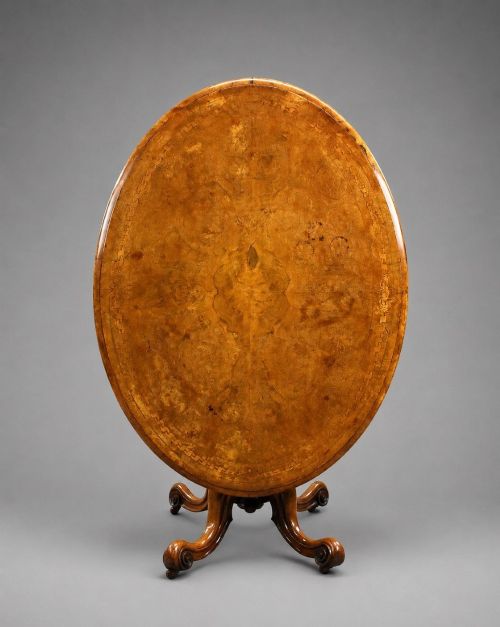
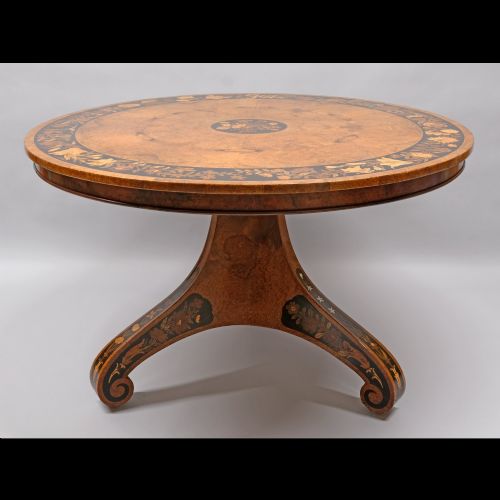
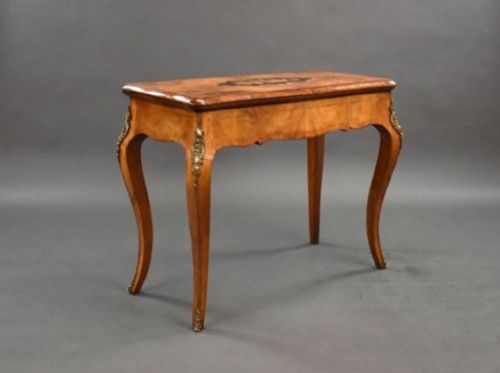
A victorian marquetry card table is primarily encountered in burr walnut, rosewood, and kingwood across this collection, shaped for nineteenth-century reception rooms.
The pieces include fold-over tops, swivelling mechanisms, and envelope designs that conceal baize-lined playing surfaces beneath rotating leaves.
Originating in the nineteenth century, these tables reflect various revival movements including Louis XV styles and French influences.
Materials and Techniques
Craftsmen built these tables using solid timber frames faced with decorative veneers of burr walnut, rosewood, and kingwood.
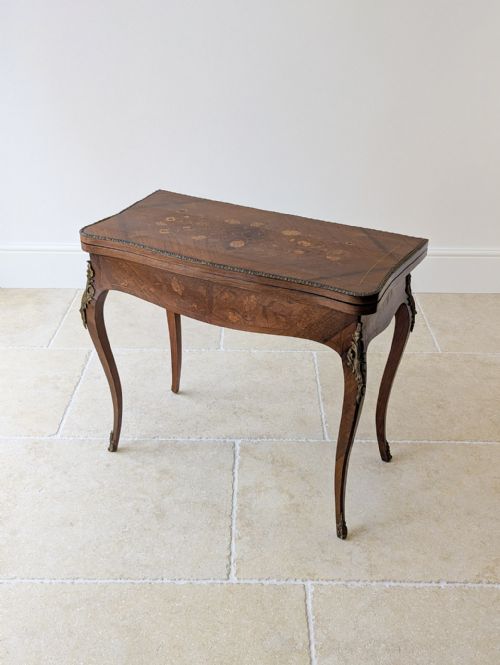
Detailed marquetry and wood inlay utilise boxwood and exotic species to create floral and geometric motifs across the top surfaces.
Ormolu mounts, brass details, and occasional mother-of-pearl embellishments accent the corners, edges, and aprons.
Listings feature walnut, rosewood, and kingwood surfaces decorated with floral marquetry and ormolu mounts.
Judging Quality
The refinement of the marquetry cutting and the choice of highly figured burr veneers distinguish standard examples from exhibition pieces.
The precision of the swivel or fold-over mechanism and the weight of the cast ormolu mounts indicate workshop standards.
Holmes Baldock·Maple and Co·Edwards and Roberts·Henry Dasson
The Victorian Marquetry Card Table Glossary
- Marquetry
- A technique where small pieces of veneer are assembled to form pictorial or decorative patterns on a wooden surface. It differs from inlay by covering the entire background.
- Ormolu
- Gilded bronze mounts applied to furniture for decorative effect. These metal accents define revival styles of the nineteenth century.
- Envelope table
- A card table with a square top formed of four triangular flaps that rotate and open outwards. The design reveals a felt-lined playing surface.
- Burr walnut
- Wood taken from the abnormal growth of a walnut tree, producing swirling and mottled grain patterns. It forms the primary visual surface on many nineteenth-century examples.
- Cross-banding
- A strip of veneer applied to the border of a tabletop with the grain running perpendicular to the centre. This frames the main marquetry panel.
Victorian Marquetry Card Table: Frequently Asked Questions
How do you open the top?
Most models feature a fold-over leaf that swivels ninety degrees to reveal a compartment for cards before dropping flat onto the base frame.
Envelope versions require lifting individual triangular flaps that pivot open from a central axis to expose the felt playing surface.
What woods were used?
Makers relied heavily on burr walnut, rosewood, and kingwood for the primary surfaces and structural carcases.
Boxwood, satinwood, and various exotic timbers provided the contrasting tones required for detailed marquetry and inlay work.
Are they sturdy enough for daily use?
These tables served primarily for occasional gaming and entertaining in nineteenth-century reception rooms rather than heavy daily service.
The folding and swivelling joints require gentle handling to preserve the alignment of the top and the surrounding veneers.
How do you date a piece?
Stylistic markers such as Ormolu mounts, French revival shapes, and specific veneer choices align pieces with the broader nineteenth-century timeline.
Maker stamps and construction methods visible beneath the chassis provide additional context for determining the period of production.