


Victorian Maritime Wall Decor
Victorian maritime wall decor brings the nineteenth-century sea into a room through timber, brass, and painted canvas.
Victorian Maritime Wall Decor
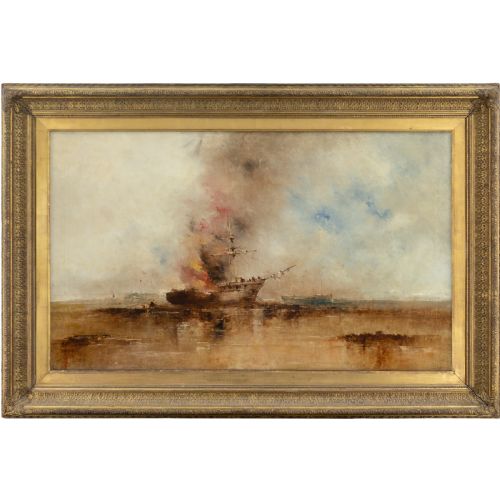
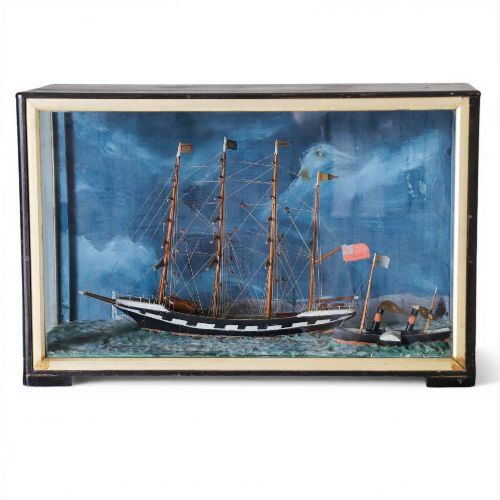
Victorian maritime wall decor encompasses paintings, shadow box dioramas, and nautical instruments that capture nineteenth-century shipping and coastal life. Buyers seeking these pieces will encounter oil paintings of burning ships, framed watercolours of coastal scenes, and deep dioramas.
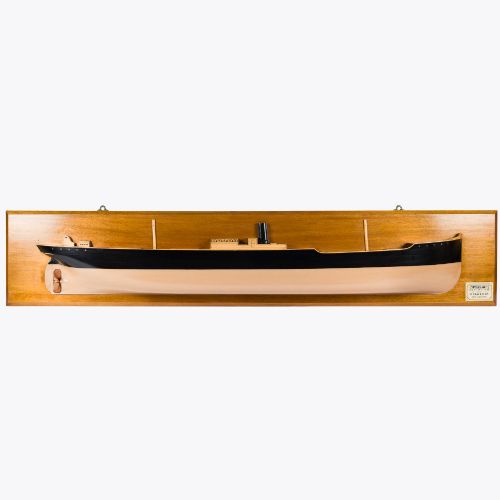
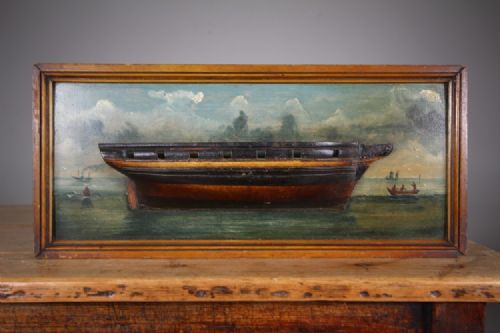
The objects stem from the Victorian era and the broader nineteenth century, reflecting Britain's maritime dominance through detailed depictions of steel hull ships, fishing boats, and naval reviews. Shadow box dioramas and half hull models offer three-dimensional depth, merging carpentry with marine art.
Framed watercolours and oil paintings dominate the visual selections, often focusing on specific vessels like the Sindia or historical events such as the burning of HMS Bombay. These works utilise traditional canvas, paper, and wood to record the sea trades and coastal towns.
Materials and Technique
Makers utilised oil paint on canvas and watercolour on paper to capture coastal scenes, often enclosing ship models within glazed shadow boxes. Wood served as the primary material for frames, half hull models, and ship's wheels, while brass appeared in instruments, portholes, and hardware.
Folk art dioramas combined carved wooden ship elements with painted plaster or paper backgrounds to create layered nautical scenes. Structural integrity relied on heavy teak and oak frames, housing fragile glass panels that protected delicate watercolours and paper components.
Sailors occasionally carved intricate shadow box dioramas during long voyages, using scrap wood and canvas.
Judging Quality
Quality rests upon the precision of the maritime draughtsmanship, particularly in the rigging of ships and the rendering of coastal light by named artists. Lesser pieces display generic seascapes with stiff proportions, whereas superior works capture the specific architecture of barques and steam barges.
The depth and preservation of shadow box dioramas dictate their standard, with finer examples retaining original painted backgrounds and undisturbed miniature rigging. Original paint surfaces on wooden elements, such as ship's wheels, distinguish untouched folk art from later restorations.
William McAlpine·W. Grey and Co·Dewrance of London·Richard Brydges Beechey·Liverpool Ship Building Co·James Kinnear·Thomas Bush Hardy·Arthur Joseph Meadows
The Victorian Maritime Wall Decor Glossary
- Half Hull Model
- A three-dimensional wooden representation of a ship's one side, used by shipbuilders to design hull forms. These models hung in offices and shipyards for display.
- Shadow Box Diorama
- A deep, glazed frame enclosing a model ship set against a painted background. This construction creates a three-dimensional maritime scene protected behind glass.
- Barque
- A sailing vessel with three or more masts, where the aft mast is rigged fore-and-aft and the others are square-rigged. This rig appeared frequently in nineteenth-century shipping trades.
- Watercolour
- A painting method using water-soluble pigments on paper. Maritime artists employed this technique for rapid coastal sketches and finished marine scenes.
Victorian Maritime Wall Decor: Frequently Asked Questions
How do I hang a heavy ship's wheel?
Hanging a large teak or oak ship's wheel requires securing heavy-duty fixings directly into structural wall studs. Because these items combine substantial timber and brass components, wall anchors must support considerable weight.
Ensure the mounting bracket engages the central hub or rear rim securely to distribute the load evenly.
Are these paintings original Victorian works?
The paintings listed date from the nineteenth century, produced during the Victorian and Edwardian periods. Artists utilised oil on canvas and watercolour on paper to record contemporary shipping and coastal views.
Signatures and historical references within the titles link many works to known marine painters and specific maritime events.
How do I clean antique glass and wood?
Dust wooden frames and shadow boxes gently with a dry, soft cloth to protect aged finishes and painted surfaces. Avoid using harsh chemical polishes on nineteenth-century timber and folk art paint.
Clean glass panels with a minimal amount of window cleaner applied to a cloth rather than sprayed directly, preventing moisture from seeping behind the frame.