


Sailing Ship Display Case
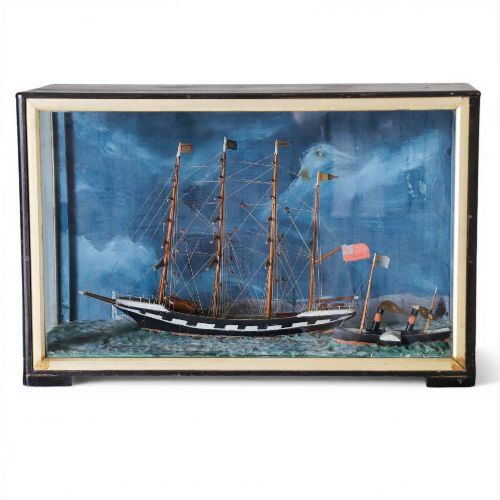
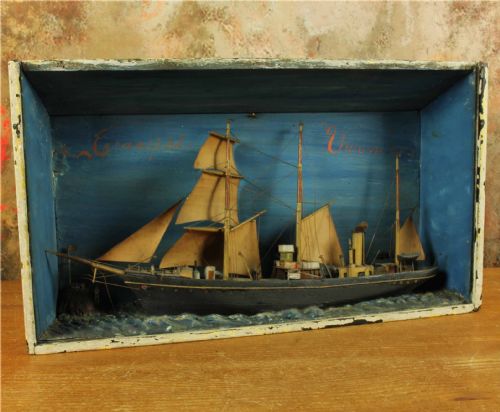
These sailing ship display case pieces bring maritime history into a room, offering miniature worlds crafted by hand over a century ago.
Sailing Ship Display Case
A sailing ship display case brings together a handmade model vessel and a protective glazed enclosure, creating a miniature marine scene. When searching for a sailing ship display case, a buyer encounters shadow box dioramas and cased models from the nineteenth century through the nineteen-thirties.
The pieces on this page span several distinct forms, including shadow box dioramas, scratch-built scale models, and framed wall art. Makers constructed these displays to preserve the likenesses of specific vessels, such as the Glynllifon, or to depict broader maritime encounters.
Most examples originate from the nineteenth century and the Edwardian period, often reflecting the traditions of maritime folk art. Buyers frequently find pieces featuring single vessels, racing pairs, or detailed coastal settings framed behind glass.
How they were made
Makers constructed these models using wood, canvas, and fabric to shape hulls and riggings, frequently applying paint to render realistic seas and skies. Many examples incorporate textured elements like plaster to build up the churning waves of a turneresque seascape.
Makers enclosed these delicate models within wooden boxes fronted by glass, protecting the painted canvas and intricate cordage from dust and damage. Certain pieces incorporate specialised techniques, such as straw work, to decorate the surrounding case with geometric patterns.
Listings feature pieces spanning the nineteenth century, the Edwardian period, and the nineteen-thirties, constructed from wood, glass, paint, plaster, canvas, fabric, brass, and gilt.
What varies in quality
Quality rests in the precision of the scale model and the depth of the painted backdrop, which together create a convincing sense of perspective. Superior pieces capture the exact rigging and character of named vessels rather than relying on generic forms.
The Sailing Ship Display Case Glossary
- Shadow Box Diorama
- A deep, glazed frame containing a three-dimensional scene built up from painted backgrounds and physical models. This construction protects delicate maritime folk art from the elements while creating optical depth.
- Barque
- A sailing vessel with three or more masts, where the foremast and mainmast are square-rigged and the mizzenmast is fore-and-aft rigged. Model makers frequently replicated this configuration for its distinctive silhouette.
- Ketch
- A two-masted sailing boat where the smaller rear mast sits forward of the steering rudder stock. These compact vessels were common subjects for early twentieth-century makers.
- Straw Work
- A decorative craft utilising flattened strips of dried straw to form geometric patterns and pictures on wooden surfaces. In maritime pieces, this technique occasionally adorns the interior mouldings of the display box.
- Maritime Folk Art
- Objects created by self-taught makers, sailors, or local craftspeople working outside formal academic traditions. These pieces prioritise direct observation and ingenuity over standardised manufacturing.
Sailing Ship Display Case: Frequently Asked Questions
Where were these dioramas made?
Many of these pieces originated in coastal communities and workshops across Europe, with specific examples documenting French and English craftsmanship. Sailors and local artisans constructed them to record notable vessels.
Makers utilised materials readily to hand, including wood, canvas, and paint, to build accurate representations of schooners, barques, and racing ships.
How do I hang a wall diorama?
Shadow box dioramas require secure wall fixings suited to the weight of the timber case and the front glass panel. Ensure the hanging wire or brackets engage directly with the structural frame of the box.
Position the display away from direct sunlight and damp environments to protect the fragile painted canvas and wooden components inside.
How do I date an antique ship model?
Dating relies on the construction techniques of the wooden case, the style of the painted seascape, and any inscribed details or names on the vessel. Nineteenth-century examples often display simpler folk art characteristics.
Later pieces from the Edwardian era or the nineteen-thirties tend to show more refined scale model techniques while retaining handmade wooden components.
How do I clean the glass?
Clean the exterior glass gently with a standard glass cleaner applied to a cloth rather than sprayed directly onto the frame. This prevents moisture from seeping past old seals into the delicate interior.
Avoid touching the painted canvas or the model itself inside the case, as the materials are fragile and sensitive to disturbance.