




Ship Diorama Display
These ship diorama display pieces capture miniature maritime scenes behind glass, offering a tangible slice of nautical history for your home.
Ship Diorama Display
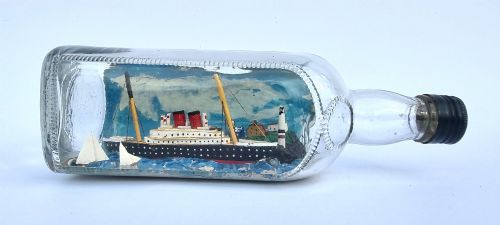
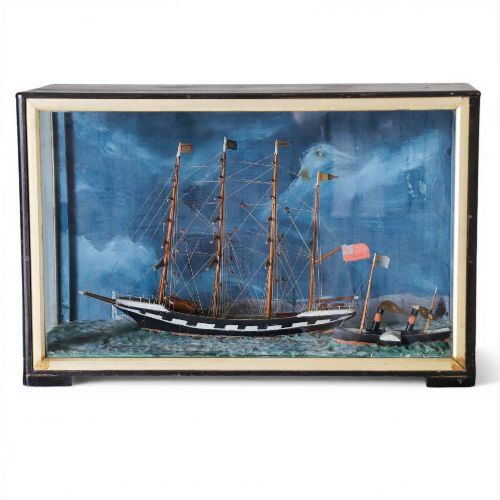
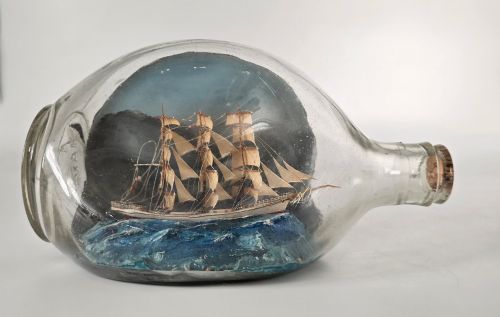
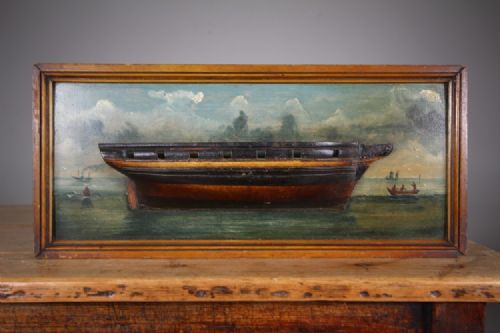
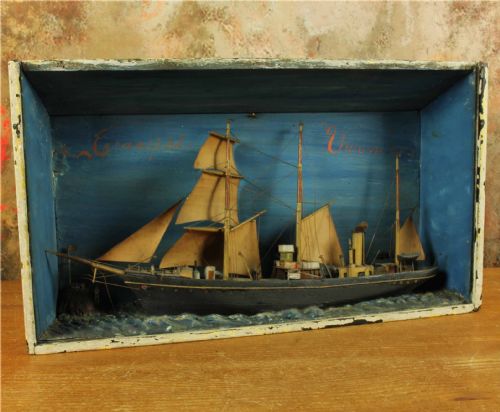
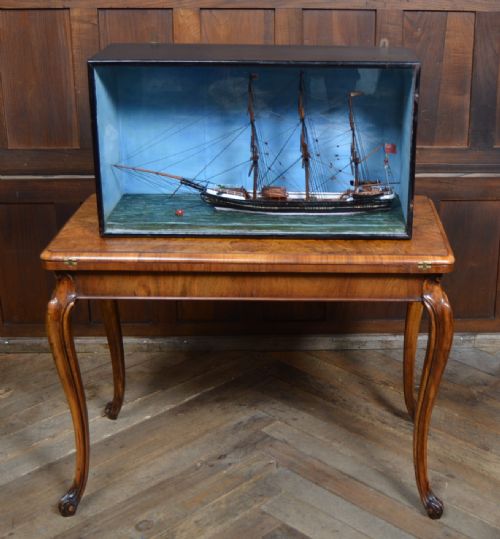
A ship diorama display presents a miniature vessel or racing ships set against a painted sea and sky background, enclosed within a wooden box or glass case. When you search for ship diorama display, you encounter maritime folk art ranging from single sailing ships to racing vessels captured in motion.
The pieces on this page span the nineteenth century up to the nineteen-thirties, taking forms such as shadow box dioramas, framed wall art, and even a ship in a bottle. Most examples originate from British, English, Cornish, or French makers working within the Victorian maritime tradition.
You will find named vessels like the Glynllifon, Queen Anne, and The Hippolyta, alongside anonymous four-masted sailing ships and steam barges. These objects bridge the gap between traditional model making and folk art painting, creating depth through layered construction.
Judging quality in maritime dioramas
Quality rests on the depth of the perspective and the fineness of the maritime detailing within the restricted space of the box. Superior examples render rigging, hulls, and painted seascapes with precision, avoiding clumsy proportions or muddy paint layers.
The condition of the glazed display and the original housing preserves the interior from dust and structural loss. Finer pieces demonstrate meticulous handwork in materials like straw or fabric, whereas simpler works rely on basic wooden construction.
Listings feature works predominantly from the nineteenth century, alongside examples from the nineteen-thirties and Victorian period.
The Ship Diorama Display Glossary
- Maritime diorama
- A three-dimensional model of a ship set within a framed enclosure depicting a marine scene. This term covers both shadow boxes and wall-hanging display cases.
- Shadow box diorama
- A deep picture frame containing a recessed scene that isolates the subject behind glass. It protects the fragile rigging and paper elements from environmental wear.
- Folk art
- Creative work produced by self-taught or traditional makers outside the formal academic tradition. In these listings, it defines the unpretentious, handcrafted nature of the maritime models.
- Turneresque seascape
- A painted background style emulating the atmospheric, dramatic light and water effects associated with the painter J. M. Turner. It elevates the visual depth behind the model ship.
Ship Diorama Display: Frequently Asked Questions
How do I hang a heavy shadow box?
These cased displays carry substantial weight due to the wood, glass, and plaster components. Secure fixings into wall studs or appropriate masonry anchors provide the necessary support.
Positioning the display at eye level allows you to appreciate the perspective of the painted sea and the fine details of the rigging.
Can I clean the inside of the glass?
The interior glass and model components remain sealed within the original housing to protect fragile thread and fabric elements. Opening the case risks disturbing delicate nineteenth-century materials that do not tolerate modern cleaning agents.
Surface dust on the exterior glass is best managed with a dry microfibre cloth, keeping moisture away from the antique timber frame.
What does a named vessel indicate?
Named ships, such as the Glynllifon or Queen Anne, tie the artwork to specific vessels recorded in maritime history. This provenance often connects the piece to a particular ship's service or a maker's local pride.
Unnamed vessels still reflect the prevalent ship types of the nineteenth century, focusing on general maritime activity rather than a specific registry.
How do I date these maritime displays?
Dating relies on the materials, framing styles, and the specific vessel types depicted, such as four-masted sailing ships and steam barges. Nineteenth-century examples often feature distinct naive construction methods and period glass.
Archival clues, inscriptions on the reverse, or titles painted on the wooden mount help narrow the decade of creation.