


Model Ship Shadow Box
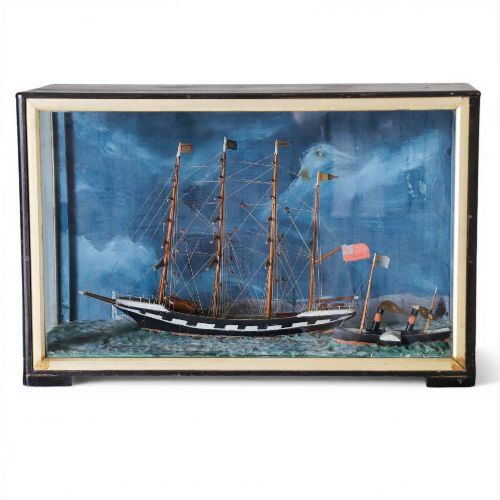
Model ship shadow box pieces are dimensional maritime folk art displays set behind glass, bringing detailed miniature vessels and painted seascapes directly onto the wall.
Model Ship Shadow Box
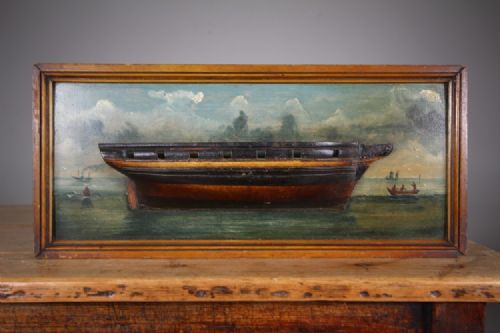
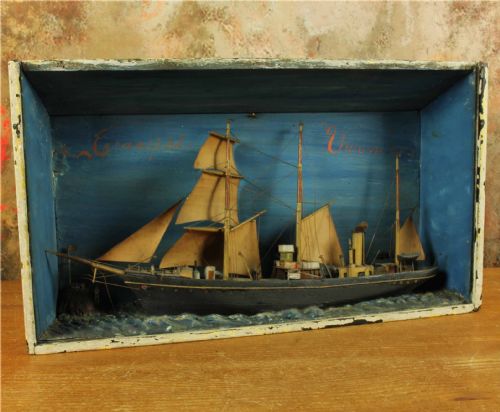
A model ship shadow box presents a three-dimensional maritime scene contained within a glazed wooden frame or box, designed specifically to hang upon a wall. These works encompass traditional maritime dioramas, boxed ship models, and folk art wall pieces that capture sailing vessels under full sail or racing across the water.
The pieces encountered most frequently on this page belong to the nineteenth century and the Victorian era, often reflecting British and English folk art traditions. Makers from this period constructed enclosed maritime dioramas that frequently feature named vessels such as the Glynllifon or Queen Anne.
Examples range from standard sailing ship dioramas to elaborate arrangements incorporating multiple vessels, steam barges, and painted Turneresque seascapes. Each creation preserves a specific moment of maritime history through handmade wooden models paired with painted backdrops.
Materials and construction methods
Makers constructed these shadow boxes primarily using wood for the frames and scratch-built ship models, combining canvas, fabric, and paper to shape the hulls, decks, and rigging. Artisans applied oil paint and standard paint directly onto plaster or backing boards to create deep, atmospheric seascapes behind the miniature vessels.
Specialised techniques included intricate straw work applied to the box structures and detailed rigging assembled by hand without modern machinery. Glazed front panels protected the delicate paper, fabric, and painted components from dust and atmospheric damage while maintaining clear visibility of the scene within.
Victorian makers occasionally used split straw to pave miniature decks and decorate frames, turning farmyard waste into shimmering maritime gold.
Factors that distinguish individual pieces
Quality separates simple folk art constructions from masterworks based on the intricacy of the ship model and the depth of the painted backdrop. Finer examples display meticulous attention to rigging, detailed hull construction, and layered plaster or oil-painted seascapes that create a genuine sense of perspective.
The choice of materials and the integrity of the original glazed wooden box also influence the overall standard of a piece. Boxes featuring specialised decorative elements like straw work or named historical vessels demonstrate a higher level of maker engagement.
The Model Ship Shadow Box Glossary
- Maritime diorama
- A three-dimensional display depicting a nautical scene, typically featuring model ships set against a painted background.
- Shadow box
- A deep, enclosed framed box with a glass front designed to showcase and protect three-dimensional objects on a wall.
- Folk art
- Artistic work created within a traditional culture by self-taught makers, often utilising accessible local materials such as wood and paper.
- Scratch-built
- A model constructed entirely from raw materials rather than from a commercial kit or pre-manufactured components.
- Turneresque
- Pertaining to the atmospheric, light-filled painting style associated with the British artist J.M.W. Turner.
Model Ship Shadow Box: Frequently Asked Questions
What is a model ship shadow box?
A model ship shadow box is a framed, glass-fronted wall display enclosing a three-dimensional handmade ship model and a painted maritime background.
These pieces combine carpentry, model-making, and seascape painting into a single hanging artwork.
How were maritime shadow boxes displayed?
These boxes were designed primarily to hang directly on interior walls, serving as decorative tributes to specific vessels or general maritime activity.
The deep wooden frames protected the delicate paper, fabric, and wooden components of the models from environmental wear.
How do I identify a nineteenth-century diorama?
Nineteenth-century examples typically show hand-carved wooden hulls, traditional natural fibre rigging, and period oil paint on canvas or plaster backings.
Construction methods rely on hand tools and materials characteristic of Victorian folk art traditions.
Can I clean the inside of a shadow box?
The interior should remain sealed to protect the fragile paper sails, rigging, and painted surfaces from accidental damage.
Cleaning is generally limited to the exterior wood frame and the outer surface of the protective glass.