


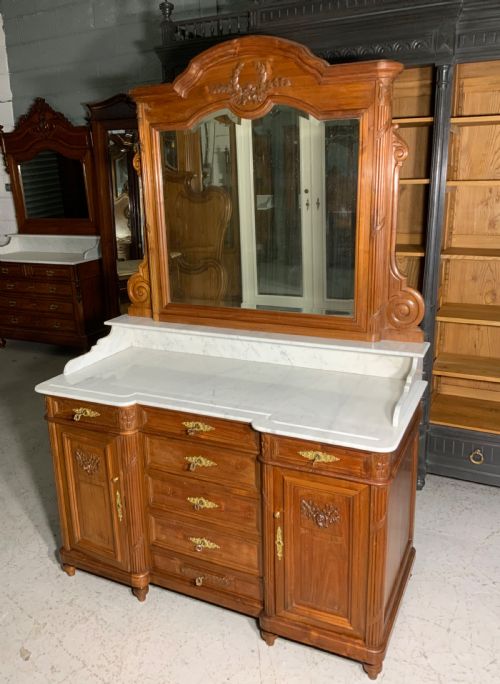
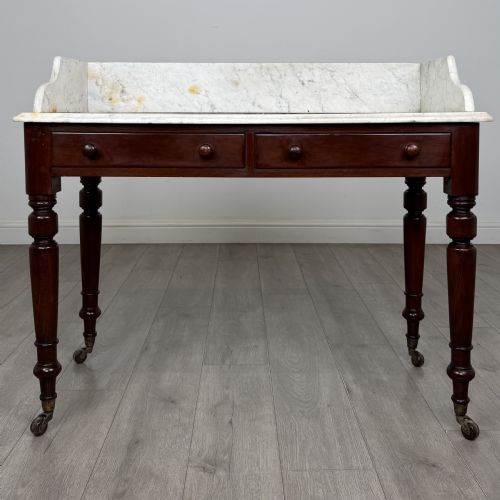
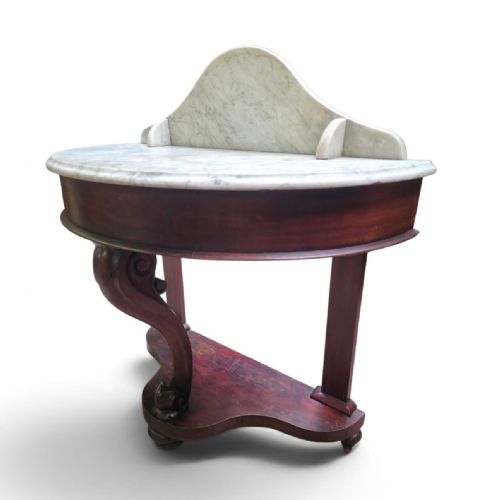
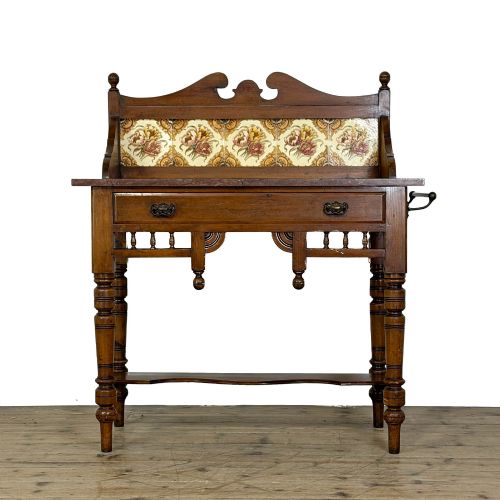
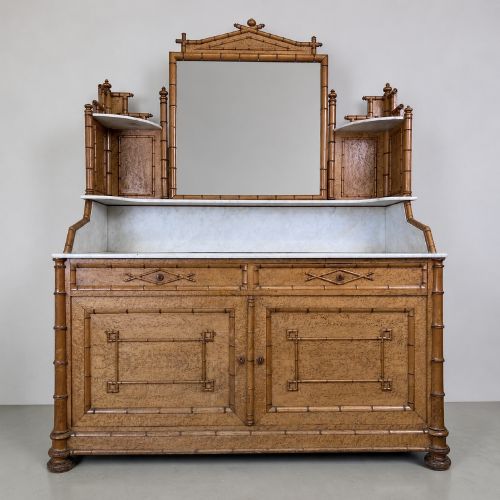
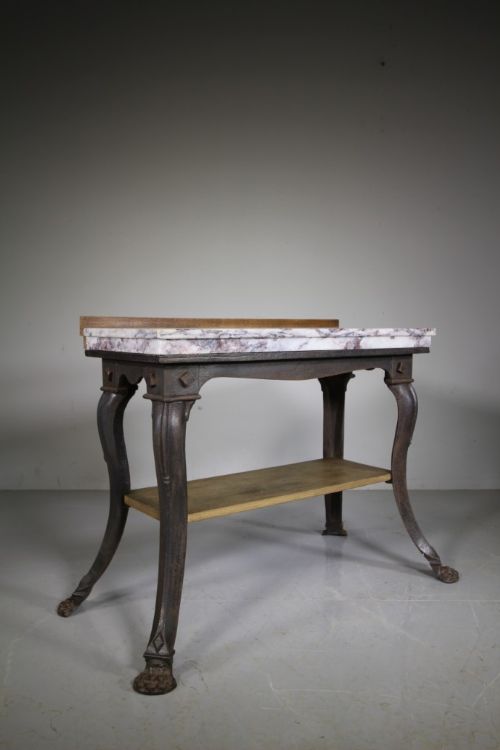

Victorian Marble Washstand
A victorian marble washstand brings solid nineteenth-century weight and cool stone into a bedroom as a functional basin stand or dressing surface.
Victorian Marble Washstand
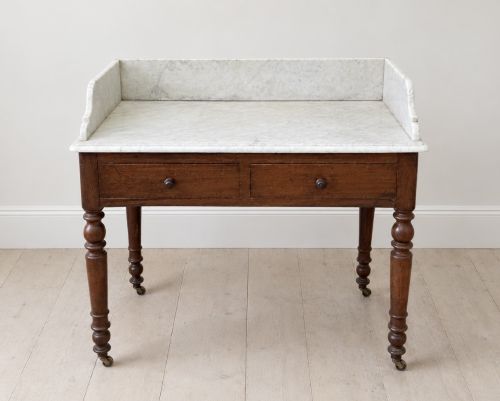
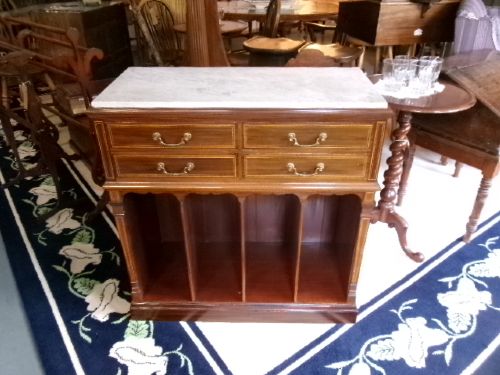
When searching for a victorian marble washstand, buyers encounter heavy nineteenth-century chamber furniture designed for personal hygiene before plumbed bathrooms became standard in every home. These pieces combine a timber framework with a heavy stone slab surface intended to resist water splashes during morning washing routines.
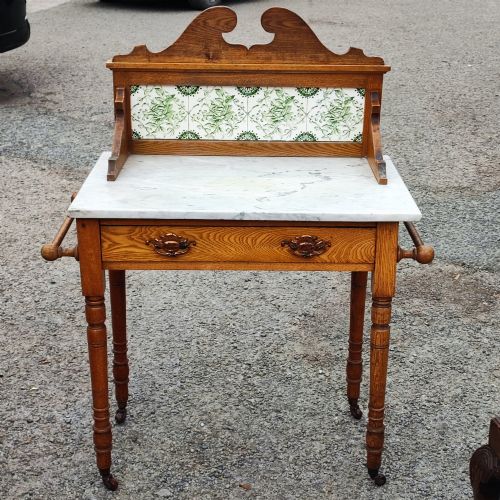
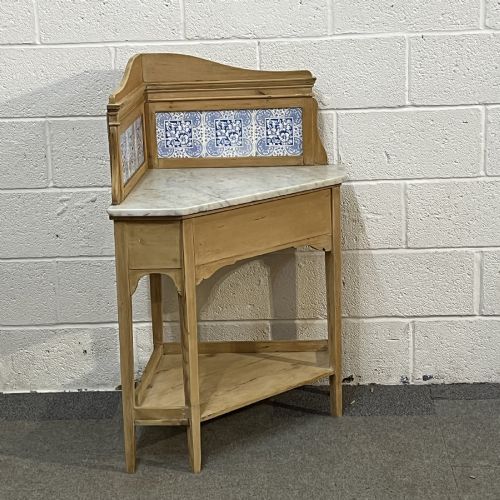
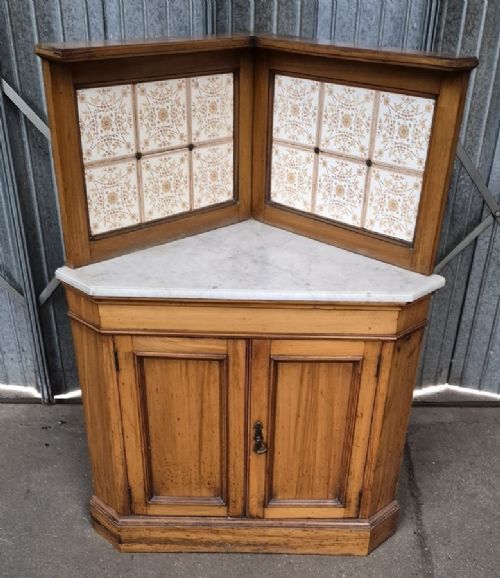
The most common examples on this page are straightforward Victorian designs in mahogany, walnut, ash, or satinbirch, frequently fitted with tile upstands or low wooden galleries. Alongside standard timber versions, rarer aesthetic movement and French faux-bamboo iterations appear, demonstrating how varied bedroom furniture of the period actually was.
How They Were Made
Cabinetmakers constructed the main bodies of these pieces using dense hardwoods like mahogany and walnut, or lighter secondary timbers such as pine and ash, often applying decorative veneers, marquetry inlay, or ebonised finishes. Selected furniture featured cast iron frames or painted pine treatments, including simulated wood grain and faux marble finishes on simpler pieces.
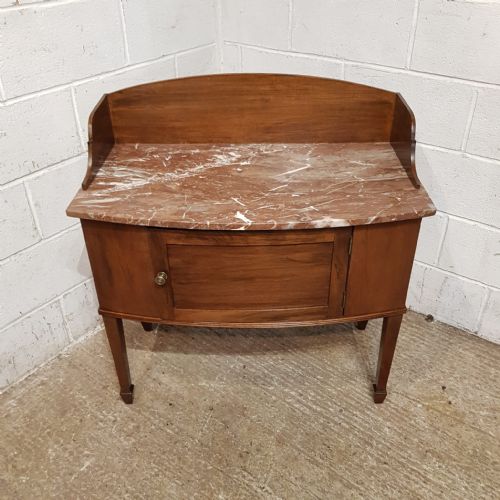
The defining element is the fitted marble top, usually slabbed thick to bear the weight of water pitchers and washbasins, paired in some designs with matching ceramic tiles set into the rear upstand. Brass hardware, such as towel rails or handles, completed the construction alongside occasional glass accessories.
Victorian Marble Washstand Retail Price Guide 2026
Typical asking prices for victorian marble washstand among the pieces listed under this phrase on Sellingantiques today, from the lower quarter to the upper quarter. They describe what is for sale here now, not the wider market.
Materials recorded across current inventory include solid marble, brass, glass, mahogany, walnut, ceramic tiles, and pine.
What Varies in Quality
The distinction between ordinary utility washstands and exceptional chamber furniture lies in the selection of timbers and the ambition of the joinery. Figured walnut with floral marquetry inlay or finely matched satinbirch represents a higher grade of manufacture than plain painted pine.
Walker And Sons·Maple And Co·Gillows
The Victorian Marble Washstand Glossary
- Washstand
- A piece of bedroom furniture designed to hold a basin and pitcher for washing before plumbed bathrooms. These items usually incorporate a stone or timber top to protect the wood underneath.
- Upstand
- A vertical barrier rising at the back of the washstand top to prevent water from splashing against the wall. They frequently incorporate decorative ceramic tiles.
- Marquetry
- The art of applying decorative pieces of veneer to a structure to form intricate patterns. Victorian cabinetmakers utilised this technique on walnut and mahogany surfaces.
- Duchess washstand
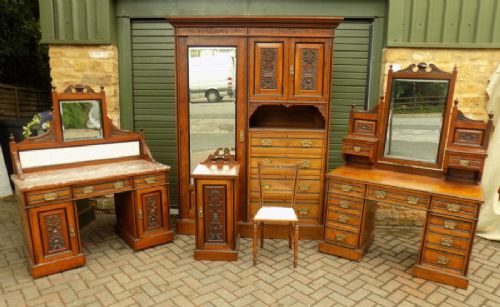
- A grander combination of a washstand and dressing table featuring an extended surface and mirrors. These pieces were built for larger nineteenth-century bedchambers.
- Aesthetic movement
- A late nineteenth-century style focusing on visual beauty rather than narrative or moral function. Furniture from this movement often displays clean lines and Japanese-inspired details.
Victorian Marble Washstand: Frequently Asked Questions
What was a washstand used for?
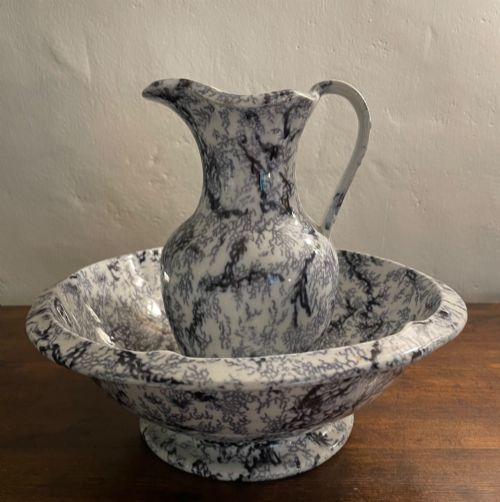
These pieces served as the primary washing station in nineteenth-century bedrooms before indoor plumbing became common. Users placed a ceramic basin and water jug on the stone surface for morning and evening routines.
The lower shelves or enclosed cupboards housed chamber pots, spare linens, and washing accessories. Today, they function well as hallway consoles or bathroom sink surrounds.
How do I identify a Victorian washstand?
Look for heavy stone tops paired with nineteenth-century timber frames in mahogany, walnut, ash, or satinbirch. Many include tiled splashbacks or low wooden galleries designed to hold washing ceramics.
Proportions are generally lower and deeper than modern bathroom vanities, reflecting nineteenth-century bedroom layouts. Maker stamps from firms like Maple and Co occasionally appear inside drawer linings.
Are marble washstands waterproof?
The stone slab surface resists water splashes and spills effectively during daily use. However, prolonged standing water can seep into unsealed edges or older grouting around tiled upstands.
Timber frames beneath the stone require regular polishing and care to prevent moisture damage. Wiping down the marble after use preserves both the stone and the surrounding wood.
Where should I put a washstand?
These pieces fit naturally into modern bathrooms as vanity bases with vessel sinks mounted on top. They also serve as distinctive side tables in hallways or bedrooms.
The combination of stone and wood brings natural texture to neutral spaces. Ensure the room dimensions accommodate the depth of the stone top and any rear gallery.