
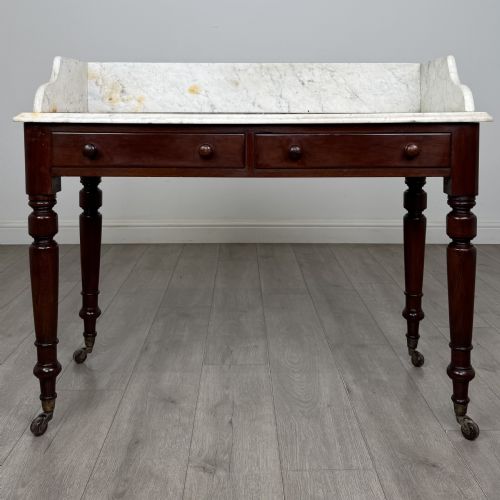
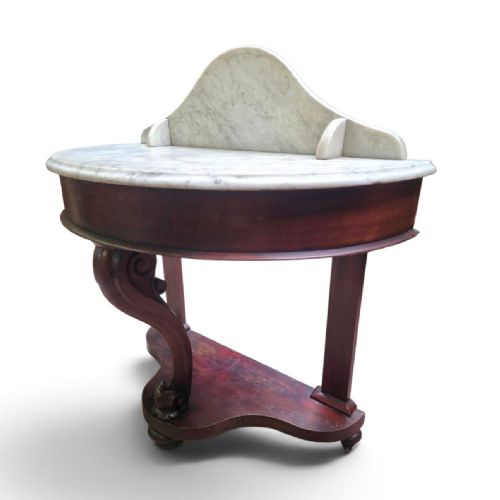
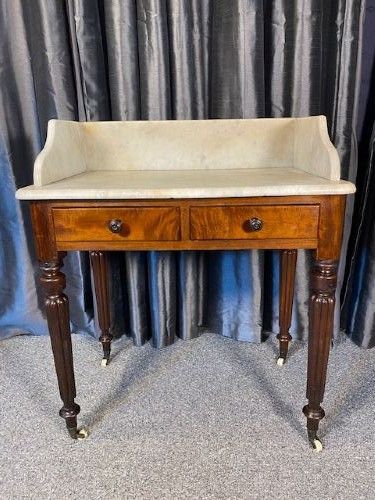
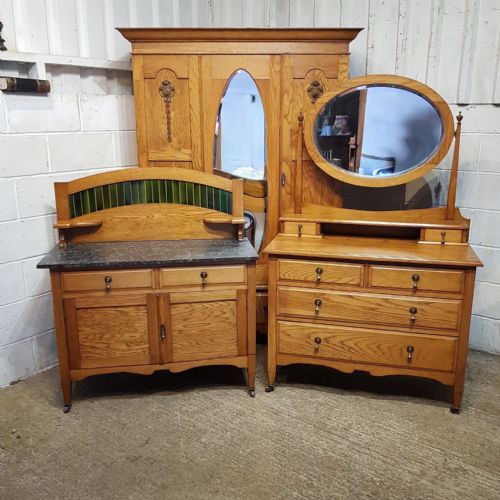




Marble Top Splashback Table
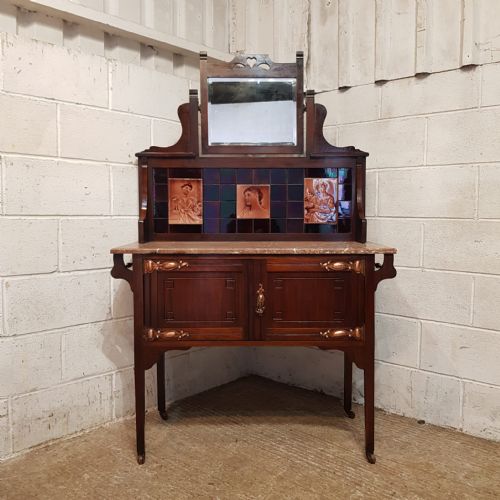
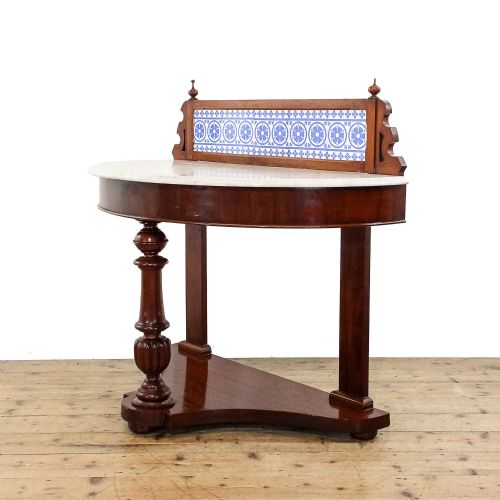
These marble top splashback table pieces are sturdy bedroom washstands combining stone and timber designed for daily Victorian and Edwardian washing.
Marble Top Splashback Table
When you search for a marble top splashback table, you encounter washstands originating from the Victorian and Edwardian periods, stretching from the late nineteenth century into the early twentieth century.
Makers of the era incorporated ceramic tiles and brass details alongside the marble surfaces to protect bedroom walls from water splashes.
What varies in quality
The distinction between standard examples and finer pieces lies in the choice of timber and the character of the marble, with figured rouge marble and detailed mahogany inlay representing superior craftsmanship.
Construction methods determine durability, visible in the tightness of the joinery and the integration of auxiliary materials like brass and ceramic tiles.
Washstands doubled as early splashguards, keeping bedroom wallpaper dry long before en-suite bathrooms saved the morning routine.
The Marble Top Splashback Table Glossary
- Splashback
- The upright panel rising behind the table top to protect the wall from water. It is usually formed from the same marble as the counter.
- Washstand
- A bedroom table designed to hold a basin, jug, and washing accessories. These pieces often feature marble tops and tiled backs.
- Duchess washstand
- A specific Victorian bedroom form offering an extended surface arrangement. It combines washing facilities with dressing table proportions.
- Satinbirch
- A pale, lustrous timber utilised for bedroom furniture frames during the Victorian era. It provides a distinctive golden grain figure.
Marble Top Splashback Table: Frequently Asked Questions
What is a marble top splashback table?
These pieces are washstands from the Victorian and Edwardian periods, built to hold basins and jugs in bedrooms before running indoor plumbing became common.
The stone top and rear splashback protected wooden furniture and wallpaper from water damage during daily washing routines.
How do I date these washstands?
Dating relies on the prevailing styles and secondary materials seen in the construction, such as Arts and Crafts oak frameworks or delicate Edwardian mahogany inlay.
Victorian examples often display heavier proportions and rouge marble, while Edwardian pieces lean toward lighter satinbirch and painted finishes.
Can I use one as a bathroom vanity?
Many buyers adapt these washstands into modern bathroom sink units by mounting basins onto the stone counters and routing plumbing through the wooden cabinets.
The original marble surfaces and splashbacks remain naturally suited to damp environments.
What woods were used for the frames?
Cabinetmakers built the foundational frames using durable hardwoods like mahogany and oak, alongside painted pine and lighter satinbirch.
The choice of timber usually reflects the design movement of the period, from Aesthetic Movement ebonising to Sheraton Revival mahogany.