
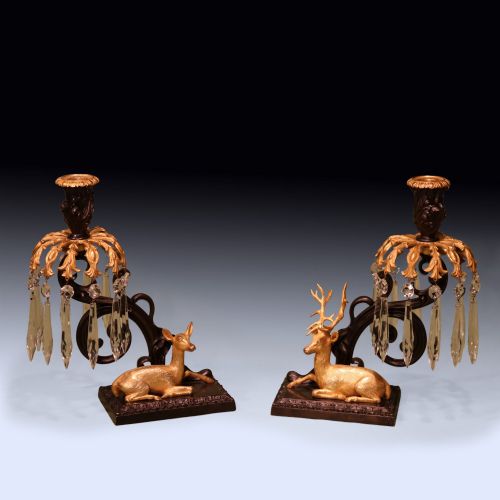


Victorian Mantle Lustres
These Victorian mantle lustres are dual-function candleholders hung with glass prisms that catch the gaslight or daylight in a room.
Victorian Mantle Lustres
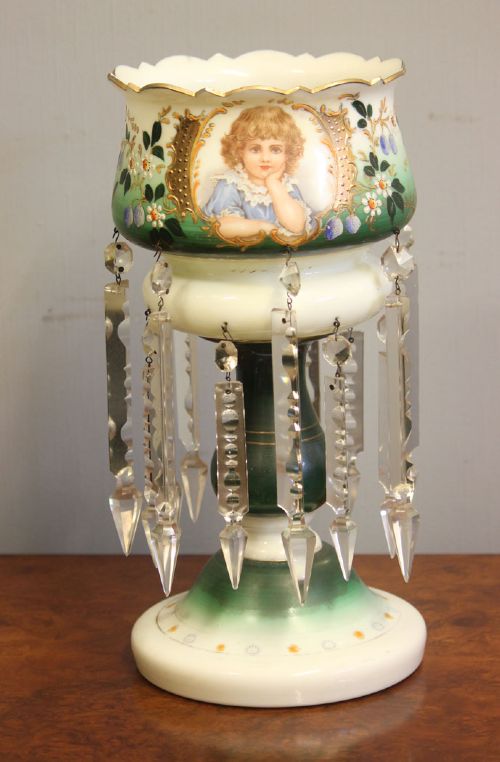
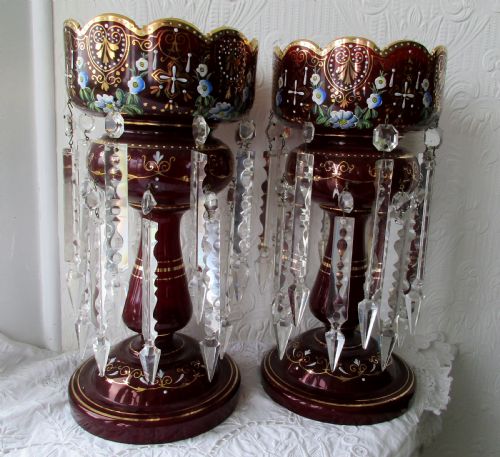
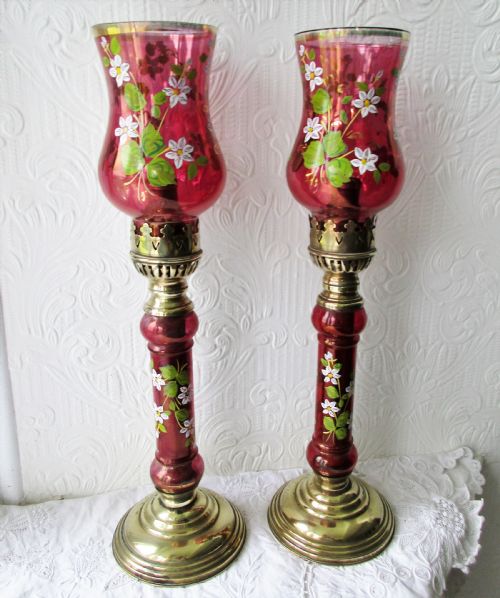
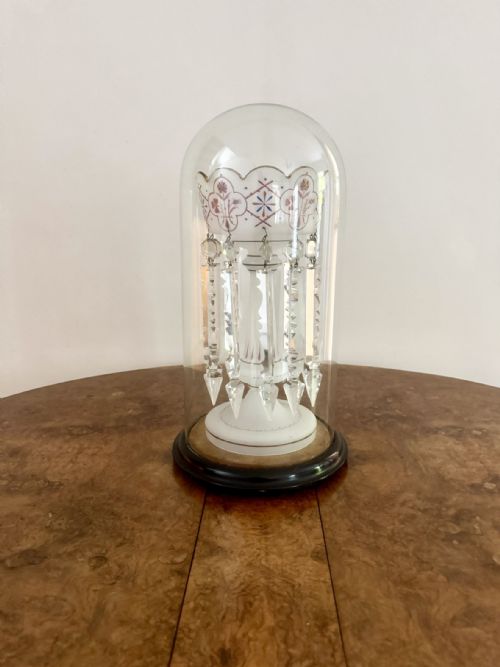
Victorian mantle lustres stand upon mantelpieces as decorative pairs or single focal objects, combining a central vase or candlestick shaft with dangling crystal pendants.
The form derives from earlier lighting designs, evolving through the nineteenth century into richly coloured glass and brass examples designed to impress.
Ruby, cranberry, green, and pink opaline glass dominate the selection, often enriched with hand-painted enamel floral motifs or gilt highlights.
How they were made
Makers shaped coloured and flash glass through blowing and pressing techniques, frequently cutting facets into the glass body to enhance optical refraction.
Cut crystal and lead crystal pendants hung from the perimeter of the top bowl, attached by brass or wire loops that allowed the prisms to sway and chime.
The glass drops are designed to tinkle musically in the draughts of a Victorian parlour.
What varies in quality
Depth of colour in the glass and the crispness of hand-painted enamel details separate standard production from finer work.
The completeness and original match of the crystal drop pendants dictate the overall integrity of a piece.
Weight and stability in the brass or bronze mountings indicate the structural care taken during manufacture.
The Victorian Mantle Lustres Glossary
- Lustre
- A mantle ornament featuring suspended glass prisms designed to reflect light. They function as both candlesticks and decorative centrepieces.
- Prism
- A cut glass drop suspended from the rim of a lustre. These pendants catch the ambient light and create a sparkling effect.
- Flash glass
- A thin layer of coloured glass fused over a clear or contrasting glass body. Artisans cut through the top layer to reveal the contrasting glass beneath.
- Opaline glass
- An opaque, pastel-hued glass popular in the nineteenth century. It mimics the appearance of porcelain while retaining the qualities of glass.
Victorian Mantle Lustres: Frequently Asked Questions
How were mantle lustres used?
They stood on drawing room mantelpieces to ornament the hearth during daylight hours. When fitted with candles, the hanging glass drops reflected and amplified the flickering flame.
They also served as impressive centrepieces on side tables, signalling status and taste in Victorian interiors.
Are mantle lustres always found in pairs?
Many survive as symmetrical pairs intended to flank a clock or mirror on a mantelpiece. Single examples do appear from historical dispersal.
Pairs command stronger interest from collectors who wish to maintain traditional symmetrical arrangements on a fireplace.
What colours are most common?
Ruby and cranberry glass appear frequently across the nineteenth-century examples. Green and pink opaline glass also feature prominently in surviving pieces.
Enamel decoration and gold leaf gilding frequently accent these strong background colours.
How do I care for crystal drops?
Remove the prisms gently for washing in warm soapy water to preserve the clarity of the glass. Avoid harsh chemical cleaners that might damage gilt highlights or enamel painting.
Inspect the wire loops connecting the drops to ensure secure attachment.