

Victorian Mahogany Table Mirror
A victorian mahogany table mirror brings a warm, deep timber tone and functional elegance to a dressing surface.
Victorian Mahogany Table Mirror
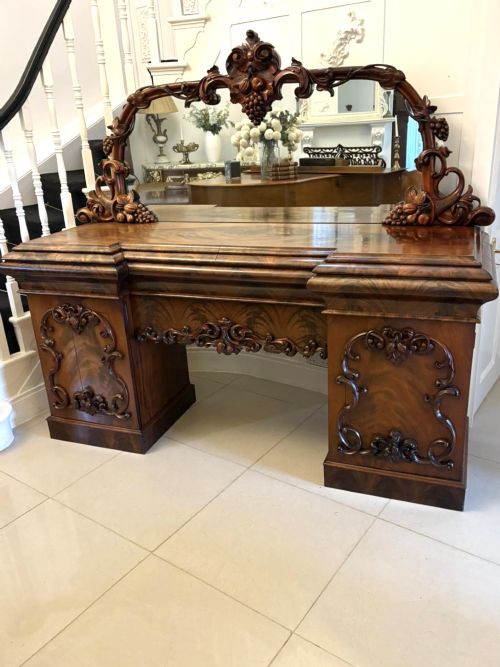
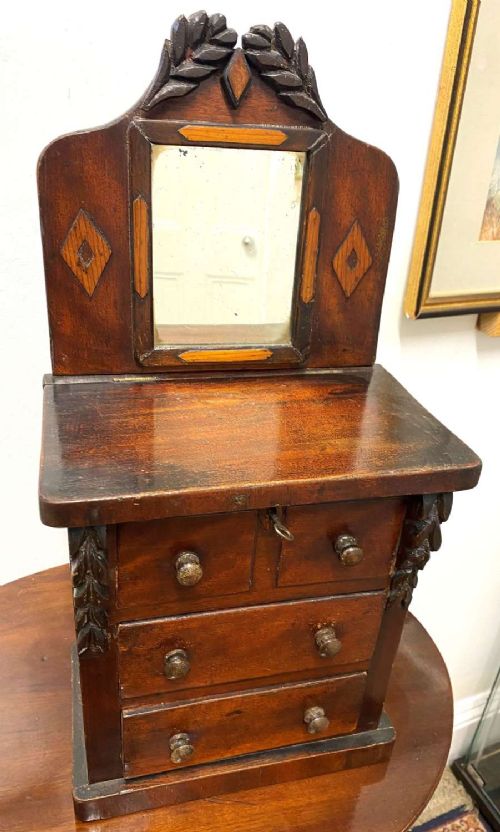
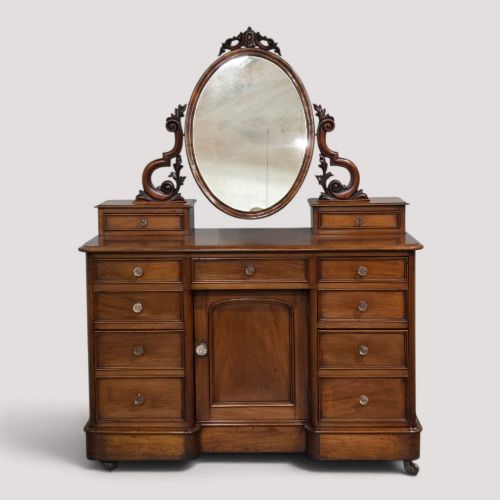
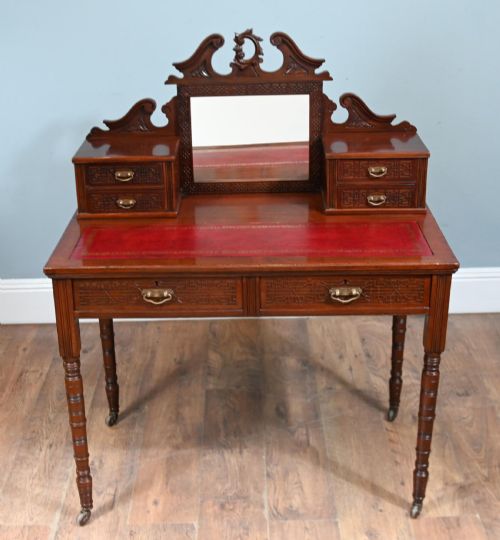
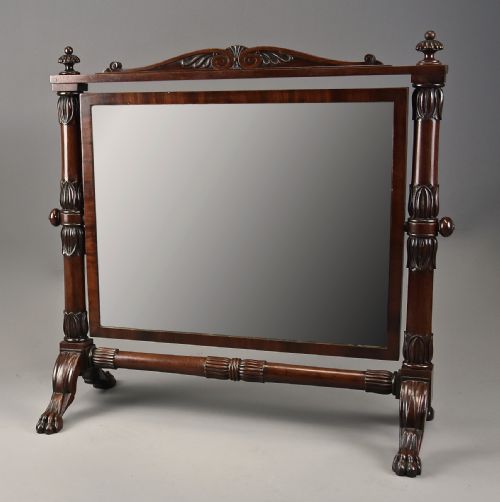
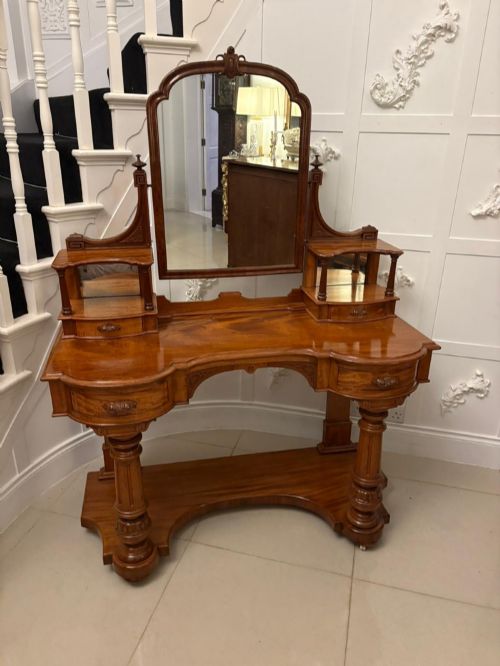
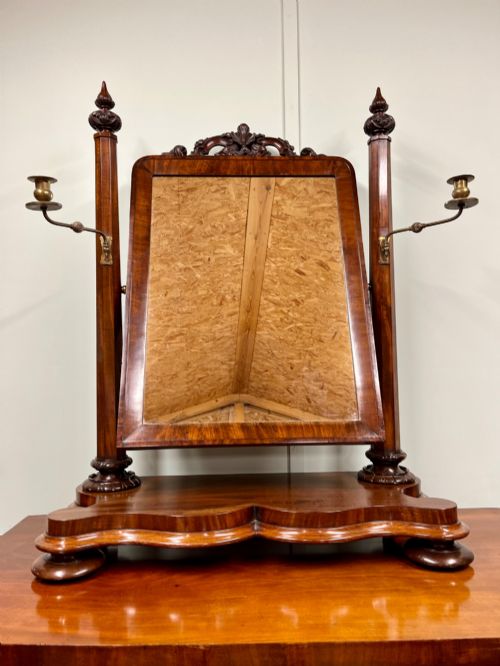
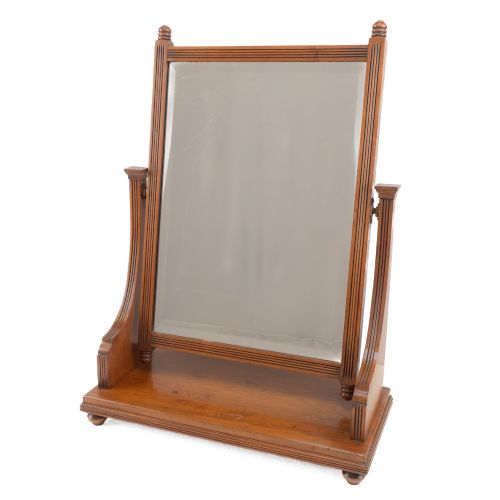
A victorian mahogany table mirror comprises a swinging glass plate held within a wooden frame, mounted upon upright supports and a base fitted with small drawers or a stepped platform. These pieces date predominantly through the nineteenth century, reflecting the prevailing styles from early Victorian developments to late Victorian refinements.
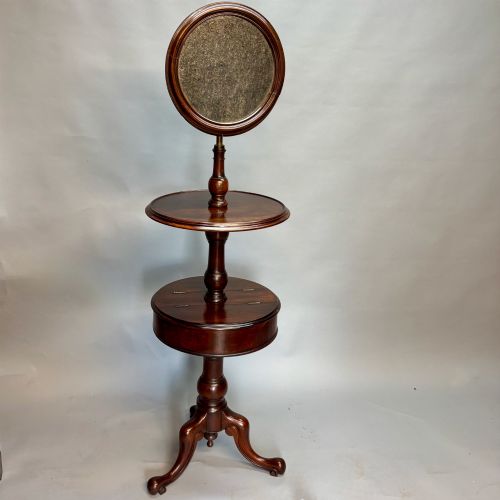
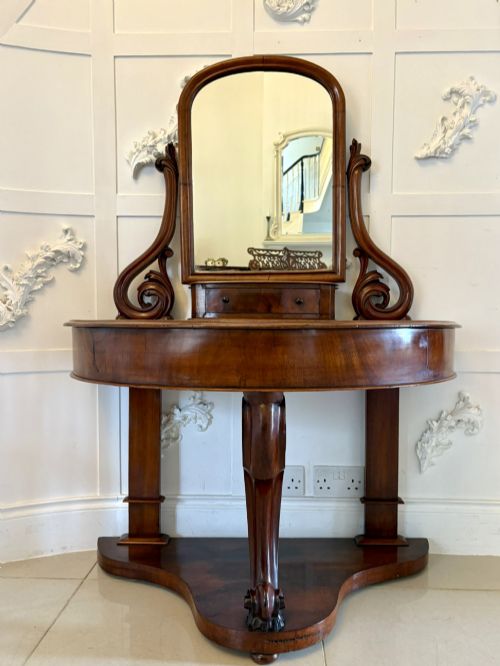
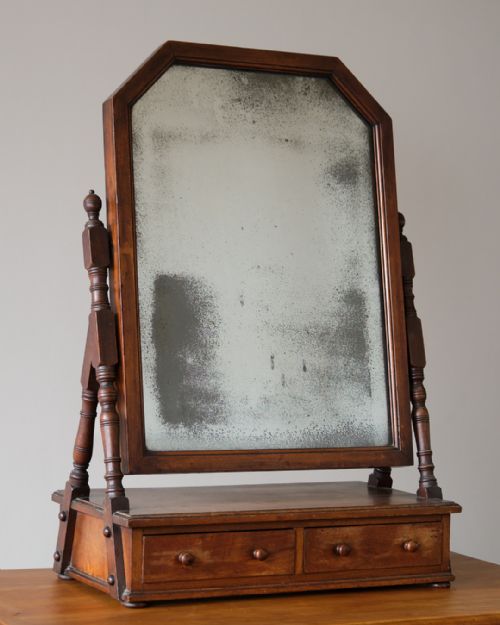
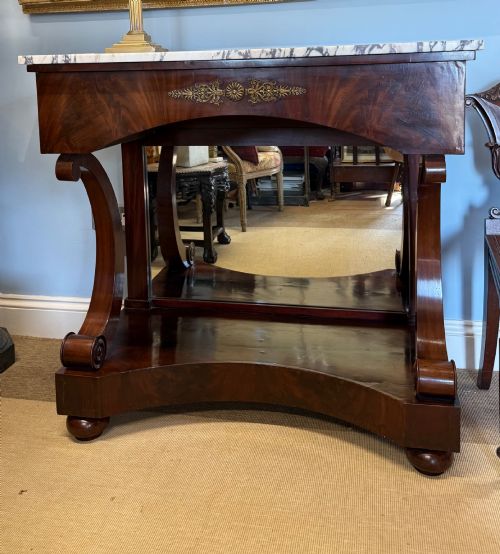
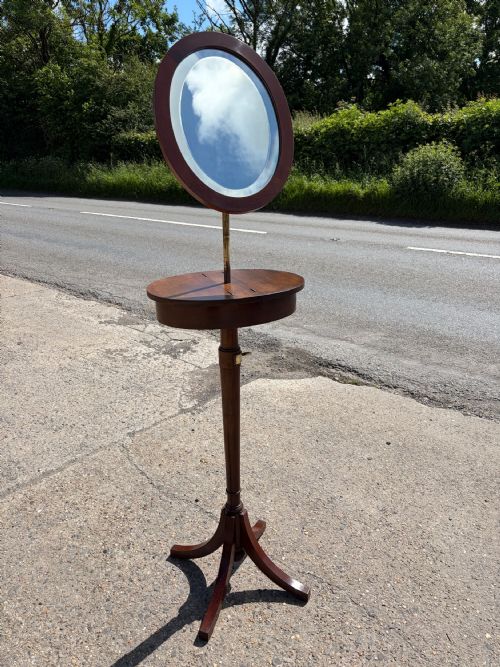
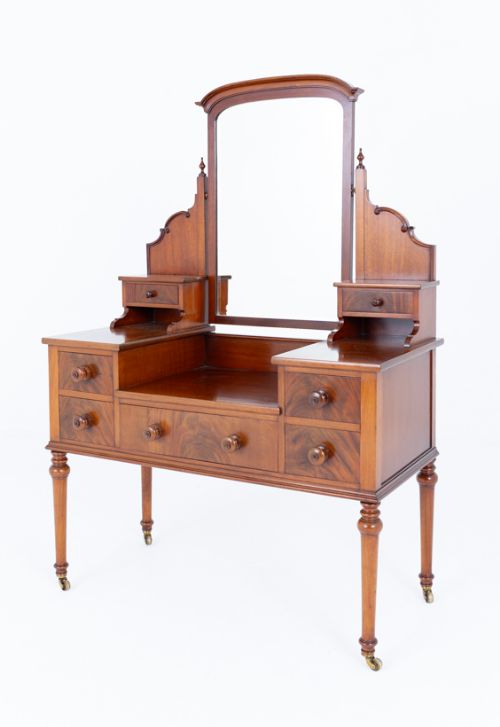
The most common form met on this page is the swing mirror resting on a box base containing two or three small drawers, designed to sit atop a larger dressing chest or partner table. Variations extend to compact toilet mirrors and adjustable tripod shaving stands utilised for grooming.
Origins span English workshops alongside Scottish examples featuring distinctive regional timber figuring, capturing the domestic craftsmanship of the period.
How They Were Made
Cabinet makers built the primary frames and box bases using solid mahogany and flame mahogany veneers, sometimes enhanced by contrasting satinwood stringing or marquetry inlay. Brass pivot screws, candle sconces and decorative handles provided functional metallic contrast to the dark timber.
Mirror plates originally utilised mercury or silvered glass held securely within rebated wooden frames by pegged joints and backboards. Structural stability relied upon tight mortise and tenon joinery in the upright supports and scratch-built dovetailed joints within the miniature drawer boxes.
Victorian Mahogany Table Mirror Retail Price Guide 2026
Typical asking prices for victorian mahogany table mirror among the pieces listed under this phrase on Sellingantiques today, from the lower quarter to the upper quarter. They describe what is for sale here now, not the wider market.
Scientific optical mirrors occasionally slip into the dressing routine, proving past Victorians liked precision with their powder.
What Varies In Quality
The choice of timber creates an immediate distinction, ranging from plain sawn boards to deeply figured flame mahogany or Cuban mahogany selected for rich grain patterns and density. Superior examples exhibit finely executed hand carvings on the scroll supports and meticulous dovetailing within the concealed drawer construction.
Proportion and hardware integrity determine the piece's overall balance, where heavy brass mounts, original mirror glass with natural foxing, and smoothly turning adjustment screws signal higher workshop execution.
P & MA Nicholson·Heal & Sons·Maple & Co·Thomas Rubergall of London·Edwards & Roberts
The Victorian Mahogany Table Mirror Glossary
- Flame mahogany
- A veneer cut from timber where the branch meets the trunk, producing a distinctive flickering, flame-like pattern across the wood surface.
- Swing mirror
- A glass plate suspended on lateral pivots between two upright arms, allowing the user to tilt the angle of reflection.
- Toilet mirror
- A smaller table-standing mirror historically used for personal grooming and ablutions in a bedroom or dressing room.
- Dovetail joint
- A box corner connection interlocking wedge-shaped fingers, prized for its tensile strength and traditional cabinet-making pedigree.
- Cheval mirror
- A full-length standing floor mirror, though the term occasionally describes larger floor-standing dressing mirrors in the evidence.
Victorian Mahogany Table Mirror: Frequently Asked Questions
How were these mirrors used?
These mirrors sat upon dressing chests or tables to assist with daily grooming, hair styling and fastening garments.
The adjustable pivot mechanism allowed users to alter the angle of reflection for optimal light and visibility.
Are the mirror plates original?
Many pieces retain their early silvered or mercury glass, often showing characteristic dark spots known as foxing due to age.
Replacement glass remains common in antique mirrors, though surviving original plates display a softer and deeper reflection.
How do I date a piece?
Dating relies on stylistic shifts from Regency restraint through ornate Victorian scrollwork to late Victorian inlay.
Construction methods, such as hand-cut dovetails and timber selection, further help narrow the decade of manufacture.
Where should I place one?
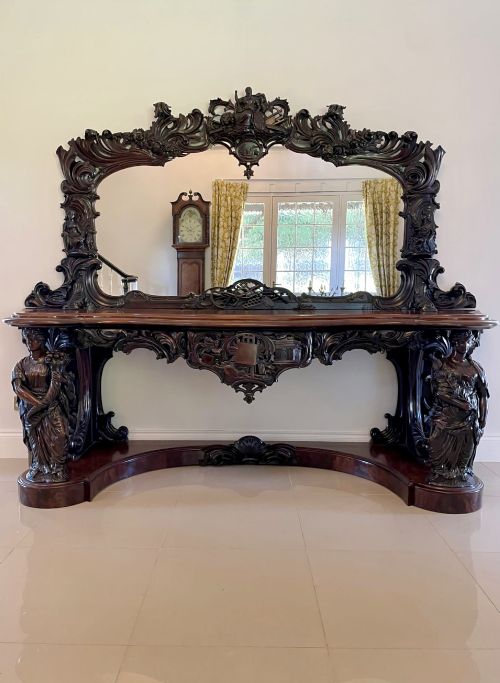
These table mirrors suit placement on top of modern or antique chests of drawers, sideboards or dressing consoles.
They require a stable surface and adequate clearance behind the frame to allow the swing mechanism to tilt freely.