





Victorian Mahogany Slope
When you search for a victorian mahogany slope, you encounter portable writing boxes hinged to open at an angle for correspondence.
Victorian Mahogany Slope
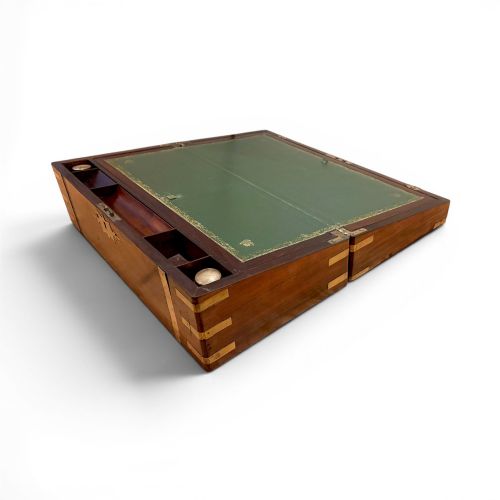
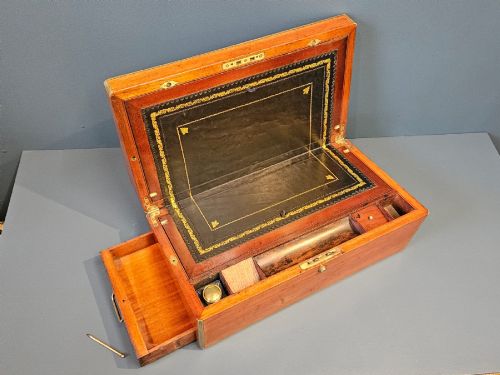
A victorian mahogany slope encompasses portable desktop boxes and campaign pieces designed for travel and correspondence. These items open on a hinge to reveal a slanted writing surface lined with leather.
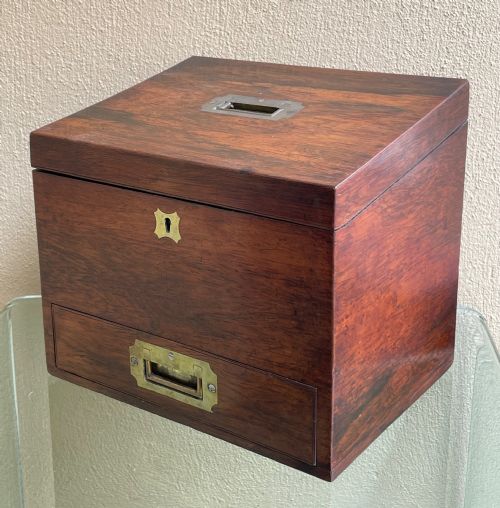
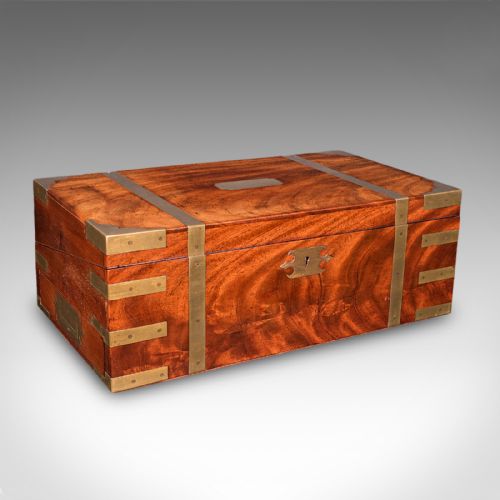
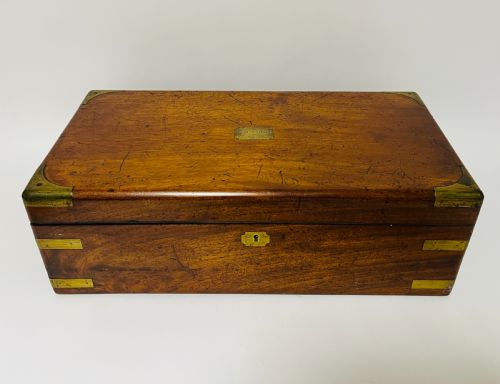
The version most frequently met on this page is the brass-bound campaign style dating from the middle of the nineteenth century. These boxes often incorporate secret compartments and internal inkwell partitions.
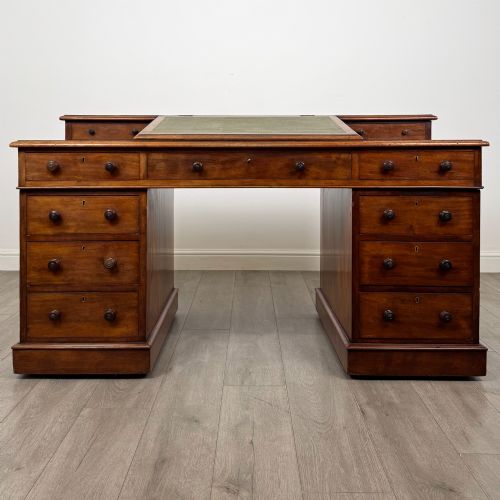
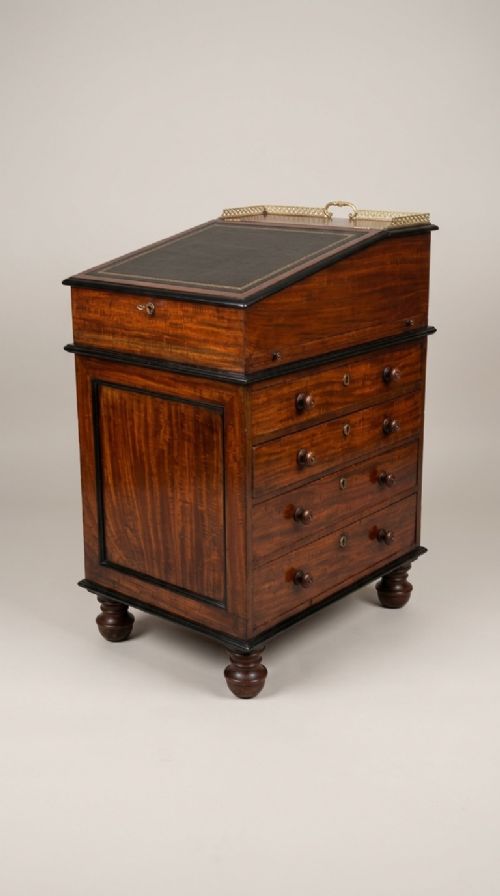
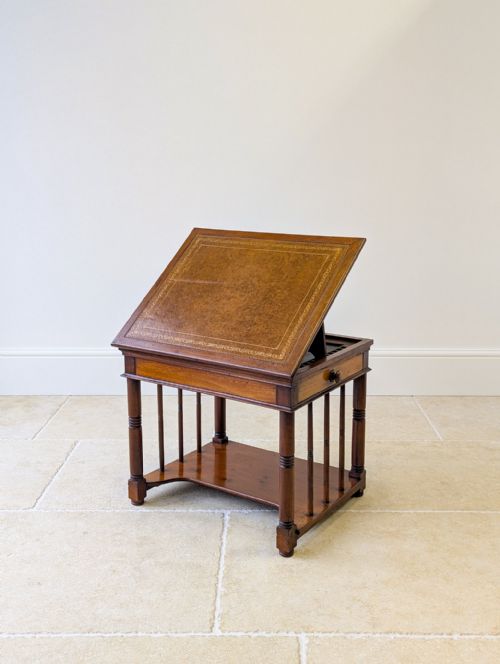
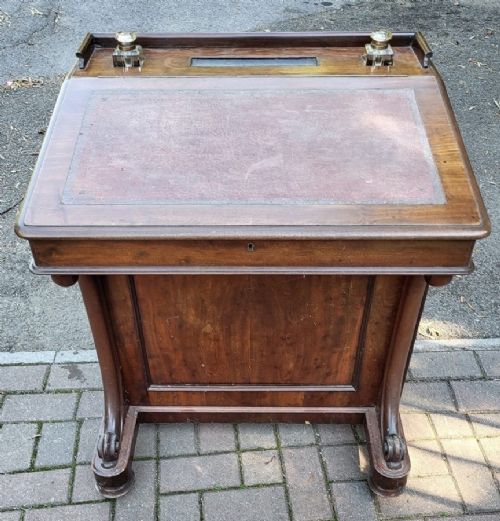
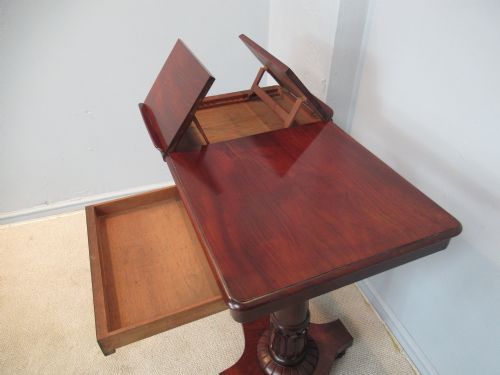
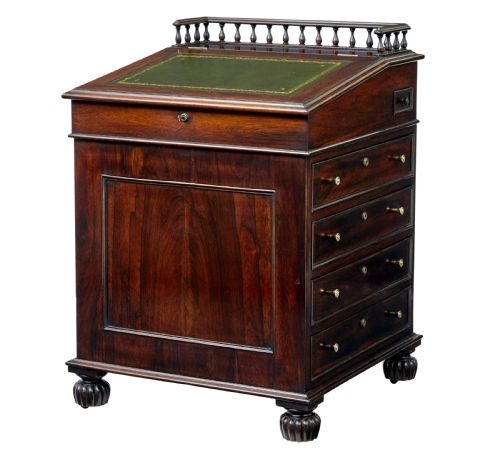
Beyond standard portable boxes, related forms include Davenport desks, Dickens desks, and stationery boxes sharing the same timber and period origin.
Materials and Construction
Makers utilised solid mahogany and flame mahogany veneers applied over secondary timbers, occasionally incorporating rosewood, satinwood, or teak details. The dense grain provided a stable foundation for frequent transport.
Brass corners, straps, and escutcheons reinforced the joints of campaign pieces against the rigours of travel. Interior writing surfaces utilised leather, sometimes gilded or embossed, paired with velvet or silk components.
Listings feature portable writing slopes alongside Davenport desks, Dickens desks, and stationary boxes produced in mahogany, rosewood, and satinwood.
Factors of Quality
Quality rests upon the selection of timber figure, such as richly grained flame mahogany, and the precision of brass inlay and corner mounts. Superior examples maintain structural integrity in their hinges and locking mechanisms.
Internal complexity distinguishes finer pieces, particularly those retaining secret drawers, tunbridge crossbanding, or matched accessories like bone alphabet sets and working keys.
Gillows of Lancaster
The Victorian Mahogany Slope Glossary
- Campaign slope
- A portable writing box reinforced with brass corners and flush handles intended for military travel. These units fold shut to protect correspondence and writing implements.
- Secret drawers
- Concealed compartments hidden behind false panels or accessed through internal spring mechanisms. Makers used these spaces for storing valuables and sensitive papers.
- Davenport
- A small pedestal desk featuring a sloped, hinged writing surface above a set of drawers. This form frequently incorporates side compartments for stationery and ink.
- Flame mahogany
- Timber cut from the fork of the mahogany tree to produce a distinctive undulating grain pattern. Cabinetmakers reserved this wood for exterior display surfaces.
- Escutcheon
- A protective brass plate surrounding a keyhole. On these pieces, the mount often matches the corner brackets and edge banding.
Victorian Mahogany Slope: Frequently Asked Questions
What is inside a writing slope?
Interiors typically contain sloped writing surfaces that lift to reveal storage compartments, alongside dedicated slots for inkwells, pens, and stamps.
Many examples also incorporate hidden compartments or secret drawers behind removable panels for securing private papers.
How do you use a campaign slope?
The box unlocks and folds open flat on a table or lap, angling the writing surface toward the user. The folding flaps create a stable, leather-lined plane for penning letters.
When packing up, inkwells and pens secure inside compartments before the lid closes and locks for transport.
How do I date a mahogany slope?
Dating relies on construction methods, brass hardware styles, and timber choices typical of the nineteenth century. Mid-century campaign pieces often feature extensive brass binding and flush side handles.
Later Victorian versions frequently incorporate varied internal arrangements, stationery dividers, or cylinder fronts matching the cabinet trends of the era.
Where were writing slopes placed?
Owners placed these portable boxes on top of library tables, sideboards, or directly on the lap while sitting in armchairs. Their compact nature allowed users to establish a writing workspace anywhere in the home.
Military officers and travellers carried them across the empire, utilising them in campaign tents and temporary quarters.