



Victorian Mahogany Screen
A victorian mahogany screen brings warmth and refined woodwork to a room, serving as both a functional heat guard and a decorative divider.
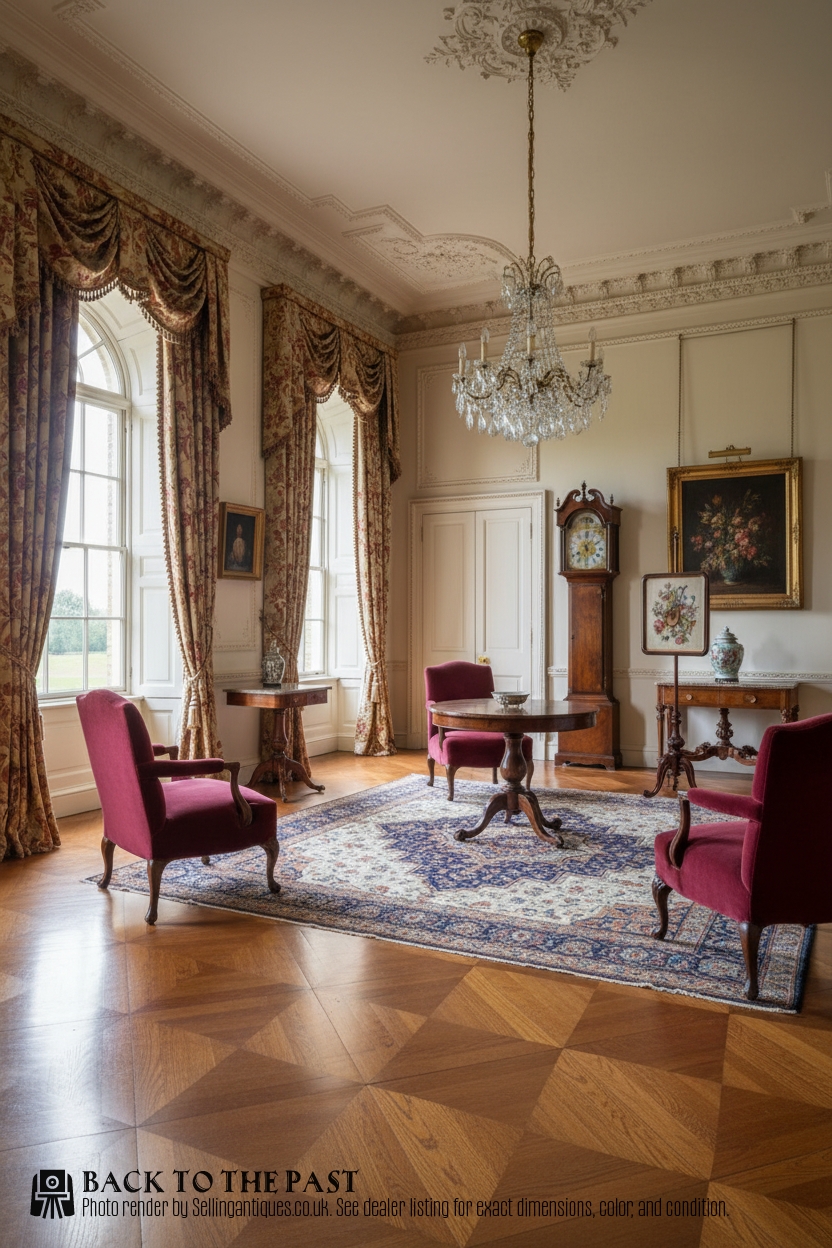
Victorian Mahogany Screen
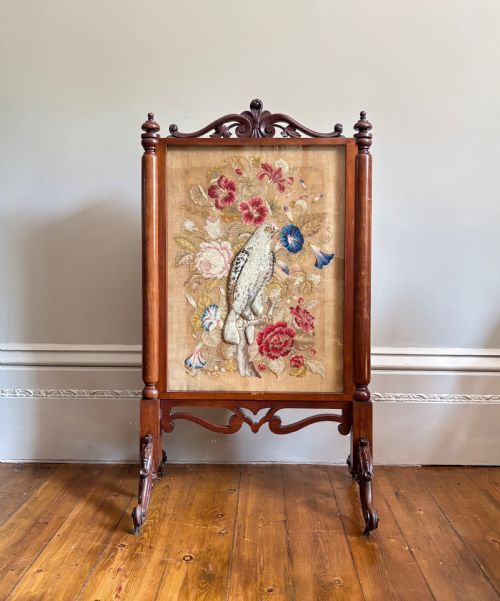
A victorian mahogany screen spans two main forms designed for the home, namely single-panel pole screens and multi-fold room or fire dividers.
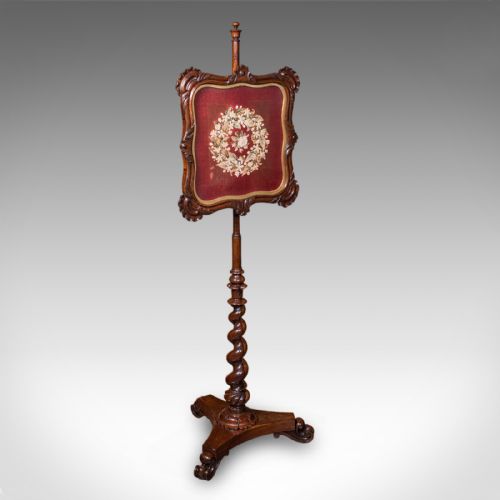
Pole screens feature an adjustable vertical panel mounted on a turned mahogany shaft with a tripod or circular base, intended to shield the face from an open hearth.
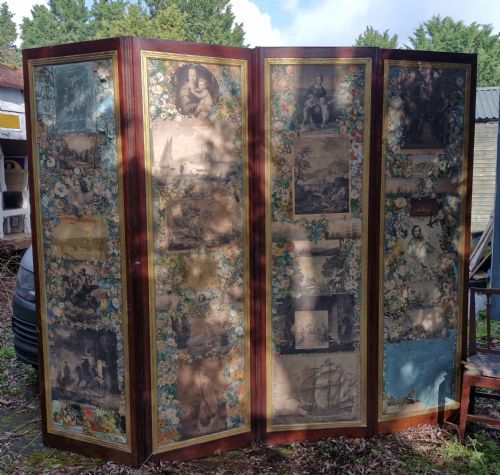
Multi-fold versions offer privacy or divide larger spaces, incorporating several hinged leaves of solid mahogany.
The selections here extend across the nineteenth century, encompassing Georgian, Regency, William IV, and Victorian periods.
How they were made
The frames utilise solid mahogany and figured veneers, shaped through turning, carving, and joinery.
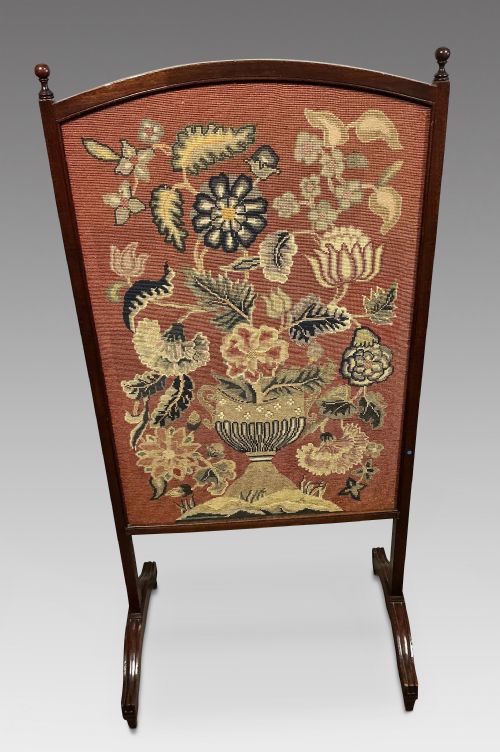
Panels incorporate textile insertions such as needlepoint, tapestry, berlin work, embroidery, wool, and canvas, alongside glass, brass fittings, and paper scrap work.
One historical panel proudly displays the coat of arms for the Clan Maclellan, bringing a touch of Scottish heraldry straight to the hearth.
What varies in quality
Craftsmanship in the woodwork dictates standard, visible in the depth of hand-carving on the bases and the precision of the turning on poles and framing.
The intricacy and preservation of the inner panels, whether hand-woven needlework or layered decoupage, separate standard items from finer examples.
The Victorian Mahogany Screen Glossary
- Pole screen
- A freestanding firescreen with an adjustable panel sliding up and down a central wooden pillar. This design allowed occupants to adjust the height of the heat shield relative to the hearth.
- Berlin work
- A style of counted-thread embroidery popular in the nineteenth century using brightly coloured wool on canvas. It frequently adorned the central panels of firescreens.
- Needlepoint
- A type of canvas work embroidery stitched by hand using wool or silk threads. It forms the pictorial scenes seen on many period screen panels.
- Decoupage
- The art of decorating a surface by gluing paper cutouts and scrap work onto it. Several folding screens in the archive utilise this technique for decorative effect.
- Bergere
- A type of upholstered wooden armchair or, in the context of screens, a panel filled with woven canework. It provides a lighter texture within the mahogany frame.
Victorian Mahogany Screen: Frequently Asked Questions
What is a pole screen used for?
A pole screen stood near an open fireplace to shield a person's face from the intense radiant heat of the coal or wood fire.
The adjustable panel could be moved up or down the central wooden shaft to block the heat precisely where the sitter needed protection.
How do I use a folding screen at home?
Multi-fold screens work well to divide large rooms, create private corners, or conceal areas that are not in active use.
Their hinged leaves allow them to be angled or flattened against a wall depending on the available space.
How do I date a mahogany screen?
Dating relies on observing the prevailing style of the woodwork, such as the Regency tripod bases or the heavier carving associated with William IV and Victorian pieces.
The materials used in the panels, from early needlework to late nineteenth-century scrap work, also offer clues to the decade of manufacture.
Are pole screens stable on modern floors?
Most pole screens utilise a tripod or weighted circular base designed to balance the weight of the central shaft and sliding panel.
While generally stable, placing them out of major walkways ensures they remain secure in a busy room.