

Victorian Mahogany Folding Table
A victorian mahogany folding table brings adaptable nineteenth-century utility into a modern room, moving easily from a compact console to a surface ready for cards or tea.
Victorian Mahogany Folding Table
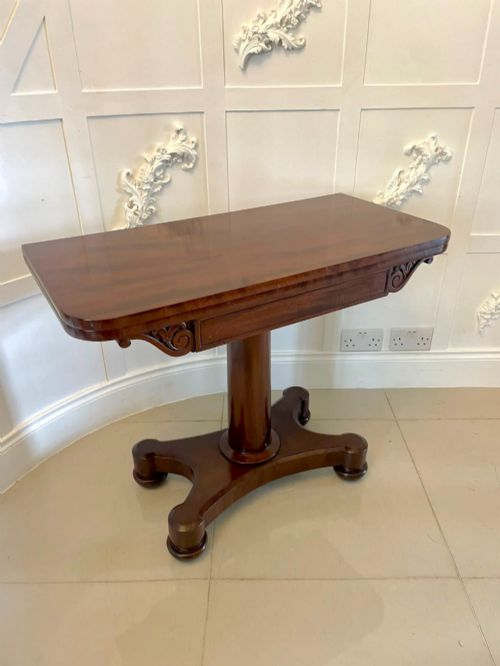
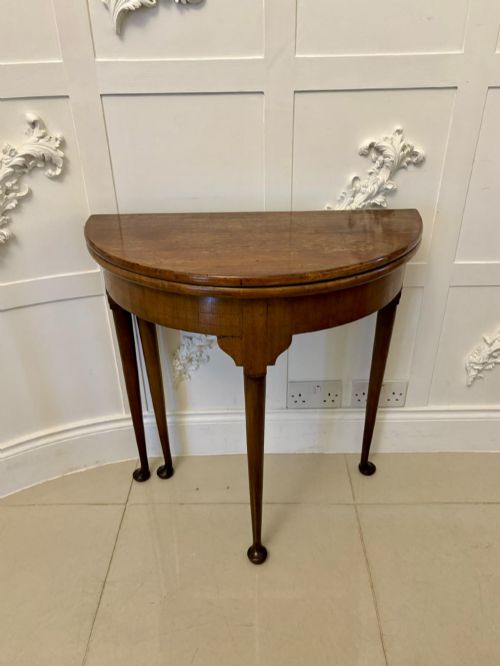
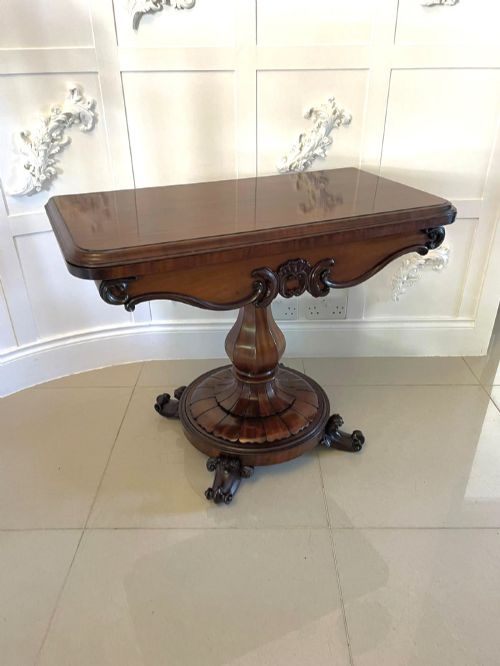
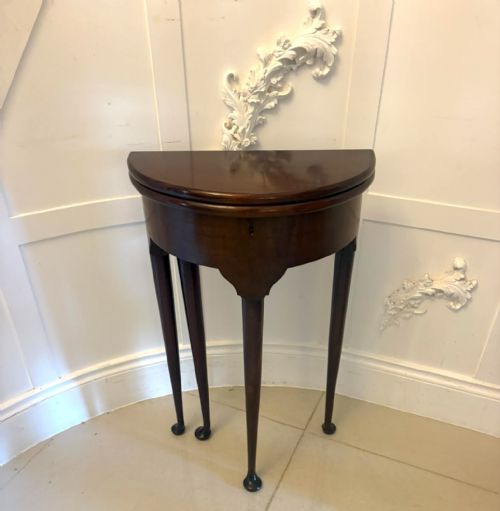
A victorian mahogany folding table encompasses diverse formats designed for space-saving adaptability in nineteenth-century homes, appearing most frequently as card tables, tea tables, and coaching tables. These pieces span the nineteenth century, with specific examples emerging from the eighteen-forties through to nineteen-hundred, alongside occasional Georgian precedents.
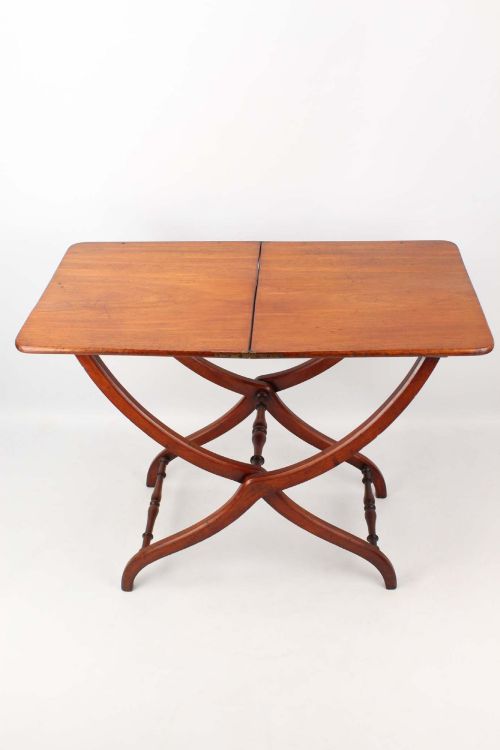
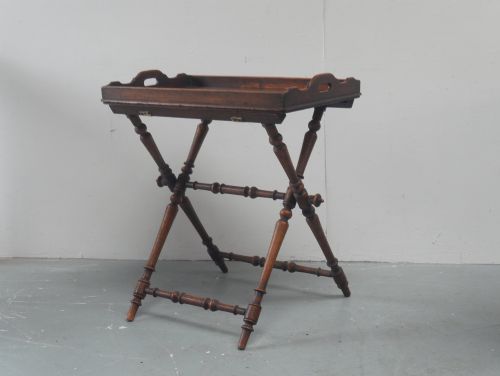
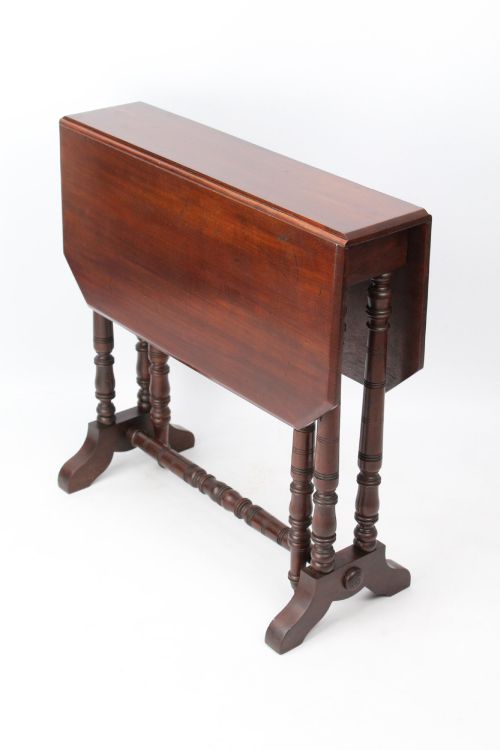
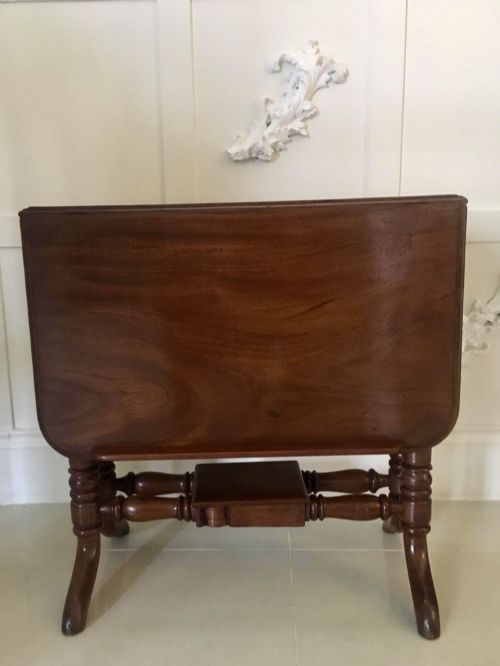
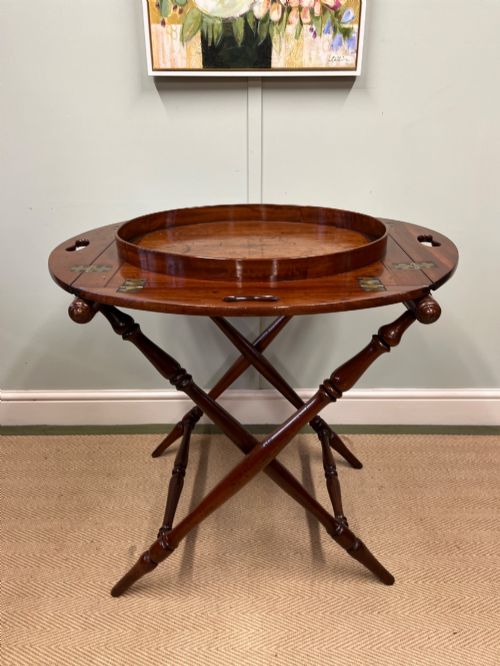
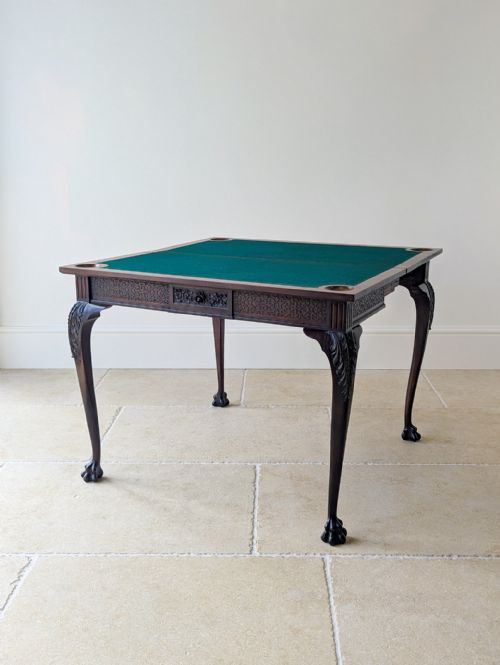
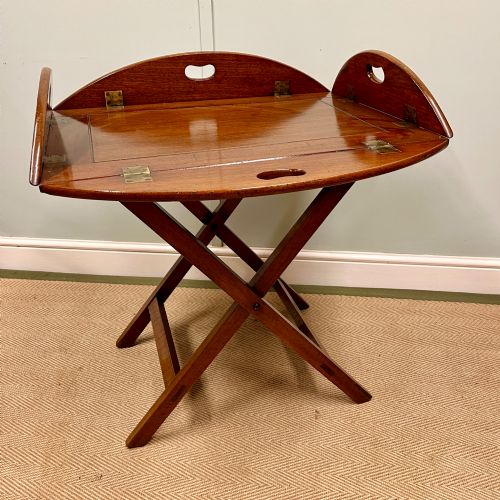
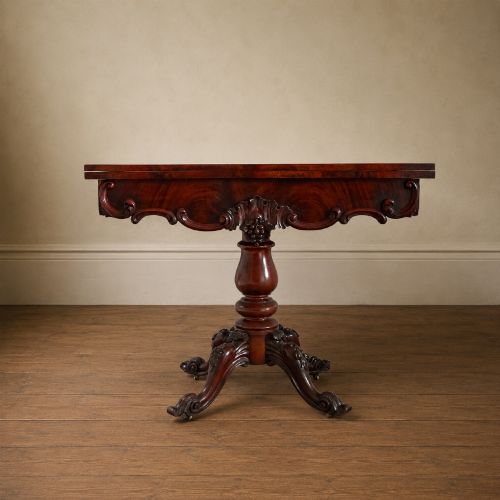
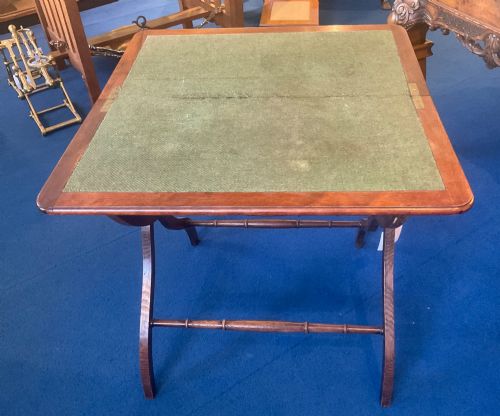
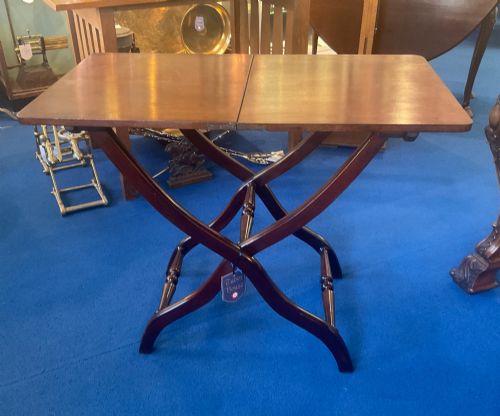
Card and games tables dominate the selection, often featuring turnover tops, swivel mechanisms, and internal wells lined for play. Alongside these, buyers encounter utilitarian folding coaching tables, butlers trays on stands, and compact Sutherland tables with drop leaves supported on swinging gate legs.
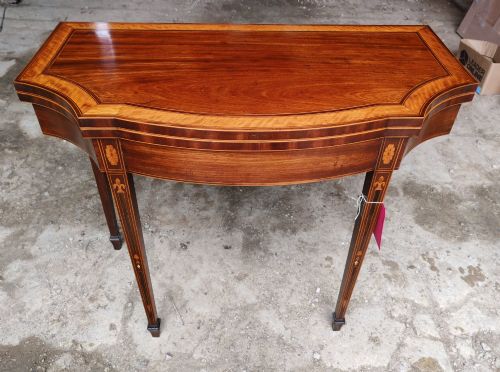
Design influences shift across the decades, moving from early plain figured mahogany surfaces to later revival styles including Chippendale and Sheraton interpretations, as well as Aesthetic Movement touches and satinwood inlay.
Materials and Construction
Mahogany serves as the primary timber, selected for its rich grain and structural stability, frequently enhanced with figured veneers or contrasting satinwood inlay. Secondary woods such as oak appear in internal framing, while specialised surfaces incorporate baize or wool baize linings for card playing.
Folding mechanisms rely on clever joinery, including swivel-top pivots, rule joints on drop leaves, and hinged gate legs that swing out to support extended tops. Brass hinges, castors, and campaign-style mounts provide both mechanical durability and functional detail.
Several folding tables hide secret storage compartments beneath their swivelling tops, perfect for stashing nineteenth-century playing cards away from prying eyes.
Quality Markers
The standard of a victorian mahogany folding table rests primarily in the selection of the timber and the precision of its figured veneer. Superior examples display carefully matched mahogany grains across the turnover leaves, avoiding abrupt joins or mismatched patches.
Mechanical integrity defines the upper tier of pieces, where folding actions, swivel mechanisms, and gate-leg supports operate with smooth, flush alignment. Subtle details such as finely turned legs, crisp carved details in revival styles, and original brass hardware elevate an individual piece.
James Shoolbred & Co.
The Victorian Mahogany Folding Table Glossary
- Turnover top
- A hinged table top that folds open to double its surface area, commonly found on card and tea tables. It often rotates on a swivel pivot to reveal a concealed storage compartment beneath.
- Baize
- A coarse woolen fabric used to line the playing surfaces of card and games tables. It provides a soft, non-slip texture suited for handling cards and counters.
- Sutherland table
- A narrow drop-leaf table with exceptionally small flaps supported by swinging gate legs. When folded down, the table occupies minimal floor space against a wall.
- Coaching table
- A portable folding table designed for travel or easy storage, featuring an X-frame or folding leg mechanism. These pieces reflect nineteenth-century campaign and domestic utility.
- Envelope table
- A square card table with four triangular flaps that fold diagonally over the centre to close. Opening one flap causes the others to unfold simultaneously.
Victorian Mahogany Folding Table: Frequently Asked Questions
How do I use a folding card table today?
These tables function brilliantly as console surfaces against a wall when closed, opening up readily when guests arrive for drinks or games.
The lined playing surface also makes them suitable as occasional writing desks or display spaces in a living room.
What is the difference between a tea table and a card table?
Tea tables generally feature polished wooden tops designed to hold china or lamps once unfolded.
Card tables typically incorporate baize or wool linings inside the folding leaf specifically intended for playing games.
Are coaching tables sturdy enough for daily use?
Coaching tables were originally built to withstand travel and active domestic service using robust folding frames.
While their folding mechanisms make them portable, well-constructed examples provide a stable surface for everyday placement of lamps or drinks.
How do I distinguish early Victorian tables from later revival pieces?
Early Victorian examples tend to rely on simple figured mahogany veneers and robust, unfussy turned legs.
Later nineteenth-century pieces often embrace revival aesthetics, featuring decorative satinwood inlay, carved edges, or stylistic nods to Chippendale and Sheraton designs.