




Victorian Mahogany Captains Chair
A victorian mahogany captains chair is a robust, revolving seat designed for long hours at the desk, prized for its sturdy timber frame and comfortable leather upholstery.
Victorian Mahogany Captains Chair
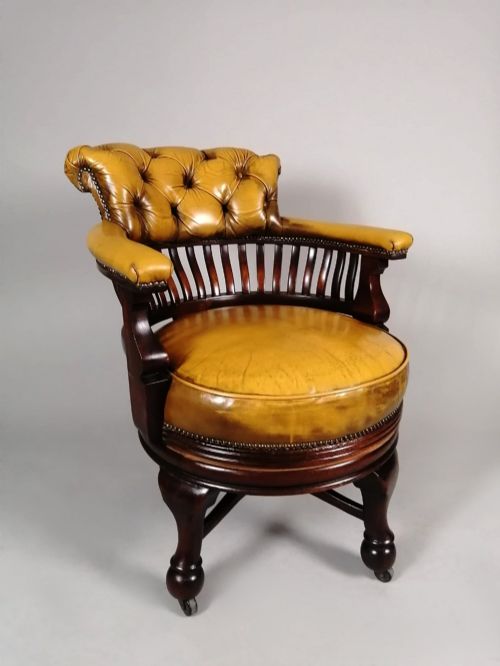
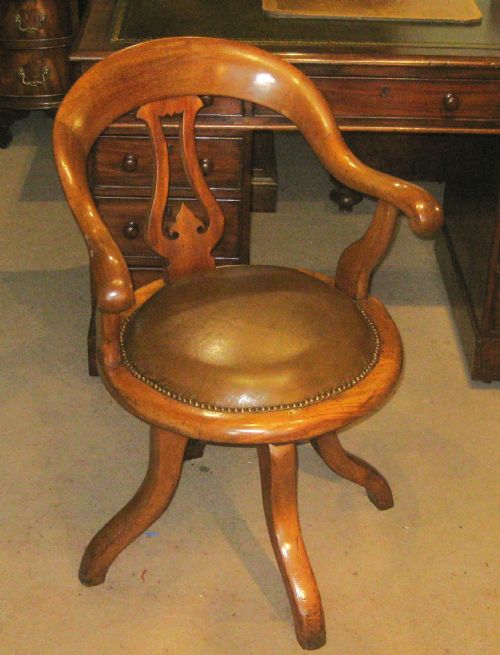
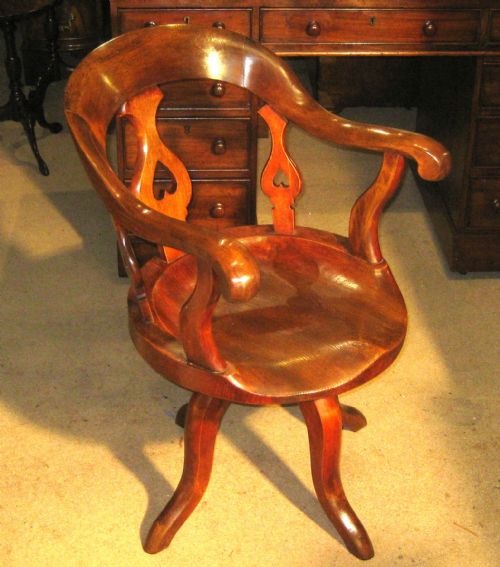
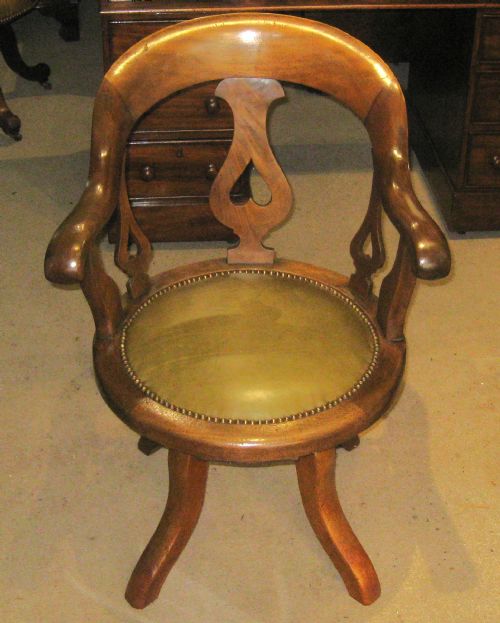
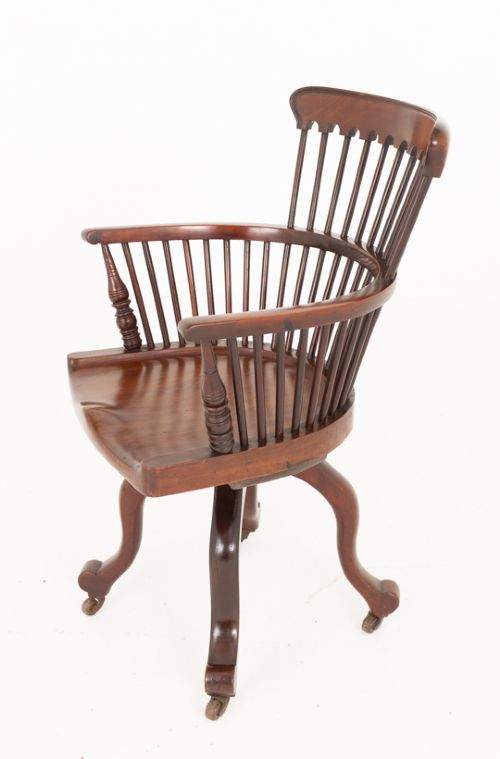
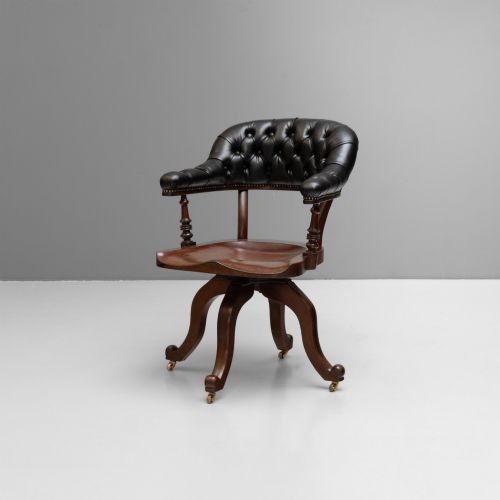
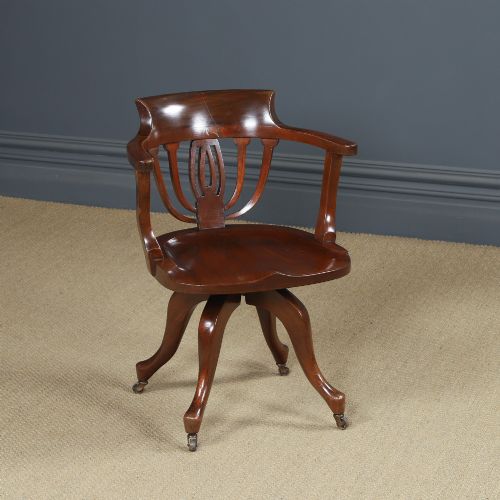
A victorian mahogany captains chair typically combines a solid timber frame with a rounded, horseshoe-shaped backrest and supportive armrests. These pieces frequently appear in revolving or swivel configurations, built to function as practical office or desk seating.
The materials span deep brown or golden mahogany paired with leather pads, fabric, or brass accents. Most examples belong to the nineteenth century, reflecting utilitarian comfort combined with domestic or professional authority.
Materials and construction
Makers utilised dense hardwood timber for the structural frames, often steam-bending the continuous rail that forms the arms and backrest. Solid mahogany components were joined with traditional woodworking joints to withstand the rotational stress of swivel mechanisms.
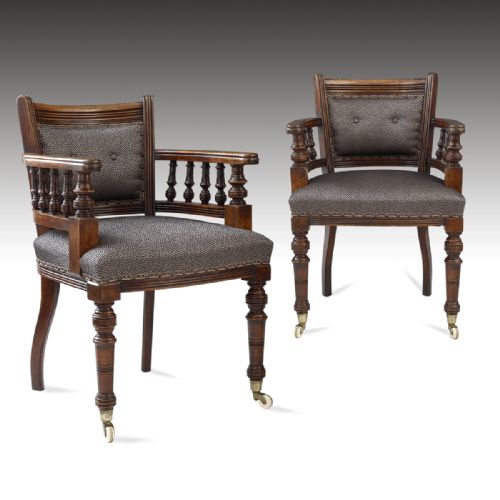
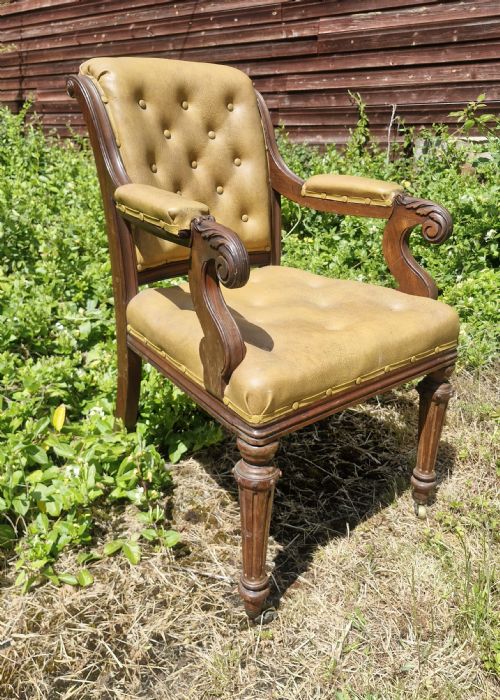
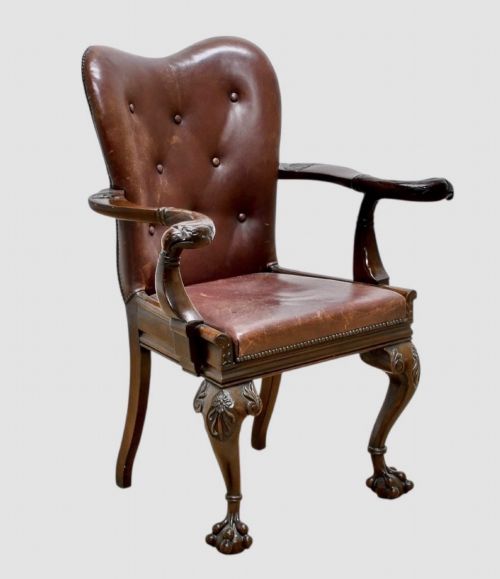
Upholstery involved fitted leather or fabric secured over padding, frequently complemented by brass studs and iron swivel mechanisms beneath the seat. Castors made of brass or metal were commonly fitted to the legs for mobility across office floors.
Listings feature mahogany, leather, and brass, spanning the Victorian and Edwardian periods.
Judging construction and finish
Quality rests in the integrity of the timber framing and the smoothness of the underseat mechanism. Heavier, solid mahogany construction commands greater regard than lighter or veneered alternatives.
The refinement of the carved details on the back rail and the proportion of the horseshoe curve separate standard utility seating from finer library and office pieces.
Howard and Sons·Shoolbred
The Victorian Mahogany Captains Chair Glossary
- Carver chair
- An armchair designed in a style matching a set of dining chairs, frequently utilised at the head of a table or at a desk.
- Revolving mechanism
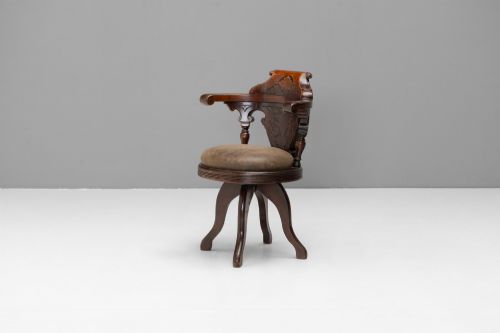
- The mechanical pivot under the seat allowing the chair to turn full circle, often utilising iron and brass components.
- Tub chair
- An upholstered seating form where the back and arms form a single continuous rounded enclosure.
- Horseshoe back
- A curved upper rail resembling a horseshoe that wraps around to form integral armrests.
- Mahogany
- A durable tropical hardwood known for its deep reddish-brown tone and resistance to warping.
Victorian Mahogany Captains Chair: Frequently Asked Questions
What is a captains chair?
A captains chair is a sturdy wooden armchair featuring a low, rounded back and arms made for desk or office work.
These seats were traditionally built to provide robust support during long hours of writing or administration.
Are all captains chairs revolving?
Not all examples swivel, as many traditional designs feature fixed legs or castors without a rotating spindle mechanism.
Revolving versions became particularly popular during the nineteenth century for office and library environments where movement was necessary.
What wood are they made from?
The primary timber used for these chairs is mahogany, valued for its strength, rich colour, and reliable density.
Other hardwoods such as walnut also appear occasionally across the period inventory.
How do I date a victorian chair?
Dating relies on examining the construction methods, the type of hardware used in the swivel mechanism, and the wear on the timber.
Nineteenth-century examples often display hand-turned components and period joinery distinct from later revival pieces.