

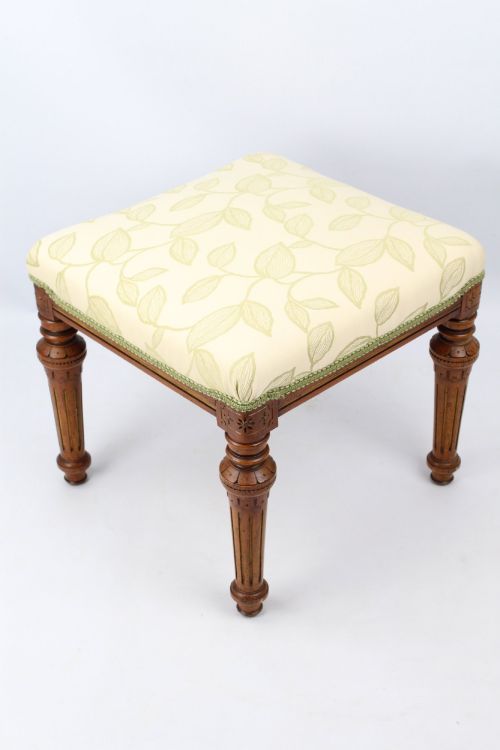
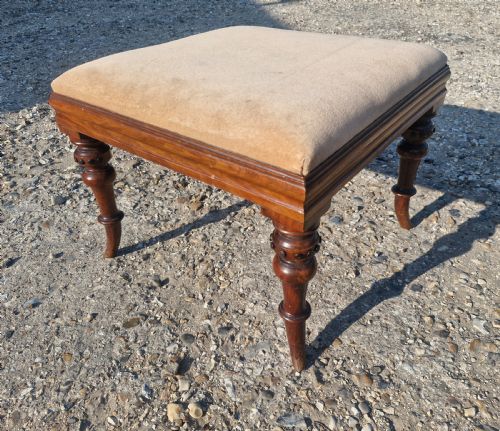
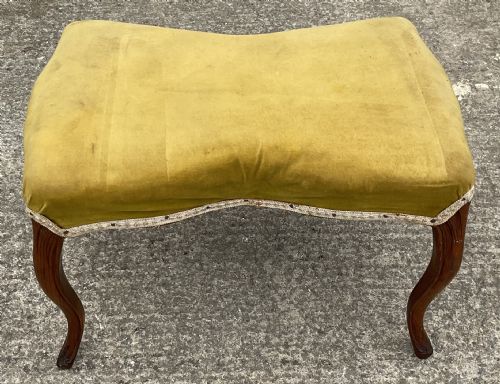
Victorian Low Footstool
A victorian low footstool brings immediate comfort to a fireside or dressing room, offering solid timber frames and traditional upholstery that ground a period interior.
Victorian Low Footstool
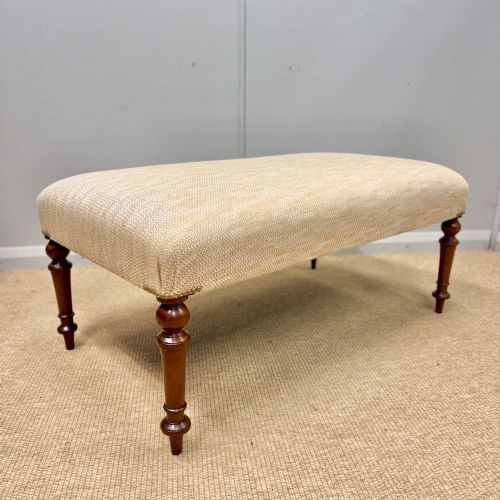
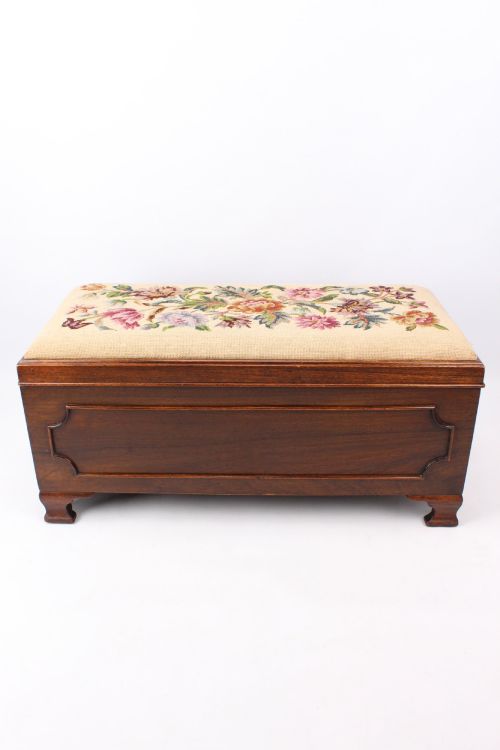
A victorian low footstool takes several distinct shapes across the nineteenth century, including small circular pads, oblong dressing seats and long hearth furniture. Most examples on this page are compact timber frames designed to support feet near a hearth or sit neatly beneath a dressing table.
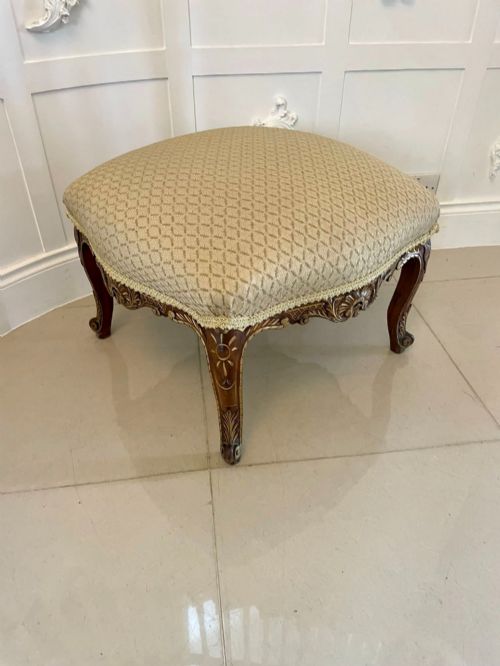
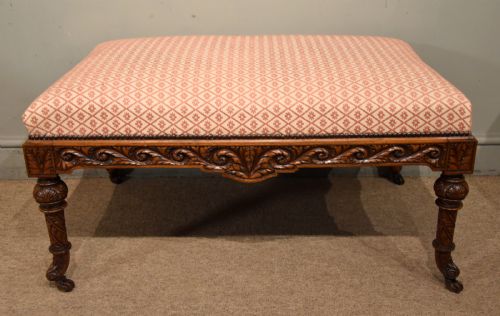
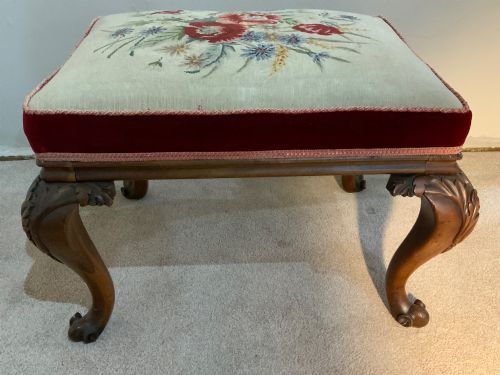
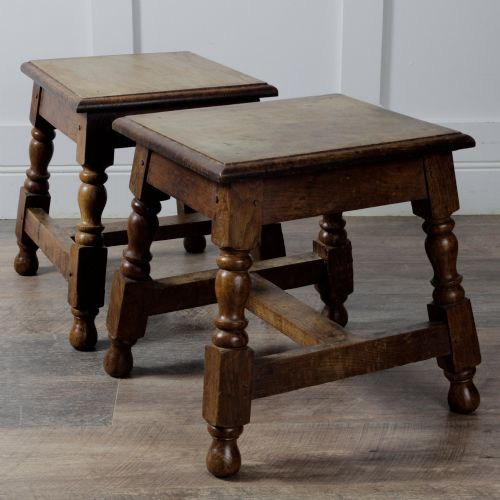
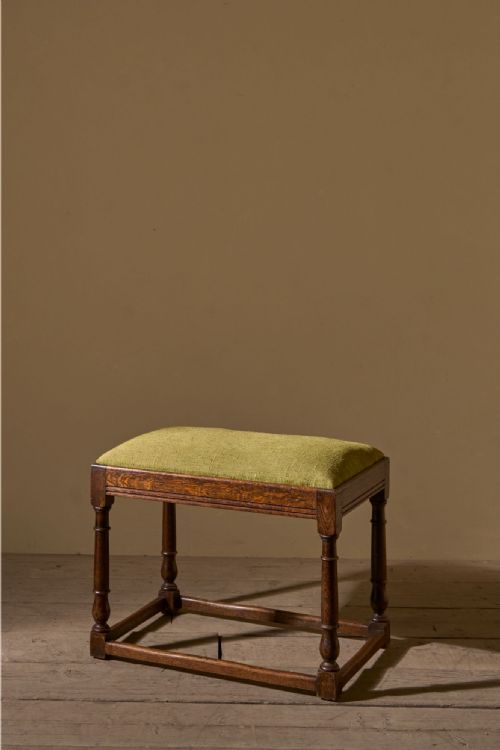
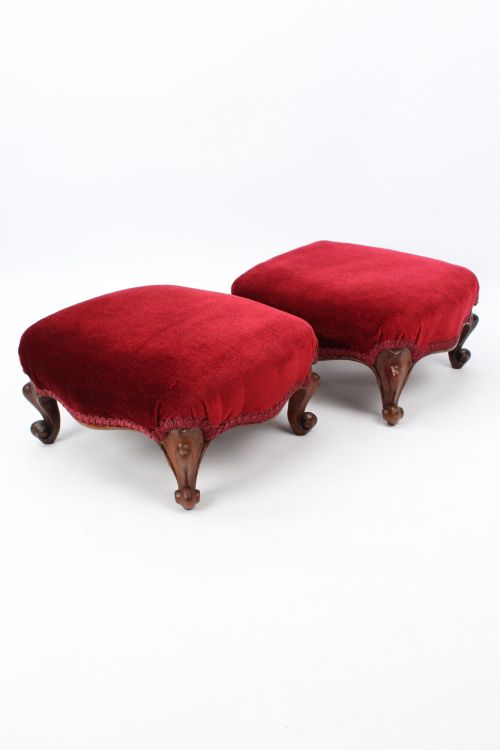
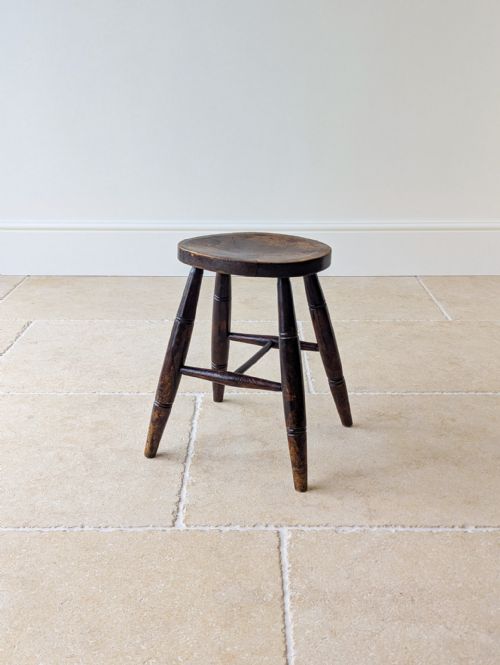
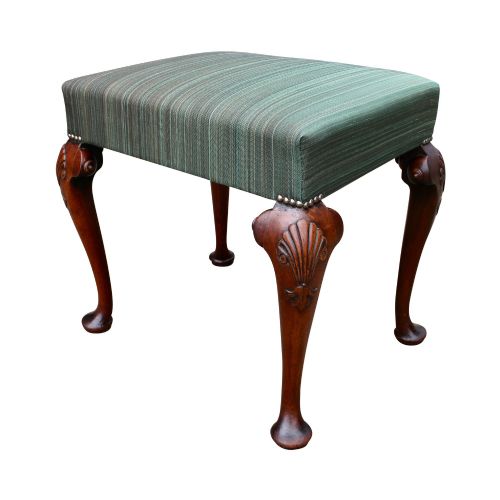
Makers fashioned these pieces from durable hardwoods like mahogany, walnut and oak, often pairing them with low cabriole legs, ball feet or brass castors. You will encounter both vernacular country stools and formal revival pieces bearing carved details or inlaid decoration.
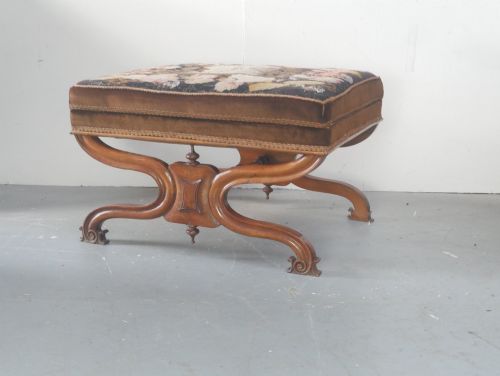
Upholstery defines much of their daily character, ranging from newly recovered linen and velvet to older needlework, tapestry and leather. Many survive with their original padding or arrive newly upholstered for immediate placement in a sitting room.
Materials and construction
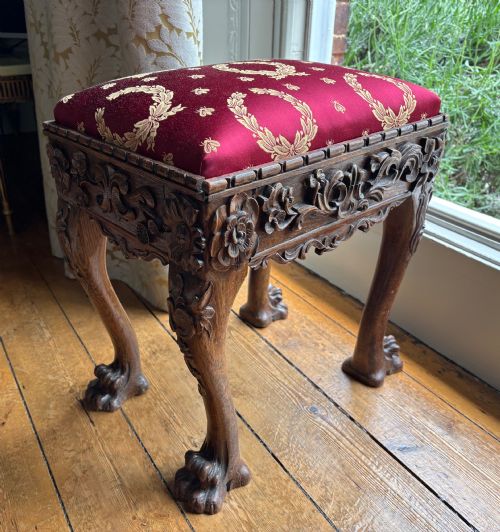
Cabinetmakers utilised dense hardwoods such as mahogany, walnut, rosewood and oak for the structural frames, joining the timber with traditional pegging or mortise and tenon techniques. Turned legs, cabriole supports and applied carvings demonstrate the standard woodworking methods of the period.
Soft furnishings relied on heavy textiles, including woollen needlepoint, tapestry, velvet, leather and linen stretched over webbed or stuffed bases. Brass castors frequently appeared on larger centre stools and hearth designs to ease movement across heavy carpets.
A few sturdy examples retain brass castors designed to chase the moving warmth of the coal fire across the rug.
Distinctions in craftsmanship
Superior examples separate themselves through the crispness of timber carving, the choice of figured walnut or rosewood veneers, and the structural integrity of the frame joints. Lesser pieces often rely on simpler vernacular pine or beech without decorative embellishment.
The refinement of the legs dictates much of the visual weight, from fluid cabriole forms with scroll feet down to basic turned uprights. Well-executed upholstery work that respects historical padding profiles maintains the dignity of the original design.
The Victorian Low Footstool Glossary
- Cabriole leg
- A furniture support that curves outward in a convex arc and tapers inward in a concave arc, ending in a pad or scroll foot. This shape originates from classical furniture design and appears frequently on Victorian seating.
- Gout stool
- A specialised low footrest featuring an adjustable inclined top designed to elevate and support a foot afflicted with pain. These pieces often retain original leather or tapestry covers.
- Hearth stool
- A long, low seat built to sit in front of a fireplace for warming feet. They provide extended horizontal surfaces supported by short turned or carved legs.
- Needlework
- Stitched textile decoration created with yarn on a stiff canvas mesh, commonly used for historical seat covers. Floral and geometric patterns dominate Victorian upholstery.
- Castor
- A small wheel fitted to the base of a furniture leg to allow smooth rolling across floors. Brass mounts are typical on nineteenth-century centre stools.
Victorian Low Footstool: Frequently Asked Questions
Where should I place a low footstool?
These compact pieces fit naturally beside a fireside armchair, at the foot of a bed, or beneath a dressing table mirror. Their low profile ensures they do not block walking routes in smaller rooms.
They also serve well as impromptu seats for children or as low stands for books and small trays in a sitting room.
How do I care for antique upholstery?
Vacuum textile surfaces gently with a soft brush attachment to remove dust without pulling fragile threads. Avoid placing antique fabrics in direct sunlight to prevent fading.
Condition leather surfaces with appropriate balms periodically, and protect wooden frames with a neutral beeswax polish applied sparingly.
Can I reupholster a period stool?
Many examples arrive ready for new fabric or already recovered in sympathetic textiles like linen or velvet. Reupholstering a frame allows you to match existing room decor while preserving the underlying antique structure.
Traditional methods utilising webbed bases and hair stuffing maintain the correct profile and sit lower than modern foam cushions.
How do I date a nineteenth-century stool?
Dating relies on combining timber choices, leg styles and construction methods visible in the frame. Walnut and rosewood pieces with cabriole legs often point toward mid-century output, while simpler oak joint stools reflect earlier vernacular traditions.
Castors, secondary woods inside the frame, and fastening types provide further clues to the decade of manufacture.