





Victorian Long Stool
A victorian long stool provides extended seating by the fireside, beneath a window, or at the foot of a bed with robust nineteenth-century character.
Victorian Long Stool
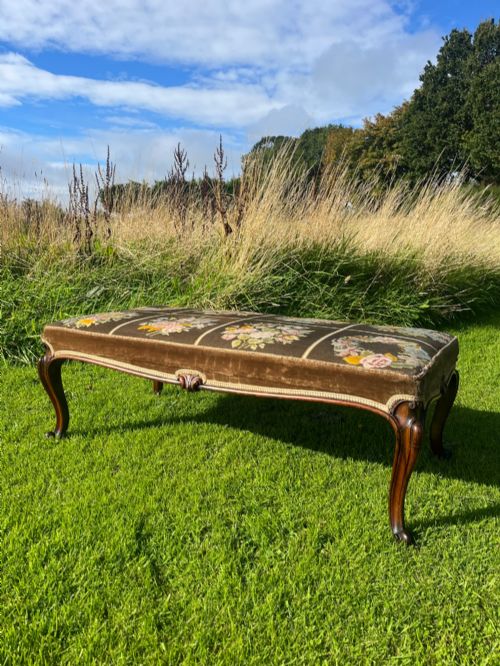
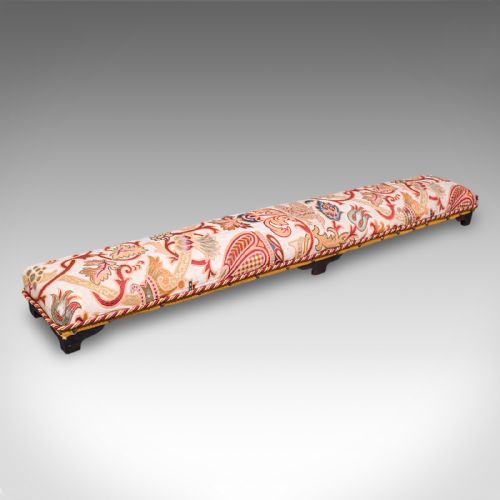
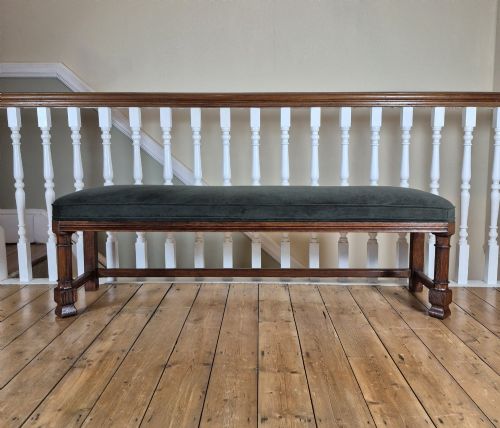
A victorian long stool encompasses low footstools, fender stools designed to sit before a fireplace, and long window seats or benches made throughout the nineteenth century. These low-profile pieces served various domestic functions, from resting feet to accommodating extra sitters in a drawing room or hall.
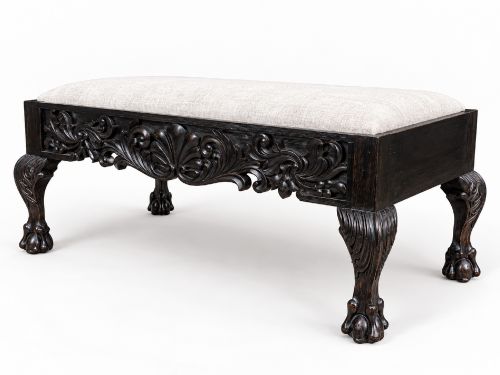
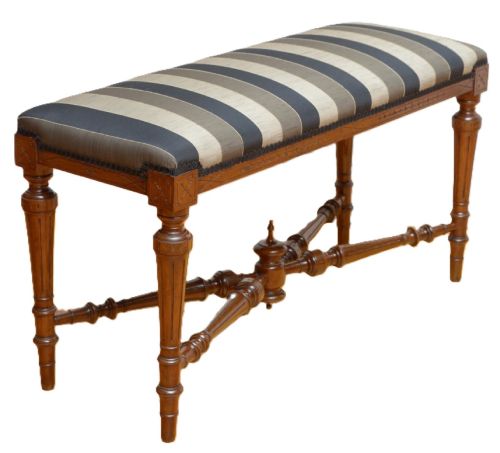
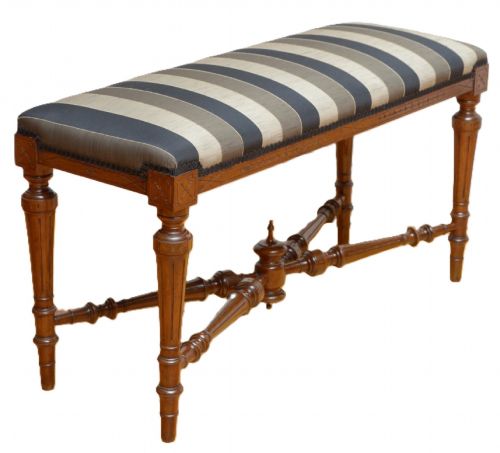
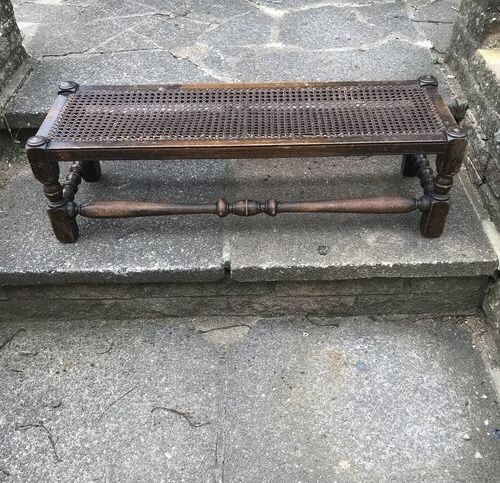
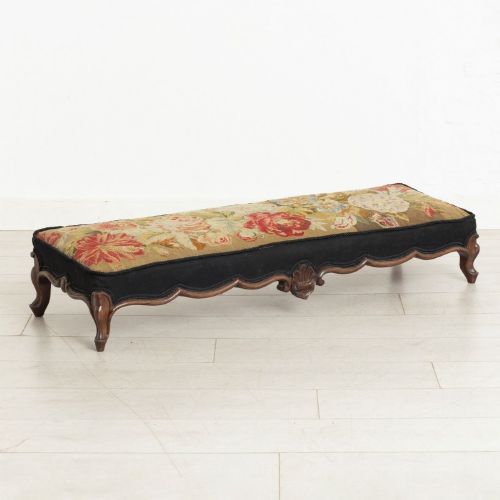
The versions most commonly met on this page are constructed from walnut or mahogany, often supported on carved cabriole legs, alongside sturdier oak and ebonised examples. Many feature upholstered tops covered in period textiles, velvet, ticking stripe, or leather, while others utilise woven cane.
Makers and manufacturers produced these long forms in diverse stylistic revivals, incorporating Gothic, Rococo, Jacobean, and Arts and Crafts design elements. Their elongated proportions distinguish them from standard square footstools, making them versatile items for modern interior placement.
How they were made
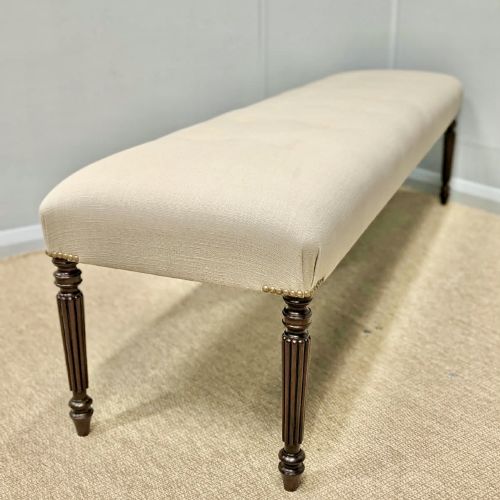
Cabinet makers constructed the frames of a victorian long stool using dense hardwoods such as walnut, mahogany, oak, and rosewood, frequently incorporating turned, fluted, or cabriole leg supports. Some iterations utilised ebonised finishes or parcel-gilding to mimic more expensive materials.
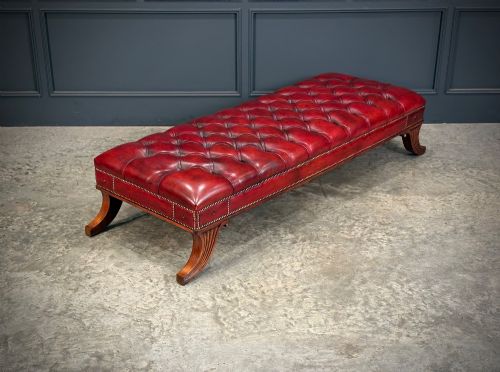
Upholstery techniques varied from simple squab cushions to deep buttoning secured with brass studs, applied over webbing and stuffing. Alternative seating surfaces relied on natural cane panels woven directly into wooden frames, or hinged wooden lids opening to reveal storage spaces below.
Victorian Long Stool Retail Price Guide 2026
Typical asking prices for victorian long stool among the pieces listed under this phrase on Sellingantiques today, from the lower quarter to the upper quarter. They describe what is for sale here now, not the wider market.
Listings feature walnut, mahogany, oak, and rosewood timbers alongside cane, leather, and velvet materials.
What varies in quality
The refinement of the timber carving and the architectural balance of the underframe separate standard utility seating from finer parlor pieces. Sharp detailing on cabriole legs or restrained Gothic tracery indicates superior cabinet work.
The integrity of the frame construction and the choice of covering material dictate the overall standard of the piece. Original or sympathetic re-upholstery using appropriate textiles like velvet, leather, or woven cane maintains the historical character of the stool.
The Victorian Long Stool Glossary
- Fender stool
- A low, elongated stool designed specifically to sit on the hearth just outside the brass or iron fireplace fender. These pieces kept feet elevated away from cold stone floors.
- Cabriole leg
- A furniture leg that curves out and then in, resembling the leg of an animal. This form became popular during revival periods referencing earlier eighteenth-century designs.
- Ebonised
- Wood treated with a dark stain or finish to imitate ebony. This technique appeared frequently on nineteenth-century seating for a dramatic, contrasting appearance.
- Cane
- Plant material woven into an open mesh pattern for seat panels. It provided a lightweight, flexible surface popular on various benches and daybeds.
- Gothic Revival
- An architectural and decorative style drawing inspiration from medieval design. Pieces often incorporate pointed arches, heavy oak timbers, and quatrefoil motifs.
Victorian Long Stool: Frequently Asked Questions
Where were these long stools placed in a Victorian home?
These long stools were positioned in multiple rooms depending on their specific form and length. Fender stools sat directly on the hearth before the fireplace, while window seats occupied deep sill recesses.
Others served as dressing stools, piano benches, or hallway seating where guests could pause. Their elongated shape allowed them to fit neatly into narrow spaces where standard armchairs would not go.
How do I tell an early Victorian stool from a late one?
Early examples from the mid-nineteenth century often display rich rosewood or mahogany timbers with heavy carved cabriole legs and robust proportions. They frequently utilise traditional needlepoint or horsehair upholstery.
Later pieces from the 1880s and 1890s frequently reflect Arts and Crafts or Aesthetic Movement influences, featuring ebonised finishes, simpler turned legs, or cane panels. Walnut also saw widespread use during the middle and later decades of the century.
Are these long stools sturdy enough for daily seating?
Solid hardwood frames built with traditional joinery remain remarkably strong and suitable for everyday use in modern interiors. Walnut, oak, and mahogany provide durable foundations that withstand regular weight.
Buyers should inspect the joints and underframe stability rather than the upholstery, which is frequently renewed. Pieces supported by four or more sturdy legs offer reliable support for multiple sitters.
What is the difference between a window seat and a fender stool?
A fender stool is exceptionally low and long, engineered specifically to stretch along the hearth in front of a fireplace fender. Its primary purpose was keeping feet warm and comfortable near the fire.
Window seats stand slightly taller to match standard chair heights, often incorporating arms or back supports designed for sitting by a light source. Both share elongated rectangular proportions but serve distinct functional roles in domestic spaces.