

Victorian Locking Drawer Chest
A victorian locking drawer chest secures your papers and valuables behind a clever hinged stile that locks every drawer at once.
Victorian Locking Drawer Chest
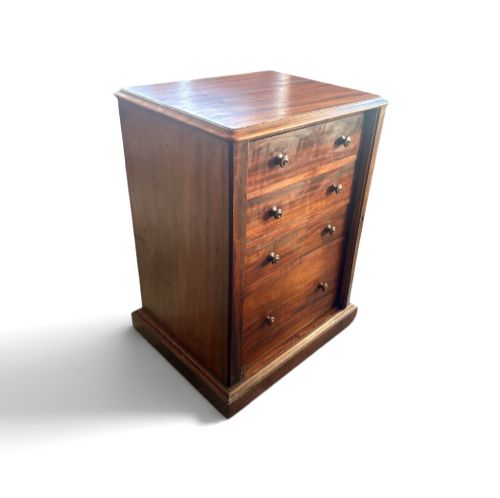
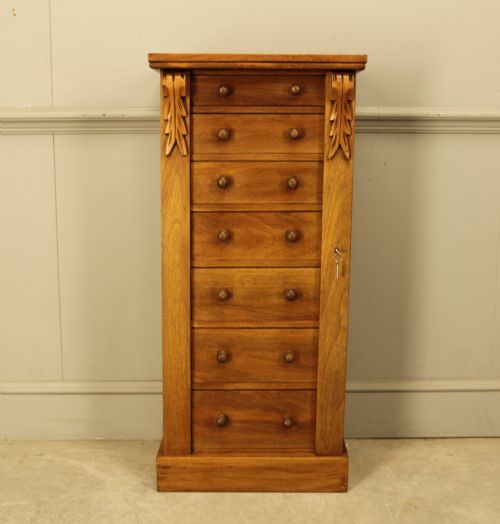
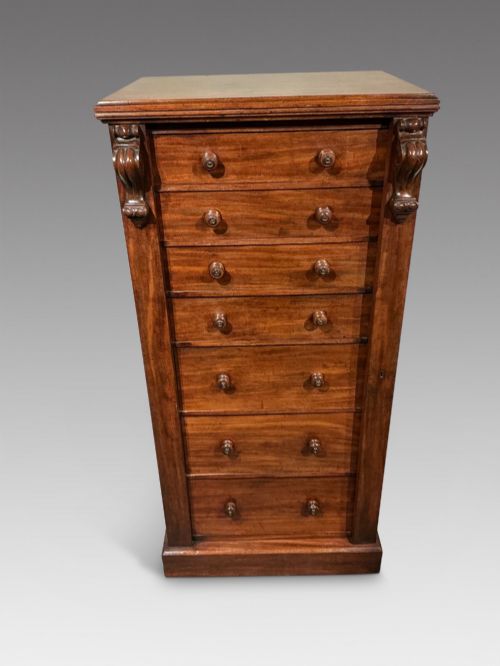
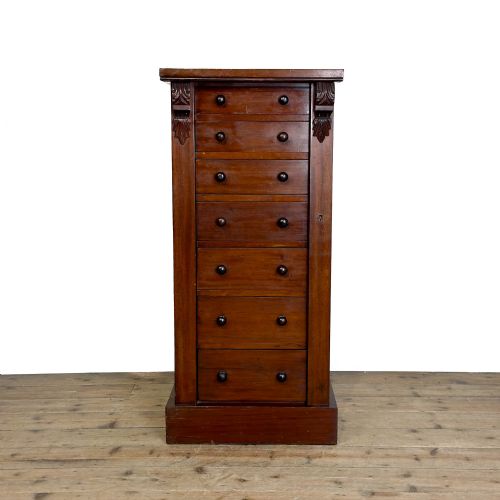
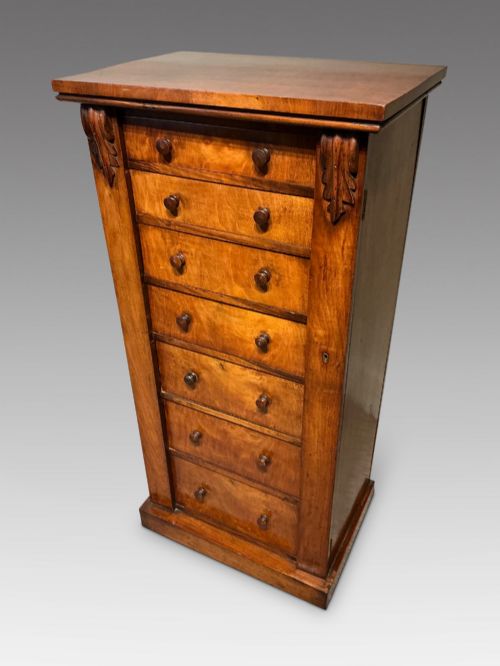
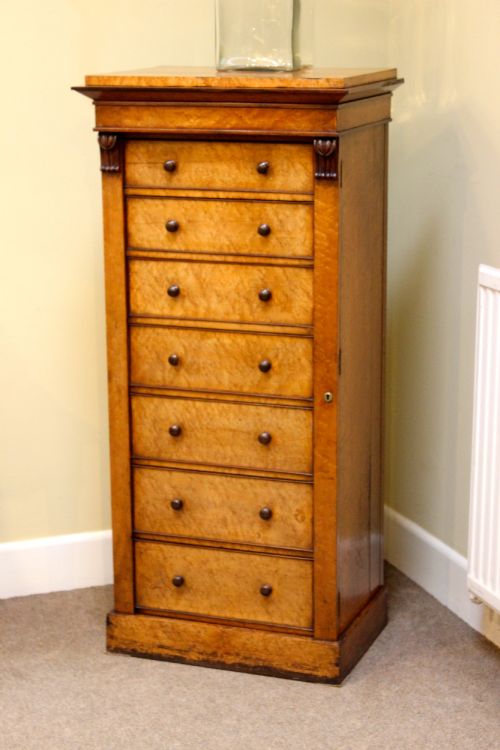
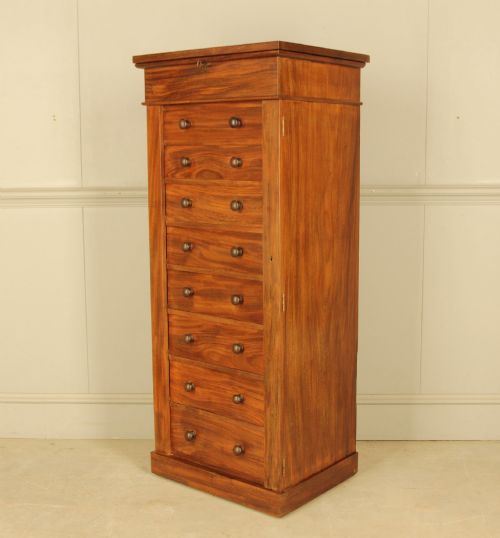
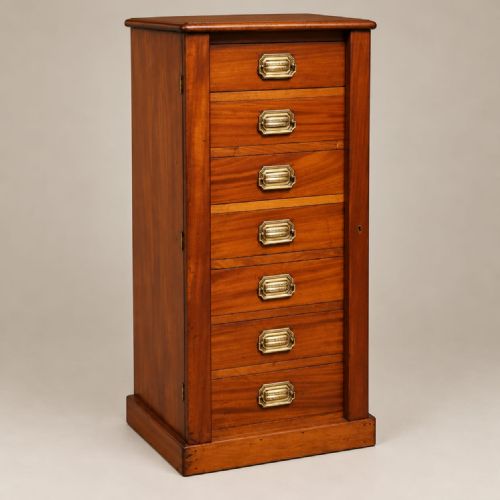
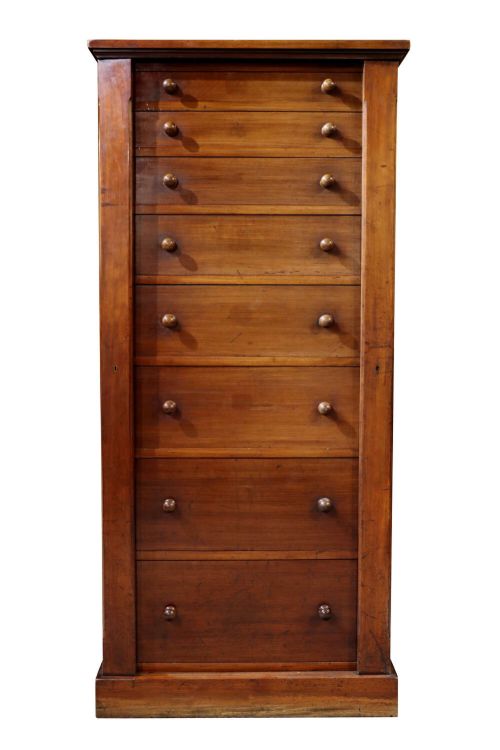
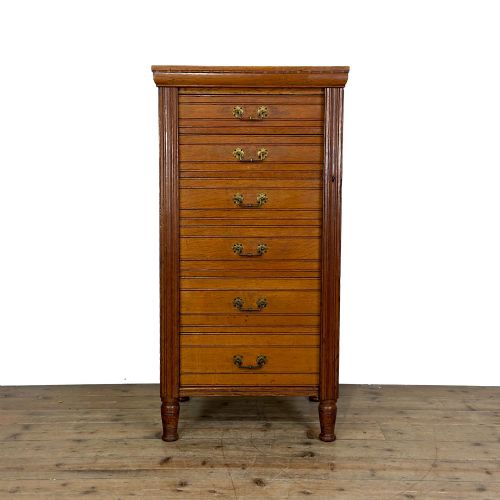
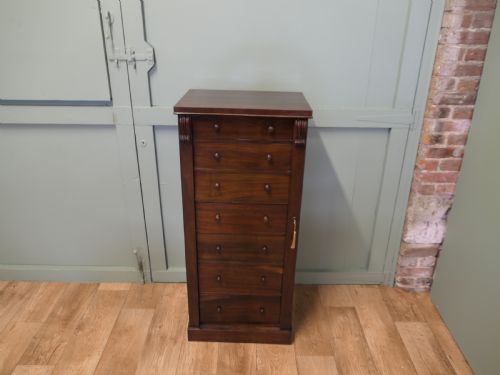
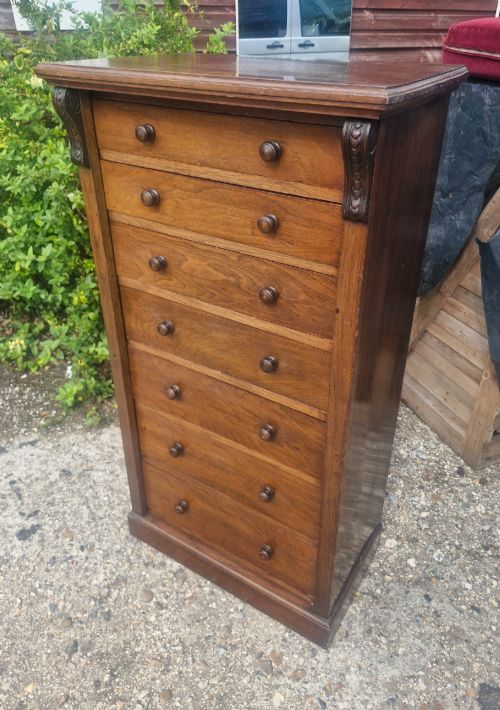
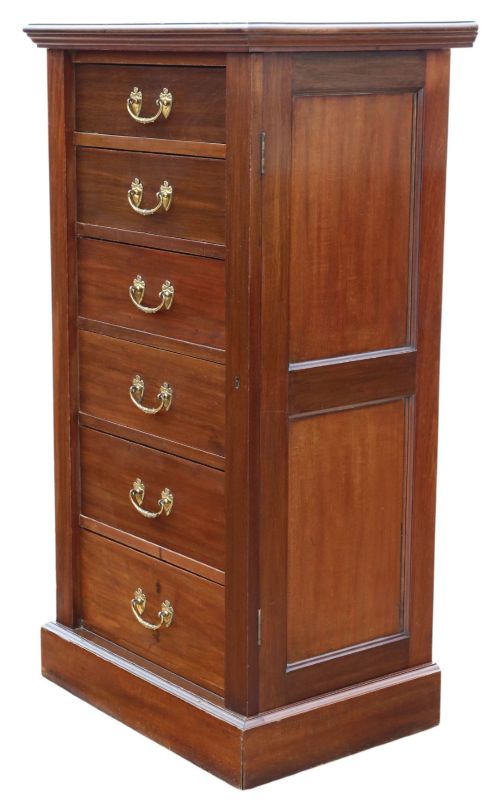
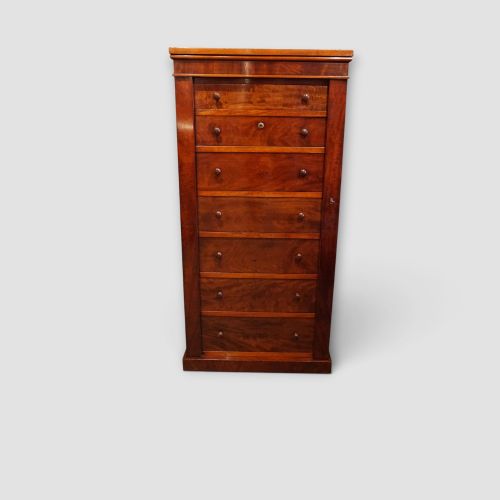
A victorian locking drawer chest is primarily represented here by the tall, slender Wellington chest, designed with multiple graduated drawers enclosed by a locking vertical flap on the right side.
The evidence shows these pieces appearing mainly in Victorian and 19th-century variants, alongside occasional Regency, William IV and Edwardian examples that share the characteristic narrow proportions.
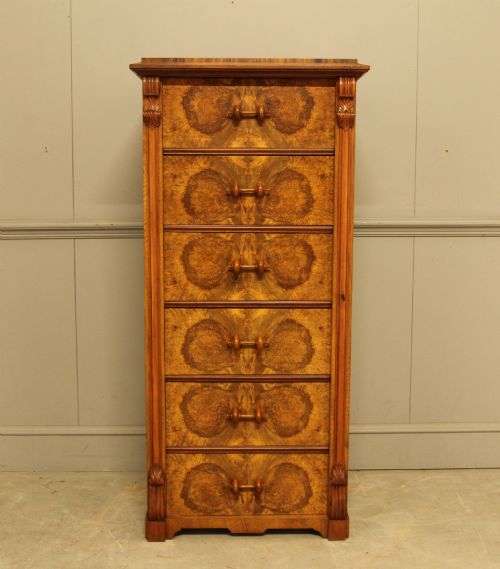
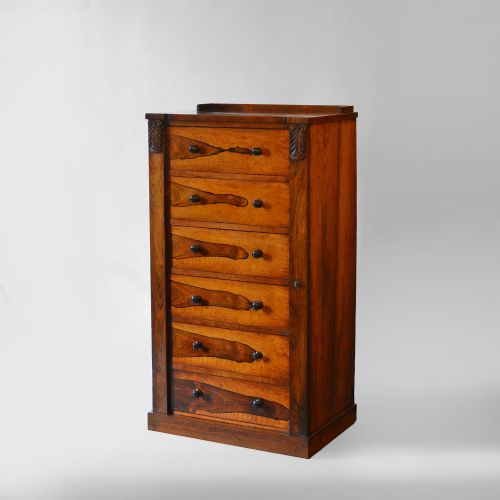
Makers utilised timber varieties such as mahogany, walnut, burr walnut, rosewood, oak and birdseye maple to construct these compact storage pieces for the bedroom or study.
Materials and construction
Cabinet makers built these pieces using solid hardwoods like mahogany and oak for the primary structure, applying choice veneers such as burr walnut, rosewood and birdseye maple to the drawer fronts.
The defining mechanism relies on a hinged locking flap or stile on the right side, which engages with the drawer edges when secured by a working key and internal bolt system.
Victorian Locking Drawer Chest Retail Price Guide 2026
Typical asking prices for victorian locking drawer chest among the pieces listed under this phrase on Sellingantiques today, from the lower quarter to the upper quarter. They describe what is for sale here now, not the wider market.
One unexpected survivor wears original country house scumble paint, proving that even formal furniture occasionally suffered a DIY makeover.
Judging the standard
Quality rests upon the selection of timber figures, such as highly figured Honduras mahogany, burr walnut or birdseye maple, matched carefully across the drawer fronts rather than laid down at random.
The integrity of the locking stile, the presence of original turned wooden knobs or brass fittings, and the smooth travel of each individual drawer distinguish the finer workshops from standard production.
Gillows·Holland and Sons
The Victorian Locking Drawer Chest Glossary
- Wellington chest
- A tall, narrow chest of drawers featuring a hinged locking flap on the right side that secures all drawers simultaneously. This design gained popularity during the 19th century for storing papers and personal effects.
- Secretaire
- A cabinet or chest incorporating a pull-down writing flap with internal pigeonholes and small drawers. Examples in this format combine the secure vertical locking system with a dedicated desk surface.
- Stile
- The upright vertical member on the right side of the chest that swings open or unlocks to release the drawers. It carries the locking mechanism that engages the side of each drawer.
- Veneer
- A thin layer of figured wood, such as burr walnut or rosewood, applied over a secondary timber base. This technique allowed cabinet makers to display dramatic grain patterns without using solid luxury timber.
- Campaign furniture
- Portable pieces designed for travel, often fitted with brass corners and recessed flush handles. Certain pieces in the listings reflect this robust construction style.
Victorian Locking Drawer Chest: Frequently Asked Questions
Why do these chests have a locking side bar?
The locking stile swings shut to secure every drawer simultaneously with a single turn of the key. This kept confidential papers and valuables private in 19th-century bedrooms and studies.
Cabinet makers developed this compact vertical format to provide generous storage without occupying much floor space in smaller rooms.
How do I operate the locking mechanism?
You must first unlock and swing open the right-hand vertical flap before any of the individual drawers can be pulled out. Attempting to force a drawer while the flap is closed will damage the internal mechanism.
Ensure the drawers are pushed completely home so the locking bar can engage smoothly down the entire side of the stack.
What is the difference between standard and secretaire models?
A standard model contains a full stack of horizontal drawers behind the locking flap, intended purely for storage. A secretaire version conceals a fitted writing drawer with small compartments behind a fold-down front.
Both types utilise the same narrow proportions and side-locking stile characteristic of the form.
Where were these chests placed in a home?
Their tall, slender footprint made them ideal for tight spaces between windows or beside a bed where a wider chest would not fit. They served as compact wardrobes, stationery cabinets or gentleman's dressers.
Country houses and town houses alike utilised them in dressing rooms and libraries for organised storage.