
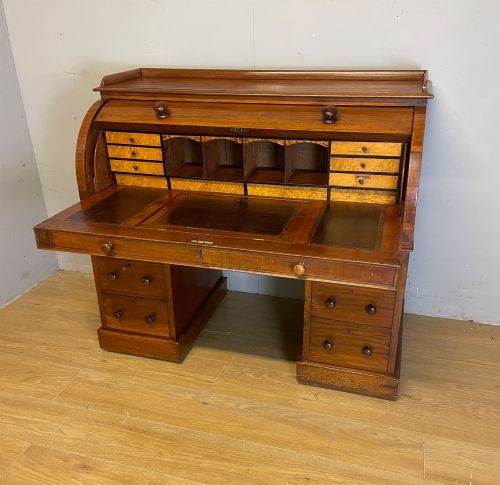
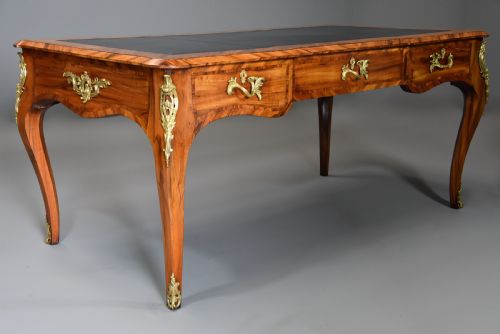
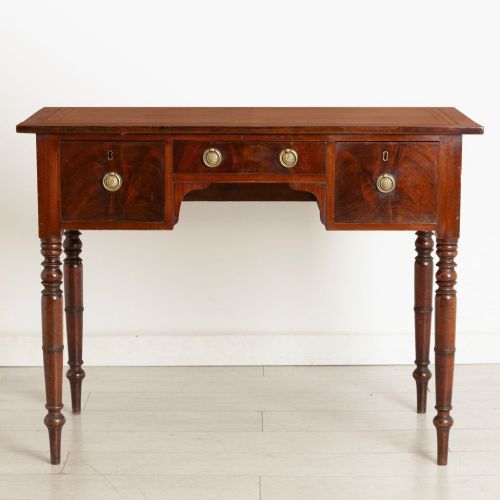
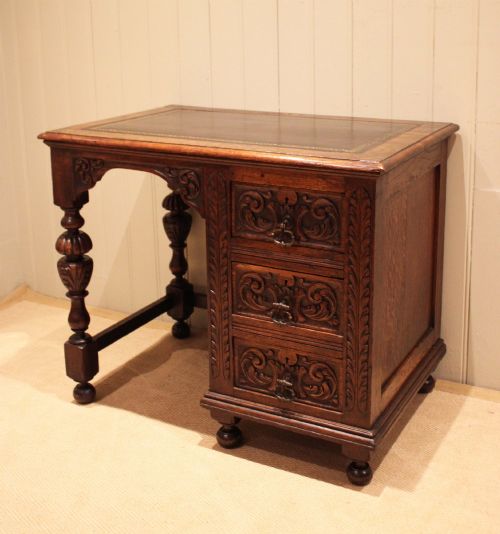

Victorian Leather Top Bureau
A victorian leather top bureau brings focused workspace and rich timber character into a room, uniting period craftsmanship with a practical writing surface.
Victorian Leather Top Bureau
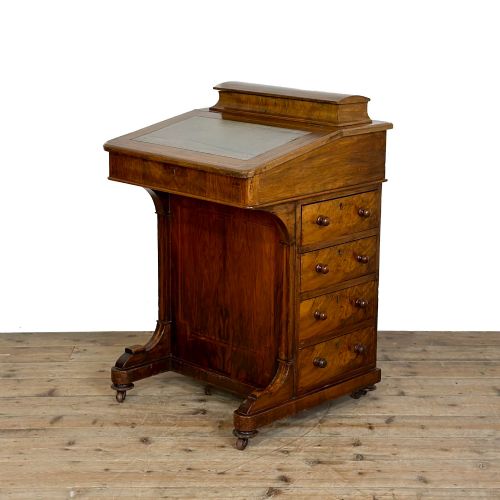
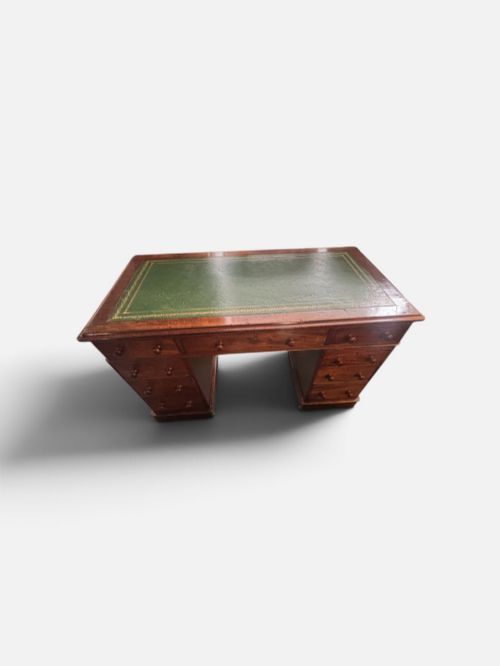
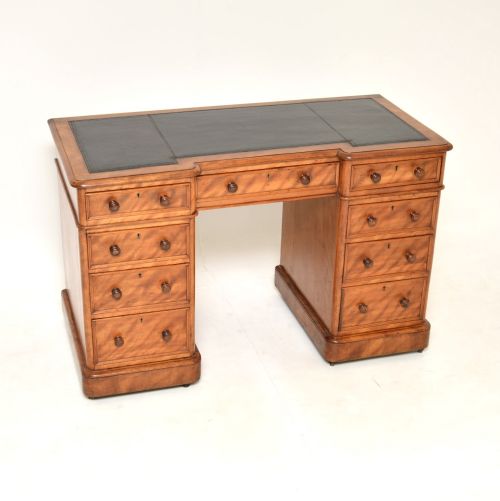
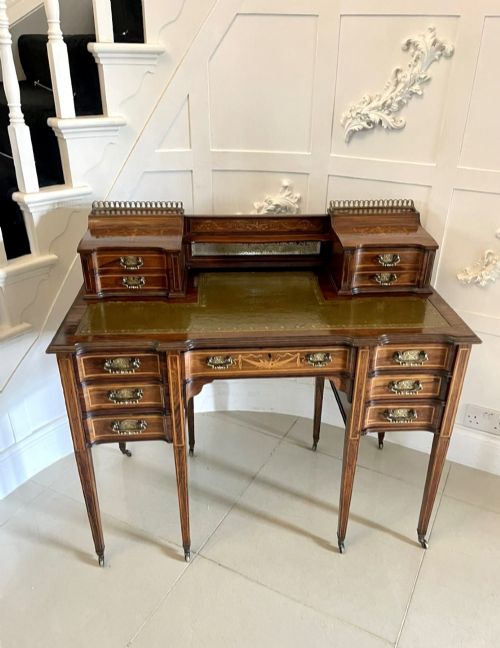
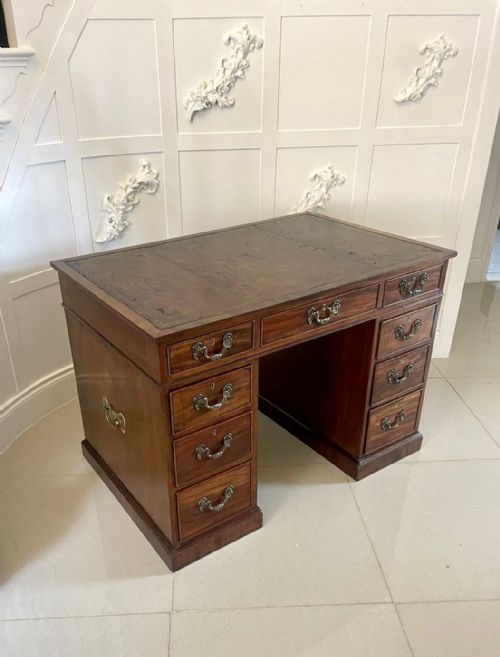
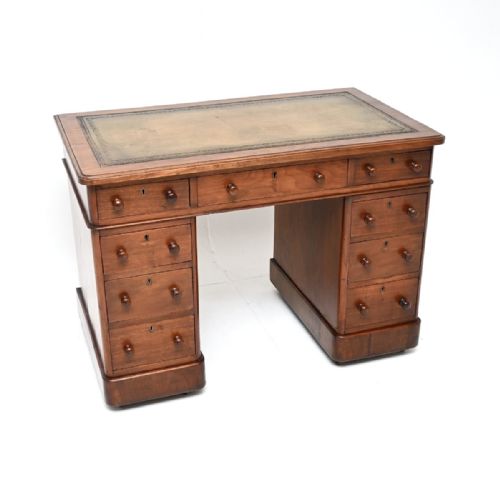
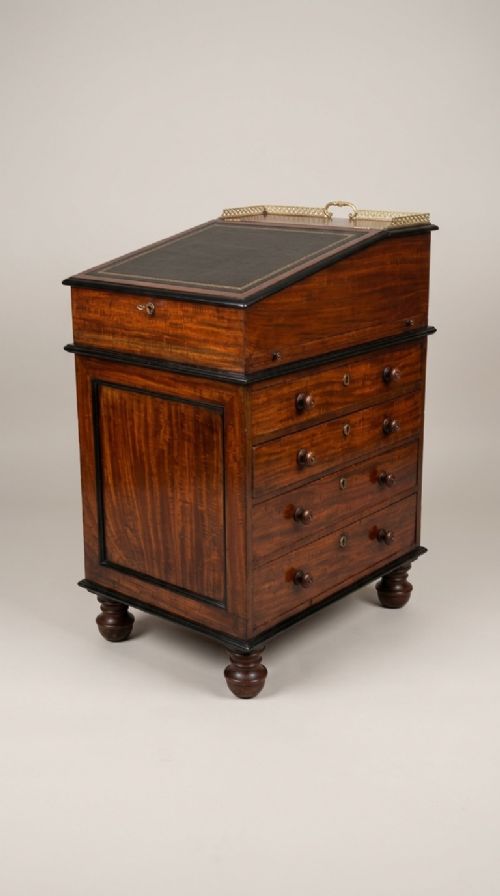
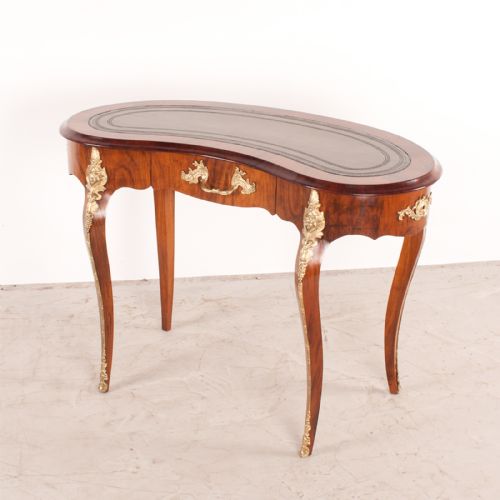
When you search for a victorian leather top bureau, you encounter a variety of forms including pedestal desks, davenports, and writing tables dating from the nineteenth century. These pieces combine utilitarian writing surfaces with domestic storage, reflecting the functional demands of Victorian studies and drawing rooms.
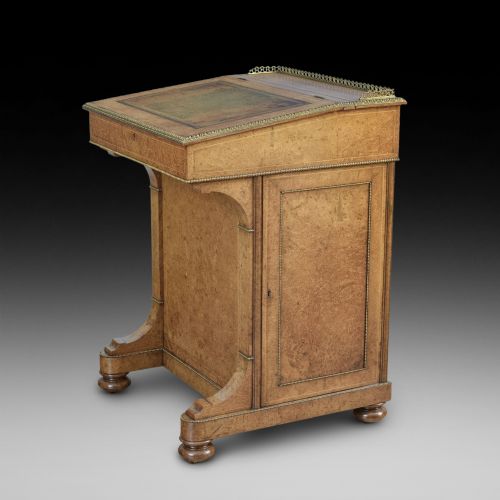
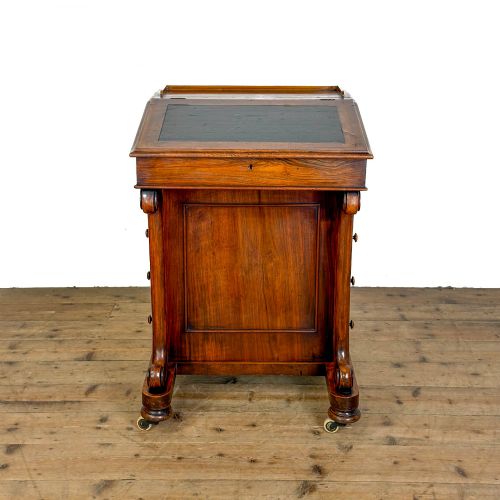
The selections available range from compact davenports with sloped writing lids to substantial twin pedestal desks fitted with inset writing panels. Woods such as mahogany, walnut, and burr walnut dominate the forms, frequently paired with contrasting satinwood interiors or brass mounts.
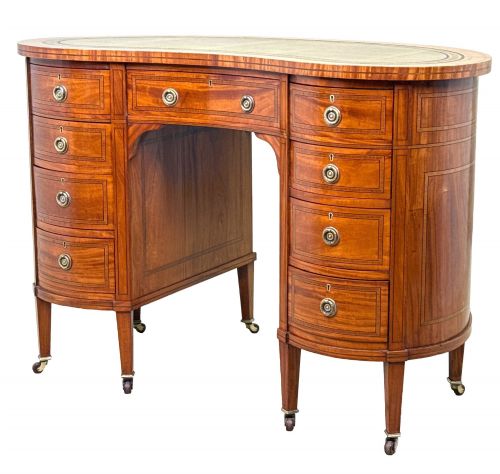
Origins span standard English cabinet makers to specialised workshops incorporating French revival styles, Louis XV influences, or aesthetic movement designs. Buyers looking through these listings meet both freestanding kneehole formats and kidney shaped writing tables designed for central room placement.
Materials and Techniques
Cabinet makers constructed the foundational carcases using solid timbers like mahogany and oak, applying decorative veneers of burr walnut, kingwood, satinwood, and rosewood to exterior surfaces. These veneers were selected for striking grain patterns and finished with polished wax or French polish.
Writing surfaces were inset with panels of dyed and tooled leather, often framed by decorative blind tooling or gilt borders. Brass hardware, including original handles, locks, and ormolu mounts, was cast and fitted to drawers and pedestals to secure structural joints and add ornamentation.
Listings feature woods including mahogany, burr walnut, satinwood, rosewood, and oak across Victorian, Edwardian, and Regency periods.
Quality Variations
The distinction between standard commercial pieces and superior craftsmanship rests in the selection of timbers and the precision of decorative inlays. Workshops employing skilled cabinet makers utilised highly figured burr veneers and intricate parquetry that remained stable and flush over decades.
Hardware quality and interior detailing also define the upper tier of pieces, seen in secondary woods used within drawer linings and the execution of carved elements like green man motifs or brass mounts. Original leather inserts and fully functioning locking mechanisms preserved by makers indicate higher initial manufacture.
Maple & Co.·Gillows·Blyth & Son·Donald Ross·Rumney & Love
The Victorian Leather Top Bureau Glossary
- Bureau
- A desk with a sloping flap covering pigeonholes and small drawers. It provides a compact writing surface for correspondence.
- Davenport
- A small desk featuring a sloped, leather-lined writing lid above a pedestal of drawers. It typically incorporates side drawers and internal stationery compartments.
- Pedestal Desk
- A heavy writing desk supported by two banks of drawers or cupboards. These freestanding pieces offer extensive storage beneath the main top.
- Bureau Plat
- A freestanding writing table fitted with drawers across the frieze. This French form sits openly in a room rather than against a wall.
- Parquetry
- Geometric mosaic woodwork used for decorative surface patterns. Makers applied small wooden tiles to create contrasting designs on tabletops.
Victorian Leather Top Bureau: Frequently Asked Questions
What is a davenport desk?
A davenport is a compact writing desk featuring a sloped, leather-inset top that opens to reveal interior pigeonholes and small drawers. The writing surface rests above a pedestal containing side drawers.
First popularized in the nineteenth century, these pieces were designed for drawing rooms and boudoirs where space was limited. Their enclosed storage allowed letter writing materials to be tucked away neatly after use.
Where were these desks placed?
Many nineteenth century writing desks were designed to stand flat against a wall within a study or library. Other variations, such as kidney shaped writing tables and freestanding pedestal models, were finished on all sides to sit centrally in a room.
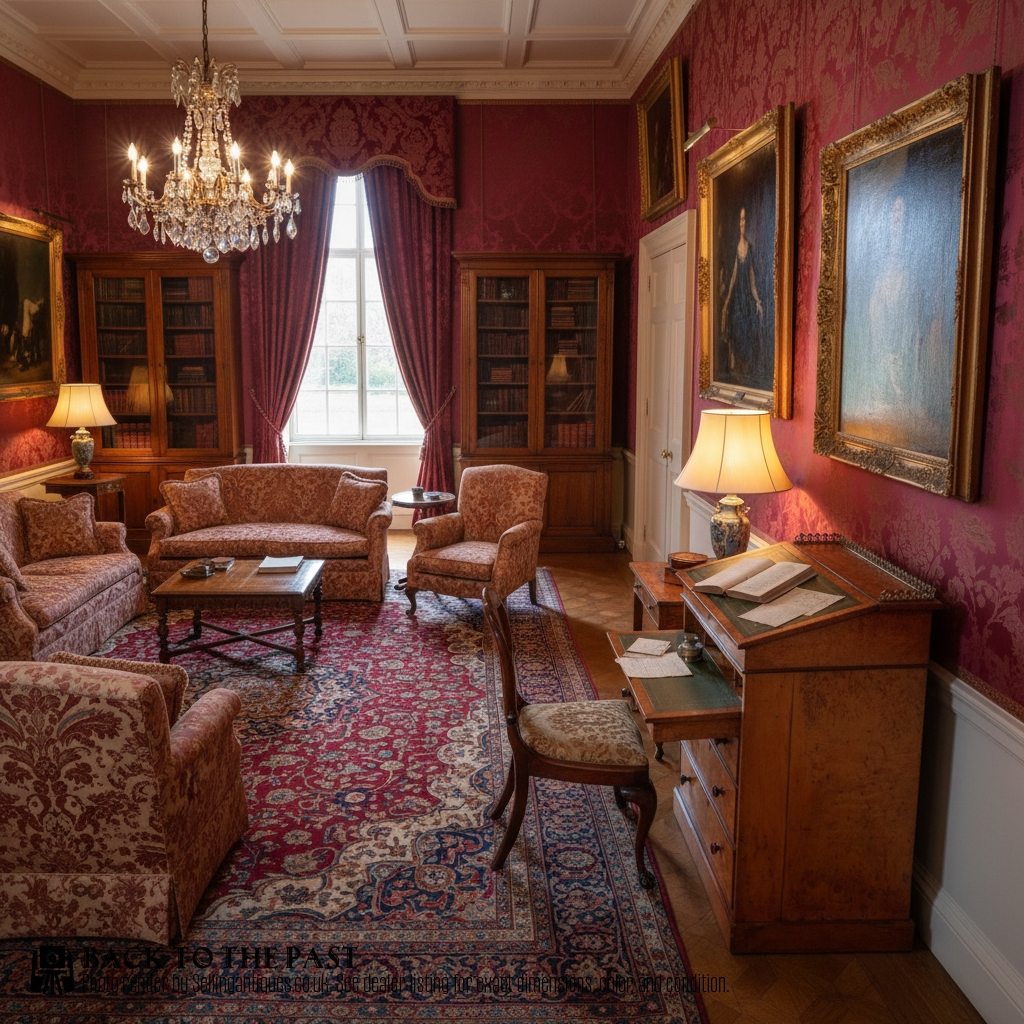
Freestanding capability allowed owners to position desks away from walls to catch natural light from windows. This layout created a dedicated focal point for administrative work within Victorian interiors.
How do I care for leather desk tops?
Leather writing surfaces require gentle maintenance using specialised leather balms or neutral waxes to prevent drying and cracking. Avoiding direct sunlight and excessive moisture preserves both the leather and the surrounding timber framing.
Harsh chemical cleaners should be avoided because they strip the original dye and gilt tooling. Regular dusting with a soft, dry cloth keeps the surface clean without damaging the material.
How are different Victorian periods told apart?
Early Victorian pieces often retain heavy mahogany construction with classical proportions, reflecting late Georgian influences. Mid-century examples frequently showcase burr walnut veneers, serpentine shapes, and French revival or rococo decorative elements.
Late Victorian items encompass aesthetic movement designs, ebonised details, and simpler oak forms influenced by arts and crafts ideals. Examining the secondary woods, handles, and construction techniques helps confirm the manufacturing decade.