


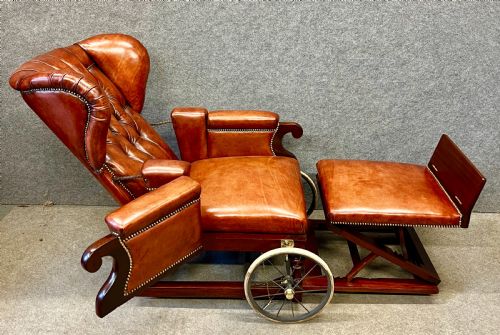
Victorian Leather Reclining Chair
These robust victorian leather reclining chair designs offer enduring comfort through adjustable mechanisms, brass details and deeply padded upholstery.
Victorian Leather Reclining Chair
A victorian leather reclining chair provides deep seating comfort through adjustable backs and foot rests designed for relaxation, reading or recovery. These seating forms span armchairs, library chairs, and chaise longues originating from the nineteenth century.
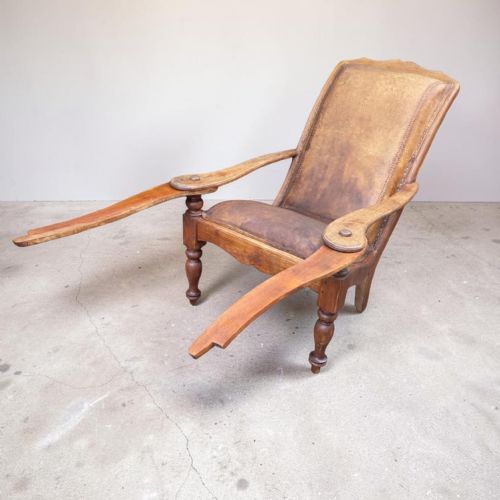
The pieces appearing on this page include styles from the Regency, William IV, and Victorian periods, alongside colonial plantation and French nineteenth-century examples. Mahogany, walnut, and rosewood frames dominate the selection alongside buttoned leather upholstery.
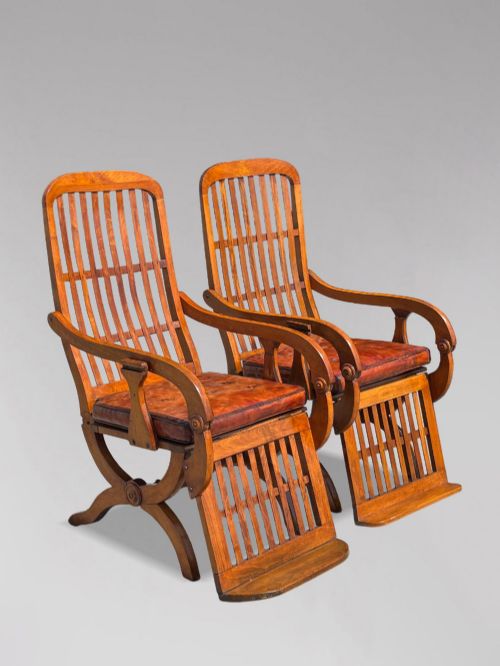
Armchairs and metamorphic library chairs form the core of what is available, offering mechanical adjustment for reading or resting. Buyers will also encounter specialised seating such as invalid wheel chairs and campaign chairs.
Materials and construction methods
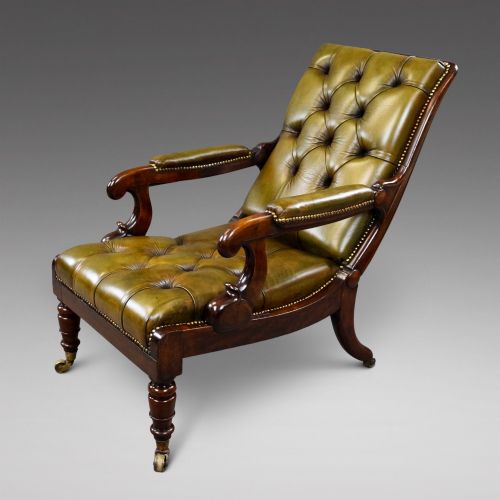
Makers utilised solid hardwoods such as mahogany, walnut, rosewood, and general timber for the structural frames, often featuring carved details. Metal studs secure the leather upholstery to the wooden framework, providing a durable outer finish.
Adjustable mechanical systems incorporate iron and brass components to enable the reclining action and support movable backrests and footrests. Leather hides provide the primary upholstery surface, frequently finished with buttoning and padding.
Materials recorded across the inventory include mahogany, walnut, rosewood, hardwood, iron, brass, metal studs, timber, and leather.
Distinctions in quality
The standard of a victorian leather reclining chair rests upon the sophistication of its mechanical adjustments and the integrity of its timber frame. Examples with stamped maker details or patented reclining systems represent higher levels of nineteenth-century craftsmanship.
The choice of primary wood, from standard timber to figured mahogany, walnut, or rosewood, dictates the visual weight and refinement of the frame. Leather quality, hand-applied metal studs, and the complexity of carved mahogany or rosewood details further separate standard productions from finer workshop pieces.
J Foot & Son·Robert Daws·John Ward·Foots Patent Chairs·Morris and Co
The Victorian Leather Reclining Chair Glossary
- Metamorphic chair
- A convertible piece of furniture designed to transform from a standard armchair into a reclining seat or chaise longue. These mechanical chairs utilise internal levers and hinges.
- Campaign chair
- A portable folding or dismantling chair originally built for travel and military use. Mid nineteenth-century versions often include adjustable reclining backs.
- Chaise longue
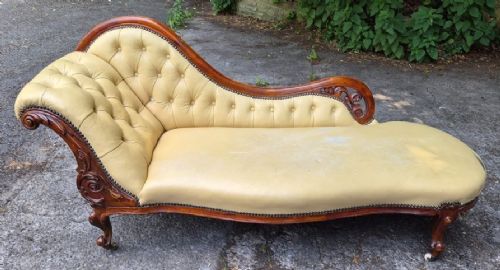
- An upholstered couch or long chair intended for reclining with support for the back and legs. Examples range from Victorian carved frames to colonial plantation styles.
- Button leather
- Upholstery secured by deep indentations formed with buttons, creating tufted cushions. This technique holds the internal padding firmly in place.
- Library chair
- A heavy, comfortable armchair designed for prolonged reading in a study or library. These often feature adjustable backs and integrated writing surfaces or footstools.
Victorian Leather Reclining Chair: Frequently Asked Questions
How do these reclining mechanisms work?
Nineteenth-century reclining chairs rely on mechanical systems of ratchets, hinges, and brass rods concealed within the wooden frame. Users adjust the backrest or footrest manually by releasing locks or shifting the weight.
Many designs feature patented systems created by specialised makers that allow smooth transitions between upright seating and fully reclined positions.
Where were these chairs used originally?
These seating pieces served primarily in domestic libraries, studies, and drawing rooms where gentlemen and family members spent hours reading or resting. Convalescing invalids also used specialised reclining and wheel chairs for daily comfort.
Colonial variations provided similar ergonomic support within plantation houses and British outposts across warmer climates during the nineteenth century.
How do I care for antique leather?
Antique leather requires gentle cleaning with appropriate conditioning balms to maintain flexibility and prevent the surface from drying or cracking. Avoid placing these chairs near direct heat sources or strong sunlight.
Regular dusting with a soft cloth preserves the finish around the metal studs and tufted buttoning without disturbing the aged patina.
How can I tell a William IV chair from a Victorian one?
William IV furniture, produced during the 1830s, often displays heavy, robust scrolling woodwork and specific classical revival motifs distinct from later nineteenth-century styles. Mahogany and rosewood frames from this era emphasise bold architectural proportions.
Victorian pieces span a broader range of decades from 1850 to 1890, introducing varied revival styles, lighter carved mahogany frames, and increasingly complex mechanical reclining patents.