
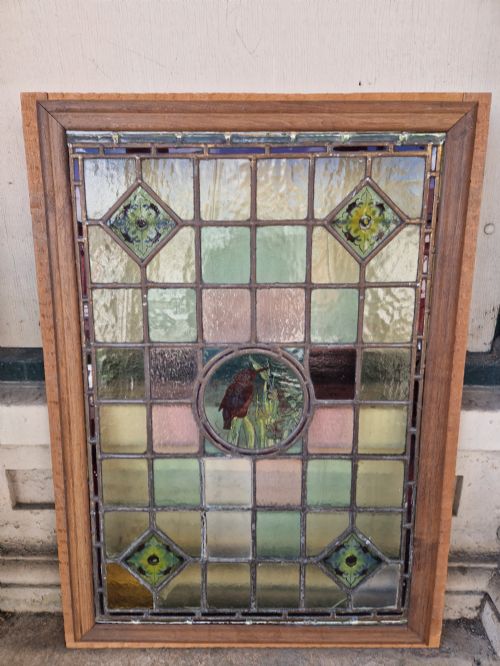


Victorian Leaded Window Light
These Victorian leaded window light panels bring rich colour, hand-painted detail and authentic period character straight into modern interiors.
Victorian Leaded Window Light
When you search for a victorian leaded window light, you are looking at architectural glass and panels designed to filter daylight through decorative motifs. The pieces available here span the Victorian era, the year 1900, 1890, and the 19th Century, capturing a distinct period of domestic and ecclesiastical building design.
You will most commonly meet panels framed in timber, pine wood, or plain wood alongside the structural lead cames holding the glass together. Object types range from stained glass windows and panels to architectural salvage, offering versatile options for wall hanging or fitted interior placement.
The aesthetic vocabulary bridges several movements, featuring Victorian, Edwardian, Arts and Crafts, Art Nouveau, and Gothic Revival styles. These diverse stylistic influences mean each panel carries a unique visual signature suited to both period restoration and contemporary display.
How they were made
Maker workshops constructed these panels by joining individual pieces of glass with flexible lead cames, soldering the joints to form a rigid matrix. Artisans integrated clear bullseyes alongside coloured and stained glass to manipulate light passing through the window.
Many panels incorporate detailed hand-painted designs directly onto the glass surface, depicting countryside scenes, farmhouses, lakes with boats, fruit, flowers, swags, and birds in flight. Structural surrounds of timber or pine wood provided a sturdy housing for architectural installation.
Materials recorded across these listings include timber, pine wood, lead, glass, and stained glass.
What varies in quality
The complexity and execution of the hand-painted elements separate standard decorative panels from finer examples. Hand-painted scenes depicting countryside landscapes, birds, or botanical motifs require precise brushwork and careful firing of the pigments onto the glass.
The integrity of the lead cames and the variety of glass used also influence the character of a piece. The inclusion of decorative bullseyes and specialised stained glass adds structural and visual depth that distinguishes superior work.
The Victorian Leaded Window Light Glossary
- Came
- The slender lead strip used to hold pieces of glass together in a window panel. These flexible channels form the structural grid of the design.
- Bullseye
- A small, rounded disc of glass featuring a central concentric swirl formed during the blowing process. These are frequently set into panels to create texture and catch the light.
- Stained glass
- Coloured glass produced by adding metallic salts during its manufacture. It forms the primary vibrant element in decorative window lights.
- Gothic Revival
- An architectural and artistic movement reviving medieval forms. Pieces in this style often reflect ecclesiastical or medieval aesthetic traditions.
Victorian Leaded Window Light: Frequently Asked Questions
How do I hang a window light?
Most panels can be fitted directly into interior window frames or hung against a light source using sturdy brackets.
Ensuring proper support for the wooden frame and lead weight is essential for safe display.
Can these panels be used outside?
These architectural salvage pieces are generally suited for interior placement where the historical leadwork and hand-painted details remain protected.
Exposing antique lead and timber to harsh outdoor weathering can degrade the original materials over time.
What styles are common here?
The selection includes Victorian, Edwardian, Arts and Crafts, Art Nouveau, and Gothic Revival examples.
Each style brings distinct motifs, ranging from floral swags to ecclesiastical church glass.
What motifs appear on the glass?
Designs often feature hand-painted countryside scenes, farmhouses, lakes with boats, and birds in flight.
Other panels showcase floral compositions, fruit arrangements, and clear bullseyes.