



Victorian Leaded Glass Panel
These pieces of Victorian leaded glass panel bring rich colour, historical weight, and intricate craftsmanship straight into modern interiors.
Victorian Leaded Glass Panel
A victorian leaded glass panel is an architectural and decorative item built to hold individual pieces of glass within a network of lead cames. When searching this phrase, buyers encounter architectural salvage, windows, and fitted elements within larger furniture like bookcases and firescreens.
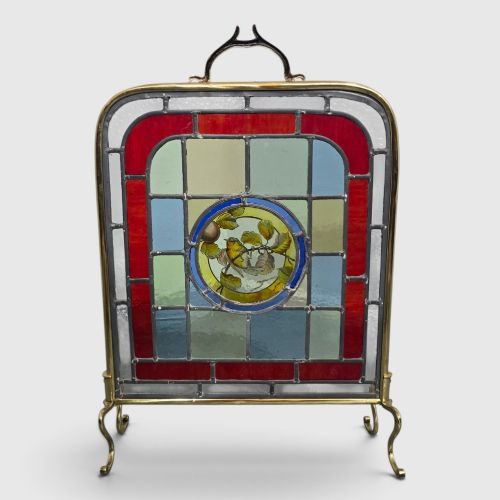
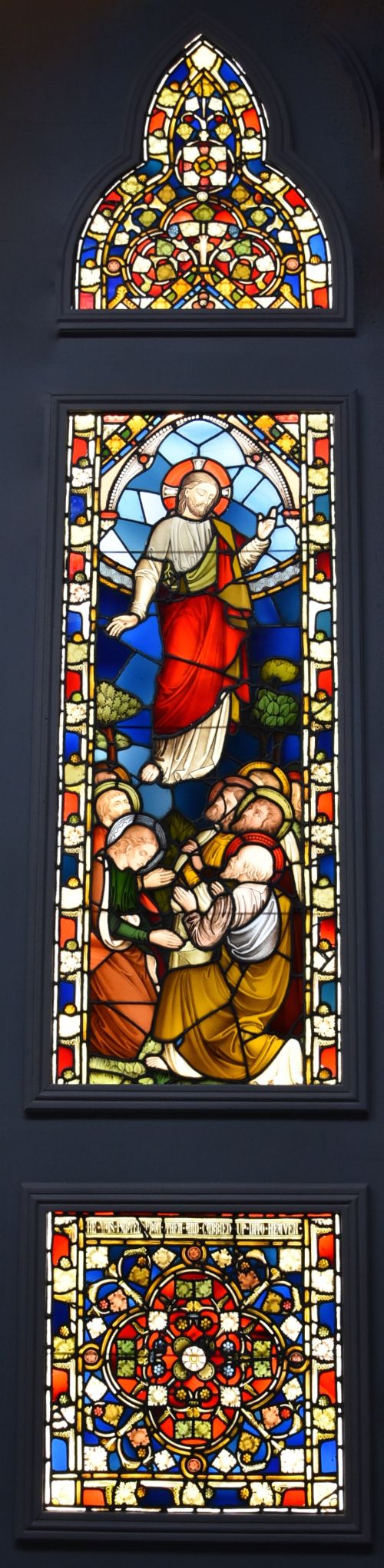
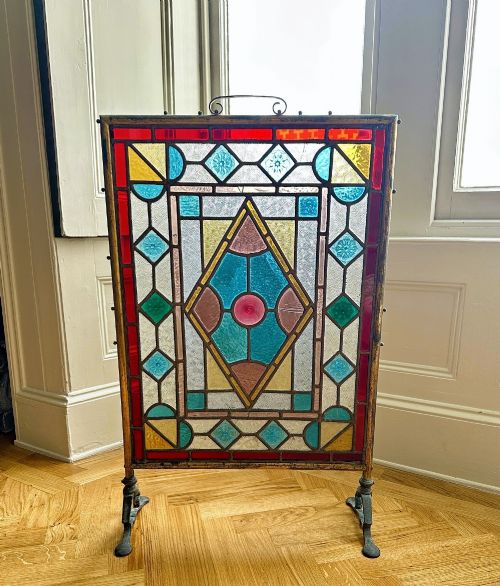
The objects span from the mid-nineteenth century into the Edwardian period, capturing styles from Gothic Revival and Arts and Crafts to Art Nouveau and Art Deco. Panels take various forms, including church windows, triptychs, firescreens, and cabinet doors.
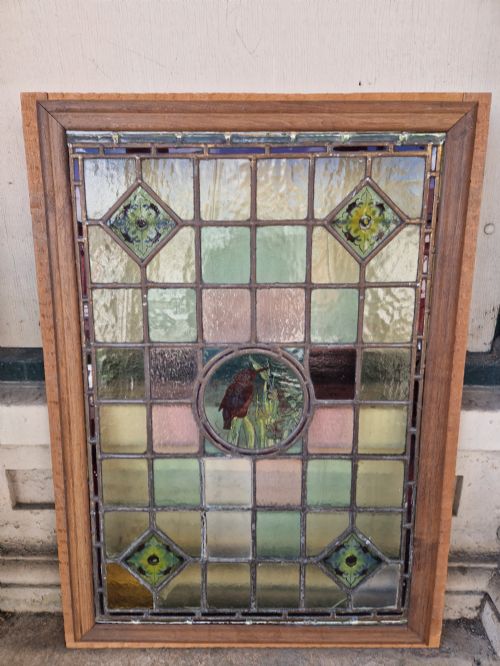
Pieces frequently feature hand-painted pictorial elements such as countryside scenes, castles, birds, fruit, floral swags, and historical figures like knights or Shakespeare emblems. Plain or textured clear bullseyes also appear alongside religious and ship motifs.
Materials and Techniques
Construction relies upon glass and lead, supported in many instances by timber frames in oak or brass and iron stands. Artisans cut coloured and clear glass to fit intricate geometric or pictorial designs before assembling them with flexible lead cames.
Many panels incorporate hand-painted details on the glass surface, fired to bond permanently before leaded assembly. Architectural salvage examples often retain traces of their original structural wood or iron surrounds.
Several panels proudly feature hand-painted portraits of Shakespeare alongside rustic winter scenes and sturdy Victorian knights in full armour.
Assessing Quality
Quality rests primarily on the complexity and execution of the hand-painted artistic work within the glass. Finer examples show detailed shading in pictorial scenes, such as landscapes, figures, and birds, whereas simpler panels rely on texture or geometry.
The integrity of the lead matrix and the choice of supporting materials, such as solid carved oak frames or brass stands, distinguish standard architectural salvage from exceptional decorative pieces.
Swaine Bourne Birmingham·Sir Edward Burne Jones
The Victorian Leaded Glass Panel Glossary
- Came
- The lead strip used to hold individual pieces of glass together in a window or panel. These flexible channels form the structural grid of the design.
- Bullseye
- A round centre piece of blown glass showing a concentric circular pattern. They are often set into leaded windows to let in light while distorting direct vision.
- Gothic Revival
- An architectural and decorative style drawing inspiration from medieval design. It frequently employs pointed arches and religious symbolism.
- Triptych
- A picture or panel divided into three sections. These larger compositions are typically hinged or designed to be displayed together as a unified set.
Victorian Leaded Glass Panel: Frequently Asked Questions
How are leaded glass panels installed?
These panels can be hung in front of existing windows using brackets or built directly into interior partition walls to divide light between rooms.
Freestanding items like firescreens or cabinet doors integrate directly into room layouts without requiring architectural modification.
What periods do these panels date from?
The pieces span the nineteenth century, the Victorian era, and into the early twentieth century around nineteen hundred.
Styles range from mid-Victorian Gothic Revival to later Arts and Crafts and Art Nouveau designs.
Can these panels be used outdoors?
Original antique panels generally serve best indoors where temperature fluctuations and harsh weather do not stress the historic lead cames.
Placing them inside allows natural light to highlight the painted surfaces and coloured glass safely.
How do I clean leaded glass?
Use a soft cloth and a gentle glass cleaner, avoiding abrasive materials that might scratch the hand-painted details.
Take care around the lead cames and painted surfaces to preserve the historic finish.