



Victorian Lead Crystal
Victorian lead crystal brings weight, clarity and deep hand-cut sparkle to the table.
Victorian Lead Crystal
When you search for victorian lead crystal, you encounter heavy, brilliant glassware spanning decanters, rummers, wine glasses, table lamps and decorative bowls. The material is dense and sonorous, carrying a bright ring when struck gently.
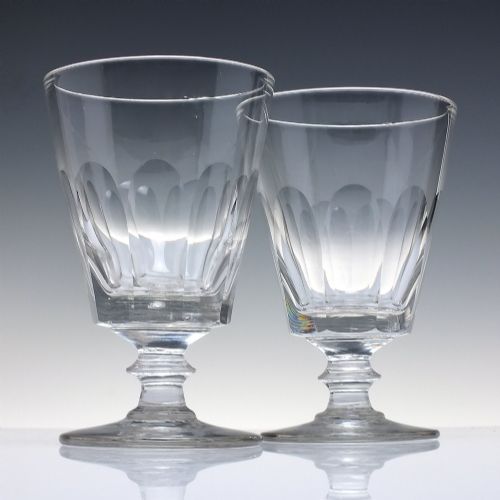
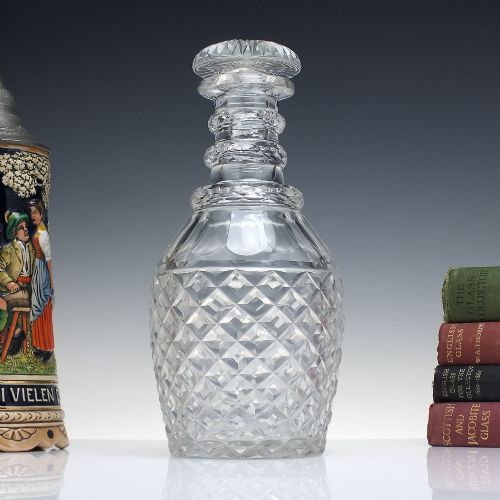
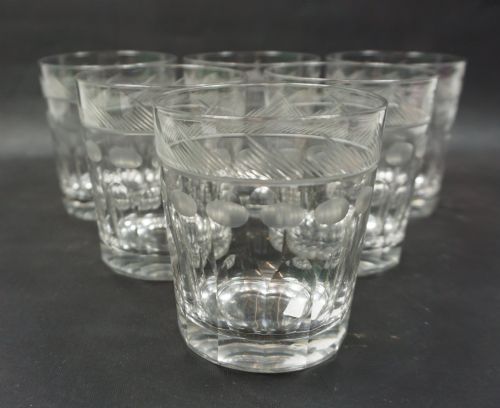
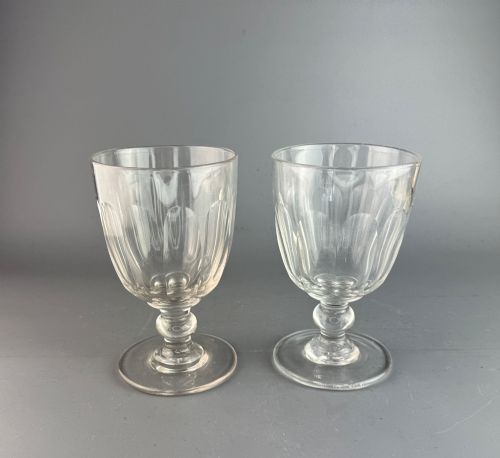
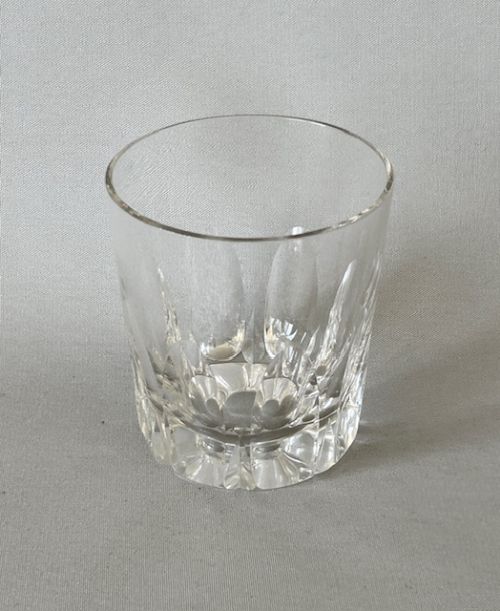
The objects on this page lean heavily toward nineteenth-century domestic serving vessels, particularly wine decanters and drinking vessels like rummers and whiskey tumblers. These pieces combine utility with decorative ambition, featuring deep faceting and intricate engraved patterns.
The forms range from small scent bottles and perfume containers up to large centrepiece bowls, lustres and lidded vases. Most items originate from English workshops operating across the mid to late nineteenth century.
Materials and Technique
The creation of these items relies on heavy lead glass, often described as crystal or clear cut glass, which provides the necessary heft and refractive index. Molten metal is free blown or press moulded before artisans apply wheel cutting and engraving by hand.
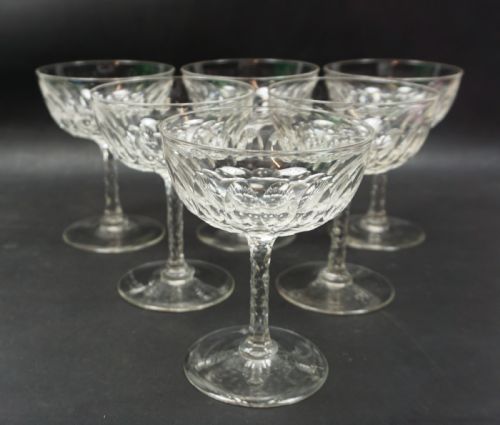
Surface decoration frequently involves deep geometric facets, flutes and stars cut into the thick glass body. Engravers use small wheels to introduce delicate floral, foliate or intaglio motifs across the clear surfaces.
Some nineteenth-century drinkers apparently needed heart-shaped perfume bottles close at hand alongside their heavy whiskey decanters.
Judging Quality and Finish
Quality rests in the crispness of the wheel cutting and the clarity of the metal itself. Superior examples show sharp, precise facet edges without softness or waviness in the refraction.
Weight and balance distinguish finer vessels, alongside the absence of internal cloudiness or bubbles within the lead glass. Engraved details on better pieces demonstrate confident, fluid lines rather than shallow, hesitant scratches.
The Victorian Lead Crystal Glossary
- Rummer
- A large, wide-bowled drinking glass typically used for ale, wine or punch. These sturdy vessels often sit on a short, knop stem above a heavy foot.
- Lead crystal
- A high-clarity glass containing lead oxide, which increases the weight, refractive index and ease of cutting. It produces a resonant ring when tapped.
- Intaglio
- A technique where the design is carved directly into the surface of the glass rather than leaving the pattern in relief. This creates a recessed, frosted appearance.
- Lustre
- A decorative tabletop vase fitted with a ring of hanging glass prisms. These pieces catch and refract candlelight through both the body and the dangling drops.
- Facet cut
- A pattern of flat, geometric planes ground onto the exterior of the glass. The resulting angles maximise the reflection of light.
Victorian Lead Crystal: Frequently Asked Questions
Can I still use these decanters for wine?
Yes, historic decanters function well for serving wine today, provided the interior is clean and free of old residue. Their heavy lead walls help keep contents stable during pouring.
Avoid leaving liquids inside for extended periods after use, and rinse the vessel thoroughly to prevent staining the interior base.
How can I tell genuine nineteenth-century pieces?
Look for the characteristic weight, slight irregularities from hand-working, and deep greyish-clear tones typical of nineteenth-century formulations. Base wear, such as fine scratches from decades of movement on tables, also points to age.
Machine-made modern crystal lacks the soft hand-polish on the pontil mark and the subtle variations found in wheel-cut patterns.
Were these items made only in England?
Many examples originate from English glasshouses, though the techniques spread widely across Europe during the nineteenth century. British production centres were particularly noted for heavy lead formulations and precise geometric cutting.
English pieces frequently appear with matching period hardware, such as brass mounts on lamps or sterling silver collars on scent bottles.