






Victorian Kitchen Armchair
A victorian kitchen armchair is a sturdy country seat built for daily domestic life, offering robust comfort and honest craftsmanship that suits modern rustic interiors.
Victorian Kitchen Armchair
A buyer seeking a victorian kitchen armchair encounters robust country seating rooted in nineteenth-century domestic life. These chairs originate from English rural workshops and farmhouses, designed primarily for utility and endurance around the hearth or table.
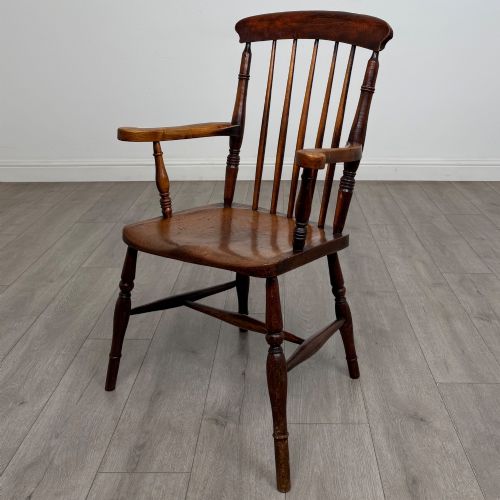
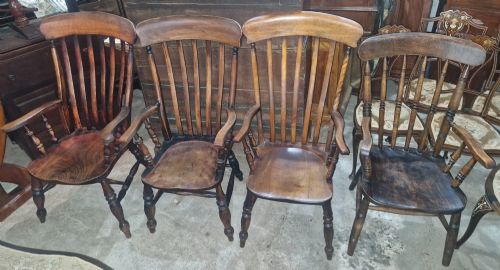
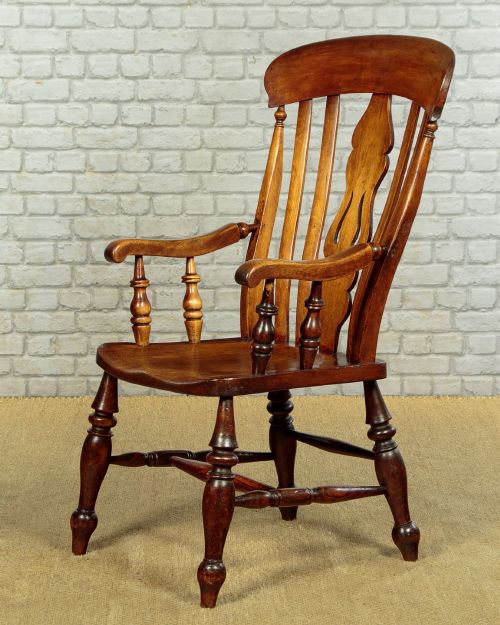
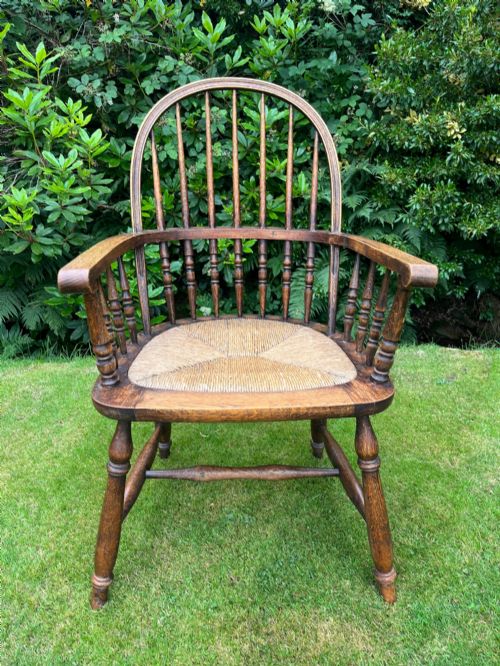
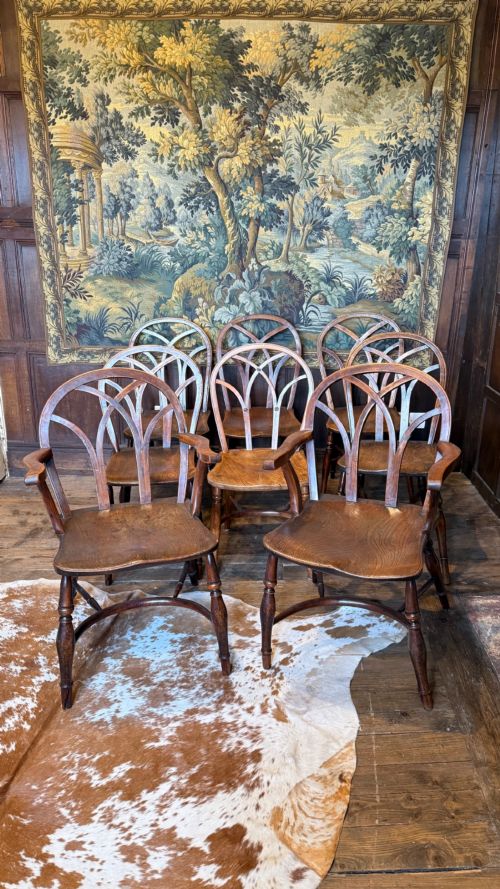
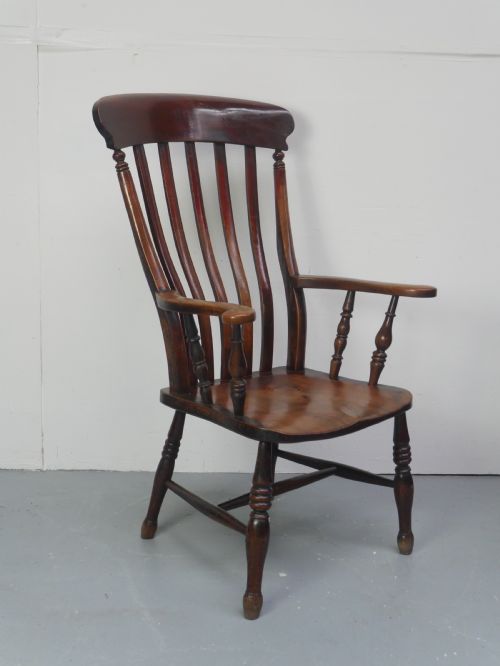
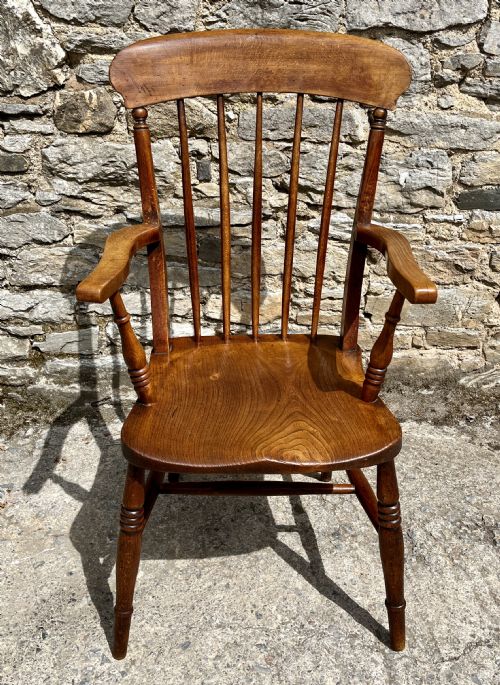
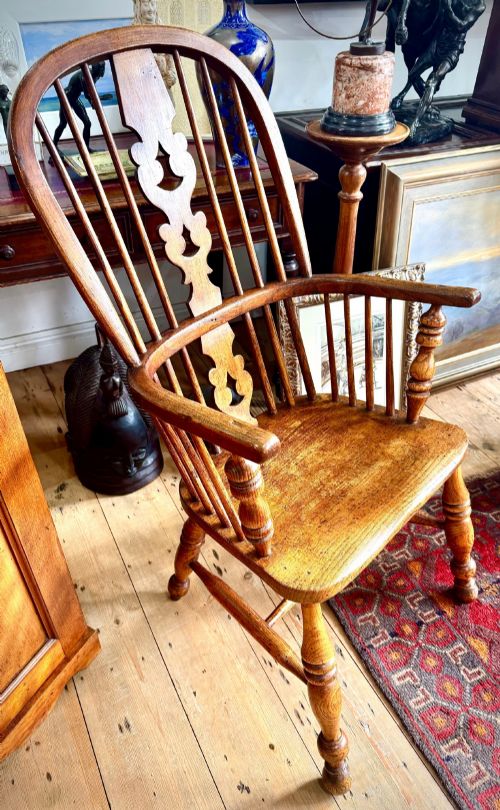
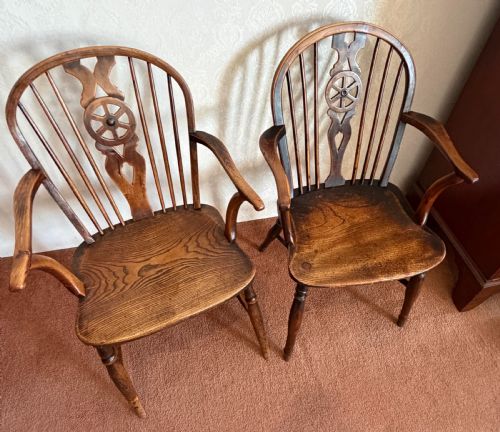
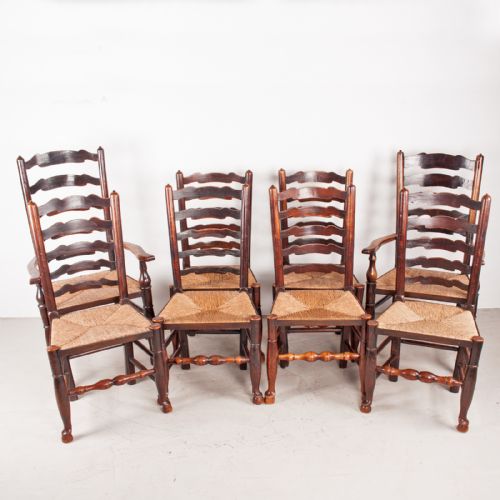
The most common form on this page is the Windsor armchair, featuring a distinctive wooden seat saddle supporting a stick, lath, or hoop back. Variations include highback, lowback, and broad arm formats, alongside occasional ladderback designs with rush seats.
Most examples date across the Victorian period, spanning from around 1850 to the turn of the twentieth century. They bridge the gap between simple rustic utility and distinct regional woodworking traditions.
Materials and Technique
Chairmakers utilised a combination of native timbers, pairing sturdy elm for solid, sculpted seats with flexible ash or beech for bentwood hoops, spindle backs, and turned legs. This multi-wood construction allowed each component to perform its specific structural task efficiently.
Construction relied on traditional bodger techniques, where turned spindles and legs were fitted into bored holes in the solid wooden seat using wedge-tenon joints. Steam bending shaped the continuous back rails and bows without weakening the grain.
Victorian Kitchen Armchair Retail Price Guide 2026
Typical asking prices for victorian kitchen armchair among the pieces listed under this phrase on Sellingantiques today, from the lower quarter to the upper quarter. They describe what is for sale here now, not the wider market.
Many elm seats still bear the faint hollowed impressions of nineteenth-century sitters who sat by the hearth.
Craftsmanship and Proportion
Quality rests in the depth and sculpting of the solid wood seat, where a well-carved saddle provides superior comfort and balance. Finer examples display harmonious proportions in the turned spindles and steam-bent bows rather than heavy, clumsy timber dimensions.
The integrity of the structural joints and the retention of original surface patination distinguish superior specimens. Mismatched repairs or replaced components alter the historical cohesion of the piece.
The Victorian Kitchen Armchair Glossary
- Windsor chair
- A wooden chair built with a heavy solid seat into which the legs and back spindles are separately dowelled. This construction method creates a durable, rigid frame.
- Stick back
- A chair design featuring simple turned vertical spindles secured into the seat and top rail. These uprights provide reliable lumbar support without elaborate carving.
- Lath back
- A variation incorporating a flat, often curved wooden splat across the centre of the backrest. It offers a broader surface area to lean against.
- Elm
- A dense, interlocking timber traditionally selected for chair seats because it resists splitting when nailed or bored. Its distinctive grain adds visual texture.
- Bodger
- A rural woodturner who worked in the woods to produce chair legs and spindles using a pole lathe. These turned parts were then supplied to the final chairmaker.
Victorian Kitchen Armchair: Frequently Asked Questions
How were these chairs used daily?
These seats served primary domestic functions around the farmhouse kitchen, providing stable seating for dining, resting near the fire, or working on household tasks.
Their robust construction meant they could be moved easily between rooms or out to porch areas as needed during daily chores.
How do I fit one into a modern home?
A country armchair works effectively as a standalone reading seat in a living room, a desk chair, or placed at the head of a dining table.
Pairing the weathered wood textures with simple textiles helps the historic piece anchor contemporary spaces.
What woods were used?
Makers relied on native British hardwoods, most frequently combining elm for the saddle seat with ash or beech for the turned legs and bentwood parts.
Occasionally, oak or yew appears in regional variations, each timber contributing specific strength and flexibility.