


Victorian Inlaid Wooden Caddy
A victorian inlaid wooden caddy is a small timber chest designed for storing loose tea leaves, combining fine cabinet work with decorative marquetry.
Victorian Inlaid Wooden Caddy
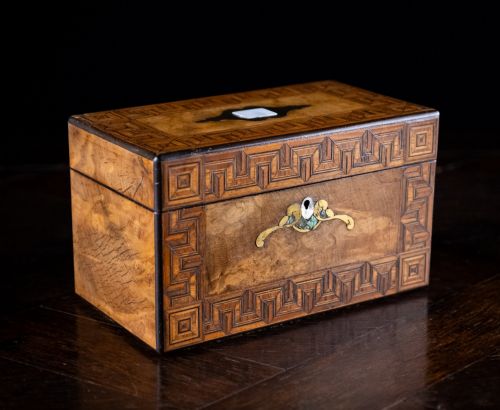
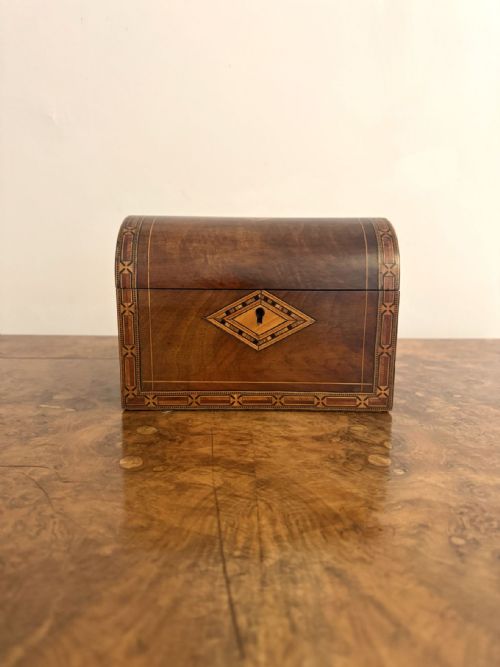
A victorian inlaid wooden caddy takes several distinct forms, most commonly the sarcophagus shape with curved sides, rectangular boxes, and specialised pieces utilising Tunbridge Ware mosaic decoration. These boxes served a domestic purpose in nineteenth century households to secure expensive tea reserves from household staff.
The selections on this page span the nineteenth century, including pieces from the Victorian era alongside related Regency and French styles. Alongside traditional tea containers, buyers encounter related desk accessories, correspondence boxes, and sewing boxes sharing similar inlaid construction methods.
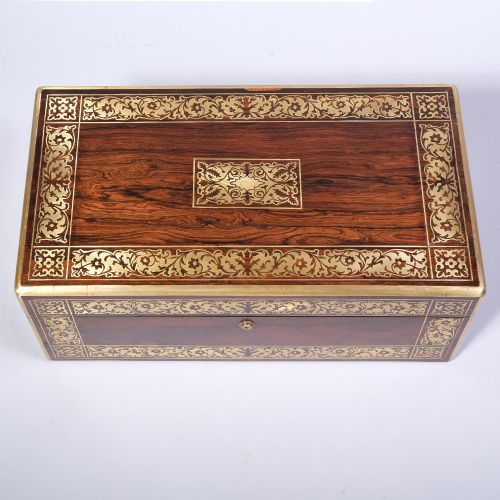
The primary woods utilised in these items include rich rosewood, burr walnut, and mahogany, often embellished with contrasting boxwood or brass stringing. Interior fittings frequently retain original mixing bowls, foil linings, or compartmentalized lids designed for black and green tea varieties.
Materials and Technique
Cabinet makers built these boxes using dense tropical hardwoods such as rosewood and mahogany as a stable carcass, applying decorative veneers of burr walnut or coromandel to the exterior surfaces. These primary timbers provide the deep grain patterns characteristic of nineteenth century luxury boxes.
Inlay techniques range from geometric brass stringing and mother of pearl cartouches to complex parquetry and Tunbridge Ware mosaic work. Artisans assembled thousands of tiny dyed wood blocks by hand to create intricate pictorial or geometric panels set into the lids and sides.
Secret compartments hidden beneath tea canisters offered nineteenth century hosts a secure place to stash the tiny silver key.
Assessing Quality
Quality in a victorian inlaid wooden caddy rests upon the precision of the timber matching and the complexity of the inlay work. Finer examples display continuous grain across joints and meticulously fitted mosaic panels without gaps or mismatched timber sections.
Internal fittings heavily influence overall merit, with complete original mixing bowls, functioning locks with keys, and intact interior lids commanding greater interest. The crispness of carved wooden feet, such as lion paw supports or bun feet, separates standard production boxes from masterwork pieces.
Henry Hollamby·Freemans of Norwich
The Victorian Inlaid Wooden Caddy Glossary
- Sarcophagus
- A box shape featuring a domed or stepped lid rising from a wider base, mimicking classical monumental tombs. This form gained popularity during the Regency and early Victorian periods for tea storage.
- Tunbridge Ware
- A type of decorative woodwork originating from Kent, utilising tiny mosaic tiles made from naturally coloured woods to form pictorial scenes or geometric borders. These mosaics are applied directly to the exterior of boxes and caddies.
- Marquetry
- The art of applying pieces of veneer to a structural structure to form decorative patterns or pictures. Craftsmen cut contrasting woods together to ensure tight joints.
- Parquetry
- A geometric mosaic of wood pieces used for flooring or box exteriors, creating repeating patterns like cubes or triangles. This technique showcases the natural grain direction of different timbers.
- Teapoy
- A small table designed specifically to support a tea caddy, often featuring a pillar and claw base or cabinet storage below. They became central furniture pieces in nineteenth century drawing rooms.
Victorian Inlaid Wooden Caddy: Frequently Asked Questions
What is inside an antique tea caddy?
Most traditional tea caddies contain two internal wooden canisters with fitted lids designed to keep black and green tea separate, often flanking a central glass mixing bowl.
Some examples also retain traces of original foil lining or velvet padding inside the lid to preserve the aroma of the dry leaves.
How do I care for a rosewood caddy?
Keep wooden caddies away from direct sunlight and radiators to prevent the delicate rosewood or walnut veneers from drying out and lifting.
Apply a light microcrystalline wax occasionally to nourish the timber and maintain the soft sheen of the polished surface.
How do I date a wooden caddy?
Dating relies on identifying construction methods, timber choices, and decorative styles like Tunbridge Ware or brass parquetry common to specific decades.
Sarcophagus shapes and rosewood usage typically point towards the earlier Victorian and Regency periods, while later boxes often feature lighter French influences.
Were these boxes only used for tea?
While primarily constructed to store expensive tea leaves, many similar boxes were manufactured as sewing caddies, correspondence boxes, or general storage chests.
Makers often adapted the exterior cabinet work across different box types while maintaining the same luxury internal compartments.