
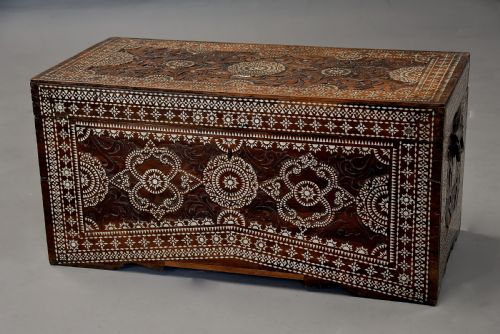


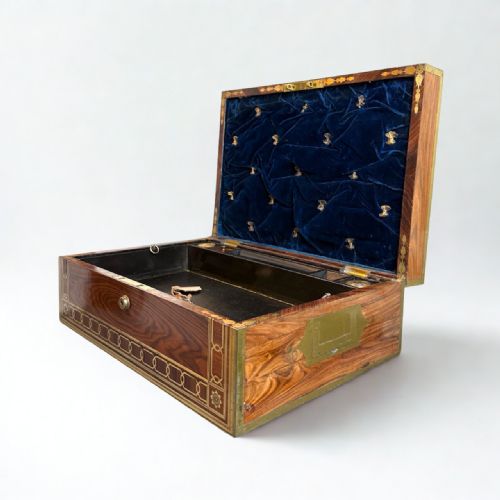


Decorative Inlaid Wood Box
A decorative inlaid wood box offers tactile pleasure and practical storage, drawing the eye with contrasting timbers and meticulous craftsmanship.
Decorative Inlaid Wood Box
A decorative inlaid wood box brings together centuries of functional container-making and surface ornamentation. Buyers searching for a decorative inlaid wood box encounter diverse domestic forms designed for specific past uses, such as tea caddies, keepsake cases, writing slopes, and glove boxes.
The selections span distinct historical periods from the seventeenth century through to the early twentieth century, encompassing Georgian, Regency, and Victorian eras. Alongside traditional English forms, regional variations surface regularly, including Middle Eastern trunks, Chinese hardwood caskets, and intricate Tunbridge Ware pieces.
How they were made
Cabinetmakers utilised a rich palette of hardwoods and exotic timbers, framing carcasses in rosewood, mahogany, walnut, coromandel, and satinwood. These structural woods provided stable foundations for intricate surface work.
Surface decoration relied on precision cutting and fitting of contrasting materials, incorporating boxwood, fruitwood, mother of pearl, brass, bone, and tortoise-shell. Artisans employed techniques like marquetry, parquetry, and mosaic inlay to build complex geometric or pictorial compositions across the lids and panels.
Several boxes disguise themselves as stacked leather-bound library volumes or feature secret compartments that slide open only when pressed in an exact sequence.
What varies in quality
The degree of refinement in the inlay work dictates the standing of the piece. Superior examples display tight, seamless joints between contrasting woods and metals, whereas lesser items reveal gaps or filler in the microscopic channels around the motif.
Material selection also governs the tier of the object. Solid exotic timbers and finely chosen burr veneers paired with thoughtful interior fittings and original working locks distinguish the master workshop from standard commercial production.
The Decorative Inlaid Wood Box Glossary
- Marquetry
- The art of forming decorative patterns by fitting together thin veneers of wood, shell, or ivory. This technique allows makers to create elaborate pictorial scenes or floral motifs across a flat surface.
- Parquetry
- A geometric mosaic of wood pieces used for adorning floors or box lids. It relies on repeating angles and contrasting timber tones to build rhythmic patterns.
- Tea Caddy
- A small storage chest or box originally designed to hold loose tea leaves securely. Because tea was a costly commodity, these containers frequently featured locks and internal compartments.
- Tunbridge Ware
- A distinct type of wooden mosaic ornamentation produced in Kent, featuring tiny blocks of coloured wood assembled to form microscopic pictorial designs. Collectors prize the extraordinary patience and precision required to manufacture these panels.
Decorative Inlaid Wood Box: Frequently Asked Questions
What were tea caddies used for?
Tea caddies served to store expensive tea leaves under lock and key in the formal rooms of the house. Servants brought the caddy to the drawing room so the lady of the house could measure out each brew.
Many examples feature internal lidded compartments to separate green and black teas, alongside a central mixing bowl for blending leaves before steeping.
How do I identify Regency boxes?
Regency boxes typically lean into architectural restraint, favouring dark rosewood or mahogany surfaces contrasted with crisp brass stringing or inlaid roundels. The proportions remain balanced and geometric, reflecting classical taste.
Look for lion-mask ring handles, bracket feet, and subtle brass escutcheons rather than the heavy floral carvings seen in later Victorian furniture.
What is Tunbridge Ware?
Tunbridge Ware refers to wooden boxes and desk accessories decorated with mosaic patterns built from thousands of tiny, naturally coloured wood prisms. These miniature wooden tiles combine to depict castles, butterflies, or complex geometric borders.
Originating in Kent, this cottage industry reached its height during the nineteenth century, leaving behind highly collectable souvenirs of English spa towns.
How should I clean my wooden box?
Maintain the surface of an antique box by dusting it gently with a dry, soft cloth and avoiding modern liquid polishes that contain silicone. A light application of quality beeswax restores moisture to dry timber without harming vulnerable veneer or old finishes.
Keep these boxes away from direct sunlight and radiators to prevent the wood from shrinking and the delicate inlay from lifting out of its channels.