



Victorian Inlaid Tea Caddy
A victorian inlaid tea caddy is a wooden receptacle for storing dry tea leaves, combining fine timber work with decorative embellishment to anchor a room.
Victorian Inlaid Tea Caddy
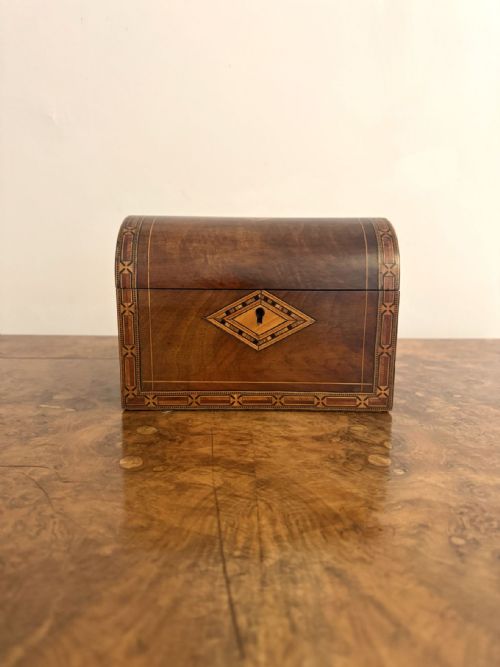
A victorian inlaid tea caddy is a decorative timber box designed to preserve precious tea leaves, most frequently encountered in rosewood, walnut, and mahogany. These pieces range from sarcophagus forms and domed lids to rectilinear boxes, often housing internal compartments for different blends.
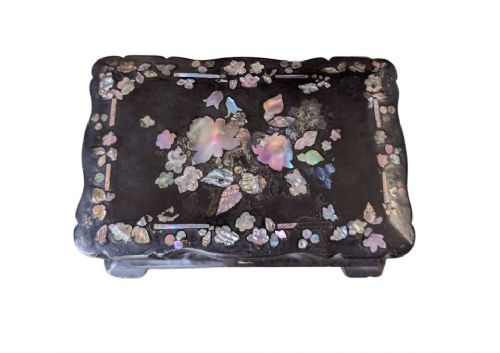
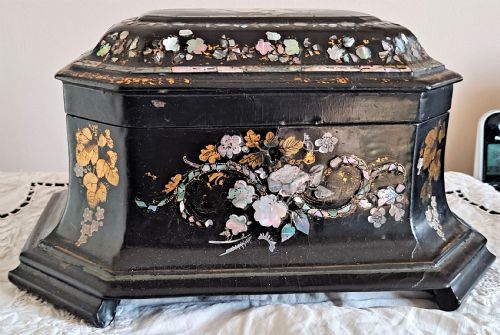
The materials and decoration on this page include brass, mother-of-pearl, tortoise shell, and buelle, alongside specialised mosaic details. Many examples reflect nineteenth century craftsmanship, spanning specific dates from the eighteen fifties to eighteen eighties.
Buyers also encounter related forms such as teapoys, sewing boxes, and decanter boxes sharing similar inlaid techniques. These objects served domestic social rituals in nineteenth century parlours, functioning as both storage and display items.
How they were made
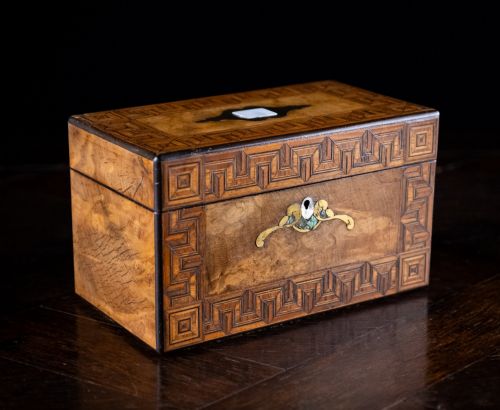
Cabinet makers constructed these bodies from dense tropical hardwoods like rosewood, walnut, and mahogany, often shaping them into sarcophagus or domed profiles. Surfaces received meticulous wood inlay, parquetry, and marquetry, embedding contrasting veneers into the primary timber.
Embellishment relied on contrasting materials such as brass, mother-of-pearl, and tortoiseshell, secured into prepared recesses within the timber. Tunbridge ware pieces utilised tiny mosaic wood blocks arranged meticulously to form pictorial or geometric panels.
Some nineteenth century makers tucked hidden compartments inside these boxes, requiring a secret sequence of presses to reveal the tea.
What varies in quality
The distinction between tiers rests upon the precision of the timber joinery and the complexity of the inlay work. Finer examples display tightly fitted parquetry, intricate Tunbridge mosaics, and well-aligned brass or mother-of-pearl detailing without gaps.
Internal appointments significantly affect overall standing, separating standard storage boxes from superior examples. Better pieces retain intact interior lids, original mixing bowls, and well-preserved silk or paper linings within their compartments.
Henry Hollamby
The Victorian Inlaid Tea Caddy Glossary
- Tunbridge Ware
- A type of woodwork featuring minute mosaic tiles assembled from different coloured natural timbers to create pictorial or geometric designs. This technique originated in Kent during the nineteenth century.
- Sarcophagus
- A box shape featuring a domed or sloping lid resting on a flared base, mimicking classical monumental tombs. This profile gained popularity for large rosewood and mahogany tea caddies.
- Parquetry
- Geometric mosaic woodwork formed by fitting various wood veneers together to create repeating patterns on a surface. It provides decorative contrast on walnut and mahogany bodies.
- Buelle
- A decorative technique applying tortoiseshell and brass inlay, often associated with French nineteenth-century cabinet making. This opulent finish catches the light across curved box lids.
- Teapoy
- A larger tea storage stand supported on a central pillar with tripod or platform feet, housing multiple caddies inside. These served similar functions to tabletop boxes but stood independently on the floor.
Victorian Inlaid Tea Caddy: Frequently Asked Questions
What is a tea caddy?
A tea caddy is a specialised lidded box built to store dry tea leaves securely away from moisture and air. In the nineteenth century, tea was an expensive commodity kept locked under the host's direct care.
Inside, these boxes typically feature foil-lined or lidded compartments to separate different leaf varieties. Wealthy households displayed them prominently in drawing rooms during social gatherings.
How do I date a tea caddy?
Dating relies on examining the timber species, overall box silhouette, and construction methods used inside the compartments. Walnut, rosewood, and mahogany dominate specific decades of the nineteenth century.
Hardware details like brass hinges and lock mechanisms also provide chronological clues. Stylistic markers such as sarcophagus shapes or specific inlay techniques help narrow down the period.
What is Tunbridge inlay?
Tunbridge inlay utilises thousands of tiny, precisely cut blocks of naturally coloured wood glued together in a mosaic matrix. This mosaic creates detailed geometric or pictorial scenes across the box lid.
Master craftsmen in Kent produced these intricate panels during the nineteenth century. Surviving pieces display remarkable colour variation derived entirely from untinted British and foreign timbers.
Can I still store tea inside them?
While structurally sound, historic tea caddies are generally collected and displayed as antique decorative objects rather than used daily. The interior wood and old foil linings may affect modern tea leaves.
Gentle cleaning with appropriate soft cloths maintains the exterior timber and inlay work. Keeping them away from direct sunlight preserves the delicate rosewood, walnut, and tortoiseshell surfaces.