
Victorian Papier Mache
Victorian papier mache objects bring together durable moulded pulp, deep lacquer and luminous mother of pearl for practical household use.
Victorian Papier Mache
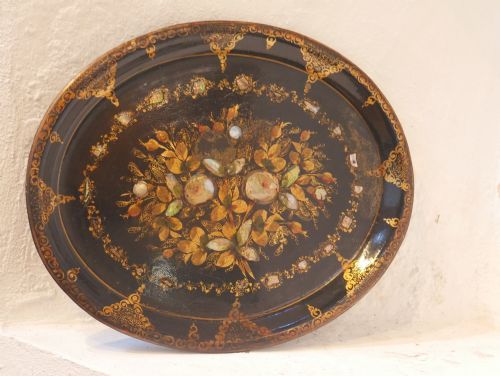
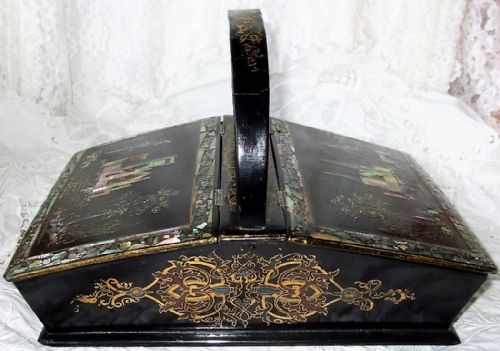
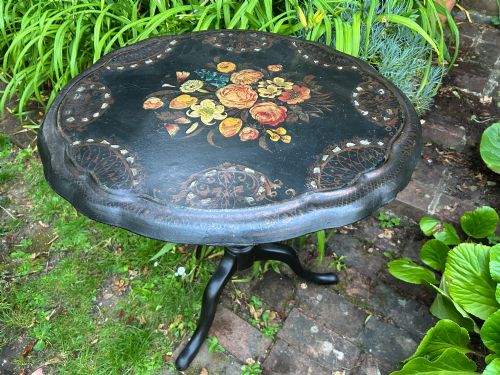
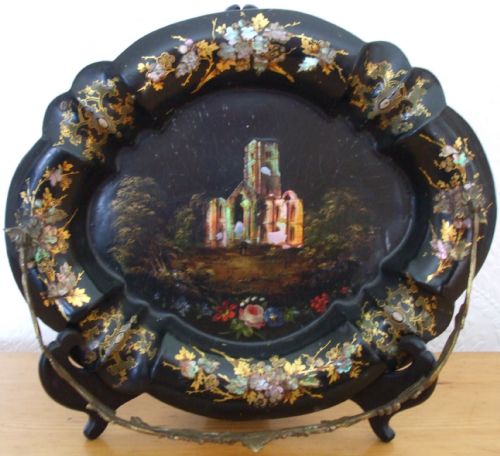
Victorian papier mache pieces encompass a range of domestic objects designed for both utility and display, from serving trays and tea caddies to occasional tables and writing boxes. The version most commonly encountered on this page is the serving tray, often mounted on a folding stand to serve as a low table.
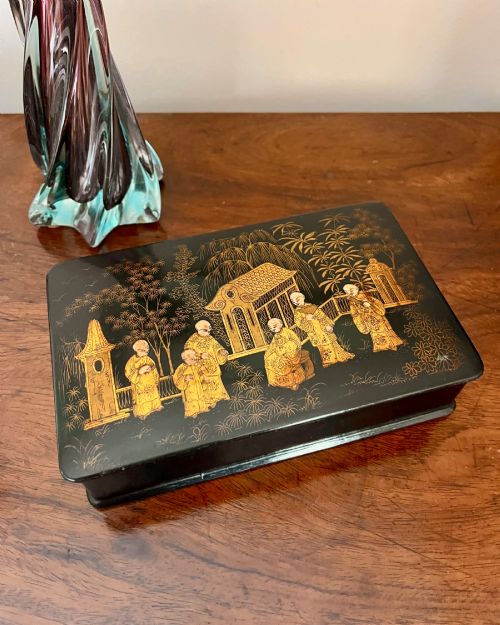
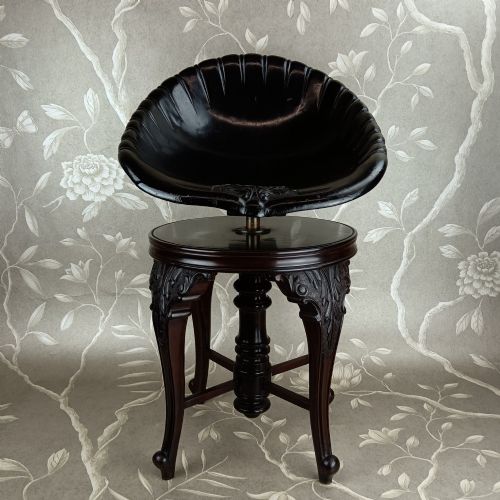
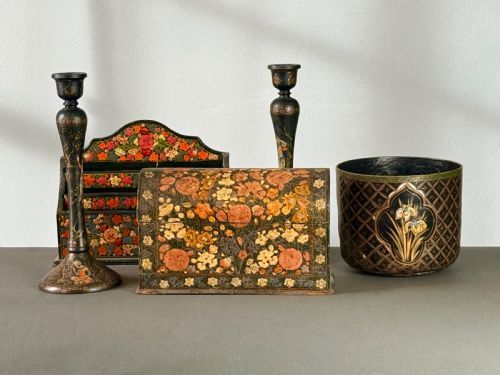
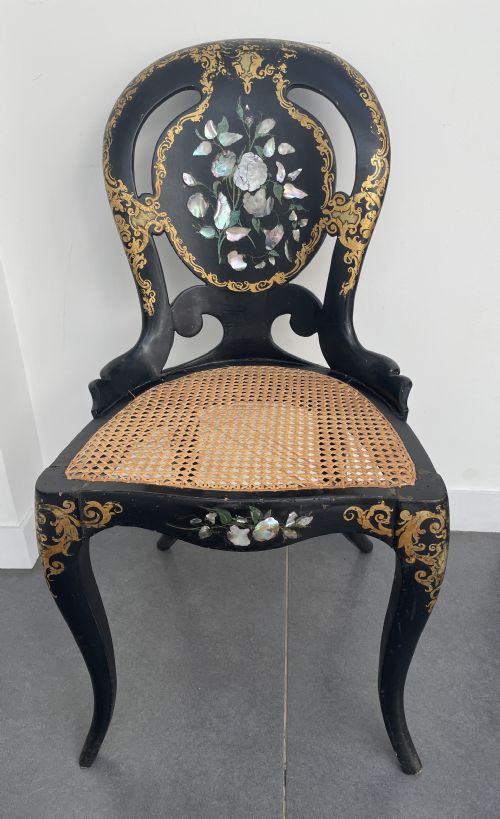
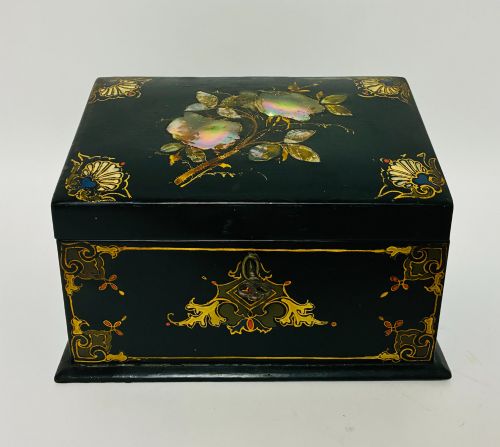
Small decorative containers also feature prominently, including stationery boxes, letter racks and needlework caskets intended for the parlour desk. Larger items such as side chairs, music stools and dressing screens complete the domestic repertoire recorded in the archive.
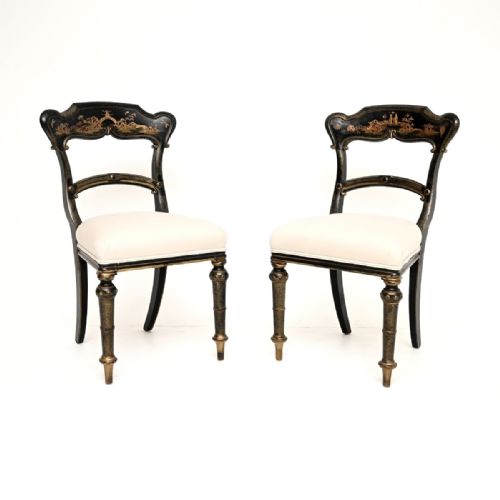
Originating largely from nineteenth-century workshops, these items reflect the era's taste for polished surfaces and ornamental decoration. The pieces draw upon both traditional British cabinet making and imported aesthetic influences like chinoiserie.
How they were made
The foundation of these items is paper pulp mixed with glue, resin and chalk, pressed into metal moulds under heavy pressure to achieve structural rigidity. Once dried, the hardened core received multiple coats of dark lacquer rubbed down by hand to a smooth sheen.
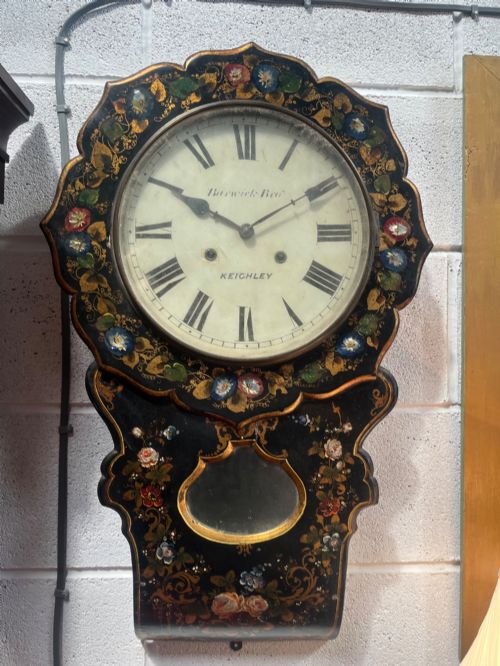
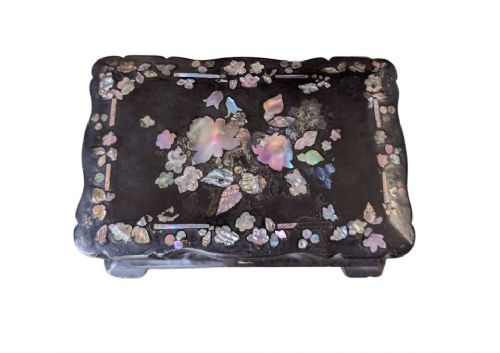
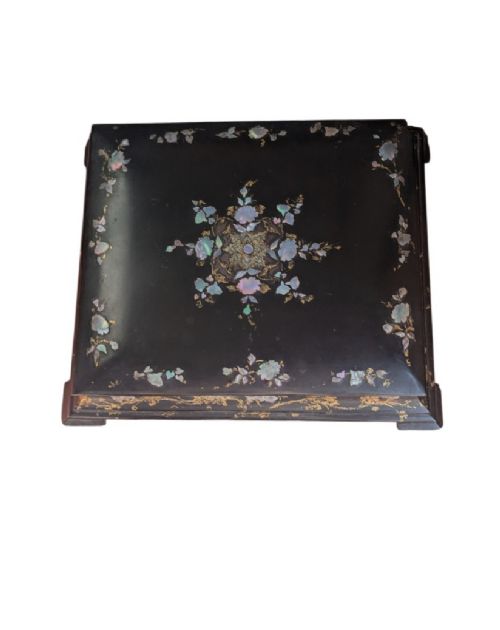
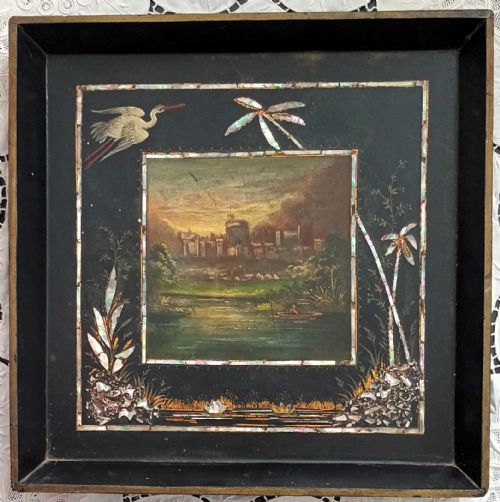
Surface ornamentation relied on meticulous hand painting in gold leaf and pigments, frequently combined with inlaid pieces of iridescent mother of pearl shell. Wood and brass provided structural reinforcement for items subject to physical weight, such as chairs and table bases.
Nineteenth-century makers even pressed paper pulp into fire buckets and howling dog automata.
What varies in quality
The distinction between standard domestic items and exceptional pieces rests upon the precision of the hand painting and the depth of the lacquer layers. Superior items exhibit intricate botanical or figural scenes rendered with fine brushwork rather than stencilled outlines.
Inlay work similarly separates grades of craftsmanship, with top tier examples utilising carefully shaped mother of pearl fragments that lie flush with the surrounding lacquer surface. The stability of the moulded core and the retention of the original gilded highlights dictate the overall integrity of the piece.
Jennens and Bettridge
The Victorian Papier Mache Glossary
- Papier-mache
- A composite material formed from paper pulp or paper sheets mixed with binding agents, compressed and dried into rigid forms. This technique allowed makers to create lightweight yet sturdy objects with smooth surfaces suitable for painting.
- Chinoiserie
- European artistic style incorporating pseudo-Chinese motifs, figures, and landscapes. It appears frequently on lacquer trays and furniture from the nineteenth century.
- Mother-of-pearl
- Iridescent inner layer of mollusc shells, cut into thin plates and embedded into lacquer surfaces. Craftsmen used these gleaming fragments to catch the candlelight on tea caddies and table tops.
- Japanning
- European imitation of East Asian lacquerwork, built up through successive coats of varnish and heat drying. The process produced the glossy black grounds characteristic of Victorian desk sets and boxes.
- Tilt-top table
- A table featuring a hinged mechanism that allows the top to rotate vertically when not in use. This form saved floor space in Victorian parlours.
Victorian Papier Mache: Frequently Asked Questions
What were papier mache tea caddies used for?
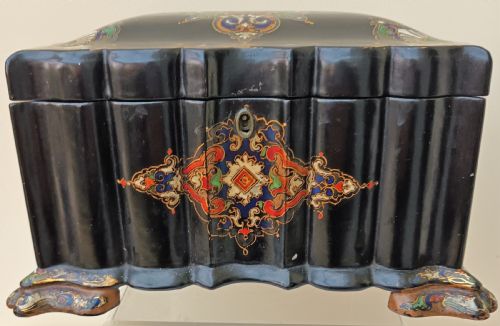
Tea caddies served to store expensive loose leaf tea securely under lock and key in the Victorian drawing room. The interior typically featured lidded compartments to keep different tea varieties separate and dry.
The durable papier mache body protected the contents from moisture while the decorative exterior matched other parlour furnishings.
How do you clean antique lacquer surfaces?
Maintenance requires only a soft, dry cloth to remove dust without disturbing the delicate lacquer or gold leaf ornamentation. Water and chemical cleaning agents must be avoided entirely to prevent clouding the varnish.
Keeping pieces away from direct sunlight and heat sources preserves the underlying papier mache core from warping and cracking.
Are tray tables original or later conversions?
Many papier mache trays were mounted onto folding wooden stands during the Victorian era or later to create functional occasional tables. Both period conversions and later pairings appear frequently in the historical record.
The quality of the stand and the fit of the tray provide indications of whether the combination dates to the nineteenth century.
How do you distinguish genuine nineteenth century pieces?
Authentic pieces display the characteristic weight, rigidity and hand applied finish of compressed paper pulp rather than modern synthetic plastics. Examining the base materials and the ageing of the lacquer reveals the period of manufacture.
Wear patterns around handles and high-contact areas should reflect genuine age and use rather than artificial distress.