



Pearl Inlaid Tea Caddy
A pearl inlaid tea caddy brings iridescent shimmer and fine cabinet work to a room, holding tea or keepsakes with period elegance.
Pearl Inlaid Tea Caddy
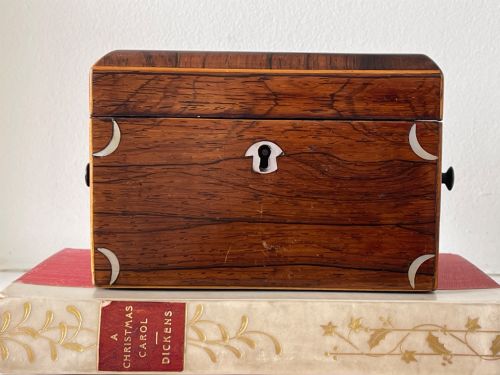
When you search for a pearl inlaid tea caddy, you are looking at nineteenth-century storage boxes designed to keep precious tea leaves secure under lock and key. These containers range from the formal Regency period to the later Victorian era, reflecting changing domestic tastes in timber and ornamentation.
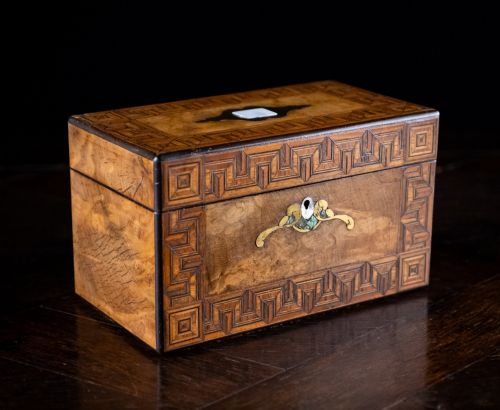
The examples on this page primarily take the form of tea caddies, keepsake boxes, and sewing boxes fashioned from rich woods or moulded papier-mâché. Makers utilised materials such as rosewood, walnut, coromandel, and tortoiseshell as dark grounds to contrast with luminous shell work.
You will encounter distinct shapes including the classic sarcophagus silhouette and rectangular caskets, often fitted with internal compartments for dry leaves. These objects bridge the gap between functional kitchenalia and decorative drawing room art.
How they were made
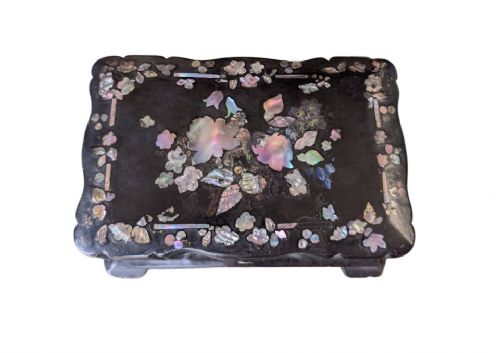
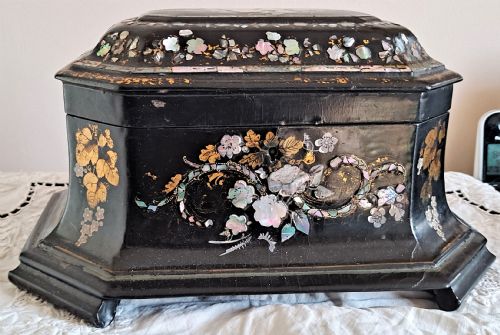
Cabinet makers built the foundational carcases from dense timbers like rosewood and walnut, or formed them using layered papier-mâché for smooth, rounded forms. Artisans then carefully cut thin sections of mother-of-pearl to inlay into the prepared surfaces, creating floral, geometric, or avian motifs.
Engraving added fine detail to the shell inlay, while brass stringing, gold leaf, and contrasting woods frequently supplemented the design. Internal compartments often featured fitted lids and velvet or silk linings to protect the contents.
Pearl Inlaid Tea Caddy Retail Price Guide 2026
Typical asking prices for pearl inlaid tea caddy among the pieces listed under this phrase on Sellingantiques today, from the lower quarter to the upper quarter. They describe what is for sale here now, not the wider market.
Some nineteenth-century tea caddies feature subtle mother-of-pearl birds perched forever among engraved brass foliage.
What varies in quality
The standard of a pearl inlaid tea caddy depends heavily on the precision of the cabinet work and the complexity of the shell cutting. Finer pieces demonstrate tight joints, well-figured timber, and meticulously engraved mother-of-pearl that sits flush with the surrounding surface.
Proportion and decorative restraint also separate standard production pieces from exceptional examples. Superior items feature harmonious proportions, balanced inlay layouts, and original internal fittings such as glass mixing bowls or lidded canisters.
Jennens and Bettridge
The Pearl Inlaid Tea Caddy Glossary
- Mother-of-Pearl
- The iridescent inner layer of certain mollusc shells, utilised by makers for decorative inlay due to its shimmering pink and green lustre.
- Papier-mâché
- A composite material made from paper pulp or layers of paper bound with glue, pressed into moulds and hardened to create smooth boxes.
- Sarcophagus
- A coffin-like box shape with a domed lid and sloping sides, popular for tea caddies during the Regency and Victorian periods.
- Regency
- An English design period spanning the early nineteenth century, characterised by classical restraint and refined cabinet work.
- Parquetry
- Geometric mosaic woodwork made from small strips of veneer laid down in repeating patterns on a carcase.
Pearl Inlaid Tea Caddy: Frequently Asked Questions
How were pearl inlaid tea caddies originally used?
These boxes stored expensive tea leaves under lock and key in the parlour or dining room, keeping the contents dry and secure from servants.
Tea was a luxury commodity in the nineteenth century, making the caddy an important social centrepiece during formal hospitality.
What is the difference between Regency and Victorian caddies?
Regency caddies often utilise solid dark timbers like rosewood with architectural forms, brass accents, and restrained geometric inlay.
Victorian examples frequently introduce moulded papier-mâché, exuberant foliate motifs, and broader uses of contrasting shell work.
How should I clean a papier-mâché caddy?
Dust the surface gently with a soft, dry cloth to prevent moisture damage to the delicate paper composite material.
Avoid commercial polishes and water entirely, as liquids can soften the historic binder and lift the pearl inlay.
Are interior fittings usually original?
Many surviving caddies retain their original internal lidded compartments, though glass mixing bowls and foil linings are frequently missing.
Replacement liners are common due to the fragile nature of glass and the wear placed on functional tea storage.