



Victorian Inlaid Bureau
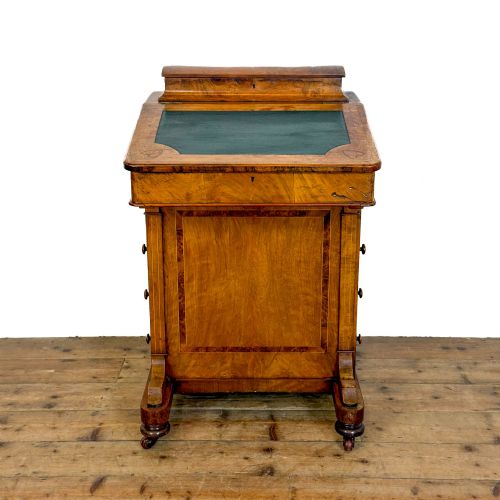
When you want a victorian inlaid bureau, you are looking at nineteenth-century writing furniture decorated with contrasting wood veneers and brass.
Victorian Inlaid Bureau
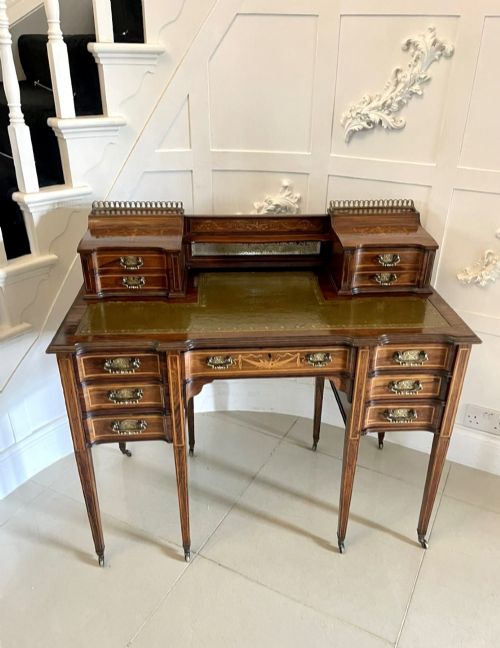
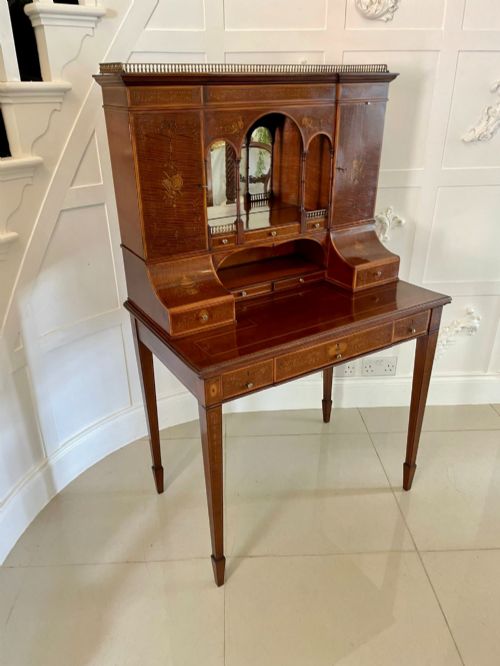
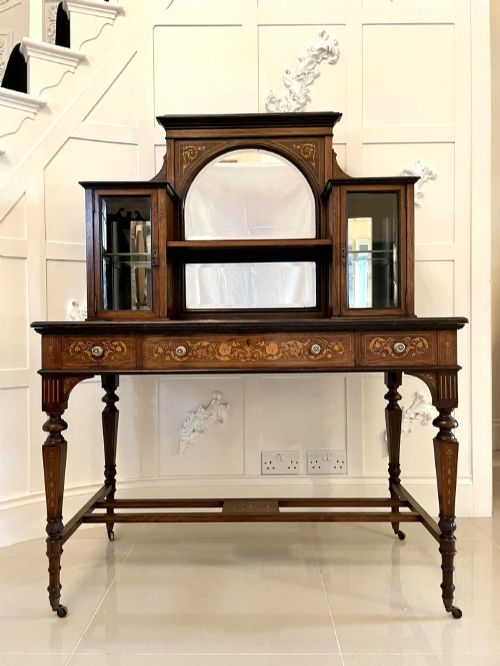
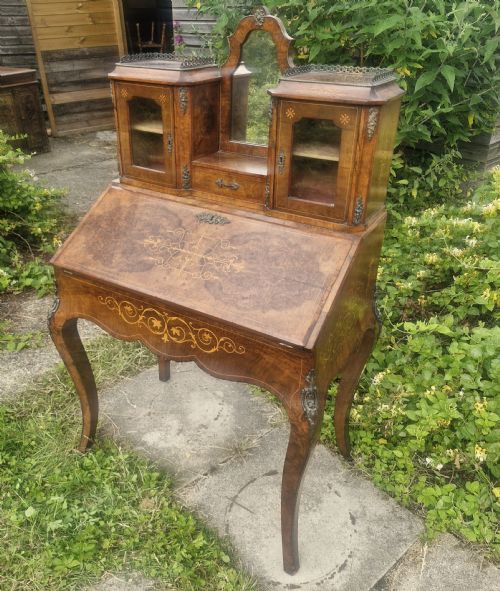
A victorian inlaid bureau typically takes the form of a slope-front writing desk, a cylinder desk, or a compact ladies bonheur du jour designed for domestic correspondence. These pieces originate primarily from the nineteenth century, spanning periods from the eighteen-sixties through to the Edwardian era.
The selection ranges from freestanding mahogany and walnut writing tables to elaborate satinwood and rosewood bureaux featuring fitted interior compartments, small drawers, and leather writing surfaces.
How they were made
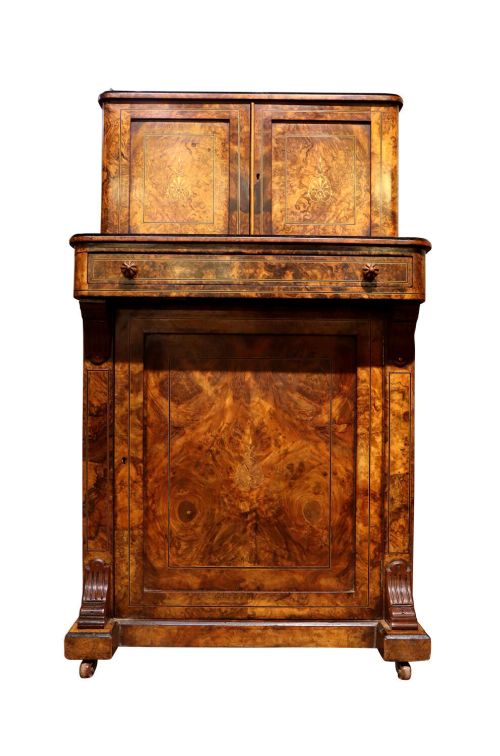
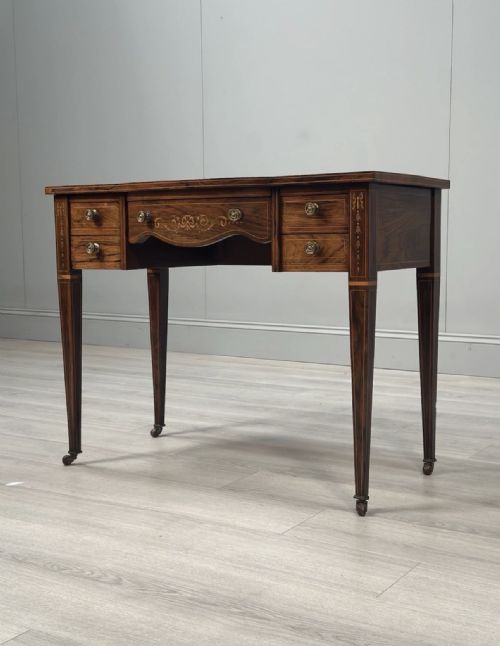
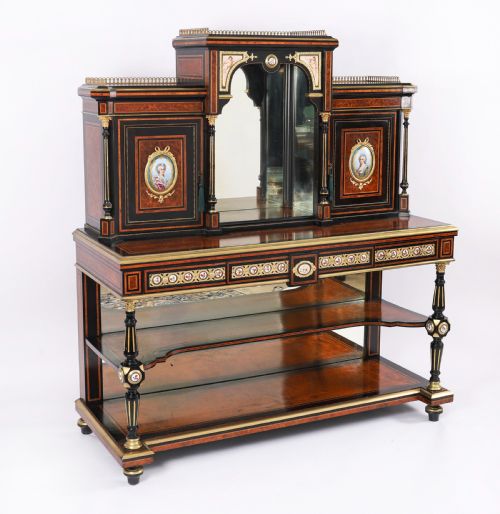
Cabinet makers utilised dense hardwoods such as mahogany, walnut, rosewood, and satinwood as the structural foundation and primary visible surfaces. These timbers received decorative veneers and detailed marquetry or parquetry inlay executed in contrasting light and dark woods.
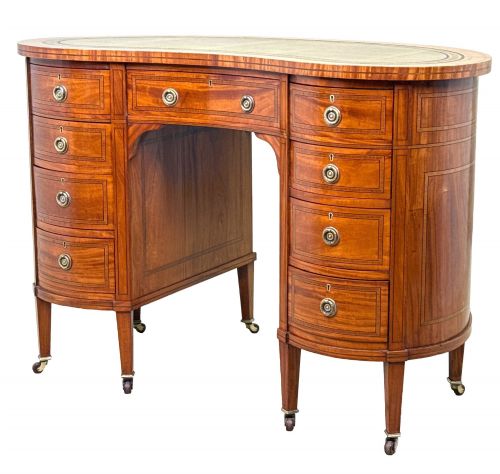
Metal mounts in brass and ormolu often edge the writing surfaces, drawer fronts, and galleries, whilst leather inserts provide a durable writing plane on the desktop.
Recorded forms include Davenport desks, cylinder desks, kidney-shaped writing tables, and freestanding bureau bookcases.
What varies in quality
The standard of a piece depends heavily on the precision of the cabinet work and the complexity of the wood selection, such as burr walnut or figured mahogany. Finer examples display meticulous control in the execution of floral marquetry and geometric parquetry.
Signatures from established workshops or retailers elevate the standing of a desk, reflecting superior joinery and more refined interior fittings compared to unsigned commercial production.
Maple and Co·JAS Shoolbred·Mawer and Stephenson·Donald Ross·Edwards and Roberts
The Victorian Inlaid Bureau Glossary
- Bureau
- A desk featuring a sloping flap that opens to reveal internal pigeonholes and small drawers. This form provides a concealed writing surface.
- Marquetry
- Decorative veneer work arranged in pictorial or floral patterns using various tinted woods. Craftsmen cut these designs to fit flush into the solid ground timber.
- Parquetry
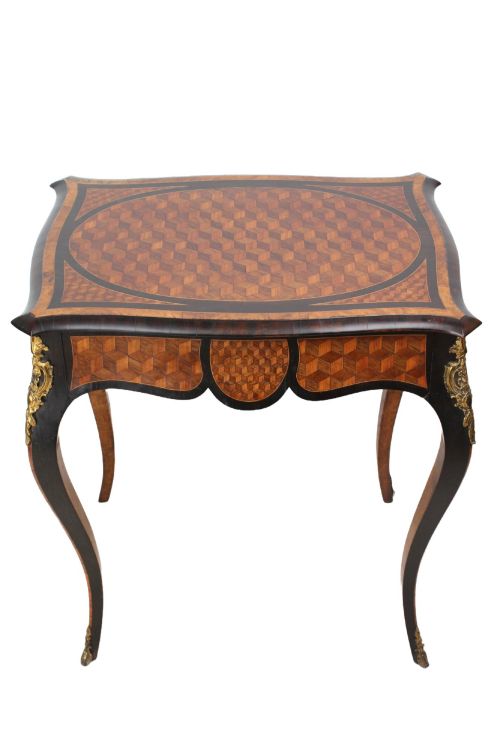
- Geometric wood inlay forming repeating patterns such as cubes or stripes. It decorates tabletops and drawer fronts across many Victorian examples.
- Bonheur du jour
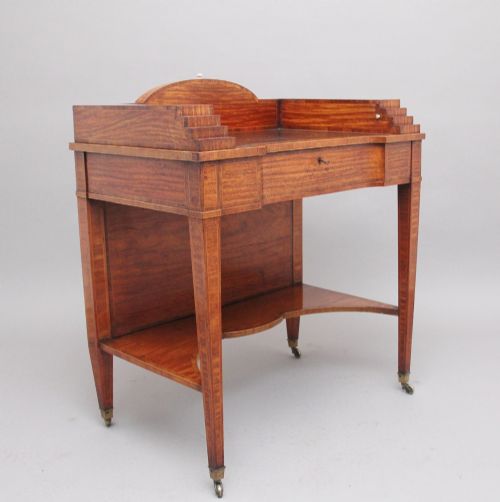
- A light ladies writing desk featuring a small cabinet or superstructure with shelves above the main writing surface. These compact writing desks date frequently to the mid and late nineteenth century.
- Satinwood
- A lustrous yellow timber utilised extensively for high-status furniture during the Sheraton Revival and Victorian periods. Its bright grain contrasts sharply with darker framing woods.
Victorian Inlaid Bureau: Frequently Asked Questions
What is a bureau de dame?
A bureau de dame is a small ladies writing desk, often designed with a cylinder front or sloping lid and fitted with delicate internal compartments.
These pieces were made for private correspondence in nineteenth-century drawing rooms and boudoirs.
How do I identify Sheraton Revival pieces?
Sheraton Revival furniture draws inspiration from eighteenth-century neoclassical designs, reinterpreted by Victorian and Edwardian makers using light satinwood and delicate floral marquetry.
These items frequently exhibit slender tapered legs and balanced geometric inlay.
What is the difference between marquetry and parquetry?
Marquetry uses varied wood veneers to create pictorial scenes, scrolls, or floral motifs across the surface of a desk.
Parquetry relies on geometric arrangements and repeating shapes to form crisp, orderly patterns.
Where were these desks used?
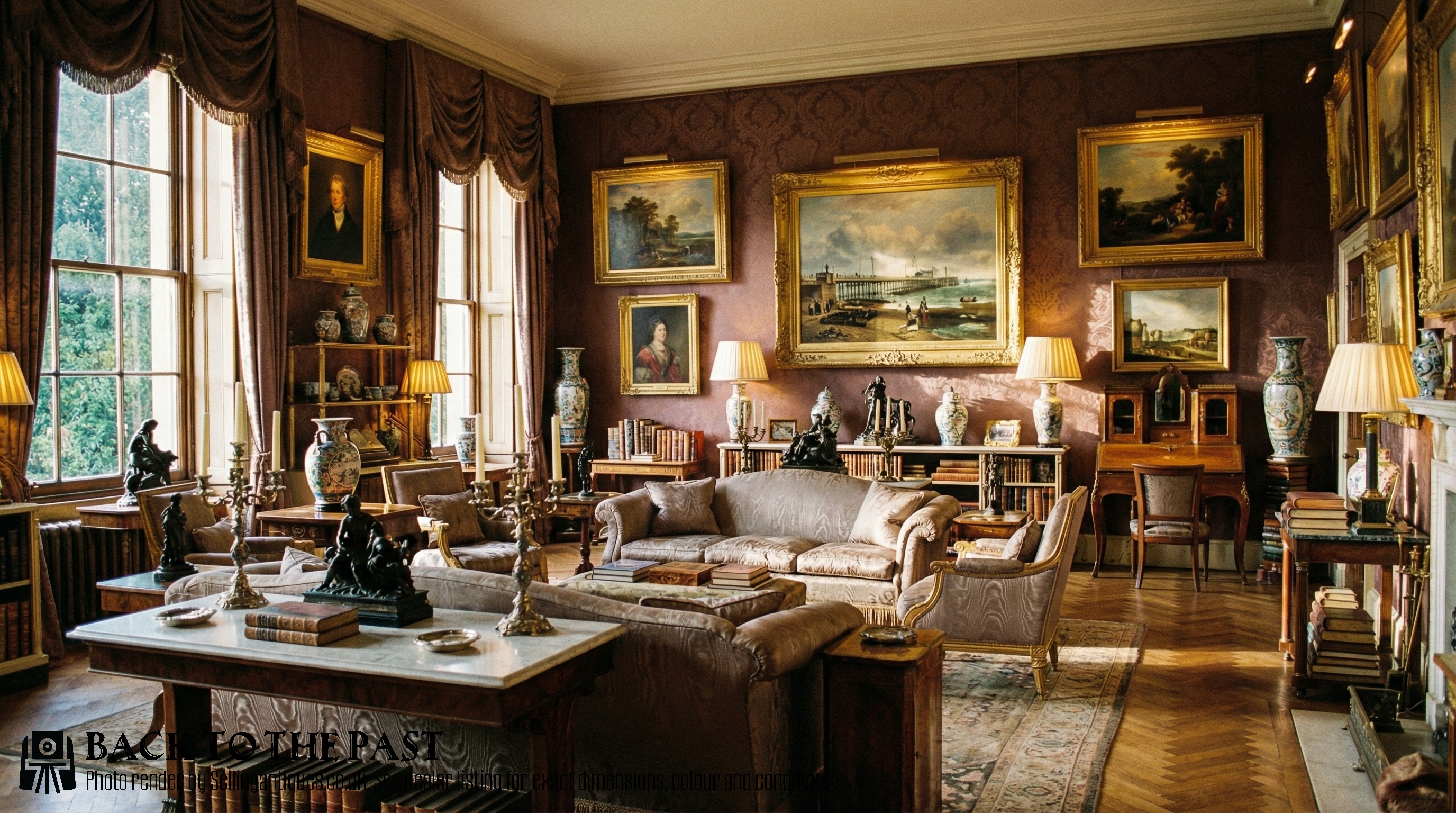
These writing desks served as functional furniture for private correspondence, record-keeping, and reading in domestic sitting rooms or studies.
Compact forms like the bonheur du jour were kept in reception rooms for quick notes and letters.