
Victorian Inkstand
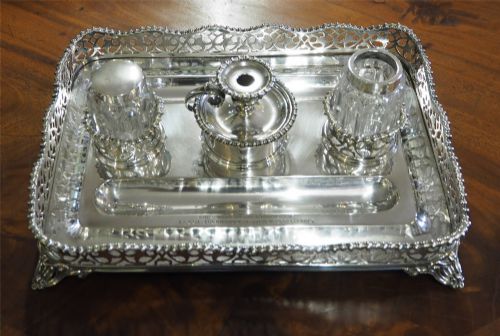
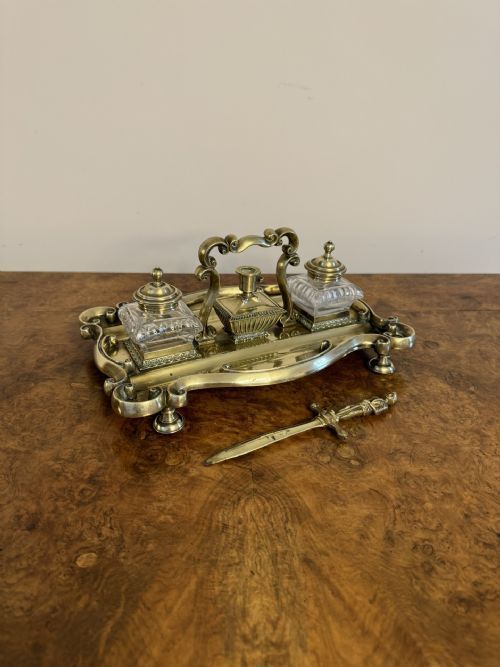
A victorian inkstand organises the writer's desk with fitted cut glass wells, pen trays and compartmented stands.
Victorian Inkstand
A victorian inkstand is a desk accessory designed to hold writing materials, typically incorporating one or more inkwells alongside pen rests and sometimes tapersticks or stamp boxes.
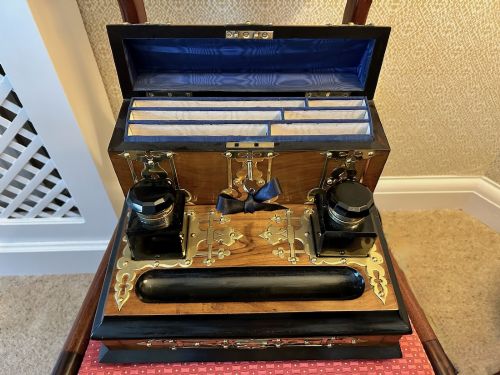
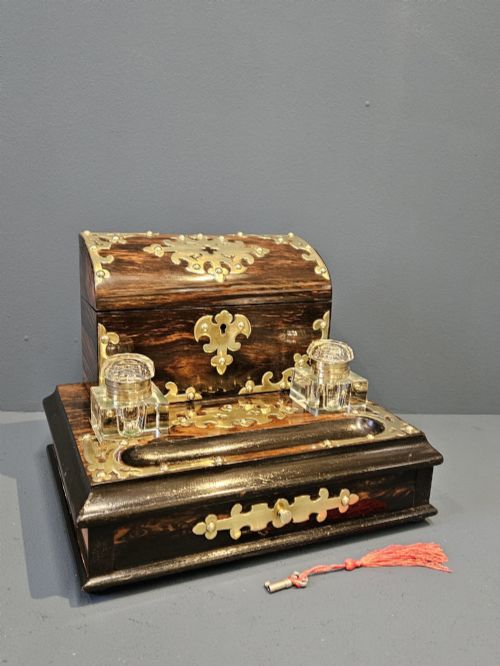
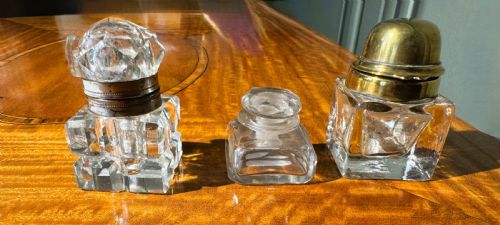
The versions met most frequently on this page combine polished hardwoods like walnut or coromandel with brass mounts and cut glass ink inserts.
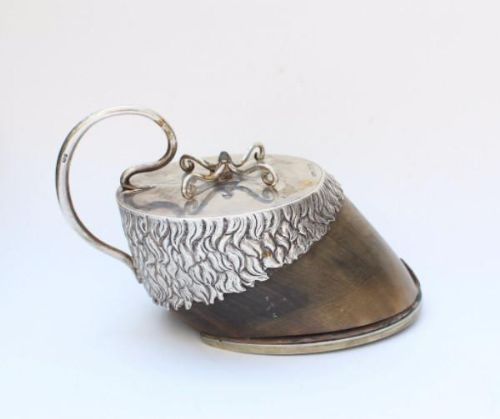
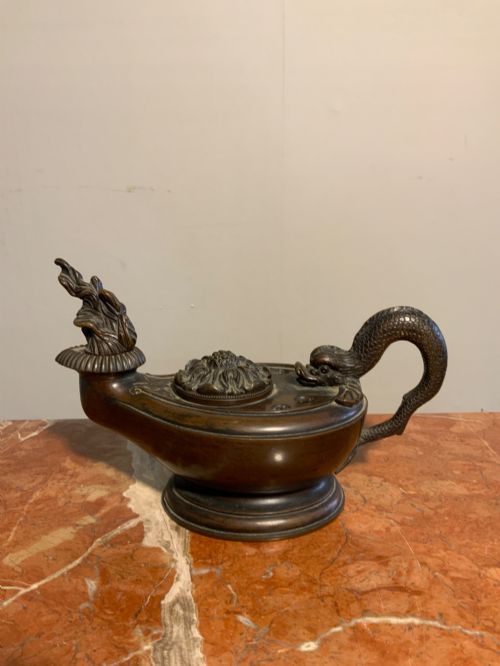
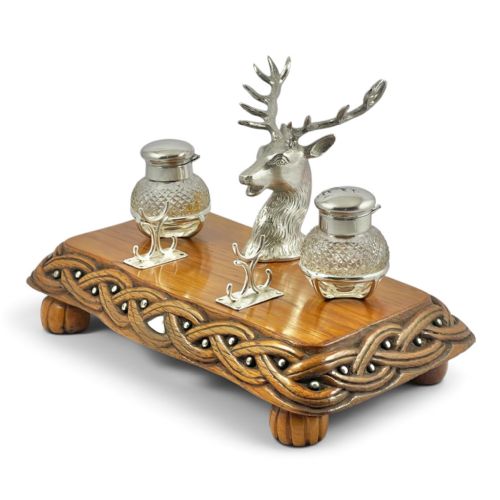
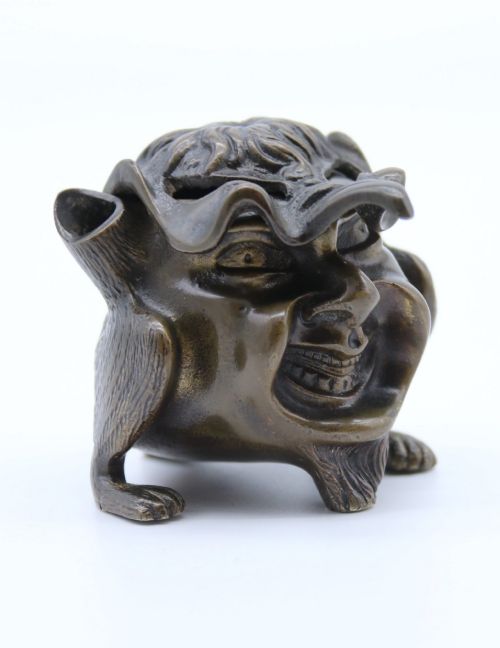
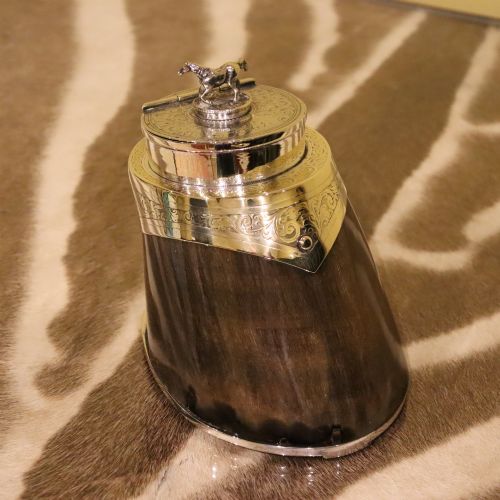
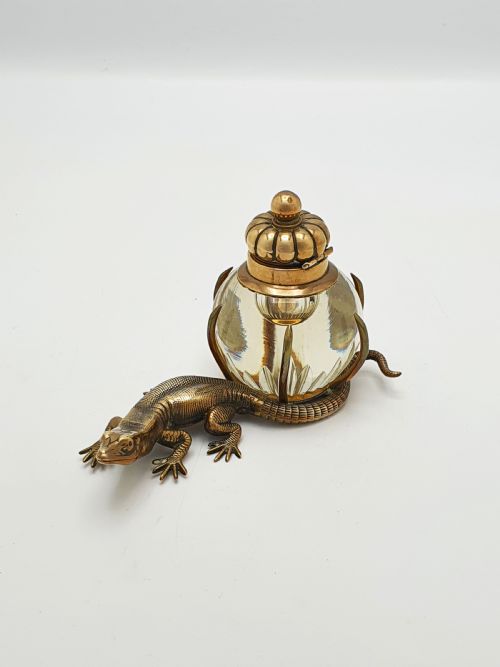
Beyond standard wooden trays, collectors encounter novelty desk items shaped as animals, including taxidermy horse hooves, carved owls and cast bronze creatures.
How They Were Made
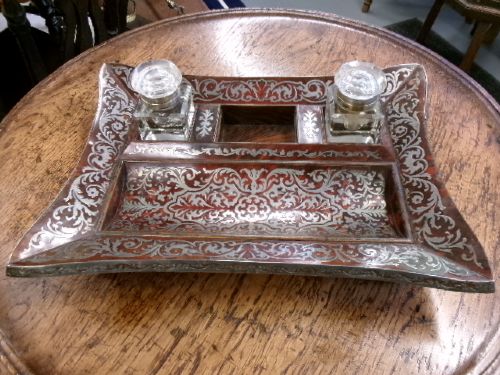
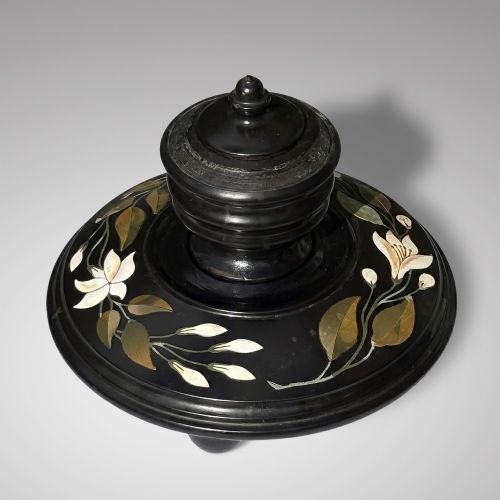
Cabinetmakers utilised dense timbers such as coromandel, oak and walnut, often applying brass inlay in the Boulle manner or combining tortoiseshell and mother-of-pearl.
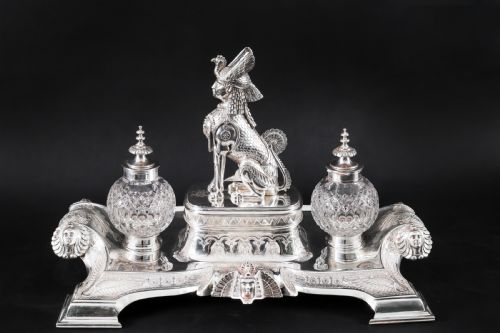
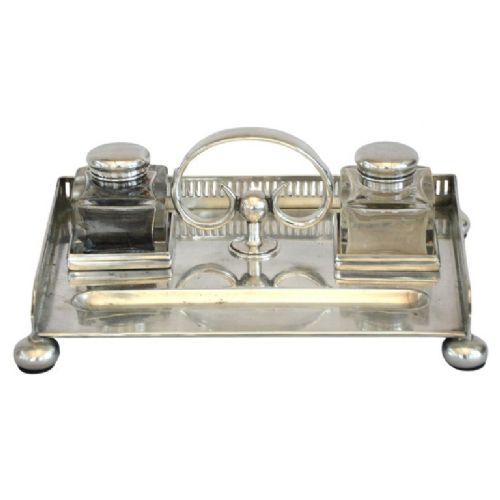
Metal components relied on cast brass, patinated or gilt bronze, or silver plate and sterling silver applied over mounts and frames.
Glassmakers produced heavy cut glass inserts with fitted metal collars, while specialist workshops turned out hand-carved stone, marble, and taxidermy subjects.
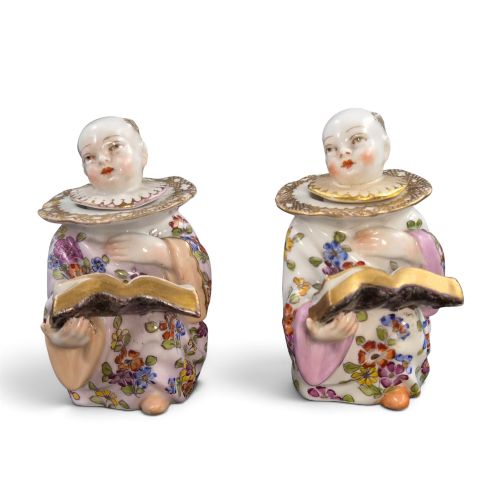
Design influences span French Napoleon III, Grand Tour classical motifs, and Chinoiserie alongside domestic Victorian styles.
What Varies in Quality
The standard of an inkstand is determined by the weight and casting finish of its metalwork, ranging from sharp, hand-chased bronze or silver mounts to simpler stamped brass.
Material selection divides standard utilitarian pieces from luxury items, particularly where solid exotic woods, matched veneers, tortoiseshell, or heavy crystal glass are employed.
Completeness dictates much of the desirability, with original matching inkwell inserts, lids, and integrated accessories separating undisturbed examples from assembled ones.
Edmé Samson·Elkington & Co·Walker And Hall·Wilkinson & Co·Edward Ker Reid·Charles Edward Nixon·Martin Hall & Co·William Comyns
The Victorian Inkstand Glossary
- Standish
- An alternative term for a desk stand or inkstand that holds writing equipment. These portable metal or wooden trays usually incorporate lidded inkwells and sanders.
- Boulle work
- A style of marquetry using brass and tortoiseshell inlaid into wood furniture and desk accessories. Named after a French cabinetmaker, it became popular during the nineteenth century.
- Grand Tour
- A term for souvenirs and decorative arts collected by travellers on European journeys. These pieces often draw on classical architecture and antiquities.
- Champlevé
- An enamelling technique where troughs are dug into a metal surface and filled with vitreous enamel. The pieces are then fired and polished flat.
- Taperstick
- A small candlestick designed to melt sealing wax rather than illuminate a room. They frequently appear integrated into silver and brass desk stands.
Victorian Inkstand: Frequently Asked Questions
What is an inkstand?
An inkstand is a portable desk tray or stand that holds inkwells, pens, and related writing implements. They were essential desk accessories in the nineteenth century for correspondence and record-keeping.
Designs range from simple oak and glass trays to elaborate silver centrepieces and novelty animal figures. They kept the desktop tidy and provided the writer with all necessary tools in one place.
How do I date a Victorian inkstand?
Dating relies on assay marks on silver components, maker names, and stylistic shifts between early and late periods. Materials like coromandel and heavy brass mountings often point to specific decades.
Cabinetwork styles also shift from the ornate walnut of the mid-nineteenth century to later Edwardian or Arts and Crafts influences. Examining construction methods helps narrow down the period of manufacture.
Were these pieces used for daily writing?
Desk stands served as functional items in offices, libraries, and drawing rooms. Writers dipped quill or steel nibs directly into the glass ink inserts housed within the stand.
Many examples include sanders for drying ink and compartmented boxes for wafers or stamps. Their solid construction allowed them to endure frequent daily use.
How do I care for wooden and brass inkstands?
Wood surfaces benefit from occasional light waxing to maintain the finish of walnut, coromandel, or oak. Brass and silver parts require gentle cleaning to preserve patination without stripping the metal.
Glass ink inserts can be removed and washed carefully by hand to eliminate dried ink residue. Keeping pieces away from direct heat sources protects glued joints and veneers.