


Victorian Indoor Plant Holder
These Victorian indoor plant holder pieces bring nineteenth-century foliage display indoors with substantial metalwork and ceramic vessels.
Victorian Indoor Plant Holder
A Victorian indoor plant holder encompasses jardiniere vessels, planters, cachepots, and plant stands designed to house greenery within nineteenth-century domestic interiors. These objects appear in forms ranging from simple cylindrical vessels to large examples set upon pedestals.
Most pieces encountered on this page date from the Victorian era and the late nineteenth century, spanning periods such as 1860, 1880, 1890, and 1900. Buyers will frequently find brass and copper vessels alongside ceramic forms like jasperware and majolica.
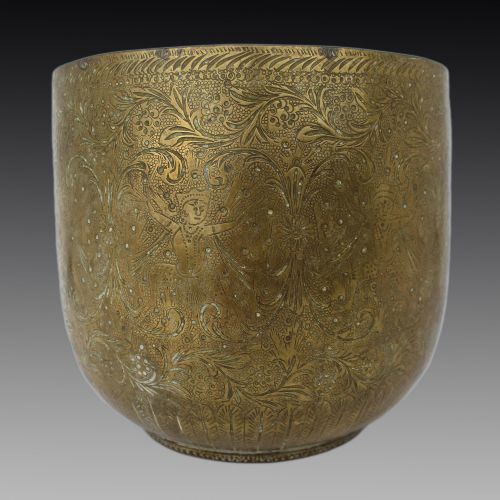
Makers and designers embraced various stylistic movements, producing items in Anglo-Indian, Arts and Crafts, Gothic Revival, and Art Nouveau styles. The resulting variety provides options suitable for both tabletop placement and floor-standing display.
Materials and construction methods
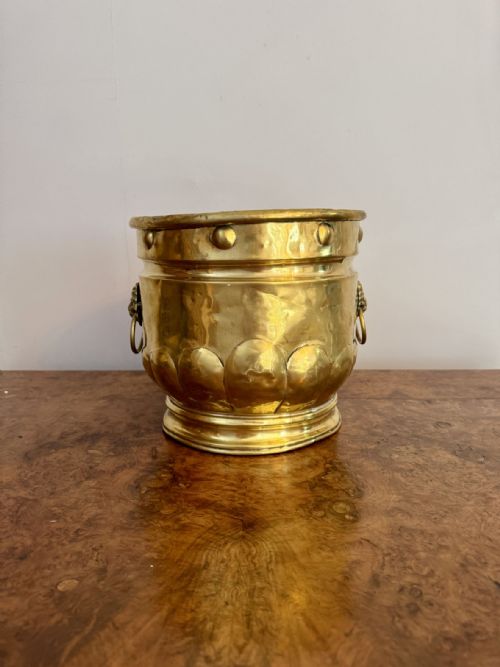
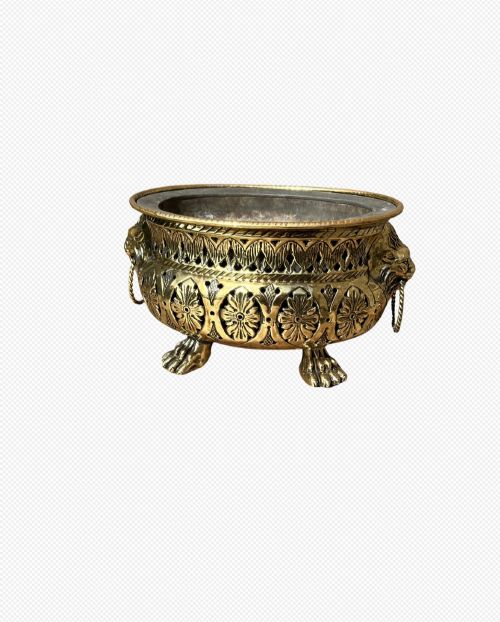
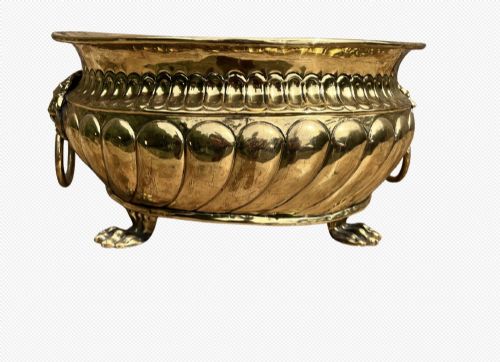
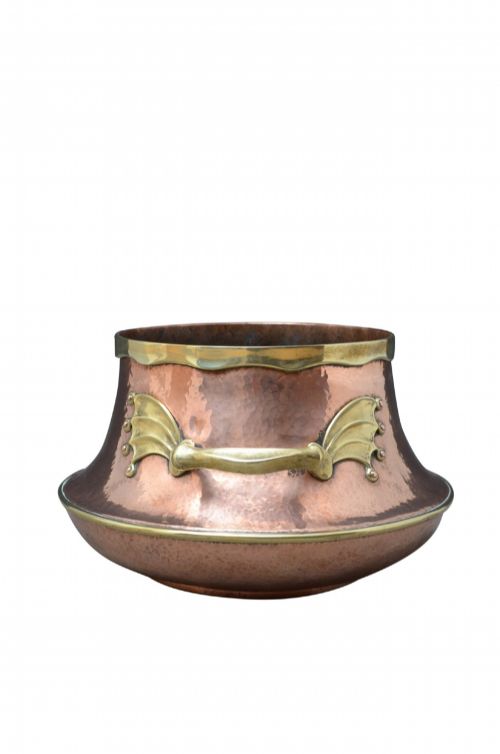
Makers utilised metals such as brass, copper, cast iron, and wrought iron to construct durable planters and jardinieres. Metalwork techniques involved hammering, piercing, and casting, often resulting in heavy vessels featuring lion's mask handles or riveted joints.
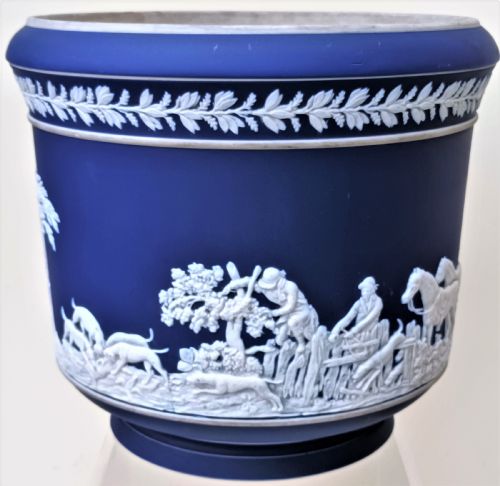
Ceramic versions incorporate clay, earthenware, stoneware, and jasperware, finished with decorative glaze. Artisans also combined materials by mounting copper bowls upon wrought iron stands or pairing ceramic bodies with metal mounts.
One copper and brass vessel doubles as a waste bin, proving that Victorian indoor plant holders easily transitioned to alternative household duties.
Assessing quality in these pieces
Quality reveals itself in the weight of the metal and the depth of the hand-hammered or pierced decoration. Thicker gauge brass and copper maintain structural integrity better over decades of holding damp soil and heavy pots.
Ceramic quality is judged by the crispness of the moulded relief work, such as the details on jasperware or majolica glaze application. Finer pieces display careful finishing at the rims and secure joins on handles and stands.
William Adams & Sons·Royal Doulton
The Victorian Indoor Plant Holder Glossary
- Jardiniere
- An ornamental pot or stand for holding plants or flowers. These vessels form the majority of nineteenth-century plant display containers.
- Cachepot
- An ornamental pot used to conceal an ordinary flowerpot. This French term describes a container that typically lacks drainage holes at the base.
- Jasperware
- A type of pottery developed by Josiah Wedgwood featuring a vitreous unglazed fine stoneware body. It commonly displays white moulded reliefs against a blue ground.
- Majolica
- A type of earthenware decorated with opaque coloured glazes over a fired slip. This technique produces vibrant colour surfaces popular during the nineteenth century.
- Arts and Crafts
- A design movement advocating traditional craftsmanship using simple forms and medieval, folk, or romantic styles of decoration. Pieces from this movement often highlight the hand of the maker through hammered metal surfaces.
Victorian Indoor Plant Holder: Frequently Asked Questions
What is a jardiniere?
A jardiniere is a large decorative pot designed to hold plants or flowers inside the home. These vessels sit on tables, floors, or dedicated stands.
During the nineteenth century, they served as central decorative elements for indoor ferns and palms.
How do I use a cachepot?
A cachepot holds a plain plant pot inside it to hide the container from view. Because many antique versions lack drainage holes, they function best with an inner pot.
Watering plants requires removing the inner pot to prevent moisture damage to the antique vessel.
What styles are common?
Common styles include Gothic Revival, Arts and Crafts, and Art Nouveau alongside Anglo-Indian designs. Each style reflects the aesthetic preferences of the late nineteenth century.
Brass and copper vessels often feature hammered textures or pierced patterns characteristic of these movements.
Are these items waterproof?
Many antique metal and ceramic holders tolerate damp conditions, but older soldered seams or porous clays can leak over time. Using an inner liner protects the interior of the vessel.
Checking the base and interior helps determine whether a container holds water safely.