




Victorian Imari Tableware
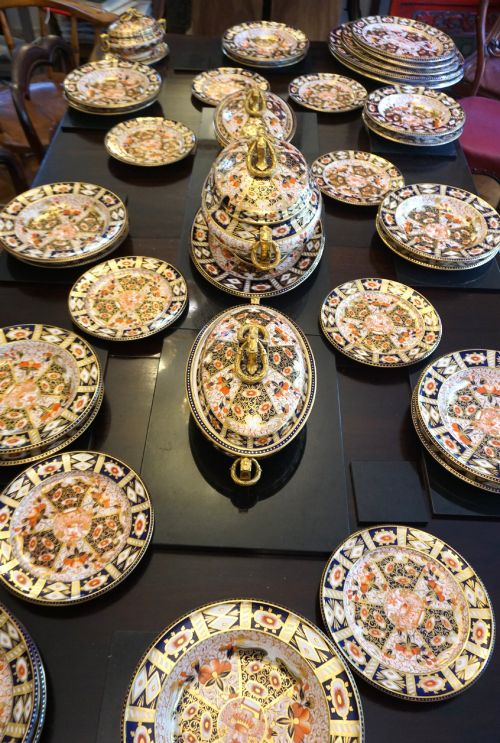
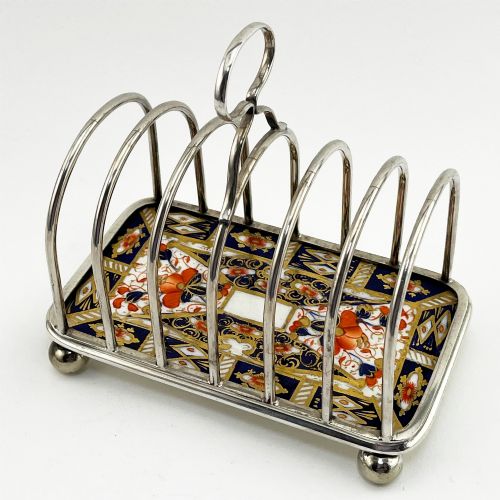
Victorian imari tableware brings rich hand-painted palettes to the dining table, combining deep cobalt blues and rust reds with bright gilding.
Victorian Imari Tableware
Victorian imari tableware encompasses patterned ceramics designed for formal dining and display during the nineteenth century. These pieces draw directly on Japanese export aesthetics, reinterpreted through British ceramic manufacturing traditions.
Buyers browsing this selection will most frequently encounter dessert services, dinnerware sets, and individual decorative plates. Serveware such as souptureens and sauce tureens also appear, often produced by notable potteries of the era.
The objects date primarily from the nineteenth century, including specific production years around eighteen-eighty and eighteen-ninety. They bridge decorative display and functional dining ware from the Victorian period.
How they were made
Potters utilised durable ironstone and bone china bodies as the foundation for these services. Earthenware and standard ceramic pastes also provide the dense substrate required for heavy table use.
Decorators applied rich enamel colours alongside gold leaf and detailed gilding by hand. Underglaze blue work combined with overglaze red enamel and metallic leaf creates the signature layered imari appearance.
Victorian Imari Tableware Retail Price Guide 2026
Typical asking prices for victorian imari tableware among the pieces listed under this phrase on Sellingantiques today, from the lower quarter to the upper quarter. They describe what is for sale here now, not the wider market.
Listings feature items from the nineteenth century, with specific production dates recorded around eighteen-eighty and eighteen-ninety.
What varies in quality
The crispness of the hand-painted brushwork distinguishes finer services from simpler production runs. Precision in the outlining and the density of the enamel application mark the skill of the original decorator.
The preservation of the applied gold leaf and surface gilding dictates the overall visual impact of each piece. Intricate patterns that retain their metallic lustre demonstrate careful preservation and superior initial firing standards.
Royal Crown Derby·Wedgwood·Masons·Ridgways China
The Victorian Imari Tableware Glossary
- Imari
- A decorative style characterised by a palette of deep blue, iron red, and gold, inspired by Japanese porcelain. British potteries adopted this aesthetic during the nineteenth century.
- Ironstone
- A heavy, durable ceramic body patented in the nineteenth century to rival true porcelain. It resists chipping and forms a robust base for complex enamel decoration.
- Comport
- A raised dish or bowl used for serving fruit or dessert as part of a matched service. These sit on a pedestal foot above the table surface.
- Tureen
- A deep covered vessel designed for serving soup or sauces at the dining table. They frequently include matching ladles and underplates.
Victorian Imari Tableware: Frequently Asked Questions
What pieces are included in an imari dessert service?
A dessert service typically comprises a central raised comport accompanied by a matching set of smaller plates. These groupings were designed specifically for serving the final course of a formal nineteenth-century meal.
The decoration on these service pieces matches across the set to create a cohesive presentation on the dining table.
How do I care for antique ironstone tableware?
Antique ironstone and bone china require gentle hand washing in lukewarm water with mild soap. Avoid modern dishwashers, as the harsh detergents and high heat will degrade the delicate gilding and enamels over time.
Store pieces with padded dividers between stacked plates to prevent scratching the glaze and surface decoration.
What is a spoon warmer used for?
A spoon warmer is a small ceramic vessel filled with hot water during Victorian dining rituals. Diners placed their serving spoons inside to keep them warm when serving hot gravies or sauces.
These decorative containers sit on the dining table alongside sauce tureens and gravy boats.
How are nineteenth-century imari patterns applied?
Decorators applied the foundational blue design under the glaze before firing the ceramic body. Subsequent colours, including iron red enamel and gold leaf gilding, went on top of the glaze and required additional lower-temperature firings.
This multi-step process results in a slightly raised texture on the enamel and metallic sections.