




Victorian Historical Portrait Figure
A victorian historical portrait figure brings figures from history into the room through pottery, bronze, and oil.

Victorian Historical Portrait Figure
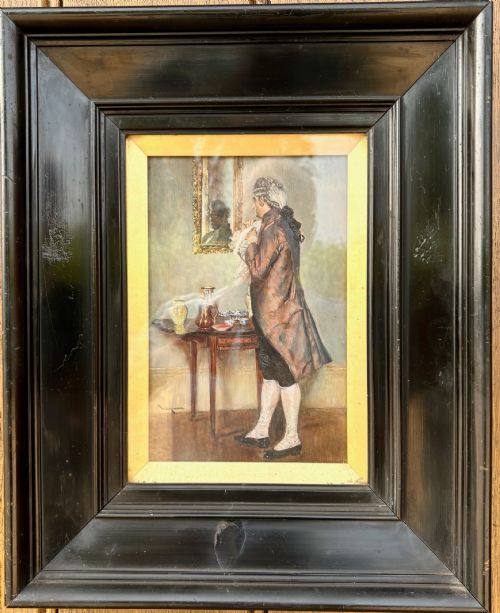
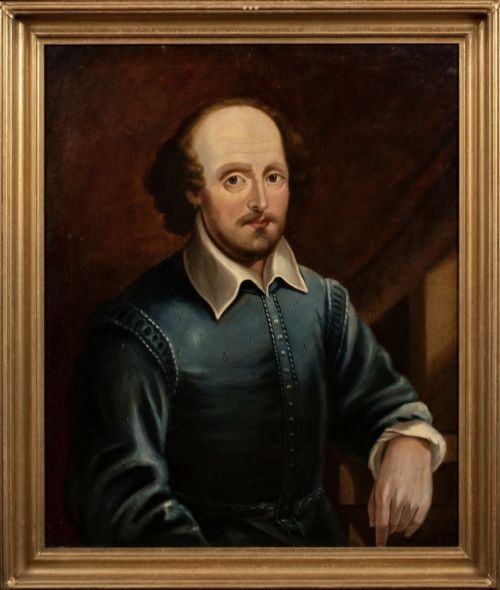
A victorian historical portrait figure captures notable historical individuals, royalty, literary figures, and public figures across various mediums. These pieces include pottery and porcelain figures, oil paintings on board, wood carvings, and bronze studies.
Materials and construction
Makers utilised earthenware, porcelain, and glazed ceramics for moulded portrait figures, often adding hand-painted details over glaze. Wood and bronze provided durable mediums for carved sculptures and cast studies.
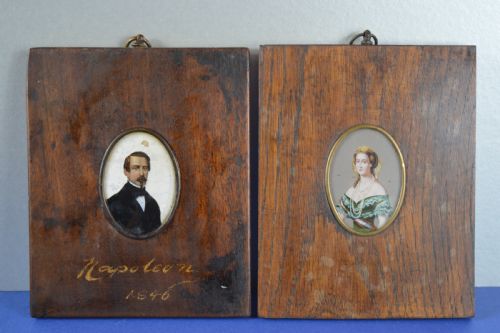
Flat works relied upon oil on board, watercolours, and hand-coloured lithographs on paper. Giltwood frames frequently housed these paintings and portrait miniatures.
Benjamin Franklin makes an unexpected appearance cast as a Staffordshire ceramic figure labelled with the name Washington.
Factors of quality
In painted works, brushwork fluidity and accuracy in portraiture distinguish accomplished artists from basic studio output. The depth and finish of carving in wood or casting in bronze also define the upper tier.
W.D. Almond·Thomas Spinks·John Watkins Chapman·Jean Jules Salmson·Willem Johannes Martens·Abraham Cooper RA·John Partridge
The Victorian Historical Portrait Figure Glossary
- Staffordshire pottery
- Earthenware produced in the Staffordshire potteries, often moulded into figures of famous personages with painted glaze decoration. These ceramics form a staple category for nineteenth-century portrait figures.
- Portrait miniature
- A small, highly detailed painting on paper, ivory, or vellum, frequently housed in a framed pair. They capture likenesses of historical figures on an intimate scale.
- Oil on board
- A painting executed with pigment suspended in drying oil applied to a rigid wooden or composition board. This medium appears frequently across nineteenth-century portraiture.
- Bronze study
- A small sculptural cast in bronze depicting a historical subject. These works demonstrate precision in metal casting and patination.
- Giltwood
- Wood that has been coated with gold leaf or a gold-colored finish. This material is standard for framing historical paintings and portrait miniatures.
Victorian Historical Portrait Figure: Frequently Asked Questions
What materials were used for historical figures?
Makers employed earthenware, porcelain, wood, and bronze to shape three-dimensional representations of historical figures. Paint on board, watercolour, and paper also feature prominently in flat portrait formats.
Pottery pieces typically carry surface glazes and hand-painted touches, whereas metal casts rely on patination to highlight sculptural contours.
How do I identify a Staffordshire portrait figure?
Staffordshire portrait figures present as earthenware ceramics moulded into recognizable likenesses of political, royal, or literary figures. They often include painted names on the base or body to identify the subject.
These pieces typically date from the nineteenth century and display glossy ceramic glazes over moulded clay.
Where should I display a portrait miniature?
Portrait miniatures suit small wall spaces or tabletop display cabinets where their fine detail remains visible at close range. Framed pairs often hang together to balance a composition.
Keep them away from direct sunlight to preserve the watercolours, paint, and paper beneath the glass.
Are these pieces originals from the period?
The listings comprise nineteenth-century works, including oil paintings, watercolours, bronze studies, and ceramic figures created during or near the eras of their subjects. Dates range across the 1800s and into the early twentieth century.
Each medium carries distinct period characteristics, from the glaze formulas of pottery to the preparation of oil on board.