



Victorian Hinged Bracelet
A victorian hinged bracelet offers secure wrist adornment through engineered clasps, bringing intricate metalwork and gemstones from the nineteenth century straight to your collection.
Victorian Hinged Bracelet
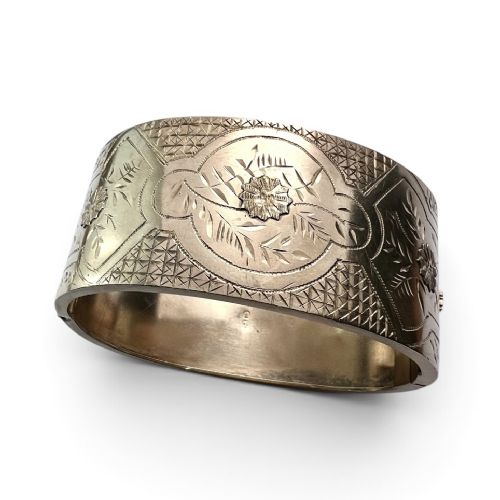
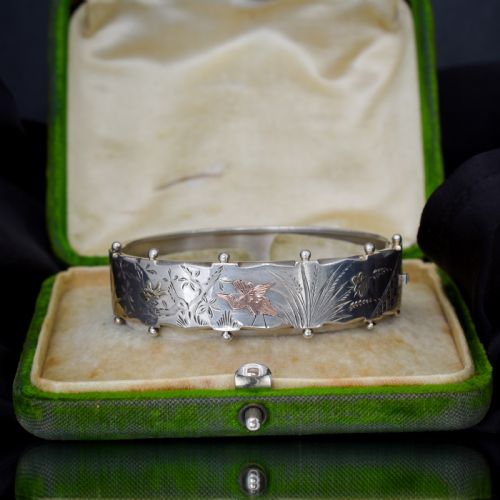
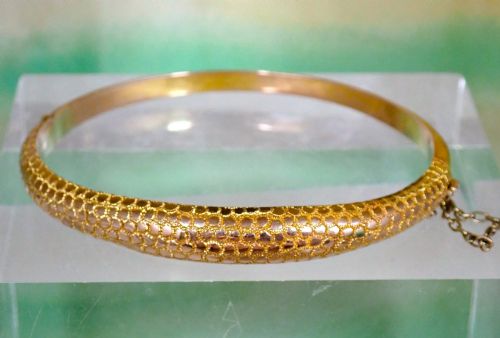
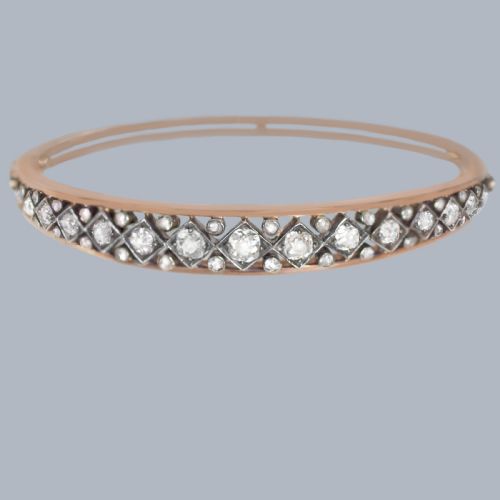
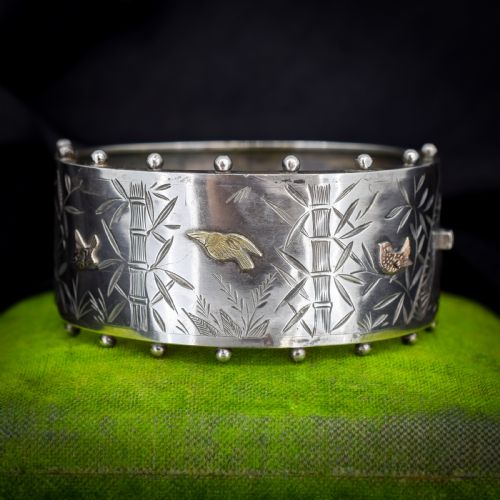
When you search for a victorian hinged bracelet, you encounter rigid wrist adornments that encircle the arm using a mechanical hinge and a secure clasp closure. The forms span robust sterling silver cuffs, slender gold bangles, and wide bands decorated with birds, flowers, or geometric motifs.
The versions you are most likely to meet on this page hail from the Victorian and Edwardian periods, alongside pieces dated broadly to the nineteenth century or around eighteen ninety. These items often integrate specific stylistic movements, including the Victorian Aesthetic Movement and Austro-Hungarian designs.
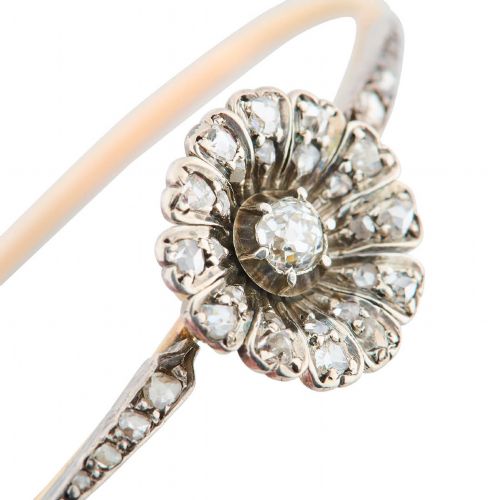
Makers utilised distinct configurations ranging from simple silver buckle bangles to elaborate gold pieces set with diamonds, rubies, sapphires, citrines, amethysts, moonstones, and seed pearls. Many survive in original boxes, preserving their domestic history and structural integrity for modern wear.
Materials and Construction Techniques
Artisans constructed these bracelets primarily in sterling silver, yellow gold, rose gold, and higher purities including nine carat, twelve carat, fifteen carat, and eighteen carat gold. Metals were frequently combined within a single piece, pairing silver with gold to enhance the contrast of stone settings.
Techniques relied on precise metal fabrication, incorporating hinges that allowed the rigid band to open and close smoothly around the wrist. Artisans mounted diamonds, opals, pearls, and paste stones using flush settings, star settings, or raised cluster mounts.
Surface decoration involved chasing, engraving, and applied motifs such as bamboo, buckles, hearts, and floral sprays. Enamel work and glass elements also appear, adding colour and texture to silver and gold frameworks.
Listings feature items in silver, gold, and combinations of both, spanning the Victorian and Edwardian eras alongside nineteenth century examples.
Markers of Superior Craftsmanship
Quality rests in the precision of the mechanical hinge and the reliability of the clasp mechanism, which should secure the rigid band firmly without play. Superior examples maintain structural alignment across the hinge pins and closure tabs after decades of use.
The fineness of the hand-engraving and the quality of the chased details distinguish finer pieces from standard production. Artisans who invested time in articulating feathers on bird motifs or crisp lines on aesthetic movement designs achieved a higher level of artistic execution.
Gemstone selection and setting accuracy separate the upper tier of pieces. Well-matched old mine cut diamonds, vibrant rubies, and secure seed pearl arrangements indicate a higher commission level than simpler paste or glass alternatives.
The Victorian Hinged Bracelet Glossary
- Hinged Bangle
- A rigid wrist ornament divided by a mechanical hinge that permits the band to open and snap shut around the arm. This construction replaced continuous slip-on bangles and allowed for a closer, more secure fit.
- Old Mine Cut
- An early diamond cutting style featuring a roughly square or cushion outline, a high crown, a small table, and a large open culet. These stones display distinctive broad facets that catch candle or gas light.
- Aesthetic Movement
- A nineteenth century artistic philosophy that prioritised beauty and form over narrative or moral content. In jewellery, this translated to stylised natural motifs, asymmetry, and Japanese-inspired design elements.
- Seed Pearl
- A tiny natural or saltwater pearl, typically under two millimetres in diameter. These pearls were frequently clustered or set in rows to create delicate floral and heart patterns.
- Gold Filled
- A material formed by bonding a layer of gold to a base metal core through heat and pressure. It offers the appearance and durability of solid gold at a different production tier.
Victorian Hinged Bracelet: Frequently Asked Questions
Can I wear my bracelet every day?
While these pieces were built for regular wear, their nineteenth century construction requires mindful handling. Solid gold versions tolerate daily routines better than delicate silver or pearl-set designs.
Remove your jewellery before engaging in strenuous physical activity, gardening, or swimming. Store the piece flat in a dedicated box to protect the hinge and gemstone settings.
How do I tell Victorian from Edwardian pieces?
Victorian items often display heavier metalwork, naturalistic motifs like birds and flowers, and darker gemstone settings. Edwardian pieces tend to introduce lighter yellow gold, delicate star settings, and refined seed pearl arrangements.
Stylistic crossovers are common, particularly in pieces bridging the turn of the century. Hallmarks and specific design movements help narrow down the exact decade of manufacture.
What is an aesthetic movement design?
Aesthetic movement designs emerged in the late nineteenth century as a rejection of heavy Victorian industrial styles. They feature stylised natural elements, such as bamboo stalks and asymmetrical floral arrangements.
These bracelets often showcase textured silver surfaces and simpler geometric framing. The focus rests entirely on visual harmony and artistic composition.