


Silver Cuff Bangle
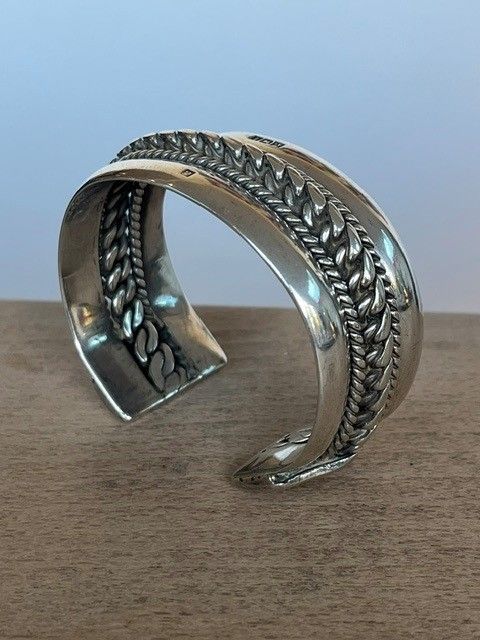
A silver cuff bangle sits close to the wrist as a rigid band of metal, offering sculptural weight and traditional craftsmanship.
Silver Cuff Bangle
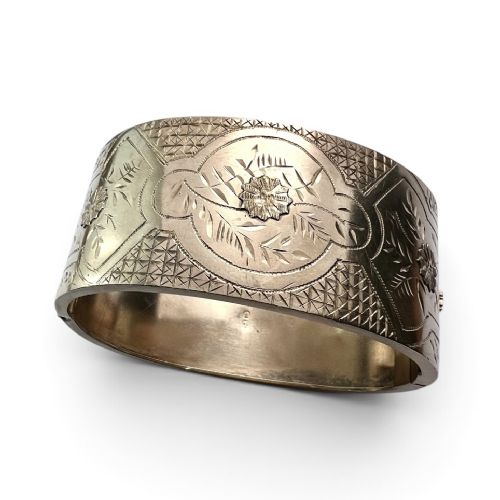
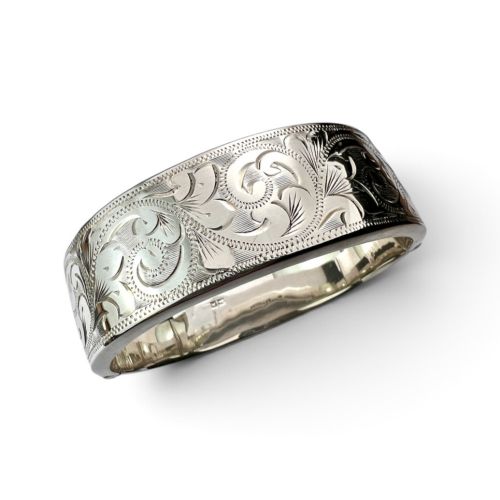
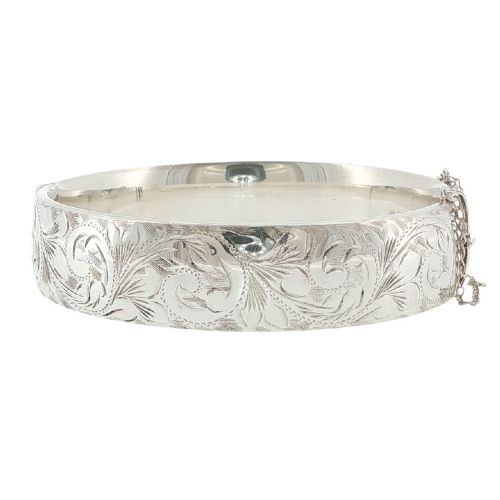
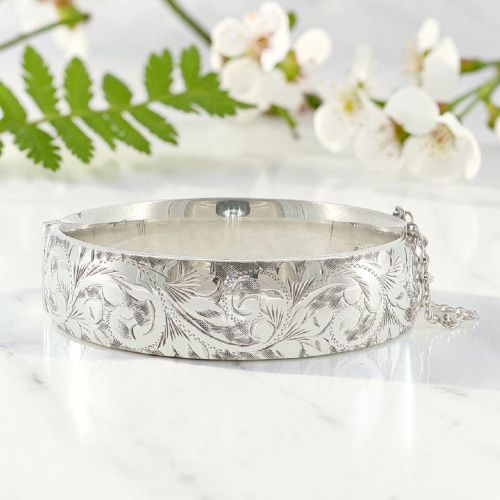
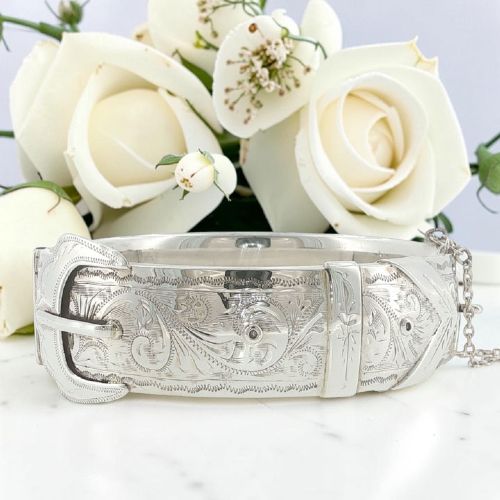
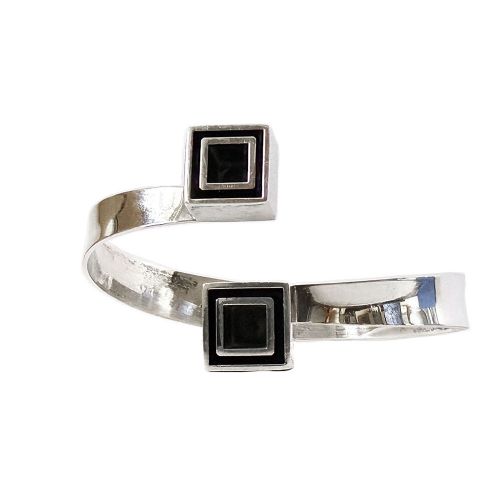
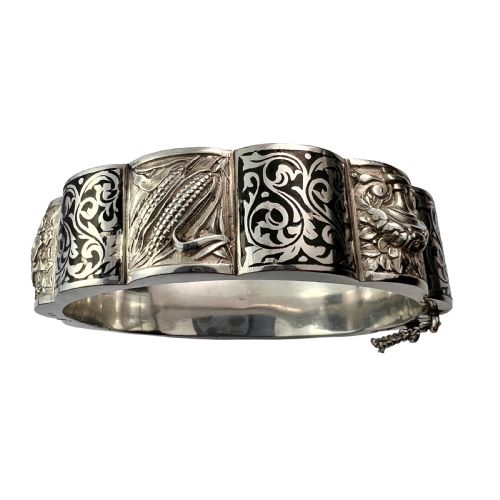
A silver cuff bangle takes many distinct forms across the periods, from ornate Victorian hinged cuffs decorated with floral engravings to sleek Mid-Century Scandinavian pieces and geometric Art Deco designs. Buyers searching for a silver cuff bangle encounter both wide hinged bracelets with intricate surface work and solid slip-on bands originating from British workshops and international makers alike.
The historical span covers the nineteenth century through the mid-century decades, incorporating regional variations such as Middle Eastern Bedouin and Indian Rajasthani jewellery alongside European silverwork. Many examples feature structural clasps or secure hinges, while others rely on rigid open designs intended to grip the wrist firmly.
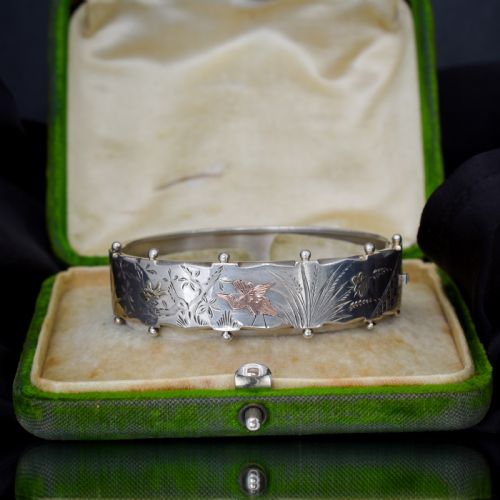
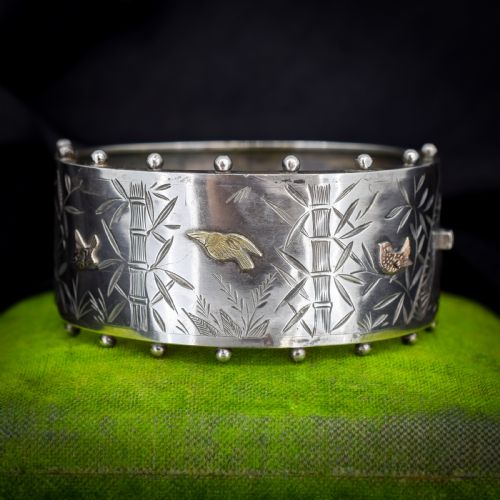
Victorian pieces frequently display mixed metals, combining sterling silver with yellow gold highlights or applied bird and floral motifs. Later twentieth-century items shift toward clean linear engraving, smooth polished surfaces, and modernist geometric styling.
Materials and construction
Silversmiths utilised sterling silver and solid silver as the primary foundation for these pieces, often enhancing the metal through hand engraving, pierced filigree, or applied gold highlights. Victorian workshops favoured deep chasing and dimensional relief work, whilst later mid-century makers relied on precise hand engraving and smooth polished planes.
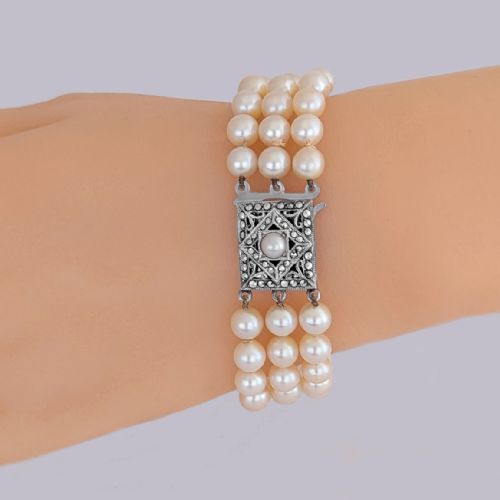
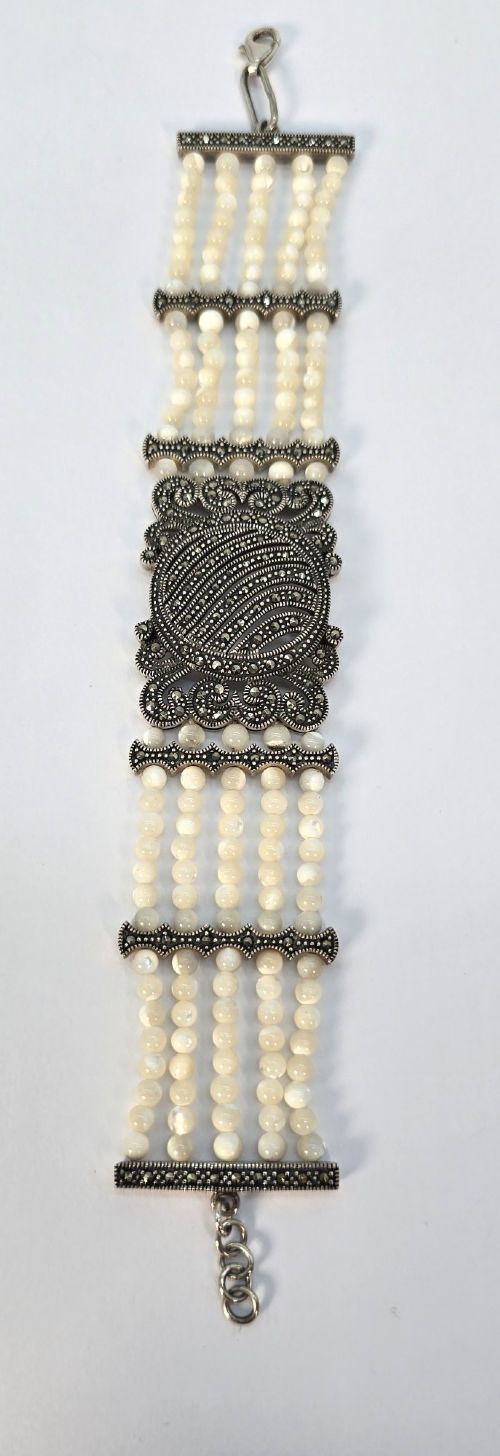
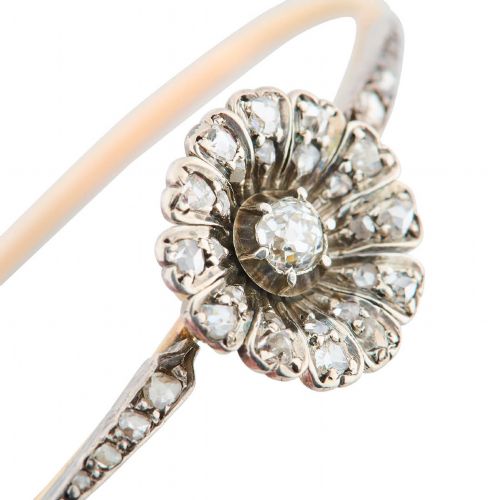
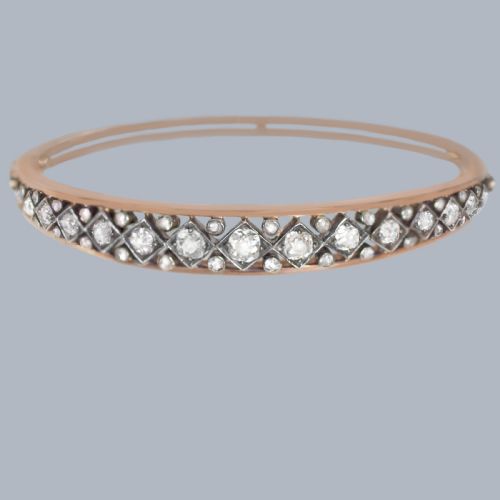
Decorative elements frequently incorporate secondary materials such as enamel, marcasite, diamonds, pearls, amber, and mother of pearl set directly into the silver framework. Hinged mechanisms require careful internal steel pins and secure box clasps to maintain structural integrity across decades of wear.
Listings span Victorian, Art Deco, and Mid-Century Scandinavian styles, utilising sterling silver, enamel, marcasite, and 15ct gold.
Standards of craftsmanship
The distinction between ordinary production and superior quality rests in the depth of hand engraving and the crispness of applied surface detail. Master silversmiths executed floral chasing and geometric patterns with sharp relief, whereas lesser pieces exhibit shallow stamping or worn surface decoration.
Structural robustness also defines the upper tier, particularly in hinged designs where the thickness of the silver gauge prevents bending under daily pressure. Secure clasp engagement and well-preserved maker marks indicate higher workshop standards.
Georg Jensen·Walker & Hall·Jakob Bengel·TOPAZIO
The Silver Cuff Bangle Glossary
- Sterling silver
- An alloy consisting of silver and other metals, usually copper, formulated to increase durability while maintaining a bright lustre. British items often carry standard assay office hallmarks.
- Hinged cuff
- A rigid bracelet constructed in two halves joined by a mechanical hinge and secured with a clasp. This design allows the band to fit snugly around the wrist.
- Marcasite
- Small faceted pyrite stones set into silver mountings to produce a metallic sparkle resembling cut steel. It appears frequently in twentieth-century dress jewellery.
- Filigree
- Delicate openwork formed from fine twisted silver threads soldered together into intricate patterns. It creates a lace-like texture across the surface of the piece.
- Aesthetic Movement
- A nineteenth-century design philosophy that prioritised visual beauty over moral or narrative function. Objects from this period feature stylised natural forms and Japanese-inspired motifs.
Silver Cuff Bangle: Frequently Asked Questions
How do I secure a hinged bangle?
Most hinged cuffs utilise an internal spring tongue or a side-mounted box clasp that clicks firmly into place when closed. Some Victorian designs incorporate safety chains to prevent accidental loss.
Check that the hinge pin remains flush and the clasp holds tension securely before wearing the piece daily.
How do I date a silver cuff?
British pieces often carry hallmarks indicating the assay office, standard of silver, and a specific date letter corresponding to the year of manufacture. Stylistic markers such as Art Deco geometry or Victorian floral chasing also provide reliable chronological evidence.
Comparing construction techniques like handmade engraving versus machine stamping helps narrow down the period of origin.
Are these bangles suitable for daily wear?
Solid silver and robust sterling hinged cuffs withstand regular daily use provided the hinges and clasps remain in sound condition. Pieces featuring delicate enamel, marcasite clusters, or soft stones require greater care to avoid impact damage.
Storing each bracelet separately prevents surface scratching against other items in a collection.
What is an aesthetic period bracelet?
Aesthetic period bracelets date from the late nineteenth century and draw inspiration from Japanese art, featuring asymmetrical compositions, birds, bamboo, and stylised flowers. They showcase fine engraving on substantial silver gauges.
These designs reject heavy Victorian revivalism in favour of flat, graphic surface decoration.