



Antique Sterling Bangle
These antique sterling bangle pieces are solid wrist ornaments in silver and gold, offering tactile weight and historical design for daily wear.
Antique Sterling Bangle
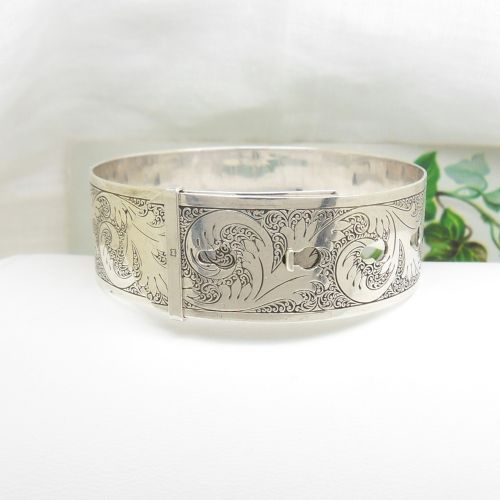
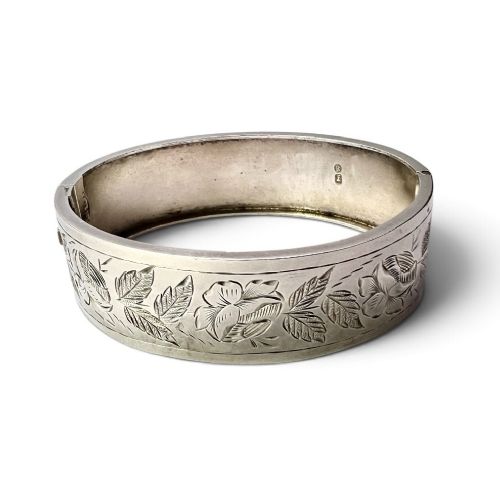
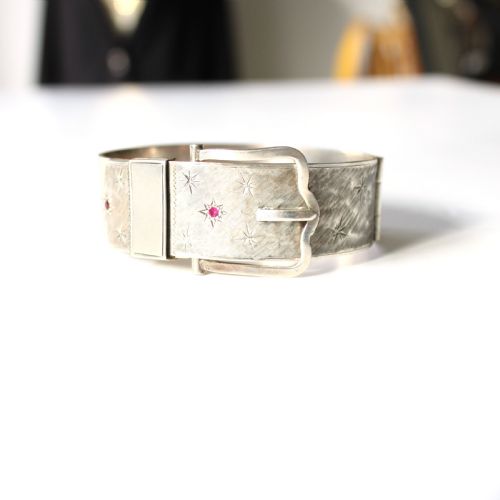
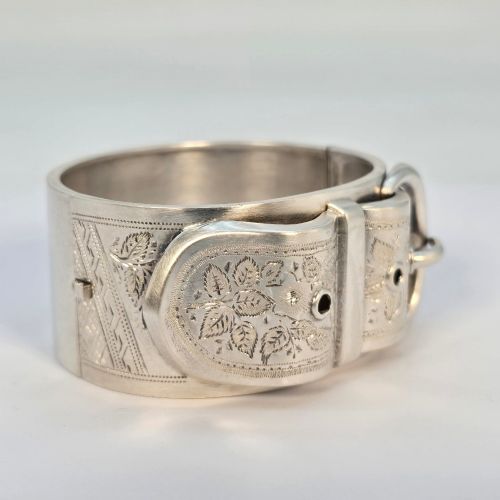
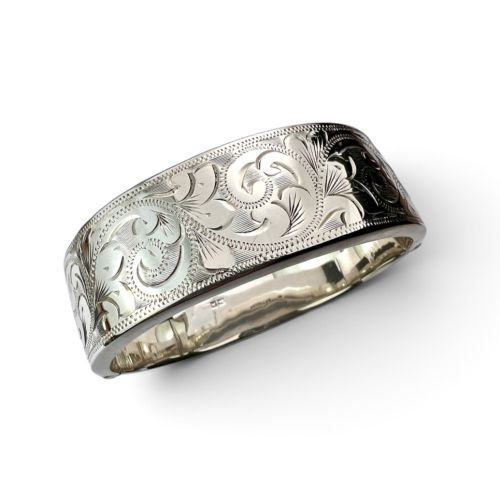
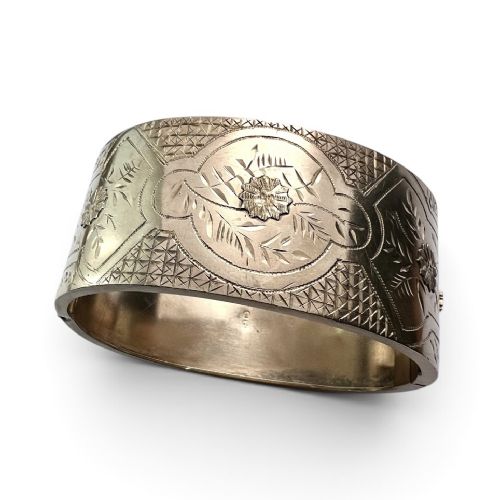
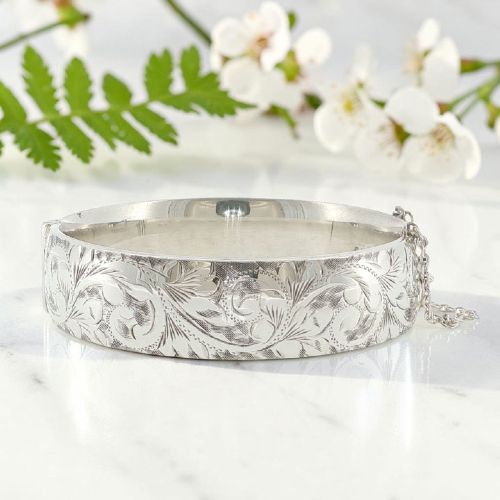
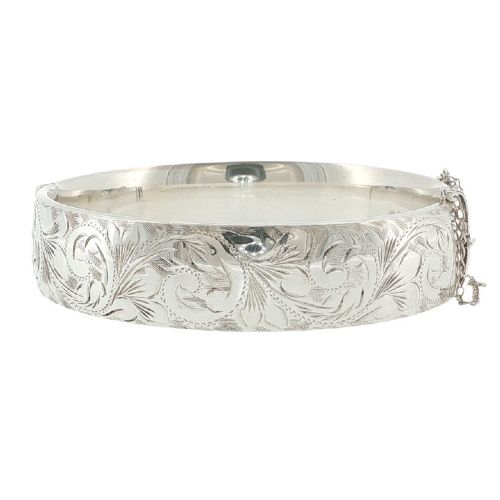
When you search for an antique sterling bangle, you encounter hinged cuffs and solid wristwear originating from the Victorian period through to the mid-century. The Victorian examples dominate the selection, bringing substantial width and complex decoration to the wrist.
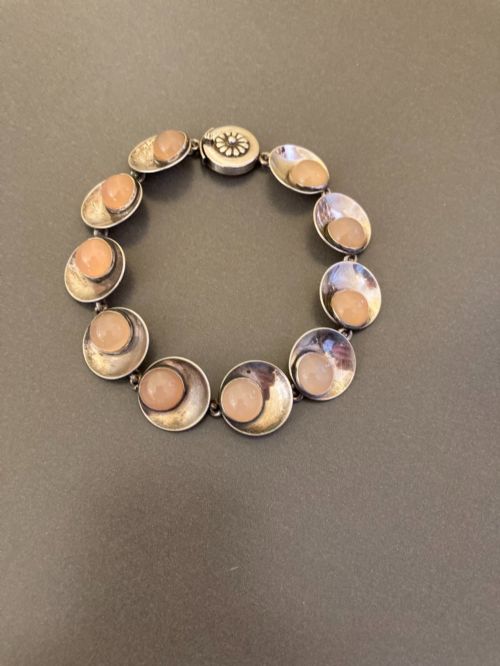
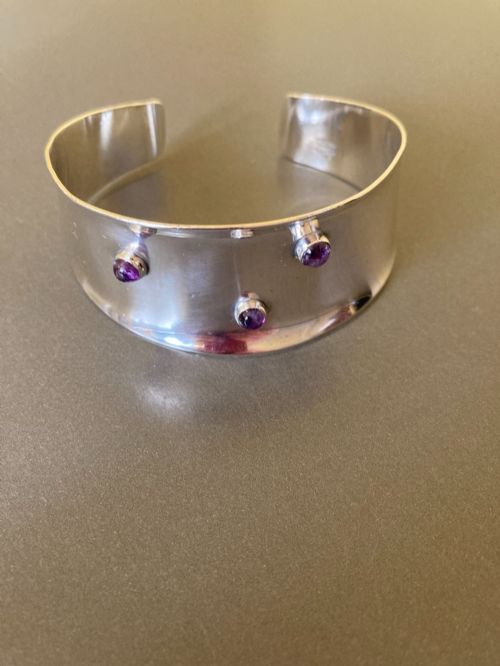
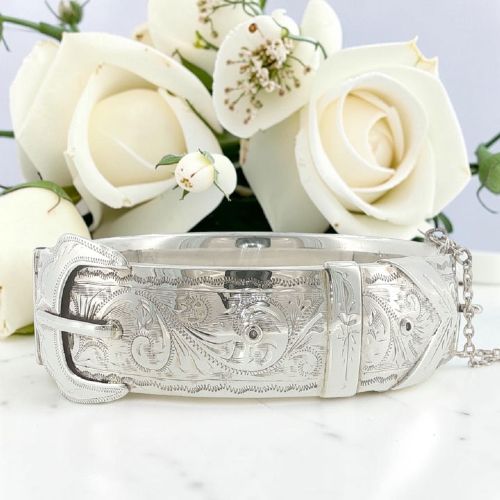
The forms span wide hinged cuffs, buckle designs, and floral motifs alongside later twentieth-century interpretations in Scandinavian modern and mid-century styles. These pieces combine sterling silver with materials such as enamel, gold, black onyx, crystal, and amber.
Origins stretch from British workshops bearing assay office marks to mid-century Norwegian studios. Buyers typically find robust Victorian hinged bangles alongside lighter twentieth-century filigree and enamel creations.
How they were made
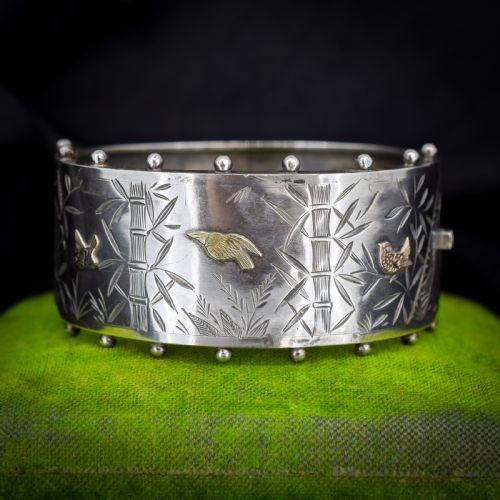
Silversmiths constructed these bangles using heavy-gauge sterling silver, often shaping them into wide hinged cuffs or tubular forms. Many Victorian pieces incorporate applied gold details, bird and bamboo motifs, or engraved floral patterns into the silver surface.
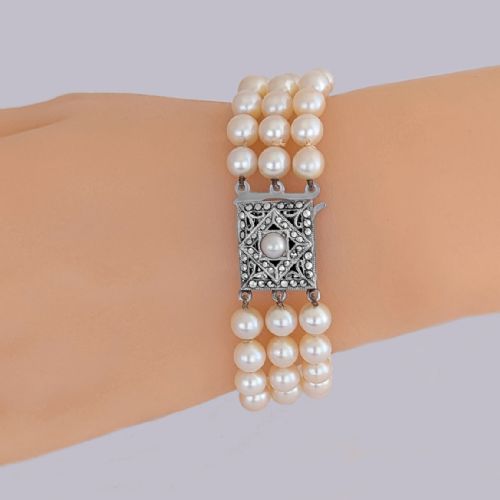
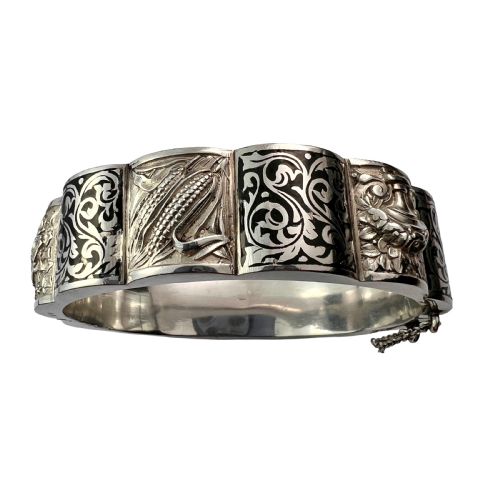
Specialist techniques define the twentieth-century pieces, utilising delicate silver filigree combined with vibrant enamel work or bezel-set amber and black onyx. Makers integrated integral hinges and secure clasps to ensure structural integrity on the wrist.
Antique Sterling Bangle Retail Price Guide 2026
Typical asking prices for sterling bangle among the pieces listed under this phrase on Sellingantiques today, from the lower quarter to the upper quarter. They describe what is for sale here now, not the wider market.
Victorian designers created corset bangles to mimic contemporary undergarments, turning restrictive fashion into wrist adornment.
What varies in quality
The standard of an antique sterling bangle rests upon the depth of the hand-engraving and the crispness of applied gold or mixed metals. Superior examples display detailed chasing and substantial silver weight rather than thin, pressed sheet metal.
Integration of secondary materials dictates the upper tier of execution, where enamel remains intact without loss, and stones such as onyx or amber are snugly fitted into pierced settings. The complexity of the hinge mechanism and clarity of hallmarks further separate standard production from finer workshop output.
The Antique Sterling Bangle Glossary
- Sterling silver
- A silver alloy containing 92.5 percent pure silver and 7.5 percent other metals, typically copper, chosen for durability in jewellery. This standard is frequently denoted by hallmarks on British pieces.
- Hinged cuff
- A rigid bracelet constructed in two halves joined by a pin hinge and secured with a clasp. This design allows the bangle to open and fit closely around the wrist.
- Filigree
- An intricate ornamental work of fine silver wire twisted and soldered together to form openwork patterns. It appears frequently in pierced settings on mid-century and twentieth-century designs.
- Aesthetic Movement
- A late nineteenth-century design style emphasising visual beauty over narrative meaning, often featuring asymmetrical nature motifs. Pieces from this period display bamboo, birds, and floral engraving.
- Buckle bangle
- A bracelet styled to resemble a belt and buckle, carrying symbolic meanings of attachment and fidelity in Victorian jewellery. These pieces often feature detailed chased engraving across the strap.
Antique Sterling Bangle: Frequently Asked Questions
How do I wear a hinged bangle?
These rigid bracelets open via a side hinge and snap shut with a secure clasp, sitting snugly around the wrist.
They pair well alone as a statement cuff or stacked alongside other slim wristwear for daily use.
What periods do these bangles cover?
The selection spans the Victorian era through the 1930s, 1950s, and 1960s.
Victorian pieces often feature heavy silver and aesthetic movement motifs, while later decades introduce Scandinavian modern and enameled styles.
How do I identify a Victorian piece?
Victorian bangles typically exhibit heavy hinged construction, wide cuffs, and characteristic motifs like floral engraving, buckles, or bamboo.
Assay office marks and date letters often accompany these nineteenth-century designs.