
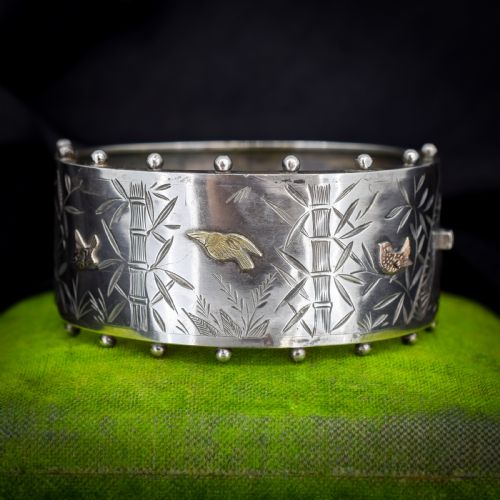


Victorian Silver Bangle
These victorian silver bangle pieces bring nineteenth-century metalwork straight to the wrist, offering solid craftsmanship and distinct historical character.
Victorian Silver Bangle
When you search for a victorian silver bangle, you encounter rigid wrist ornaments shaped by nineteenth-century tastes. These pieces range from wide hinged cuffs to slender circlets, often integrating metals and stones.
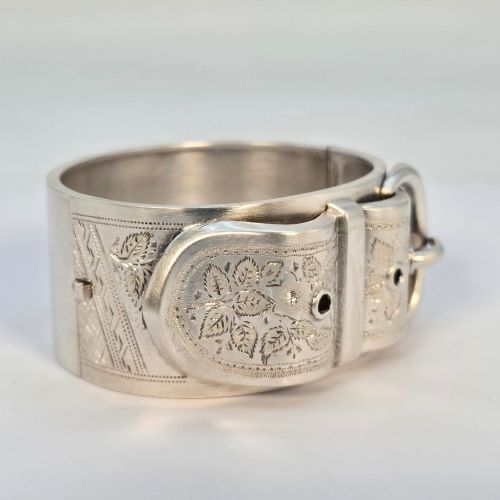
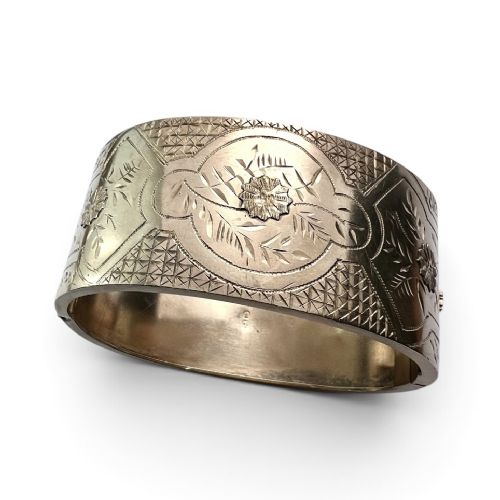
The most common versions on this page are wide sterling silver hinged cuff bangles. Many of these feature detailed engravings, floral motifs, or applied gold highlights.
The selection includes examples from the Victorian and nineteenth-century periods, alongside specific regional designs such as Scottish agate pieces and Austro-Hungarian enamelled work.
Materials and Techniques
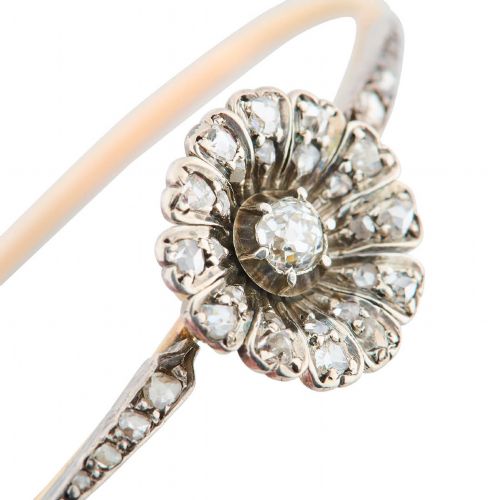
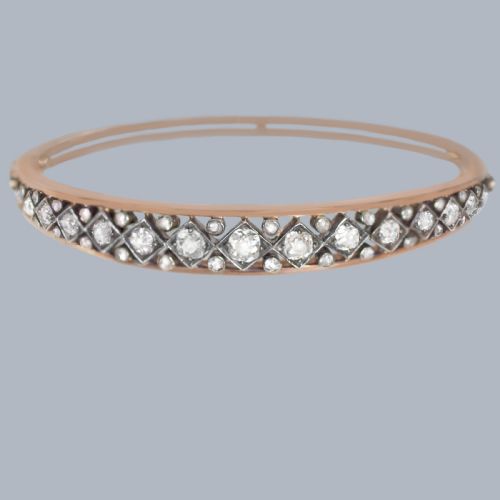
Makers constructed these bangles primarily using silver, sterling silver, and gold, occasionally combining fifteen-carat or eighteen-carat gold with silver settings. Artisans also incorporated diamonds, pearls, enamel, agate, and citrine into the designs.
Techniques relied heavily on hinged construction to create secure cuffs, alongside hand engraving, floral studding, and applied rose and yellow gold details. Hallmarks on British pieces record specific assay offices and years of production.
Listings feature silver paired with fifteen-carat gold, eighteen-carat gold, diamonds, pearls, enamel, agate, and citrine.
Quality Variations
Quality in these bangles depends on the depth and clarity of the hand engraving, the crispness of applied gold or floral elements, and the structural integrity of the hinge. Weight also dictates substance, with heavier solid silver cuffs sitting differently on the wrist than lighter variants.
The inclusion of gemstones such as old mine cut diamonds, rubies, or natural pearls elevates a piece, as does documented provenance linking the work to specific makers, regional Scottish stones, or identifiable assay offices.
Constantine and Floyd·Chauvet
The Victorian Silver Bangle Glossary
- Sterling silver
- A silver alloy containing 92.5 percent pure silver by mass, providing durability for nineteenth-century jewellery.
- Hinged cuff
- A rigid bracelet design split into sections joined by a pin hinge, allowing the piece to open and fit snugly around the wrist.
- Old mine cut
- An early diamond cut characterised by a cushion shape, high crown, and large open culet, typical of nineteenth-century stones.
- Aesthetic movement
- A nineteenth-century artistic style prioritising visual beauty over narrative, often reflected in stylized flora and asymmetrical engraving.
- Assay office
- An official body that tested precious metals and stamped items with hallmarks to verify their standard of purity.
Victorian Silver Bangle: Frequently Asked Questions
How do I wear a hinged cuff bangle?
These bangles open via a side hinge and secure with a clasp or safety chain, making them straightforward to slip onto the wrist.
Because they are rigid, choose a diameter that matches your wrist size to prevent the cuff from sliding or rotating excessively.
What periods do these bracelets cover?
The pieces span the Victorian era and the wider nineteenth century, capturing stylistic shifts from early floral engravings to later Aesthetic Movement designs.
Many English pieces include clear hallmarks that date the manufacture to specific years within this timeframe.
How do I identify different styles?
Look closely at the surface decoration, as Aesthetic Movement pieces often display stylized nature motifs while Etruscan Revival examples use granulation and classical wirework.
Regional variations also emerge clearly, such as Scottish pieces featuring banded agates and citrines.
Are these bangles solid silver?
Most listings specify sterling silver or solid silver construction, often complemented by accents of rose gold, yellow gold, or applied gold birds and flowers.
Heavier cuffs demonstrate substantial metal weight, while others incorporate hollow hinged designs engineered for comfortable daily wear.