


Engraved Silver Cuff
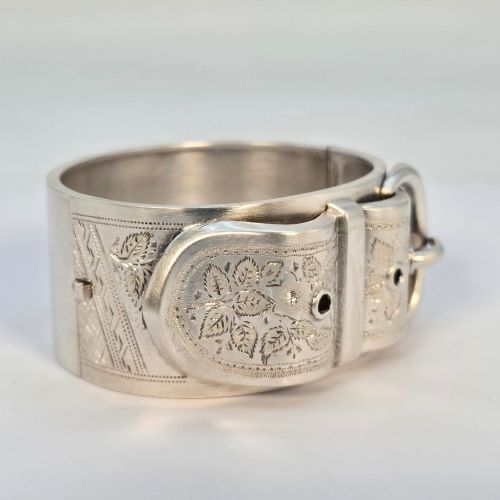
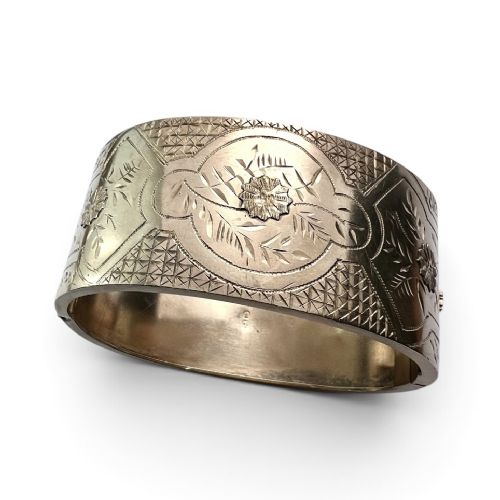
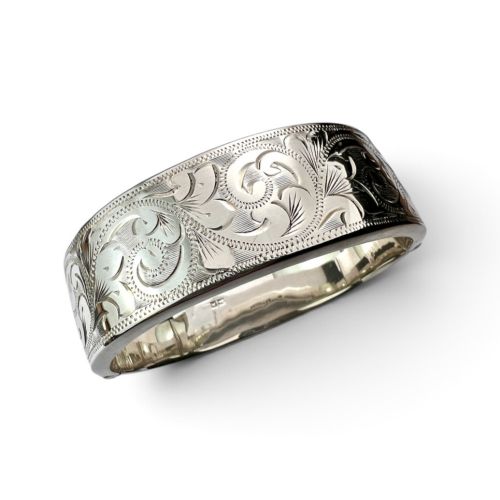
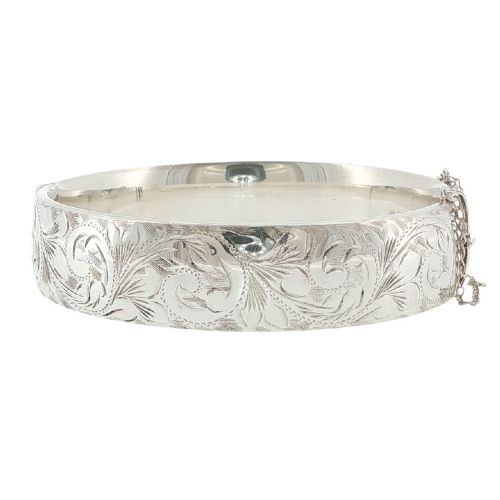
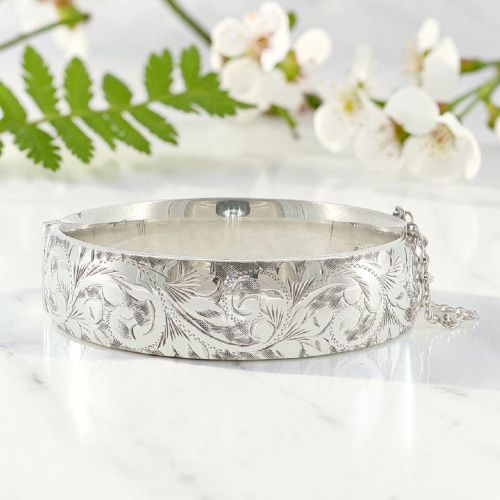
These engraved silver cuff pieces are solid wrist adornments bearing intricate surface decoration, offering enduring tactile appeal for everyday wear.
Engraved Silver Cuff
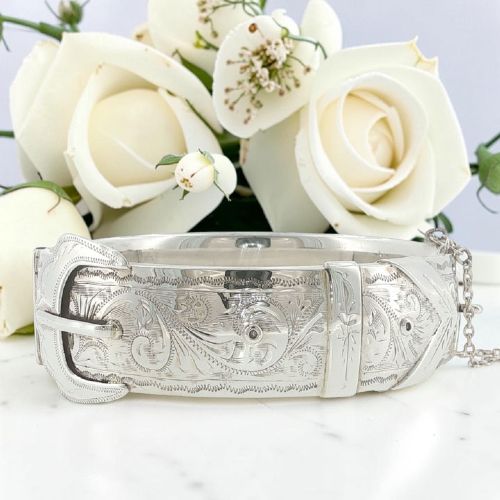
An engraved silver cuff search uncovers hinged bangles and rigid bracelets spanning the Victorian era through the mid-twentieth century. Buyers encounter robust sterling silver forms decorated with hand-engraved patterns, floral motifs, and geometric designs.
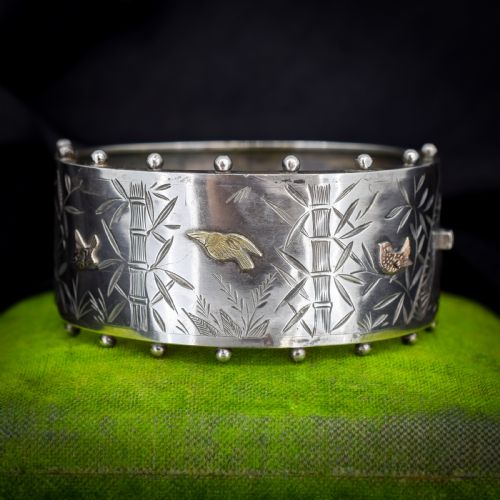
The Victorian period contributes wide hinged bangles and Aesthetic Movement pieces, often enriched with gold highlights or bird and bamboo imagery. Mid-century examples bring Scandinavian and Portuguese modernism alongside classic British hallmarked designs.
Most items on this page function as substantial statement pieces worn singly on the wrist. Their construction typically incorporates secure box clasps, safety chains, or hinged joints to facilitate easy fitting.
Materials and construction
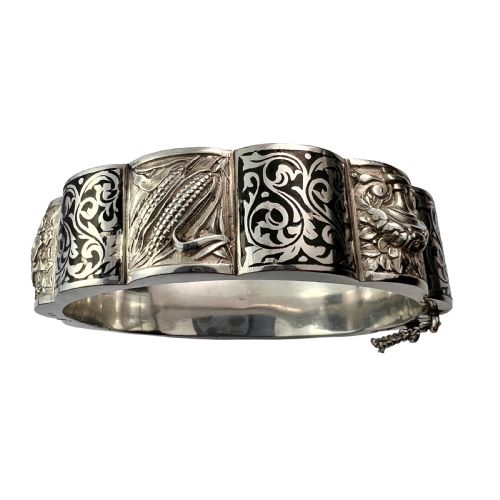
Silversmiths formed these cuffs from sterling silver, occasionally adding contrasting rose gold or yellow gold details to highlight specific design elements like birds and flowers. Niello work also appears, providing dark metallic infills that create striking contrast against bright silver surfaces.
Craftsmen utilised hand engraving to cut crisp lines and botanical patterns directly into the metal substrate. Hinged mechanisms and buckle closures were engineered to integrate seamlessly with the rigid band structure.
Engraved Silver Cuff Retail Price Guide 2026
Typical asking prices for engraved silver cuff among the pieces listed under this phrase on Sellingantiques today, from the lower quarter to the upper quarter. They describe what is for sale here now, not the wider market.
Several Victorian birds remain permanently frozen mid-peck into bamboo stems.
Assessing quality
Quality rests upon the depth and clarity of the hand engraving, where crisp, confident lines distinguish superior artisan work from simpler machine marking. The weight and gauge of the sterling silver determine the structural rigidity of the cuff during daily wear.
Maker attribution and clear hallmarks elevate certain pieces, particularly those bearing the stamps of recognised silversmiths or regional assay offices. The integration of mixed metals, such as applied gold on silver, reflects higher manufacturing ambition.
Georg Jensen·Walker & Hall·TOPAZIO
The Engraved Silver Cuff Glossary
- Sterling silver
- An alloy containing 92.5 percent silver by mass, providing the durable standard for British and international silverwork. This composition balances malleability for engraving with structural strength for jewellery.
- Hinged cuff
- A rigid bracelet constructed in two halves joined by a pin hinge and secured with a clasp. This design allows the bangle to open wide for the wrist and close securely.
- Aesthetic Movement
- A late nineteenth-century style emphasising visual beauty over narrative meaning, frequently featuring stylized natural forms like birds and bamboo. Pieces from this era display balanced asymmetry and delicate surface detail.
- Niello
- A black metallic alloy of sulphur and silver, lead, or copper used as an inlay on engraved metal. It produces dark contrasting designs against the bright polished silver background.
- Hallmark
- An official stamp applied by an assay office to indicate metal purity, origin, and year of manufacture. These small marks provide a secure historical record for antique pieces.
Engraved Silver Cuff: Frequently Asked Questions
How do I secure a hinged cuff?
Most antique and vintage cuffs utilise an integrated box clasp combined with a hidden hinge for easy fastening around the wrist. Many Victorian examples also feature a safety chain to prevent accidental loss.
Ensuring the clasp clicks firmly into place guarantees secure daily wear without risking the structural integrity of the hinge mechanism.
Are these bangles suitable for daily wear?
Solid sterling silver construction makes these rigid bracelets durable enough for regular use, provided they are treated with appropriate care. Removing them during manual tasks prevents deep scratching to the hand-engraved surfaces.
Proper storage in a lined box protects the hinges and delicate metalwork from unnecessary pressure when not being worn.
How do I date a Victorian piece?
Victorian cuffs often display characteristic Aesthetic Movement motifs, heavy proportions, and occasionally mixed gold highlights on silver backgrounds. Examining the stylistic markers alongside any visible assay office hallmarks provides an accurate period attribution.
Engraved monograms and dedication dates inscribed on the reverse can also offer direct confirmation of the year of manufacture.
What is the difference between mid-century and Victorian cuffs?
Victorian designs tend to feature dense, elaborate botanical engraving, sometimes paired with gold bird or bamboo applications. Mid-century examples favour cleaner Scandinavian or Portuguese modernist lines with restrained surface ornamentation.
Weight distribution and clasp engineering also evolve, with mid-century pieces often displaying sleeker geometric profiles compared to earlier robust forms.