





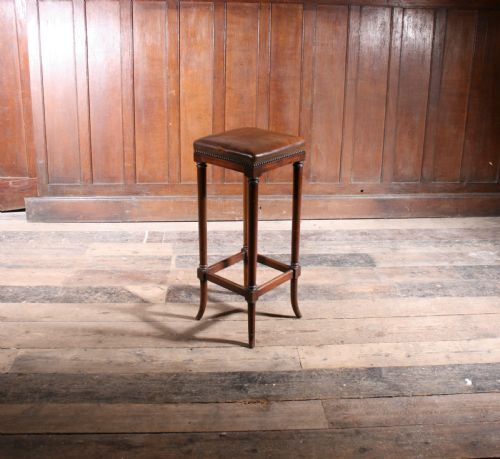


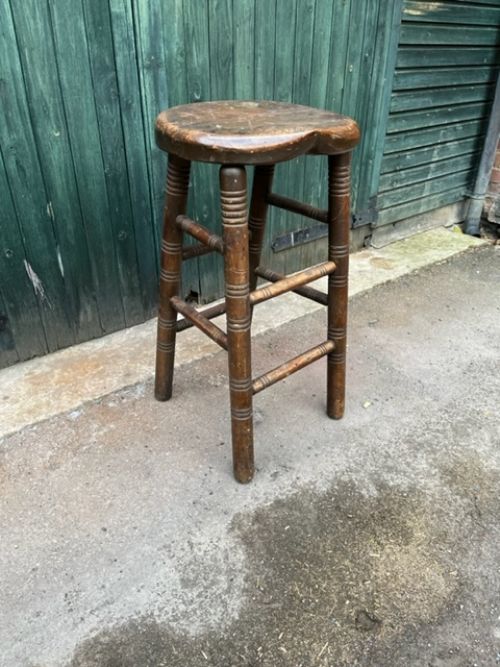
Victorian High Stool
These Victorian high stool examples offer sturdy utilitarian seating rooted in nineteenth-century workshops and taverns.
Victorian High Stool
A victorian high stool brings robust working history into modern interiors through elevated seating designed for practical tasks. These pieces span tavern stools, clerk seating, and workshop furniture intended for prolonged daily use.
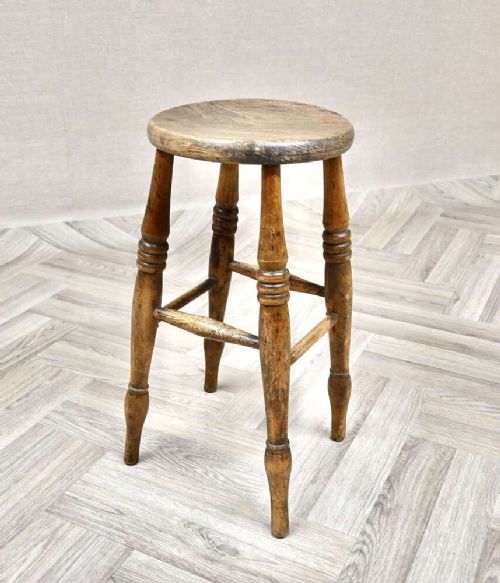
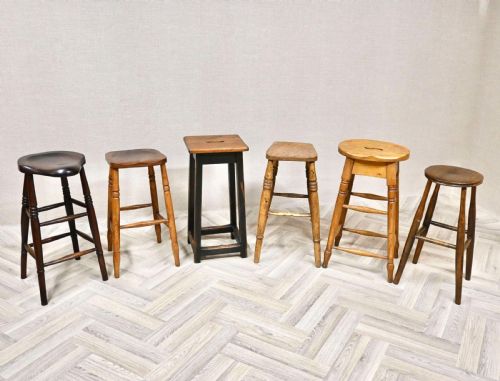
The selections encountered here reflect nineteenth-century vernacular and industrial needs, often featuring tall legs and substantial footrests. Common forms include saddle seats, revolving tops, and simple round timber platforms.
Originating in commercial, domestic, and institutional spaces, these tall seats survive in various domestic adaptations. Elm, sycamore, and oak dominate the construction, showing the honest utility demanded by nineteenth-century workers.
How They Were Made
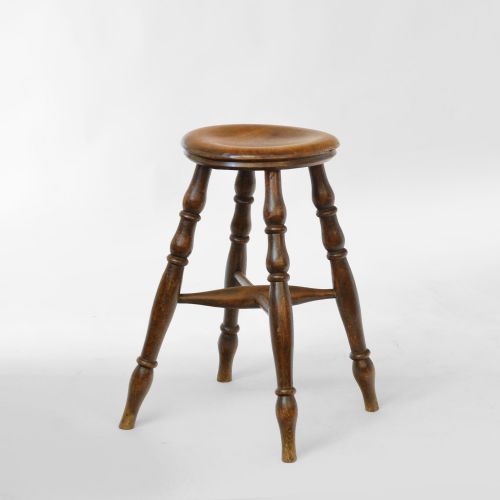
Joinery relies heavily on turned wooden components and wedged tenons to maintain stability at height. Craftsmen utilised local hardwoods like beech, elm, and sycamore for framing and seats, ensuring endurance under heavy workplace conditions.
Turning lathes shaped spindles and legs, while seats were frequently hand-carved or hollowed into saddle shapes for comfort. Occasional brass footrests and leather upholstery add refined detailing to otherwise stark industrial forms.
Victorian High Stool Retail Price Guide 2026
Typical asking prices for victorian high stool among the pieces listed under this phrase on Sellingantiques today, from the lower quarter to the upper quarter. They describe what is for sale here now, not the wider market.
Pub stools carry deep tavern polish, bearing quiet witness to centuries of spilled ale and leaning elbows.
What Varies in Quality
Construction integrity and timber selection separate ordinary utility pieces from finer studio or double stools. Original surface patination and honest wear indicate historical usage rather than modern intervention.
Proportion and turning complexity dictate the visual weight of each piece, with balanced footrests and tightly fitted joints showing superior regional craftsmanship.
The Victorian High Stool Glossary
- Vernacular
- Everyday objects made by regional craftsmen without grand architectural pretensions. These pieces prioritize local materials and practical function over high-style academic design.
- Saddle seat
- A wooden seat base carved with ergonomic hollows resembling a horse saddle. This shape provides comfort during long hours of sitting without requiring upholstery.
- Turned
- Shaped on a revolving lathe using chisels to create cylindrical or spindle components. Turned legs and stretchers offer structural rigidity while lightening the visual load of tall furniture.
- Prie Dieu
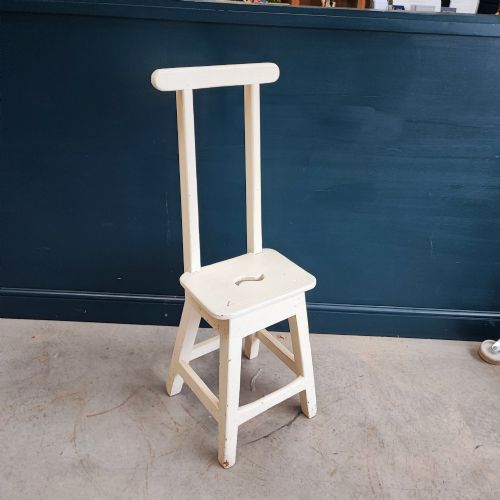
- A devotional chair featuring a low seat and an elevated padded shelf for kneeling. These Victorian examples occasionally overlap with high stool forms through tall wooden frames.
Victorian High Stool: Frequently Asked Questions
Where were high stools used?
Nineteenth-century high stools served clerks in offices, patrons in taverns, and artisans in workshops. Their elevation accommodated tall standing desks and counters.
Domestic spaces also utilised them in studios and kitchens for tasks requiring height and mobility.
How do I care for antique wood?
Maintain timber surfaces by applying natural beeswax periodically to nourish dry nineteenth-century hardwoods. Avoid placing wooden stools near direct heat sources to prevent timber splitting.
Keep upholstery clean using soft brush attachments on vacuum cleaners where leather or fabric elements exist.
Are revolving seats original?
Revolving mechanisms on nineteenth-century stools utilise threaded wooden spindles or early iron screw posts. Original mechanisms show appropriate wear and smooth turning action.
Inspect the underside to confirm the thread matches the age of the surrounding timber frame.
What woods were commonly used?
Elm, sycamore, beech, and oak form the backbone of these nineteenth-century seating examples. Regional makers selected local hardwoods for their strength and resistance to splitting under heavy daily loads.
Mahogany and rosewood appear in more formal settings, such as studios or parlour spaces.