

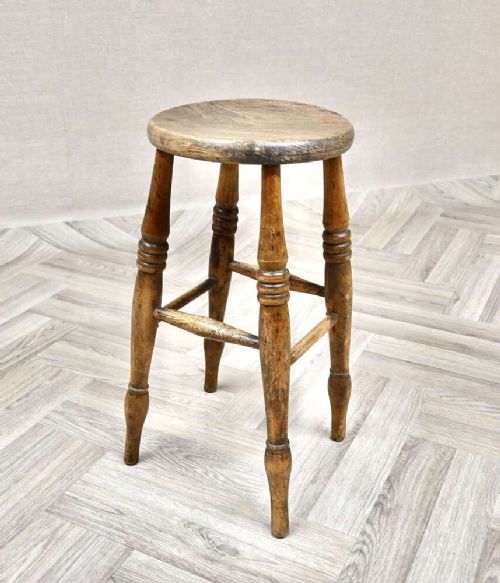

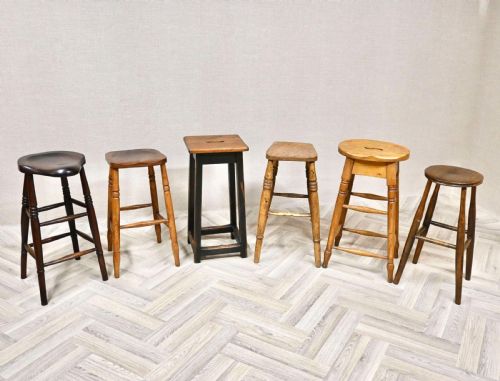
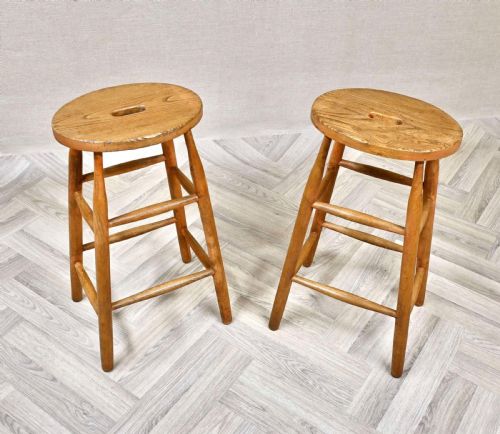


Oak Tall Stool
These oak tall stool pieces offer sturdy utility and practical height, bringing honest country character to kitchens and workspaces alike.
Oak Tall Stool
An oak tall stool provides elevated seating rooted in utilitarian history, originating from domestic kitchens, workshops, and commercial premises. Buyers searching for an oak tall stool will encounter robust seating designed for specific trades and everyday use.
The selections span from nineteenth century clerk and tavern designs to twentieth century industrial models, including bar stools and rotating architect seats. Many examples reflect vernacular and rustic traditions, utilising local timbers shaped for practical demands.
Forms range from simple four-legged frames with rush or timber seats to height-adjustable swivel designs meant for offices and drafting desks. This variety ensures pieces suit contemporary breakfast bars as naturally as traditional period interiors.
How they were made
Construction relies heavily on solid oak, often paired with elm, sycamore, beech, or pine for seats and stretchers. Traditional joinery such as pegged mortise and tenon joints ensures stability under daily weight and movement.
Turned legs and spindle stretchers provide structural rigidity while demonstrating standard carpentry techniques of the period. Seats are shaped from single timber planks or woven from rush, matching the intended function of the stool.
Oak Tall Stool Retail Price Guide 2026
Typical asking prices for oak tall stool among the pieces listed under this phrase on Sellingantiques today, from the lower quarter to the upper quarter. They describe what is for sale here now, not the wider market.
Listings span from the mid seventeenth century through the twentieth century, with nineteenth century vernacular and rustic forms appearing most frequently.
What varies in quality
Quality rests in the integrity of the timber selection and the retention of original surfaces, ranging from scrubbed deal to polished oak with deep patination. Substantial framing and minimal replaced components separate utilitarian survivors from lesser examples.
Design sophistication also distinguishes individual pieces, seen in turned stretchers, sculpted saddle seats, and functional mechanisms like working height-adjustment screws. Superior items combine honest wear from decades of use with robust original structure.
The Oak Tall Stool Glossary
- Joint stool
- A low or tall wooden stool constructed with mortise and tenon joints, common in early British domestic interiors. These pieces pre-date widespread chair use.
- Vernacular
- Objects built by local craftsmen for everyday regional needs rather than high-style polite society. These pieces prioritise function and local timber availability.
- Stretchers
- Horizontal rails connecting the legs of a stool to provide structural rigidity and footrests. They are typically turned or plain depending on the period.
- Clerk stool
- A tall seat designed for high desks in offices, banks, and counting houses. These often feature revolving seats or foot rings.
Oak Tall Stool: Frequently Asked Questions
Where were tall stools used?
These tall seats served primarily in commercial and professional environments such as taverns, banks, and drafting offices. Clerks and workers utilised them at high standing desks or counters.
Domestic spaces also adopted them for kitchen tasks and casual seating. Their height made them suitable for elevated work surfaces before modern kitchen islands existed.
How do I date an oak tall stool?
Dating relies upon examining construction methods, tool marks, and timber wear visible on the frame and underside. Hand-cut joinery and pegged joints generally indicate nineteenth century or earlier origins.
Later twentieth century pieces often incorporate mechanical height adjustments or industrial metal components. Comparing the turning style of the legs with known furniture periods helps narrow the decade.
Are these stools comfortable for daily sitting?
Many examples feature contoured wooden seats or foot rings designed to support extended periods of work. Saddle seats shaped from solid timber offer surprising ergonomic support.
Adding a cushion can improve comfort for modern dining or kitchen bar use. The sturdy proportions ensure they remain practical for everyday seating.
Can I use these at a kitchen bar?
These tall stools suit modern kitchen islands and breakfast bars due to their elevated seat heights. Their narrow footprints allow them to tuck neatly beneath counters.
Checking the specific seat height against your counter clearance ensures a comfortable fit. Historic pieces bring authentic texture to contemporary kitchen spaces.