


Victorian Heavy Oak Buffet
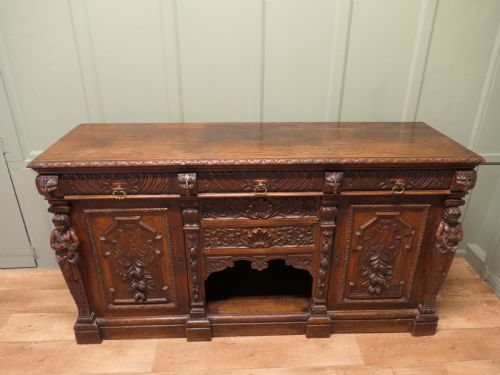
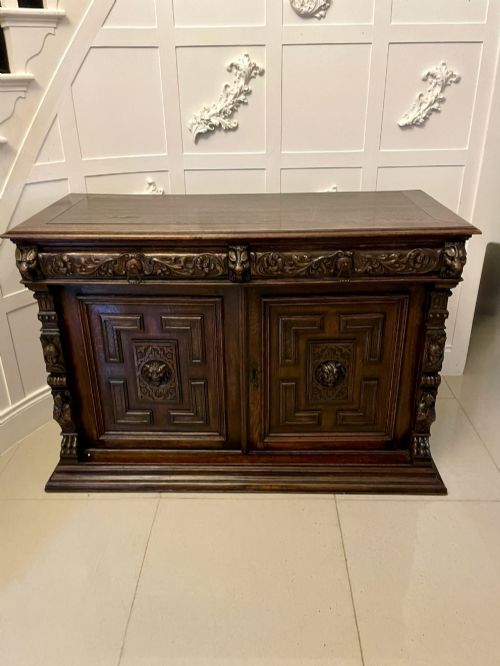
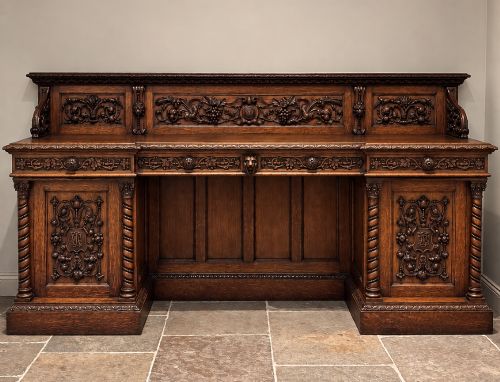
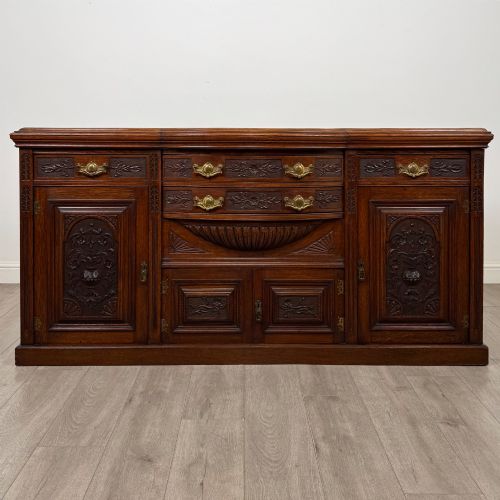
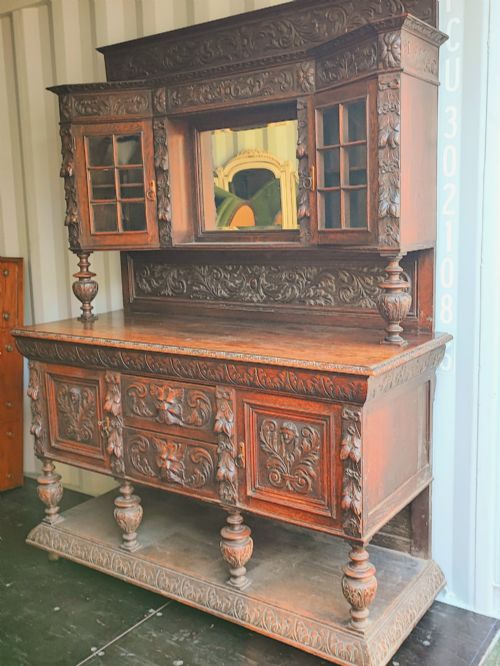
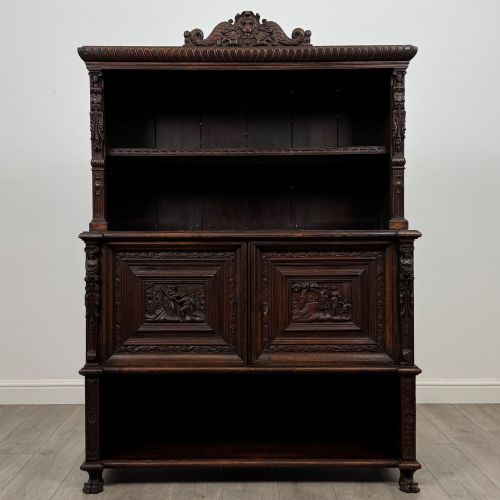
These substantial pieces are a victorian heavy oak buffet, built for display and storage in formal dining rooms.
Victorian Heavy Oak Buffet
A victorian heavy oak buffet combines the function of a serving table, a cupboard and a sideboard into one substantial piece of furniture. These items emerge from the nineteenth century, with specific examples carrying dates from the middle and late decades of that era.
The form appears on this page under several overlapping names, including sideboards, hall cupboards and serving tables. Buyers frequently encounter pieces fitted with mirror backs, glazed doors and tiered shelving designed to hold plate and glassware.
Revival styles dominate the selection, showing heavy architectural influences from the Gothic, Renaissance and Jacobean periods. These designs reflect the Victorian taste for historical pastiche executed in robust timbers.
How they were made
Construction relies heavily upon solid oak, frequently paired with decorative veneers such as pollard oak to create visual contrast on door panels and drawer fronts. Cabinetmakers utilised traditional joinery techniques to support the immense weight of the timber and the large proportions of the carcasses.
Carving serves as the primary decorative technique, ranging from deeply undercut foliage to figural elements like Green Man motifs. Hardware components incorporate cast brass and iron for drop handles, hinges and escutcheons.
Several sideboards conceal carved wooden faces peering through leafy foliage, watching over the dining room china.
What varies in quality
The depth and crispness of the carved ornamentation separate standard production from superior examples. Master carvers produced deeply articulated relief work with distinct details, whereas lesser pieces rely on shallow, mechanical stamping or simple mouldings.
The selection of timber grain and the scale of the architecture dictate the overall presence of the piece. Selecting figured pollard oak veneers and incorporating heavy bevelled glass plates demonstrate a higher tier of workshop output.
The Victorian Heavy Oak Buffet Glossary
- Pollard oak
- A decorative timber derived from trees that were pruned close to the trunk to produce dense, mottled grain patterns. Cabinetmakers used these rich veneers on prominent surfaces like drawer fronts.
- Renaissance Revival
- A nineteenth-century architectural and decorative style that drew inspiration from sixteenth-century European design. Pieces in this manner feature symmetrical facades, heavy cornices and classical relief carvings.
- Green Man
- A sculptural architectural motif depicting a human face emerging from or entwined with foliage. This pagan symbol appears frequently on nineteenth-century carved woodwork.
- Bevelled glass
- Plate glass with edges ground and polished at an angle to create a framed, prismatic border. This technique added refinement to the mirror backs of large sideboards.
- Gothic Revival
- An aesthetic movement that resurrected medieval architectural forms, including pointed arches and heavy tracery. Furniture in this style mimics the vertical emphasis of cathedrals.
Victorian Heavy Oak Buffet: Frequently Asked Questions
How do I clean an oak buffet?
Dust the surfaces regularly with a dry, soft cloth to prevent grit accumulation in the deep carvings. Apply a traditional beeswax sparingly to nourish the timber and maintain the natural sheen of the oak.
Avoid using modern liquid silicone polishes or placing the piece near direct heat sources, which can dry out the historic wood and cause splitting.
Where should I place a large buffet?
These imposing items require substantial wall space and proper structural support due to their heavy weight and grand proportions. Dining rooms and large hallway spaces provide the appropriate architectural scale to balance the mass of the furniture.
Ensure the room has stable humidity levels to protect the solid oak panels and any inset mirror glass from environmental stress.
What is a Green Man carving?
A Green Man is a decorative motif showing a face surrounded by or sprouting from leaves and vines. It symbolises rebirth and was popular during the nineteenth-century revival periods.
Find this carving on the central doors or friezes of larger sideboards, adding a distinct folkloric element to the architectural design.
How do I date a Victorian buffet?
Examine the construction methods, secondary timbers, and hardware style to establish a general timeframe. Pieces dated specifically to the mid-nineteenth century often display different carving depths compared to items marked from the later decades.
Look for original registration marks, paper labels, or written inscriptions on the backboards or drawer interiors which occasionally record exact years.