



Victorian Hearth Scuttle
A victorian hearth scuttle brings practical fuel storage to the fireplace, combining heavy metalwork with period craft.

Victorian Hearth Scuttle
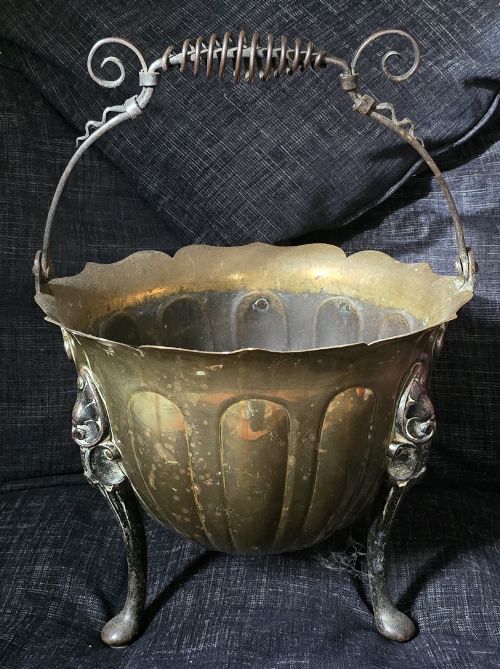
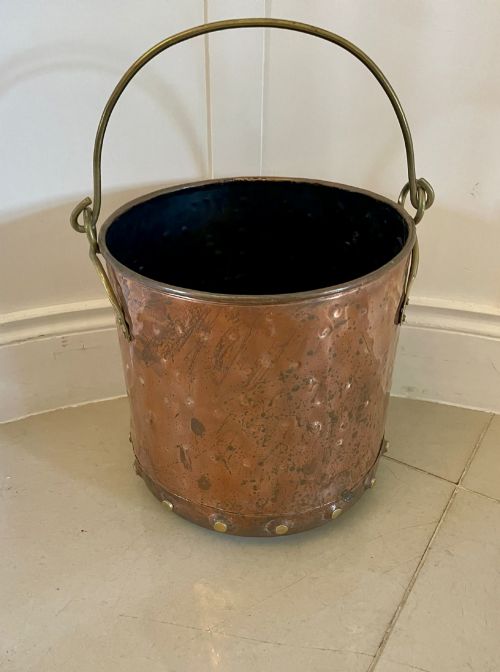
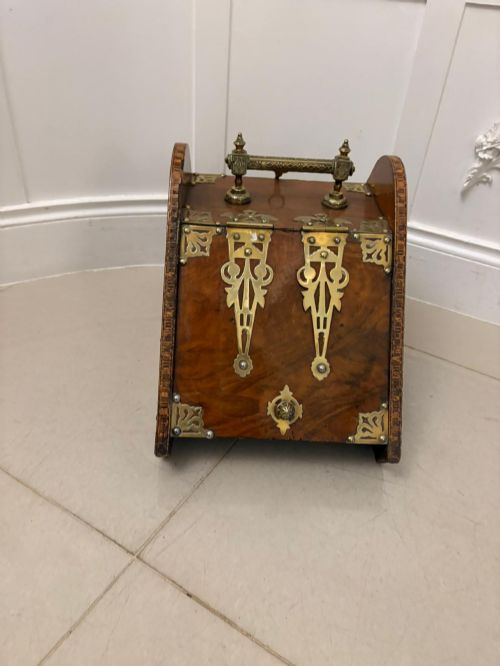
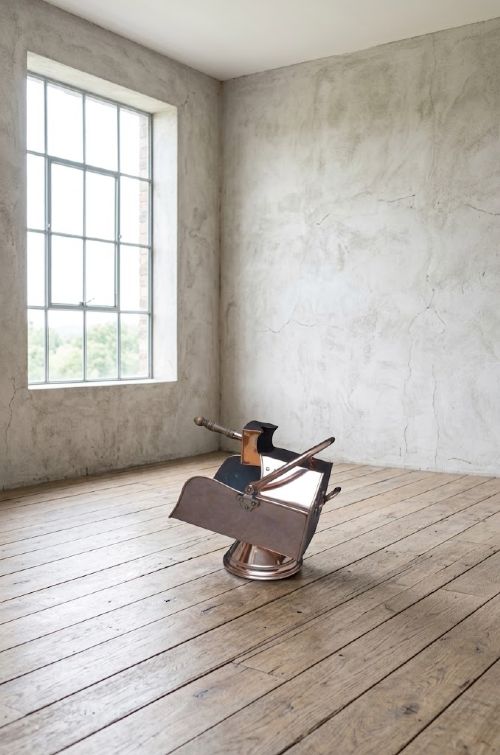
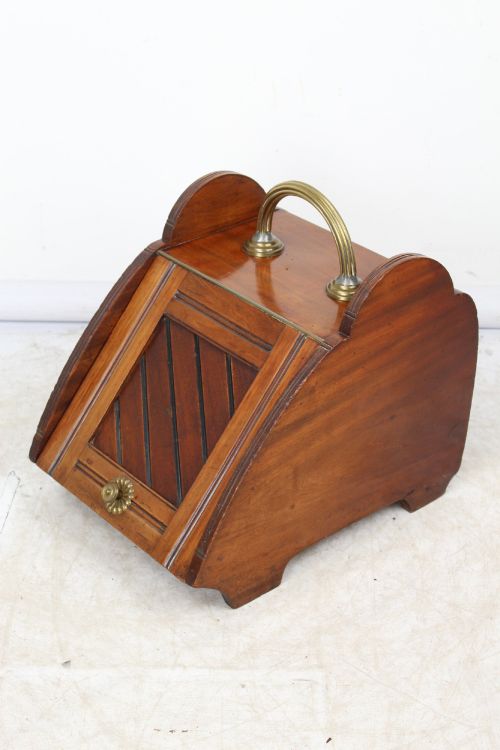
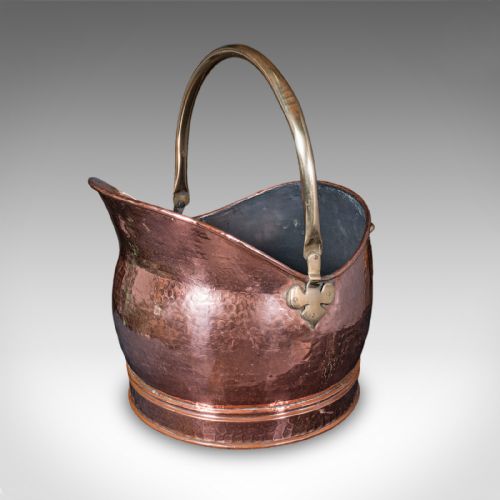
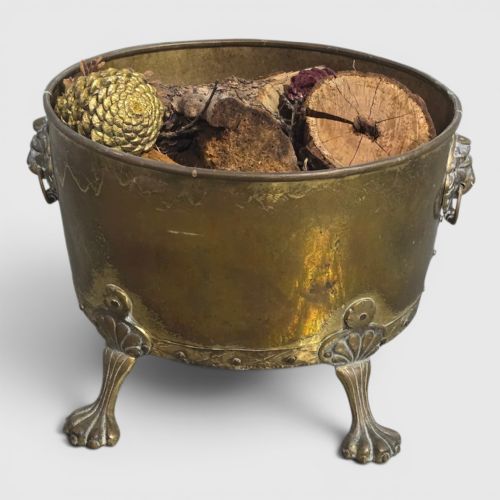
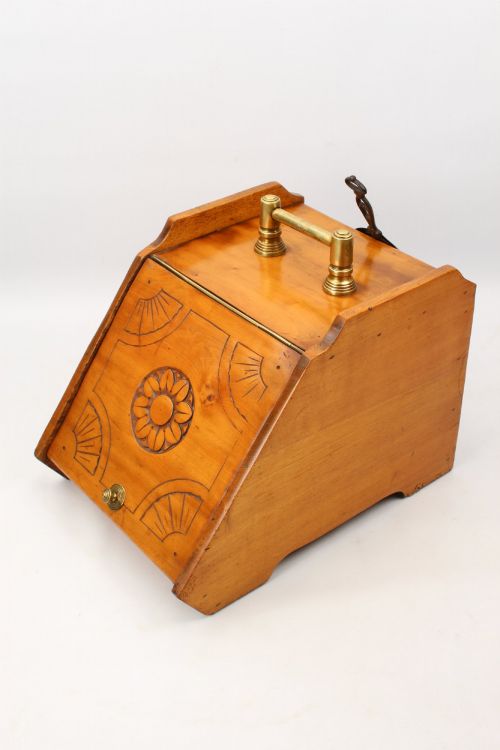
A victorian hearth scuttle serves as a functional fireside container for coal, logs, or peat, originating predominantly from the nineteenth century and the early twentieth century. Buyers encounter helmet-shaped vessels, cylindrical buckets, and lidded boxes known as purdoniums, which sit beside the fireplace to hold fuel.
The materials span polished brass, riveted copper, and various timbers including oak, mahogany, and walnut. Many examples incorporate brass bands, swing handles, and matching shovels designed for daily hearthside utility.
Makers and styles range from plain utilitarian iron to decorative Arts and Crafts, Art Nouveau, and industrial brutalist designs. These pieces function equally well today as log bins or indoor planters beside modern stoves.
Materials and construction
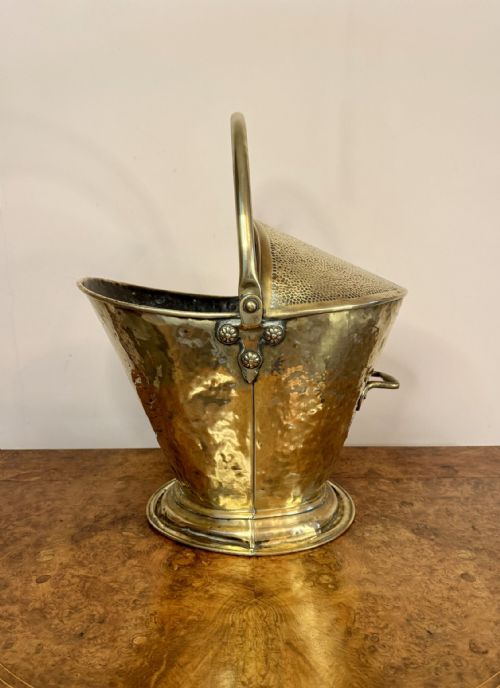
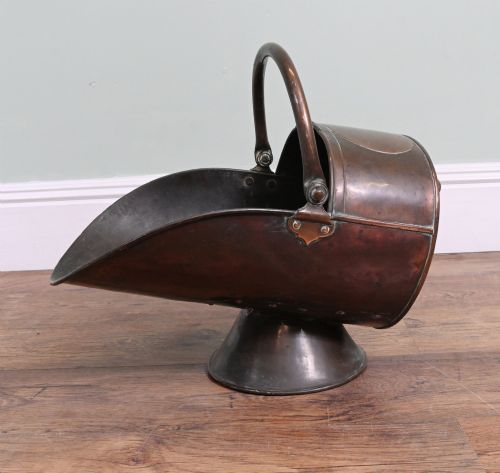
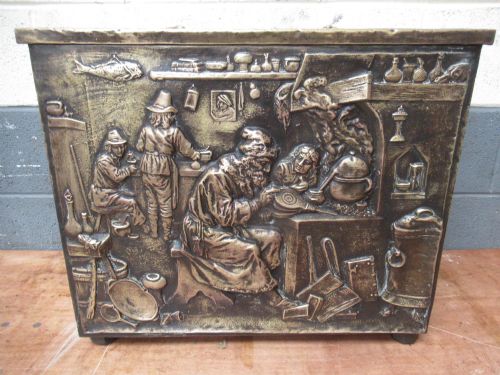
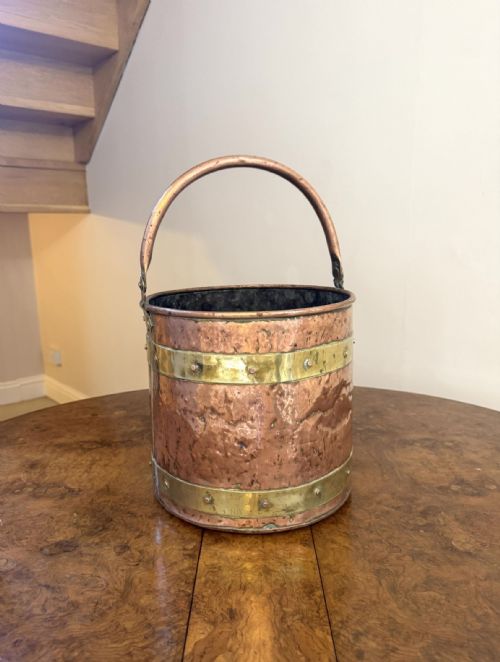
Metal vessels rely on sheet brass and copper, frequently joined by visible rivets along the seams to ensure structural strength for heavy loads of coal. Beaten surfaces, embossed tavern scenes, and cast brass mounts demonstrate traditional metalworking techniques of the period.
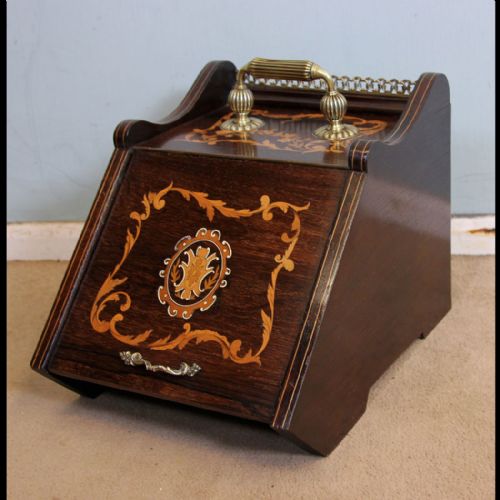
Wooden containers utilise solid oak, mahogany, or walnut, sometimes featuring inlaid rosewood or brass banding to reinforce the staves. Joinery methods include traditional cooperage for bucket forms and box construction with fitted interiors for purdoniums.
Victorian Hearth Scuttle Retail Price Guide 2026
Typical asking prices for victorian hearth scuttle among the pieces listed under this phrase on Sellingantiques today, from the lower quarter to the upper quarter. They describe what is for sale here now, not the wider market.
Some nineteenth-century brass buckets feature detailed tavern scenes embossed by hand, proving that even coal storage deserved a humorous pub view.
Judging the standard
Quality rests on the thickness of the metal and the integrity of the construction, where heavy gauge copper and solid brass hinges distinguish superior pieces from lighter alternatives. The presence of original matching shovels and intact liners adds considerably to the integrity of a piece.
The finesse of the hand-finishing, such as neatly hammered rivets and crisp decorative embossing, separates standard utility items from finer examples produced by notable workshops.
Henry Loveridge·Benham and Froud·Petrus Ramus
The Victorian Hearth Scuttle Glossary
- Helmet scuttle
- A traditional coal container featuring a flared mouth and a high-backed profile resembling a medieval helmet. It usually includes a fixed arched handle and a small foot at the base.
- Purdonium
- A dedicated wooden coal box, often Edwardian or Victorian in origin, containing a metal liner and a tilt-forward compartment. It typically stores a coal shovel in a side or internal rack.
- Log bin
- A deep cylindrical or oval vessel designed to hold firewood rather than loose coal. These often feature strong drop handles for lifting heavy timber.
- Planter
- A secondary function assigned to these copper and brass vessels when retired from fireside fuel storage. The metal liner makes them suitable for holding potted house plants.
- Riveted copper
- Sheet copper joined with small metal pins hammered flat to secure the seams. This technique provides both industrial strength and a distinct decorative texture.
Victorian Hearth Scuttle: Frequently Asked Questions
What is a purdonium?
A purdonium is a specific type of enclosed coal box featuring a sloping front door that drops forward to reveal a metal liner. This design keeps coal dust contained inside the box.
Such pieces often include a matching shovel stored in a compartment at the side, representing a more formal style of fireside accessory than an open bucket.
How do I clean copper and brass?
Cleaning depends on whether you prefer a bright polished shine or an aged dark patina developed over a century of use. Many collectors prefer to leave the original surface untouched.
If polishing is desired, standard metal creams applied with a soft cloth will remove tarnish from brass and copper without harming the underlying metal.
Can these hold logs instead of coal?
Many of these vessels serve as log bins or general fuel baskets just as effectively as they hold coal. The wider buckets and oval tubs accommodate split firewood with ease.
Ensure any metal liner is dry before loading timber to prevent interior moisture accumulation and subsequent corrosion.
How do I date a metal scuttle?
Dating relies on manufacturing techniques, material choices, and stylistic markers such as Arts and Crafts embossing or Art Nouveau motifs. Hand-beaten surfaces and heavy riveted construction typically point to the nineteenth century.
Makers' stamps on the base or handles can also provide a precise point of origin during the Victorian or Edwardian eras.