


Victorian Harbor Oil Painting
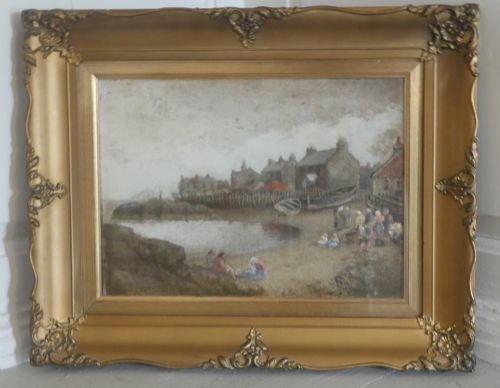
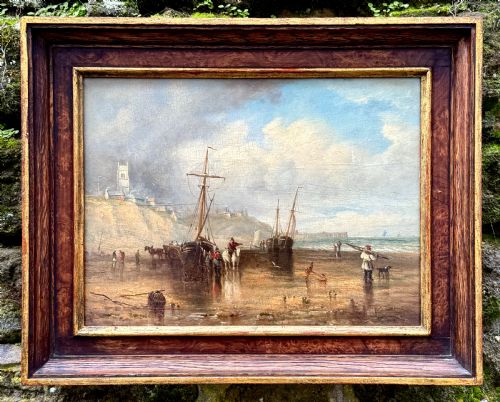
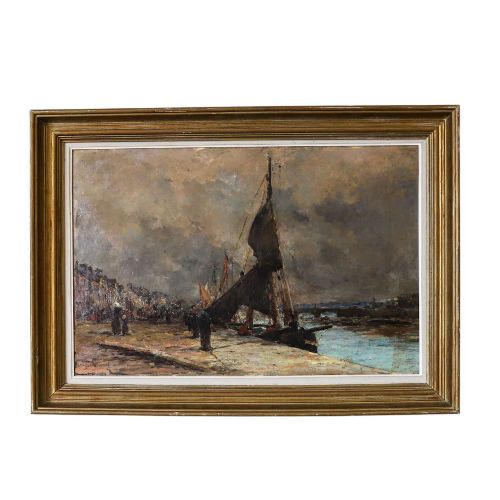
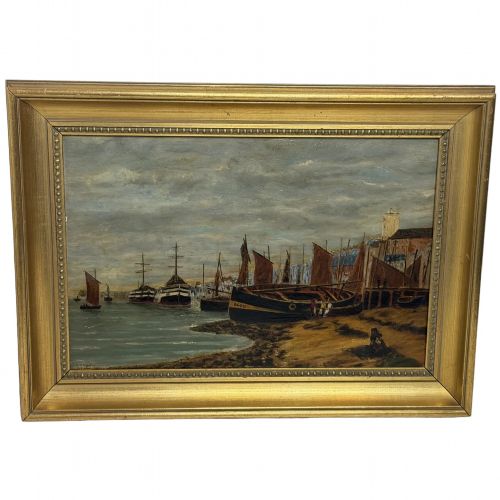
A victorian harbour oil painting captures the bustle of nineteenth-century maritime life through pigment and canvas.
Victorian Harbor Oil Painting
A victorian harbour oil painting records the coastal commerce, shipping vessels, and tidal waters of the nineteenth century. These works document specific ports ranging from British locations like North Shields, Portsmouth, and the River Thames to continental destinations such as Venice, Cannes, and Livorno.
The pieces on this page span the Victorian period, including dates through the 1860s, 1880s, and 1900s, categorised under maritime art, marine landscapes, and coastal townscapes. Such paintings reflect the industrial and mercantile expansion of the era through depictions of busy quaysides, fishing boats, and moored shipping.
Most examples present realistic or fine art interpretations of maritime scenes, often signed by period artists and framed in period surrounds. Buyers encounter both domestic English coastal views and continental European ports rendered in oil mediums.
Materials and technique
Artists of this era applied oil paint directly onto woven canvas supports, occasionally utilising wood panels for smaller compositions. The pigment was worked with brushes and palette knives to build texture in the water, sky, and architectural elements of the harbour.
Framing typically involved carved wood structures enhanced with gesso and gold leaf or giltwood finishes. These heavy frames protected the canvas edges and provided an ornate border suited to nineteenth-century domestic display.
Listings feature works from the 1860s through the 1920s, employing oil on canvas and wood panel supports.
Evaluating craftsmanship
Quality in a victorian harbour oil painting rests upon the artist's command of perspective, atmospheric light, and maritime architecture. Master painters rendered the movement of water and the intricate rigging of vessels with precise observation, whereas lesser works rely on formulaic repetition and stiff compositions.
The condition of the canvas and the integrity of the original paint layer dictate the visual impact of the piece. Works that retain their original pigment depth without excessive overpainting or structural canvas repairs represent the upper tier of surviving examples.
Edward Mills·Thomas Creswick·Charles William Wyllie·William Edward Webb·James Kyd·Stanley Leader·T.S. Wallis·James Webb·George Gregory·Alfred Henry Vickers·Sir Edwin Landseer·John Callow·Gustave de Breanski·Edward Henry Holder·William Langley·Jane Vivian·Charles Euphrasie Kuwasseg·Hubert Thornley·Ludwig Hermann·Charles France·Edward Fletcher·Arthur Joseph Meadows·John James Wilson·Walter Meegan·William Dommersen
The Victorian Harbor Oil Painting Glossary
- Oil on canvas
- A painting medium where pigments bound in drying oil are applied to a stretched woven fabric support. This combination allows for rich colour blending and durability over centuries.
- Giltwood
- Wood carved and coated with a thin layer of gold leaf or metallic gilt powder. It provides the ornate, reflective borders typical of nineteenth-century picture frames.
- Gesso
- A paint mixture consisting of a binder mixed with chalk, gypsum, or pigment. It was applied to wood frames to create a smooth surface for gilding.
- Marine art
- Artistic works that focus on or draw main inspiration from the sea, ships, and coastal environments. This genre encompasses both naval battles and commercial port scenes.
- Townscape
- A painting or other depiction of a city or urban area, often highlighting buildings, streets, and waterfront architecture. In maritime contexts, this includes quaysides and harbourside structures.
Victorian Harbor Oil Painting: Frequently Asked Questions
How do I identify the specific port in a painting?
Many nineteenth-century marine artists inscribed the location on the reverse of the canvas or within the title recorded in gallery archives. Architectural landmarks, such as the Tower of London or the Doge's Palace, also help pinpoint the exact harbour.
Examining the vessel types and flag details can further confirm the geographical context of the coastal scene depicted by the artist.
Were these paintings created outdoors or in studios?
Most nineteenth-century marine artists sketched preliminary views on location near the quayside before completing the final oil painting in a studio. This method allowed them to capture accurate details of shipping vessels and tidal conditions while managing the drying time of oil paints indoors.
Studios provided the controlled lighting necessary to refine complex compositions involving water reflections and atmospheric haze.
How should I care for a nineteenth-century oil painting?
Keep the artwork away from direct sunlight and sources of extreme heat to prevent the canvas from warping and the oil paint from cracking. Maintain stable room humidity to protect both the wooden stretcher bars and the gesso frame.
Dust the surface gently with a soft, dry brush, and avoid using chemical cleaning agents or water on the pigment layer.
What distinguishes a marine landscape from a pure seascape?
A marine landscape incorporates coastal elements such as harbour walls, townscapes, buildings, and figures working on the shore alongside the water. A pure seascape focuses primarily on open ocean views, waves, and ships at sea without significant land masses.
Harbour paintings belong firmly in the marine landscape category due to their architectural and commercial focus.