


Victorian Hand Blown Jug
These Victorian hand blown jug pieces bring rich nineteenth-century colour and fluid glassmaking technique straight to your table.
Victorian Hand Blown Jug
A victorian hand blown jug is a functional vessel or decorative ewer shaped by glassmakers during the nineteenth century. Buyers searching this phrase look for pitchers, decanters, and water jugs that display authentic period character.
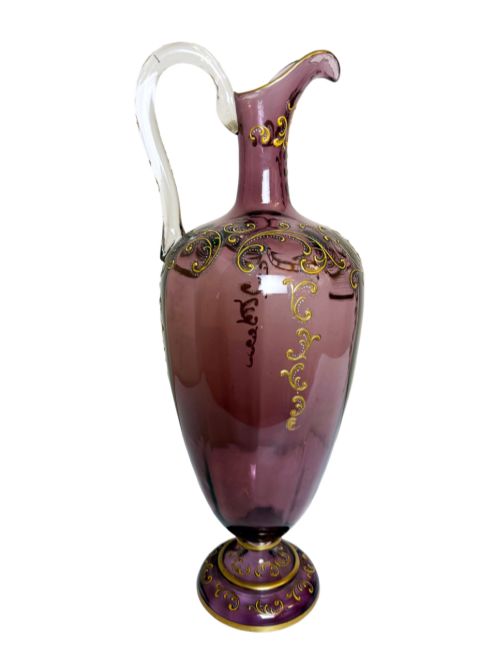
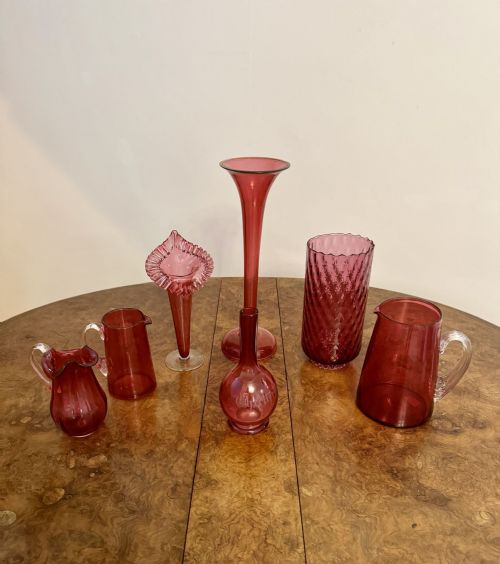
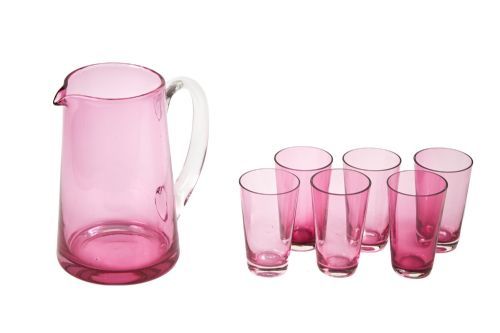
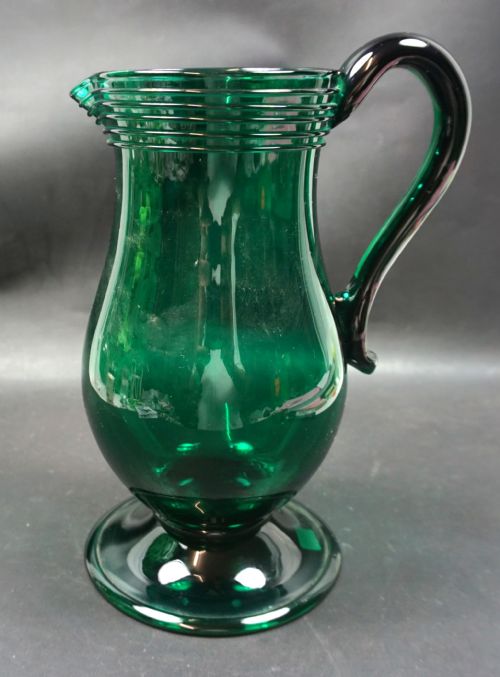
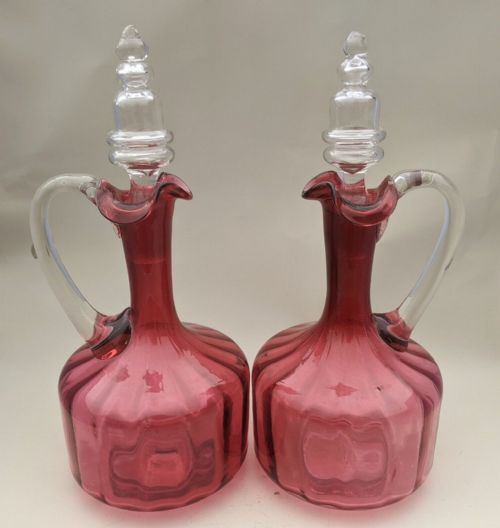
The pieces on this page appear in various forms, including cranberry glass sets, green glass ewers with enamel paint, and violet pitchers with gilt applique. Most examples date from the late nineteenth century through the Edwardian era.
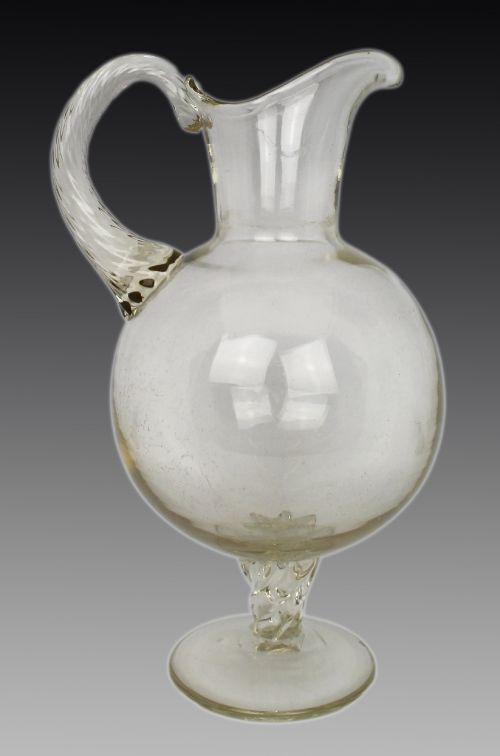
Makers utilised distinct colours like Bristol blue and deep cranberry, often incorporating applied trails and folded feet. These vessels served practical dining purposes and decorative household displays in period homes.
What varies in quality
Quality in a victorian hand blown jug rests on the balance of the vessel and the skill evident in the applied handle and rim. Finer pieces show careful control during the free-blowing process, resulting in even walls and graceful proportions.
Decoration also distinguishes the range, where hand-painted enamel work and precise gilt applique display superior artistry compared to plain glass versions. The depth of colour in cranberry or green metal indicates the purity of the ingredients used by the glasshouse.
Victorian glassblowers occasionally added gold salt to hot batches of glass just to see the pink melt into rich cranberry.
The Victorian Hand Blown Jug Glossary
- Cranberry glass
- A transparent pinkish-red glass produced by adding gold chloride to the molten batch. It became extremely popular for tableware during the Victorian period.
- Ewer
- A large jug with a wide spout and a looped handle, traditionally used for holding water or wine. Many Victorian examples functioned primarily as decorative display pieces.
- Gilt applique
- Applied decorative metal or leaf details fixed to the surface of the glass. Artisans often painted these gold elements by hand onto violet or clear vessels.
- Trail rim
- A thin thread of molten glass wrapped around the collar of a vessel while hot. This technique adds both structural reinforcement and visual contrast to the piece.
- Folded foot
- A base formed by doubling the lower edge of the glass back upon itself to create a sturdy rim. It provides stability for tall pitchers and heavy decanters.
Victorian Hand Blown Jug: Frequently Asked Questions
What is a victorian hand blown jug used for?
These vessels originally served functions at the dining table, holding water, wine, or other beverages for guests.
Today, collectors use them primarily as decorative objects or centrepieces, displaying their rich colours in cabinets or on open shelving.
How do I identify a Victorian glass jug?
Look for the characteristic weight and slight irregularities of free-blown glass, along with period colours such as cranberry, Bristol blue, and green.
Many examples feature hand-painted enamel details, gilt applique, or applied glass trails typical of nineteenth-century glasshouses.
What is cranberry glass?
Cranberry glass is a distinctive pinkish-red transparent material created by introducing gold salts into the molten glass mixture during production.
Victorian makers utilised this striking material extensively for jugs, decanters, and complete tableware sets.
Are these jugs dishwasher safe?
Antiques of this age require gentle hand washing in lukewarm water with mild soap.
Harsh detergents and sudden temperature changes can damage the delicate hand-painted enamel and gold leaf decorations found on many period pieces.