
Victorian Hall Side Table
When you search for a victorian hall side table, you uncover sturdy timber consoles and compact serving pieces built to anchor nineteenth-century entryways.
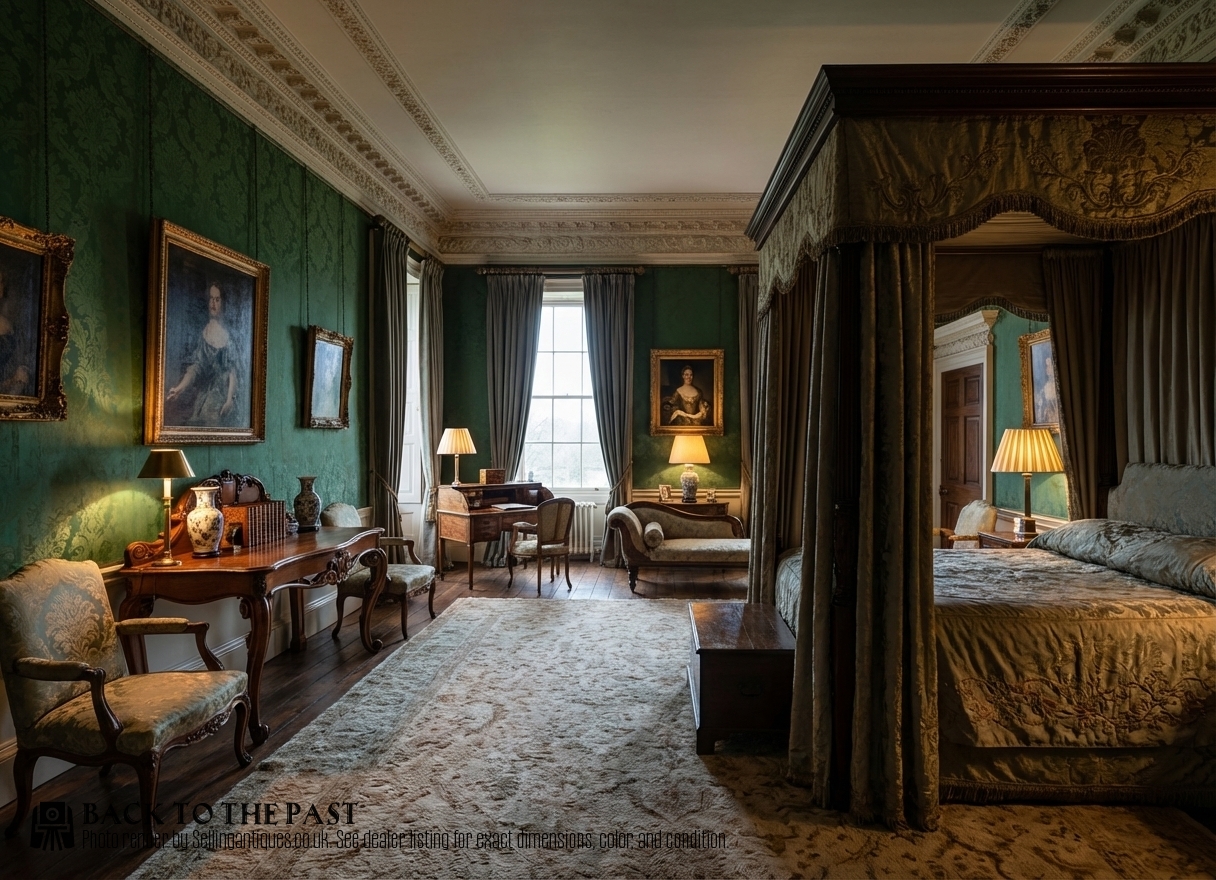
Victorian Hall Side Table
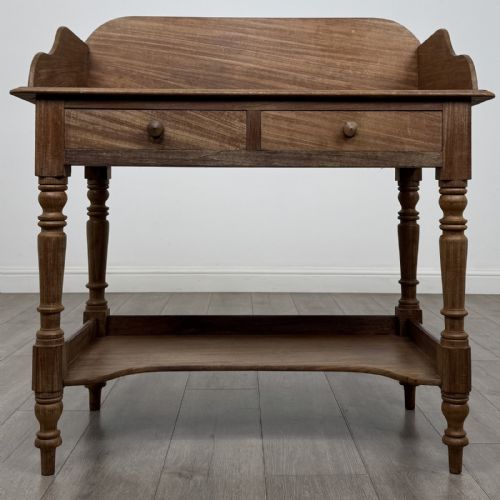
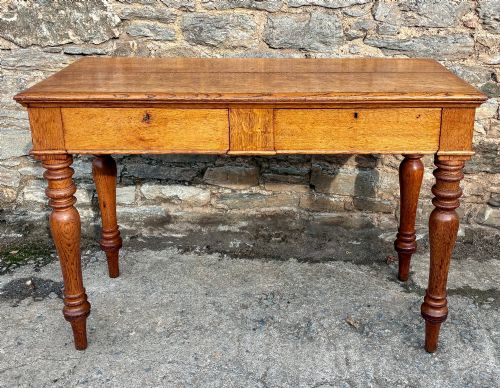
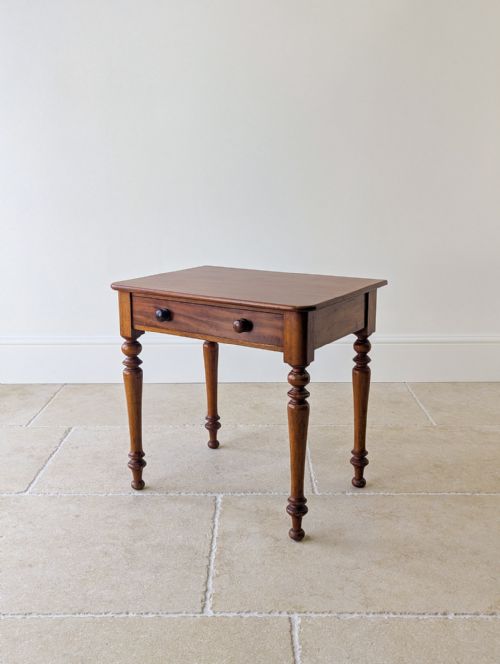
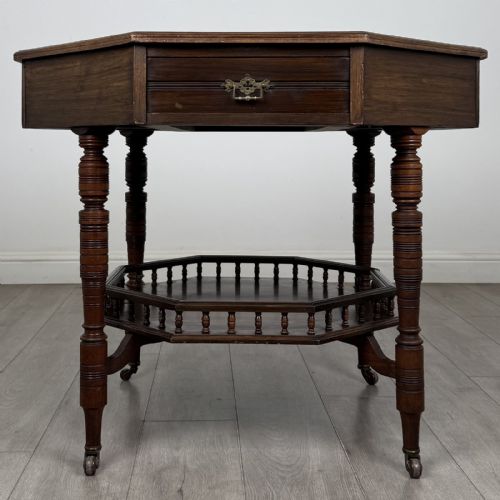
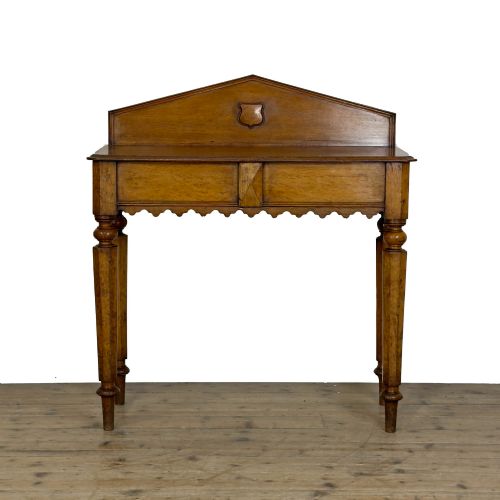
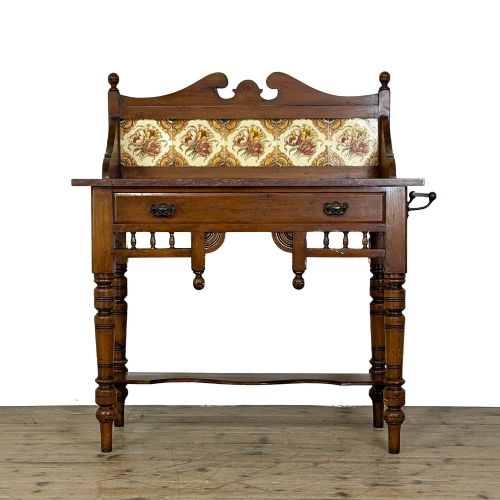
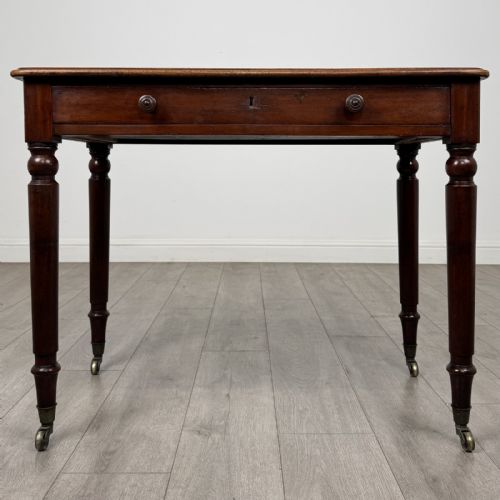
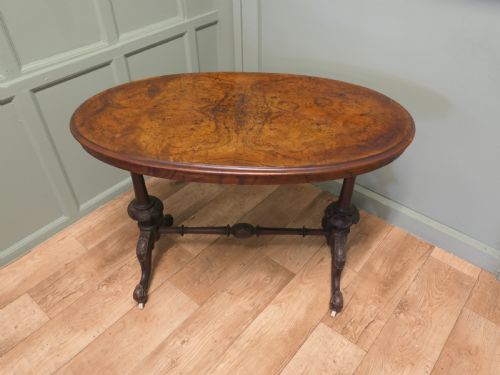
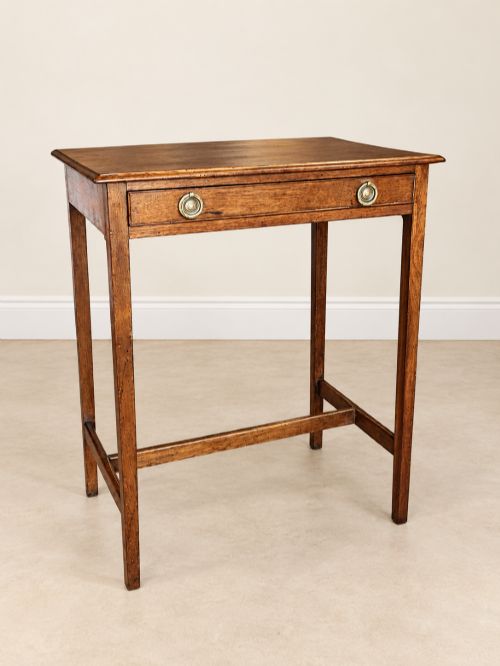
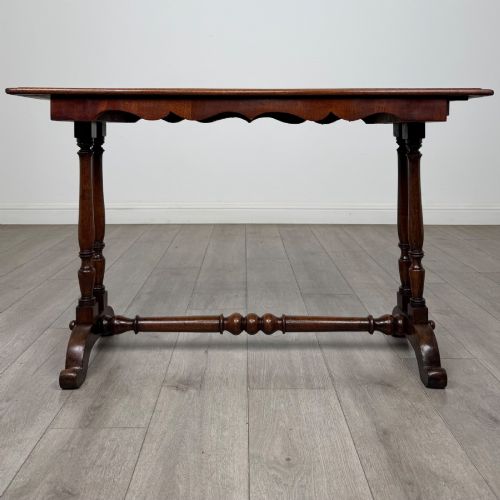
A victorian hall side table encompasses narrow console tables, writing desks, and occasional servers designed to sit against entrance walls without blocking passage. These pieces emerge in various woods and configurations, ranging from simple single-drawer pine tables to elaborate carved walnut consoles.
Originating during the nineteenth century, these tables served domestic duties in grand country houses and smaller town residences alike. Today, they function practically in modern hallways as drop zones for keys and correspondence.
Materials and Construction
Makers utilised dense hardwoods like mahogany, walnut, and oak alongside utilitarian softwoods such as pine and pitch pine. Timber selection dictated whether a piece received a clear polish to display grain patterns, intricate hand-carved details, or a painted scumble finish.
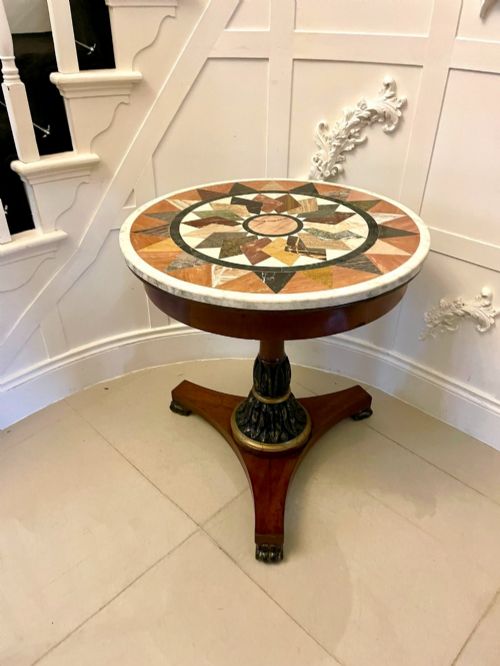
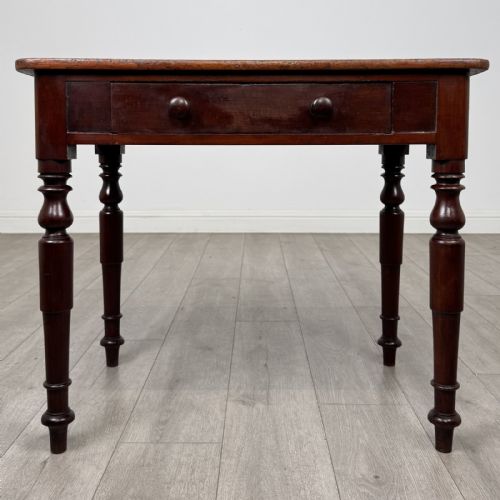
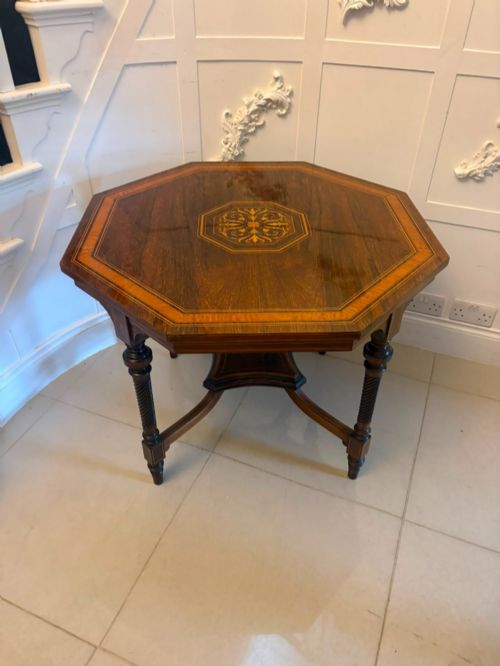
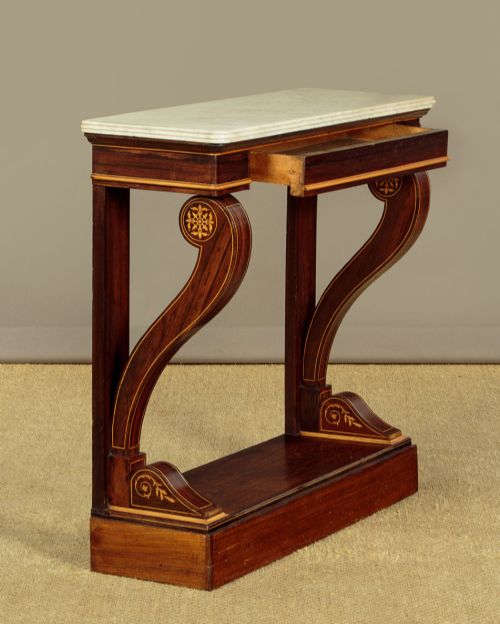
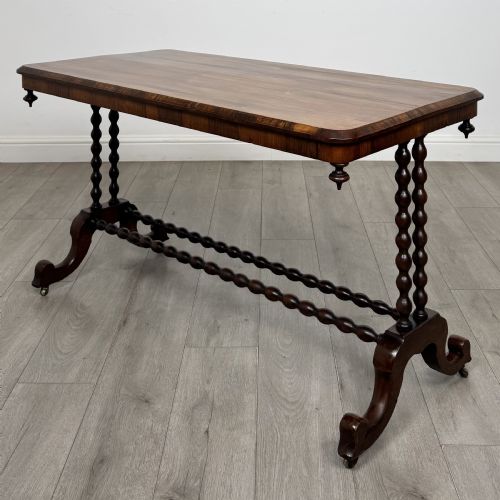
Joinery techniques relied on traditional mortise and tenon frames, dovetailed drawer construction, and turned legs including barley twist supports. Frieze drawers often incorporated small wooden knobs or brass pulls, whilst select tables integrated rouge marble tops or marquetry inlay.
Assessing Craftsmanship
Quality in a victorian hall side table rests on the selection of timber and the precision of structural joinery. Finer pieces display figured veneers like burr walnut or flame mahogany, balanced proportions, and substantial weight in the solid timber frame.
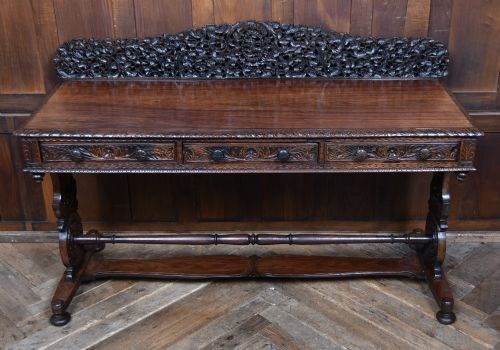
Decorative ambition separates standard utility tables from exhibition pieces. Superior examples feature crisp hand-carving, applied mouldings, secondary wood linings of high grade, and maker signatures from established cabinet-making firms.
Edward’s And Robert’s·Gillows·Gregory & Co·Maple & Co
The Victorian Hall Side Table Glossary
- Demilune
- A half-moon shape used for console tables designed to sit flush against a wall. This form gained popularity during the nineteenth century for narrow entryways.
- Frieze
- The central horizontal band of a table located directly beneath the top surface. It frequently houses one or more storage drawers.
- Console table
- A table supported against a wall by console brackets or legs. These items provide display space without occupying deep floor areas.
- Scumble
- A decorative paint technique applied to imitate more expensive wood grains or to create aged textures. This finish appears on regional nineteenth-century pine furniture.
- Marquetry
- The art of applying decorative veneer pieces to a structure to form intricate patterns. Walnut tables often utilised this technique on top surfaces.
Victorian Hall Side Table: Frequently Asked Questions
Where should I place a hall table?
These tables fit naturally in narrow entryways, corridors, and reception rooms where floor space is limited. Their shallow profiles allow them to sit flush against walls without obstructing pathways.
In contemporary homes, they function well beneath hallway mirrors or serve as compact surface areas for lamps and correspondence.
What is a console table used for?
Historically, console tables provided a decorative surface for displaying ornaments, clocks, and lighting in entrance halls. They offered a formal greeting point for visitors arriving at a home.
Today, they retain their role as stylish furniture pieces that organise everyday items while anchoring hallway interior design.
Did all these tables feature drawers?
Many nineteenth-century examples incorporate a single frieze drawer or twin drawers for storing household items like keys and gloves. However, numerous console and centre tables were built without drawers to maintain an open, decorative frame.
Tables intended for writing or dressing duties more reliably included fitted compartments or secret drawers.