
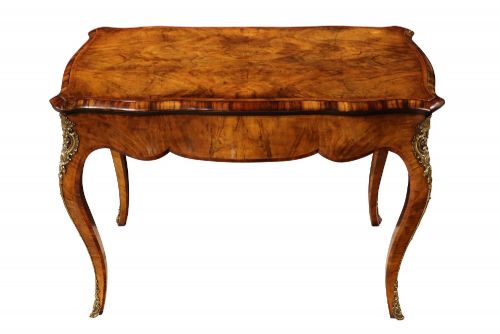


Mid 19th Century Console Table
A mid 19th century console table brings architectural presence and rich timber character to an entrance hall or living space.
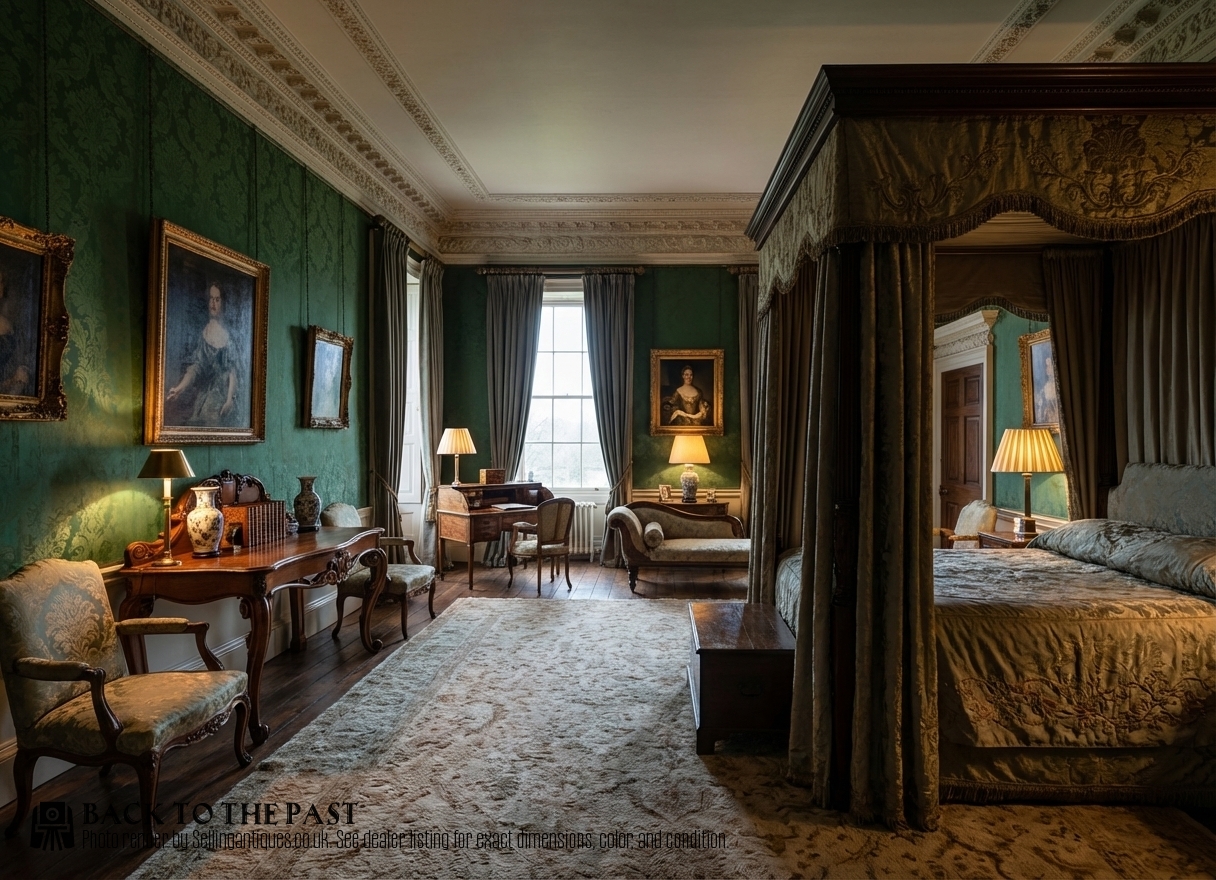
Mid 19th Century Console Table
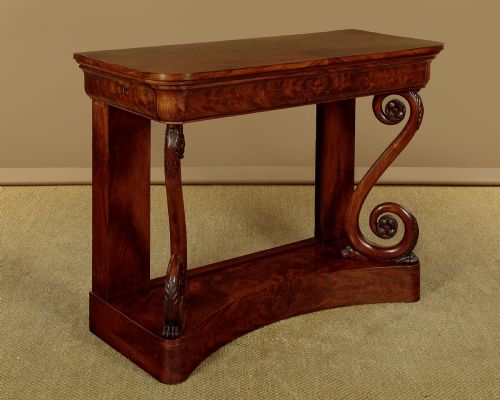
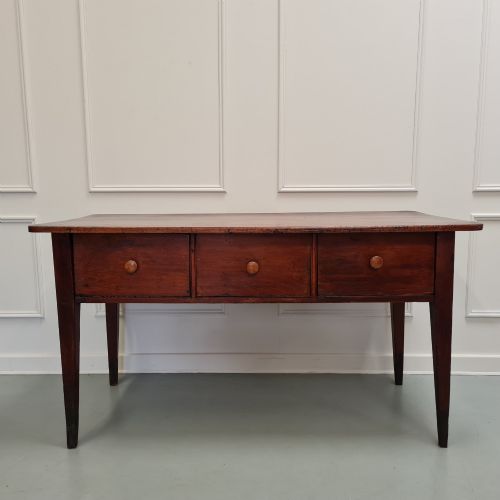
A mid 19th century console table is a substantial piece designed to sit against a wall, frequently paired with a matching wall mirror in Victorian interiors. The pieces appearing here span specific regional variations, from English and Irish mahogany and walnut examples to French Louis-style giltwood and continental pine or elm forms.
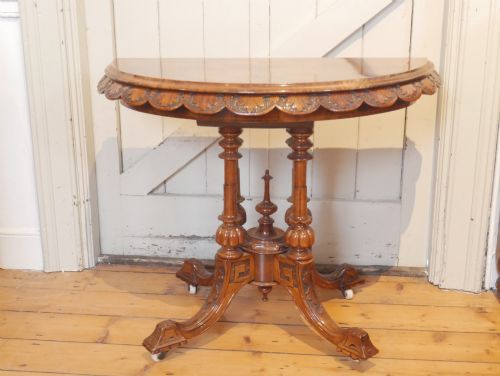
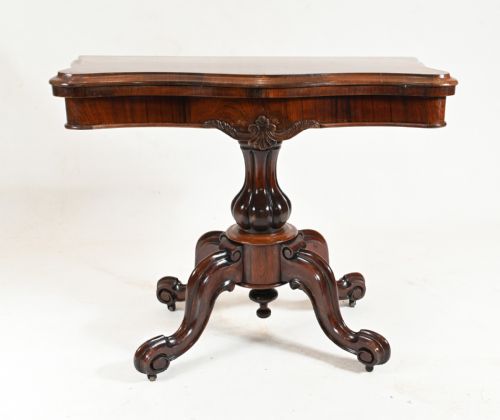
Buyers seeking a mid 19th century console table will encounter diverse formats across the inventory, including serving tables, pier tables, and fold-over card or games tables alongside traditional wall-fixed consoles. These items reflect the eclectic revival tastes of the nineteenth century, encompassing Rococo Revival, Louis XV and XVI styles, and Anglo-Indian craftsmanship.
The materials utilised in these tables define their visual weight, featuring rich native hardwoods such as mahogany and oak alongside highly figured burr walnut, rosewood, amboyna, and padouk. Marble tops also feature among the continental and revival pieces, adding a cold, smooth surface contrast to the carved wooden frames.
Materials and construction methods
Cabinetmakers of the period relied heavily on dense tropical hardwoods and domestic timbers, constructing carcases and frames in mahogany, walnut, oak, elm, and rosewood. Veneers of burr walnut and amboyna were carefully applied to primary surfaces to create striking grain patterns, while giltwood frames employed carved softwoods finished with gold leaf.
Structural embellishment relied on traditional hand-carving techniques, visible in the serpentine outlines, floral motifs, and scrollwork typical of Victorian Rococo and French revival pieces. Marble inserts were precisely cut to fit recessed wooden tops, and specialised turning appeared on table legs and card table pivots.
Current listings demonstrate a broad geographic spread, incorporating English, Irish, Scottish, French, Anglo-Indian, and Swedish regional variations from the mid-nineteenth century.
Distinctions in construction and design
Quality in these tables rests primarily on the depth and crispness of the hand-carving and the selection of timber veneers. Finely figured burr walnut or amboyna applied with precision elevates a piece above standard utility furniture of the era.
The integrity of the structural joints, the weight and thickness of integrated marble tops, and the smooth operation of folding mechanisms on card and games tables separate superior examples from more basic workshop output.
The Mid 19th Century Console Table Glossary
- Console table
- A table designed to stand against a wall, traditionally supported by brackets or console legs rather than four independent vertical posts.
- Pier table
- A low table specifically built to sit against the wall space between two windows, often placed directly beneath a pier glass mirror.
- Burr walnut
- Timber obtained from the gnarled growths on walnut trees, sliced to reveal highly decorative, swirling grain patterns highly favored in Victorian cabinetmaking.
- Giltwood
- Wood that has been coated with a thin layer of gold leaf or gilt gesso, commonly utilised on French revival and decorative English console frames.
- Serpentine outline
- A curved edge or front profile shaped in a continuous wavy line resembling a snake, characteristic of mid nineteenth century Rococo revival forms.
Mid 19th Century Console Table: Frequently Asked Questions
Where should I place a console table?
These tables find their traditional home against a flat wall in an entrance hall, reception room, or dining space. They anchor a room visually when paired with a painting or mirror hung directly above.
Because many examples feature finished backs or shallow depths, they occupy minimal floor space while offering a practical surface for lamps, decorative objects, or correspondence.
How do I care for a polished wood table?
Maintain the timber surfaces by dusting regularly with a soft, dry cloth and avoiding placement near direct heat sources or strong sunlight. Excessive temperature changes can cause traditional wood finishes and veneers to dry out.
Apply high-quality beeswax sparingly when the wood appears dry, buffing gently to preserve the natural lustre of the nineteenth-century polish without building up heavy chemical residues.
What is the difference between a console and a pier table?
While both stand flush against a wall, a pier table was specifically proportioned to fit the narrow wall pier between architectural windows. Console tables frequently served broader reception room functions and carried heavier decorative carving.
In surviving nineteenth-century examples, the terms often overlap depending on whether the piece was designed to support a matching wall-mounted mirror.
How do I identify a Rococo Revival piece?
Rococo Revival furniture from the mid-nineteenth century is distinguished by asymmetrical scrollwork, naturalistic floral carvings, and flowing serpentine outlines. These designs draw inspiration from eighteenth-century French aesthetics but employ heavier Victorian proportions.
Look for deep, sculptural relief work on the wooden aprons and cabriole legs, often executed in walnut, mahogany, or giltwood.